
For decades, the electron has been the undisputed protagonist of the technological age. Our entire digital civilization—from the massive data centers powering the cloud to the smartphone in your pocket—is built upon the movement and manipulation of these tiny, negatively charged subatomic particles. However, as we push the limits of Moore’s Law and venture into the realm of “The Great Small,” the tech industry is no longer satisfied with the electron as the final frontier. To build the next generation of supercomputers and microscopic machines, engineers and physicists are looking at what lies beneath: the world of quarks, gluons, and the quantum fields that define the very fabric of reality.
In the context of modern technology, asking “what is smaller than an electron” isn’t just a question of theoretical physics; it is a roadmap for the future of hardware, digital security, and materials science.
The Physics of the Small: Beyond the Electron in Modern Hardware
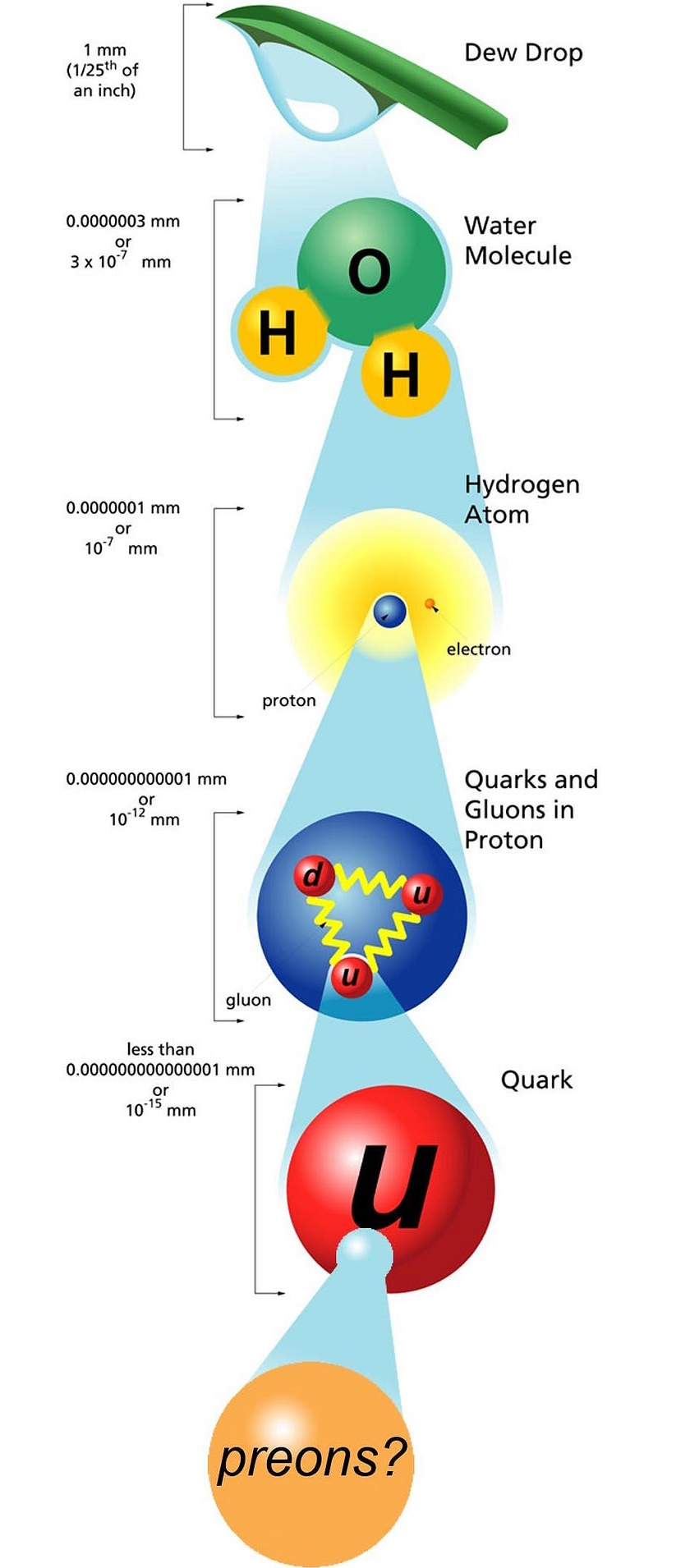
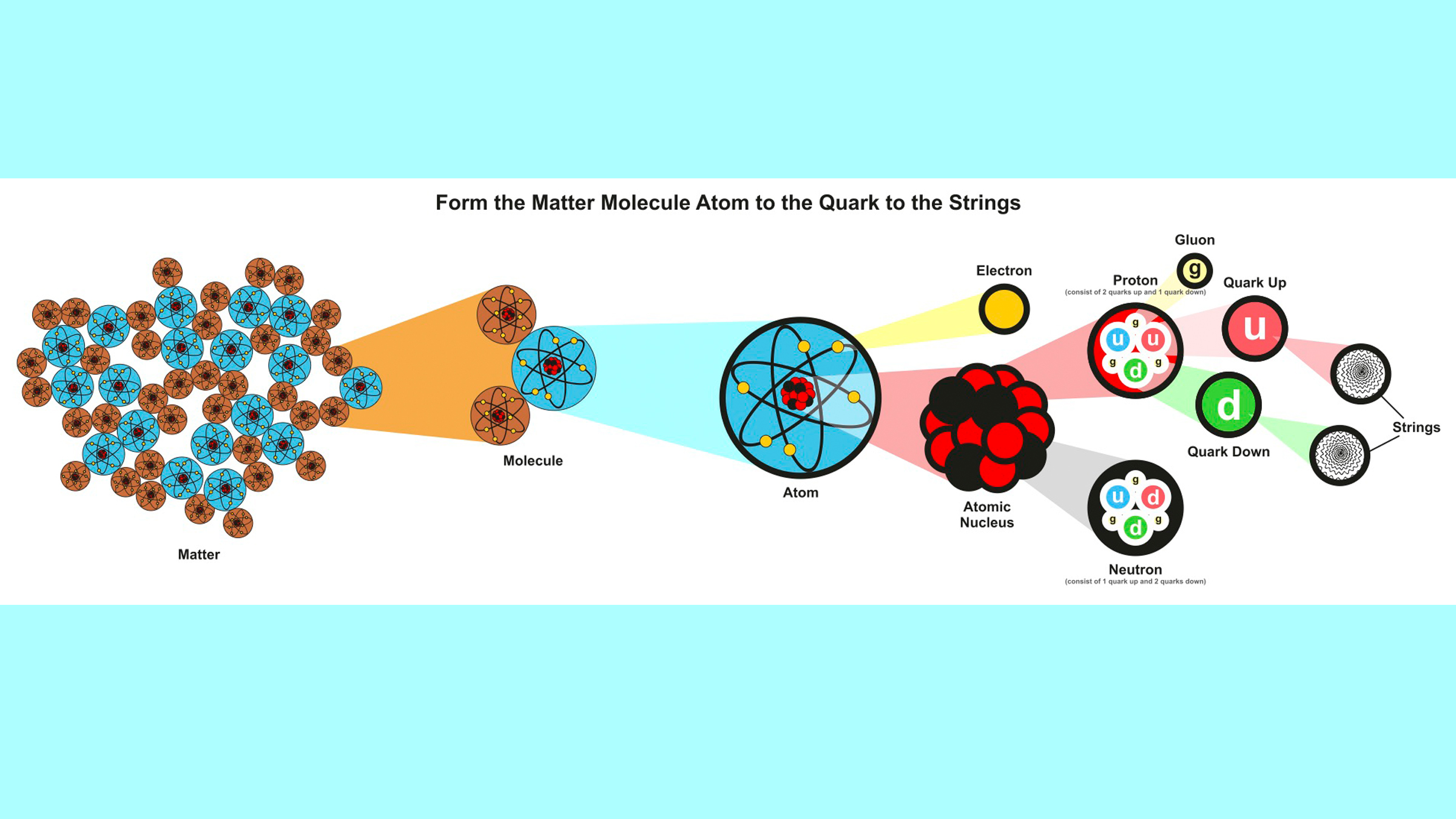
To understand where technology is going, we must first understand the structural hierarchy of the universe. For a long time, the atom was thought to be indivisible. Then, we discovered protons, neutrons, and electrons. While protons and neutrons are composed of even smaller particles, the electron is currently classified as a “fundamental particle” (a lepton), meaning it has no known substructure. However, that does not mean it is the smallest entity in existence.
Quarks and the Fundamental Building Blocks
While an electron is a point-particle in the Standard Model of physics, we know of entities that are functionally “smaller” or more fundamental in terms of their role in mass and force. Quarks, which make up protons and neutrons, are held together by gluons—massless gauge bosons that transmit the strong nuclear force. In the world of high-tech sensors and particle accelerators, the ability to observe and manipulate these interactions is the key to unlocking new forms of energy and data storage. By understanding the “color charge” of quarks, tech researchers are exploring “femtotechnology,” a theoretical field that involves manipulating the nucleus of an atom in the same way nanotechnology manipulates molecules.
Why the Size of the Electron Matters for Semiconductors
The primary reason the tech industry is obsessed with the “size” of subatomic entities is the physical limitation of silicon. We are currently manufacturing chips at the 3-nanometer (nm) and 2-nm scale. At this level, we are approaching the “Bohr radius”—the physical space an electron occupies around an atom. When transistors become too small, electrons begin to exhibit a phenomenon called “quantum tunneling,” where they leap across barriers they aren’t supposed to cross. This creates “leakage,” leading to overheating and chip failure. To move past this, tech giants like TSMC and Intel are looking at sub-electron behaviors to find ways to stabilize circuits at an almost inconceivable scale.
Quantum Computing: Harnessing the Sub-Electron Realm
The transition from classical computing to quantum computing represents a shift from manipulating electrons as “flowing juice” (current) to manipulating the internal quantum states of particles. This is where the quest for what is smaller than an electron becomes commercially viable.
From Bits to Qubits: The Shift in Information Processing
In a classical computer, a “bit” is represented by the presence or absence of an electrical charge—essentially, a group of electrons. In quantum computing, we use “qubits.” These can be represented by a single electron’s spin or even the state of a photon (a particle of light). Because photons have no mass and behave differently than electrons, they allow for “photonic computing,” which can process information at the speed of light with almost zero heat generation. By moving “smaller” than the traditional electron flow and focusing on the internal properties of these particles, we can solve calculations in seconds that would take a classical supercomputer 10,000 years.
Superposition and Entanglement: Operating Below the Particle Level
The “magic” of quantum tech lies in properties that exist at a scale smaller than the particle itself: its wave function. Through superposition, a qubit can exist in multiple states simultaneously. Through entanglement, two particles can be linked so that the state of one instantaneously affects the other, regardless of distance. Tech firms are currently racing to use these subatomic “shortcuts” to create unhackable communication networks (Quantum Key Distribution) and to simulate complex molecular reactions for drug discovery, a feat impossible with electron-based binary logic.
The Nanotechnology Revolution: Engineering at the Atomic Scale
While quantum computing handles the data, nanotechnology handles the physical matter. By understanding what is smaller than an electron—specifically the forces that govern particle interactions—engineers are creating materials with “supernatural” properties.
Molecular Manufacturing and the Bottom-Up Approach
Traditional manufacturing is “top-down,” meaning we take a big block of material and carve it away. Nanotechnology is “bottom-up.” It uses the principles of atomic force to snap molecules together like LEGO bricks. At this scale, we are dealing with the electron shells of atoms. By manipulating the “probability clouds” where electrons reside, scientists can create carbon nanotubes that are 100 times stronger than steel but six times lighter. This is the technology that will eventually enable space elevators, ultra-efficient batteries, and microscopic robots (nanobots) capable of repairing human cells from the inside.
Graphene and Beyond: Materials Science at the Edge of Physics
Graphene, a single layer of carbon atoms, is often cited as the “wonder material” of the 21st century. Its secret lies in its electron mobility. In graphene, electrons act as if they have no mass, moving at speeds much higher than they do in silicon. By exploring the subatomic “valance bands” of these materials, tech companies are developing flexible screens, wearable sensors, and even “smart skins” that can conduct electricity with nearly 100% efficiency. The focus here isn’t just the electron itself, but the “topology” or the shape of the space the electron moves through.
The Hardware Wall: Challenges in Reaching the Singularity
As we dive deeper into the subatomic world to build better tech, we encounter the “Hardware Wall.” This is the point where the laws of classical physics break down entirely and are replaced by the chaotic, probabilistic nature of quantum mechanics.
Quantum Tunneling and the Limits of Silicon
As mentioned, the electron’s tendency to “tunnel” is the greatest threat to the future of the CPU. When a transistor gate is only a few atoms thick, an electron doesn’t see a wall; it sees a suggestion of a wall. It can simply appear on the other side. This is why we are seeing a shift toward “2D materials” and “vacuum transistors.” Tech researchers are trying to find ways to use the very “smallness” of these particles as a feature rather than a bug, leading to the development of “Tunnel Field-Effect Transistors” (TFETs), which require far less power than current hardware.
Thermal Management in Sub-Atomic Architecture
One of the most significant bottlenecks in technology today is heat. When you cram billions of moving electrons into a space smaller than a dust mite, they collide and generate massive amounts of thermal energy. To solve this, the industry is looking at “phonons”—the collective vibrations of atoms. Phonons are even more fundamental in their impact on hardware performance than electrons in some contexts. By “tuning” these vibrations at the sub-atomic level, engineers can create “thermal superconductors” that pull heat away from processors instantly, allowing for clock speeds that were previously thought to be physically impossible.
The Future of Digital Infrastructure: A Subatomic Perspective
The journey into what is smaller than an electron is ultimately a journey toward a more efficient, powerful, and sustainable digital future. As we move away from the “Electron Age” and into the “Quantum/Nano Age,” the structure of our digital infrastructure will change fundamentally.
Sustainable Tech: Lower Energy, Higher Efficiency
The current energy consumption of the world’s data centers is unsustainable. However, by leveraging the subatomic world, we can create “spintronic” devices. Unlike traditional electronics that move an electron’s mass (generating heat), spintronics simply flips the “spin” of an electron. This requires almost no energy. This “cold” computing could reduce the global energy footprint of the tech industry by over 90%, making the dream of a truly green digital economy a reality.
The Ethical and Security Implications of Quantum Supremacy
Finally, we must consider the security tech landscape. If we can manipulate entities smaller than an electron, we can break any current encryption. RSA encryption, which protects our bank accounts and private messages, is based on the difficulty of factoring large numbers. A computer operating at the subatomic, quantum level can bypass this effortlessly. This has sparked a “Post-Quantum Cryptography” arms race, where tech developers are scrambling to create new encryption standards based on the “Smallest” structures of mathematics, ensuring that our data remains safe even in a world of subatomic computing.
In conclusion, the question of “what is smaller than an electron” is the catalyst for the next great leap in human innovation. From the quarks that define mass to the quantum fields that enable instantaneous communication, the future of technology lies in the mastery of the invisible. As we look past the electron, we aren’t just seeing smaller particles; we are seeing the blueprint for a faster, smarter, and more efficient world.
aViewFromTheCave is a participant in the Amazon Services LLC Associates Program, an affiliate advertising program designed to provide a means for sites to earn advertising fees by advertising and linking to Amazon.com. Amazon, the Amazon logo, AmazonSupply, and the AmazonSupply logo are trademarks of Amazon.com, Inc. or its affiliates. As an Amazon Associate we earn affiliate commissions from qualifying purchases.