
In the world of high-stakes finance, personal wealth management, and corporate accounting, precision is the difference between a calculated risk and a costly mistake. While we live in a digital age where decimal points dominate our banking apps and trading screens, the underlying logic of the fraction remains a cornerstone of financial literacy. Whether you are calculating equity splits in a startup, determining the exact yield on a bond, or analyzing the “basis points” of an interest rate hike, understanding how to convert a decimal into a fraction is a fundamental skill.
This guide bridges the gap between raw numerical data and actionable financial insights. By mastering the conversion of decimals to fractions, you gain a deeper perspective on how value is divided, distributed, and grown.
The Fundamental Relationship Between Decimals and Fractions in Finance
To the uninitiated, decimals and fractions are merely two ways of expressing the same value. However, in a financial context, they often serve different psychological and functional purposes. Decimals represent the language of the machine—swift, fluid, and ideal for high-frequency trading and digital transactions. Fractions, conversely, represent the language of the contract—solid, divisible, and often used to define ownership and long-term interest.
Why Decimals Dominate Digital Banking
Most personal finance tools, from Mint to sophisticated brokerage platforms, display balances and returns in decimal form. The decimal system is built on powers of ten, making it exceptionally easy for software to process. When you see a 4.5% interest rate on a savings account, your bank’s backend sees 0.045. This uniformity allows for seamless global transactions and instant calculations of compound interest across millions of accounts.
The Legacy and Utility of Fractions in the Stock Market
History tells a different story. For decades, the New York Stock Exchange quoted prices in fractions of a dollar—specifically eighths (1/8). While “decimalization” occurred in 2001 to allow for tighter spreads and smaller price increments, the fractional mindset remains. We still talk about a “quarter-point” interest rate cut (1/4 or 0.25) or owning a “third” of a business (1/3 or 0.333…). Understanding the fraction allows a financier to visualize a “piece of the pie” in a way that a trailing decimal sometimes obscures.
A Step-by-Step Guide: Converting Financial Decimals into Usable Fractions
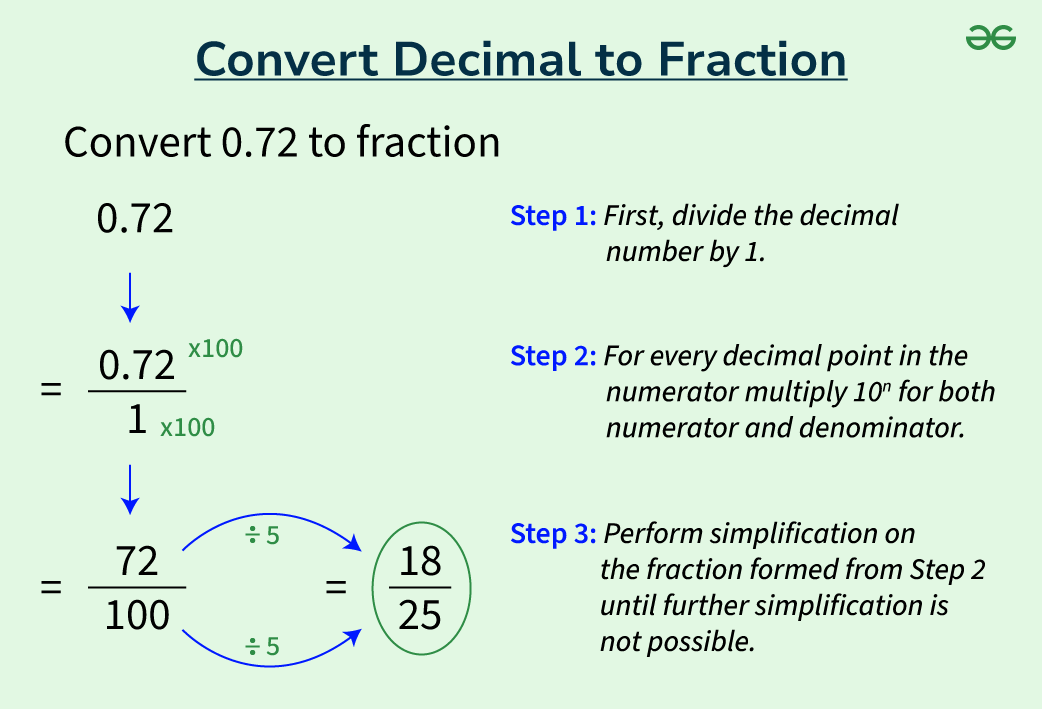
Converting a decimal to a fraction is a linear process of “de-scaling” the number. In finance, this is particularly useful when you need to take a decimal percentage and turn it into a ratio for a legal agreement or a partnership split.
Identifying the Place Value of a Decimal
The first step is to recognize the position of the last digit in your decimal. In financial modeling, we often deal with two or three decimal places (cents or tenths of a cent).
- If the decimal has one place (0.5), it is in the “tenths” place.
- If it has two places (0.75), it is in the “hundredths” place.
- If it has three places (0.125), it is in the “thousandths” place.
This place value determines your starting denominator. For instance, if you are looking at a dividend yield of 0.08, the “8” is in the hundredths place.
Creating the Initial Fraction
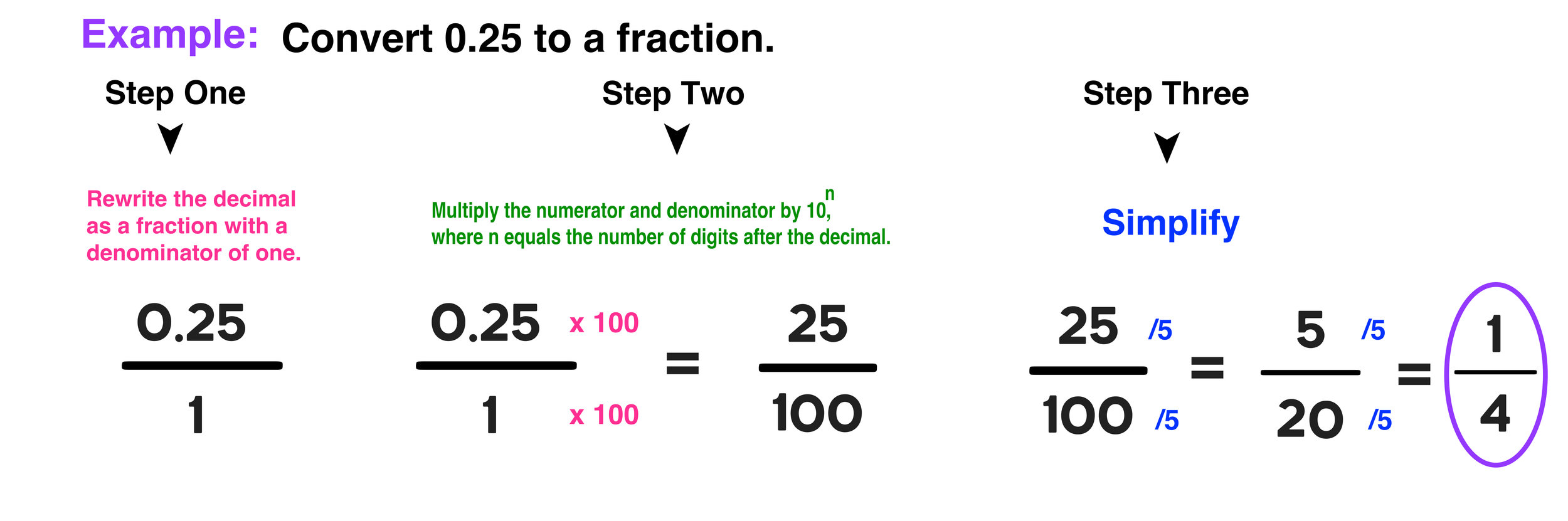
Once the place value is identified, you can remove the decimal point and place the number over the corresponding power of ten.
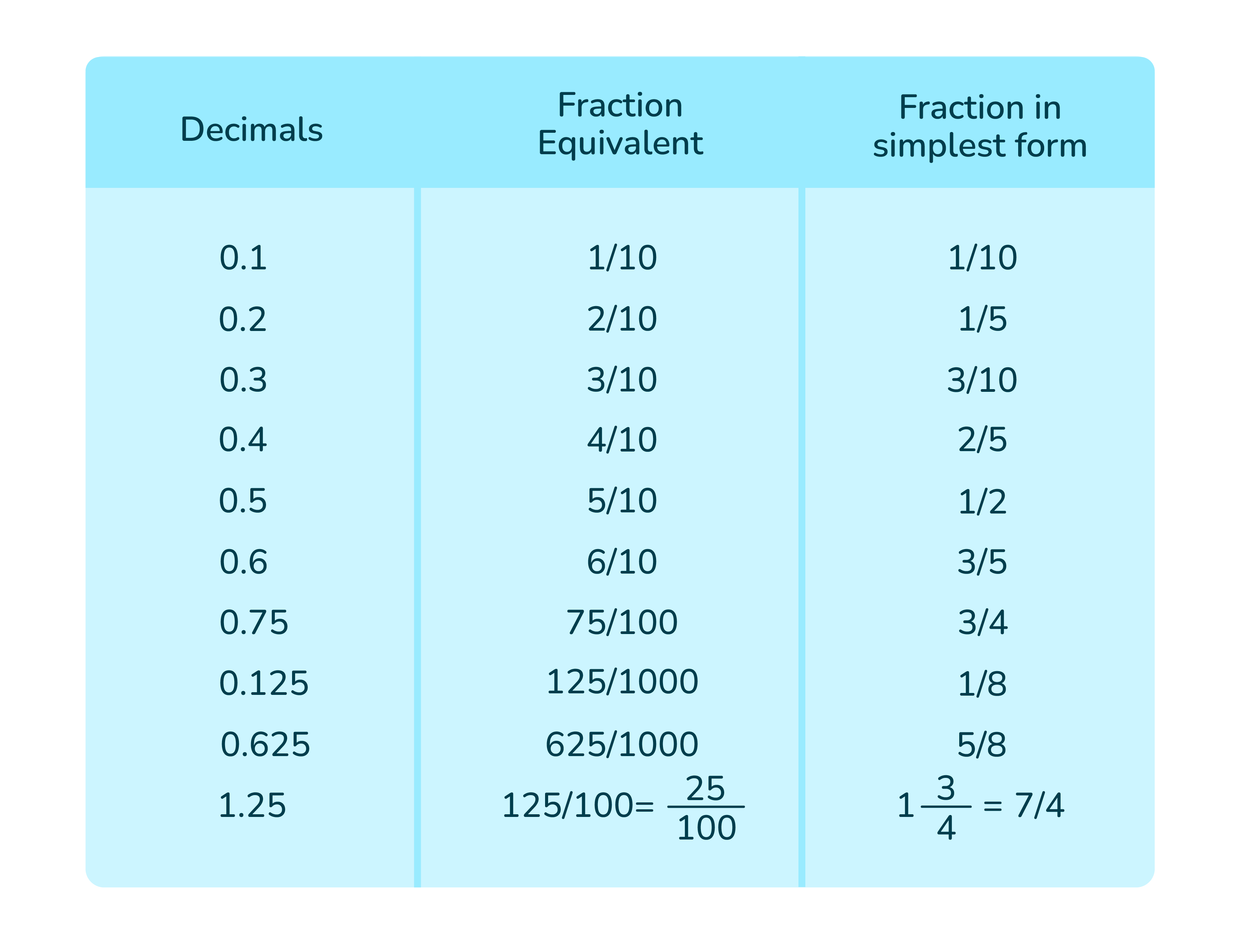
- 0.5 becomes 5/10.
- 0.75 becomes 75/100.
- 0.125 becomes 125/1000.
In a business context, if a partner owns 0.4 of a firm, they effectively own 4/10 of the total equity before the fraction is simplified.
Simplifying to the Lowest Terms
A fraction like 75/100 is accurate, but it isn’t “clean” for a financial report. To simplify, you must find the Greatest Common Divisor (GCD)—the largest number that divides into both the numerator and the denominator.
For 75/100, the GCD is 25.
- 75 ÷ 25 = 3
- 100 ÷ 25 = 4
- Result: 3/4.
Now, instead of saying a project is 0.75 complete, you can state with professional clarity that it is three-quarters finished. This simplification is vital for clear communication in boardrooms and client meetings.
Practical Applications in Personal Finance and Investing
Why does this matter for your wallet? The ability to toggle between these two numerical formats allows for better mental math and a more intuitive grasp of your net worth and investment performance.
Calculating Equity and Ownership Stakes
Imagine you are part of a three-person startup. The cap table shows you own 0.1666… of the company. At first glance, this is just a string of numbers. However, by converting this repeating decimal to a fraction, you realize you own exactly 1/6 of the company.
When it comes to “dilution”—the process of issuing new shares that reduces your percentage—understanding the fractional shift (e.g., going from 1/6 to 1/8) is often more intuitive than tracking the move from 0.166 to 0.125. It helps you visualize exactly how many “shares” or “parts” of the whole you have surrendered in exchange for capital.
Understanding Basis Points and Interest Rate Fluctuations
In the world of bonds and mortgages, we often talk about “Basis Points” (BPS). One basis point is equal to 0.01%, or 0.0001 in decimal form.
If the Federal Reserve raises rates by 50 basis points, that is a 0.50% move. Converting this to a fraction (50/10,000 or 1/200) allows institutional investors to calculate the cost of debt on a massive scale. If you are managing a $10 million loan, knowing that a 50-basis-point move is 1/200th of your principal helps you quickly estimate a $50,000 increase in annual interest expenses.
Analyzing Real Estate Dividends and Cap Rates
Real estate investors often use “Cap Rates” (Capitalization Rates) to evaluate the profitability of a property. If a property has a cap rate of 0.05, it means it returns 5% of its value annually. In fractional terms, that is 1/20. This means that, excluding appreciation and other factors, the property pays for itself in exactly 20 years. This “fractional thinking” (1 divided by the decimal rate) provides an immediate timeline for a Return on Investment (ROI) that a simple decimal does not immediately reveal.
Financial Tools and Tech to Automate the Conversion
While manual conversion is a vital skill, modern financial professionals use tools to ensure 100% accuracy, especially when dealing with complex repeating decimals or irrational numbers.
Using Excel and Google Sheets for Fractional Precision
Both Microsoft Excel and Google Sheets are the industry standards for financial modeling. Often, a spreadsheet will default to decimal formatting. To see the fractional equivalent:
- Select the cell containing your decimal (e.g., 0.125).
- Go to the “Format” menu.
- Select “Number” and then “Fraction.”
- You can choose the type of fraction (up to one, two, or three digits).
This is particularly useful when creating “Quantity” columns for inventory or “Ownership” columns for legal documents, as it ensures the data is presented in the most readable format for stakeholders.
Specialized Investment Calculators
For more complex scenarios, such as converting a decimal “Yield to Maturity” (YTM) on a bond into a fractional ratio, financial calculators like the HP 12C or specialized online tools are used. These tools handle the “heavy lifting” of rounding and significant figures, ensuring that when a decimal is converted, no “lost pennies” occur due to rounding errors—a phenomenon known in finance as “leakage.”
The Psychological Advantage of Fractional Thinking in Budgeting
Beyond the technicalities, there is a psychological benefit to viewing your money through the lens of fractions. In personal budgeting, the “50/30/20 Rule” is a classic example: 1/2 of your income for needs, 3/10 for wants, and 1/5 for savings.
When you look at your monthly bank statement and see that you spent 0.42 of your income on housing, converting that to a fraction (roughly 2/5) creates a more visceral understanding of your spending. You are handing over two out of every five dollars you earn just to keep a roof over your head. This perspective often drives more disciplined financial behavior than simply looking at a decimal percentage.
By mastering the conversion from decimal to fraction, you aren’t just doing math; you are gaining a new dimension of financial clarity. You are moving from merely seeing numbers on a screen to understanding the proportions, ratios, and divisions that define your economic life. Whether you are a seasoned investor or someone just starting their journey toward financial independence, the ability to translate the language of machines into the language of value is a tool that will pay dividends for years to come.
aViewFromTheCave is a participant in the Amazon Services LLC Associates Program, an affiliate advertising program designed to provide a means for sites to earn advertising fees by advertising and linking to Amazon.com. Amazon, the Amazon logo, AmazonSupply, and the AmazonSupply logo are trademarks of Amazon.com, Inc. or its affiliates. As an Amazon Associate we earn affiliate commissions from qualifying purchases.