
In the rapidly evolving landscape of professional services, the integration of Artificial Intelligence (AI) has moved from a speculative future to a current necessity. Among the frontrunners of this digital transformation is Blue J, a legal technology powerhouse that has redefined how tax and legal professionals interact with complex statutes and case law. But what exactly is Blue J Legal AI software? At its core, Blue J is a sophisticated SaaS (Software as a Service) platform that leverages machine learning and generative AI to bring absolute clarity to the law, specifically focusing on the intricacies of tax and employment regulations.

As the legal tech industry shifts from simple database searching to predictive modeling and generative reasoning, Blue J stands out by offering tools that do more than just find information—they interpret it. This article explores the technological architecture, the core functionalities, and the transformative impact of Blue J on the professional landscape.
The Evolution of Legal Technology: Enter Blue J AI
The journey of legal technology has progressed through several distinct phases. The first was digitalization, where physical law libraries were replaced by searchable databases. The second was the era of “boolean” logic, which allowed for more precise searching. Today, we are in the third era: the era of Cognitive Computing and Generative AI. Blue J sits at the pinnacle of this evolution.
From Predictive Analytics to Generative AI
Blue J first gained international recognition for its predictive analytics capabilities. By using machine learning to analyze thousands of past court rulings, the software could predict the likely outcome of a new legal scenario with over 90% accuracy. This was a technological breakthrough; it moved the needle from “research” to “forecast.” However, with the advent of Large Language Models (LLMs), Blue J evolved further. The current iteration of the software combines these predictive roots with advanced generative capabilities, allowing users to interact with legal data through natural language processing.
The Core Mission: Bringing Clarity to the Law
The fundamental technological hurdle in legal work is the “gray area”—the ambiguity found in tax codes and regulatory frameworks. Blue J’s mission is to eliminate this ambiguity. By using structured data and proprietary algorithms, the software parses the logic behind judicial decisions. For a tech-focused professional, this means the software isn’t just a digital library; it is a reasoning engine that mirrors the thought process of a high-level legal expert but operates at the speed of a high-performance processor.
Key Features and Functionalities of Blue J Legal
To understand what Blue J is, one must look at the specific tools it provides to the tech-savvy professional. The platform is divided into modules that handle different aspects of legal and tax analysis, each powered by a unique blend of AI technologies.
AI-Powered Tax Research and Analysis
Tax law is perhaps the most data-dense and rule-heavy sector of the legal world. Blue J’s tax module uses AI to navigate the Internal Revenue Code (IRC) and Treasury Regulations. Unlike a standard search engine that looks for keywords, Blue J understands the hierarchical relationship between different sections of the law. This allows the software to identify relevant precedents that a human researcher might miss due to the sheer volume of documentation.
Predictive Case Outcomes and Decision Support
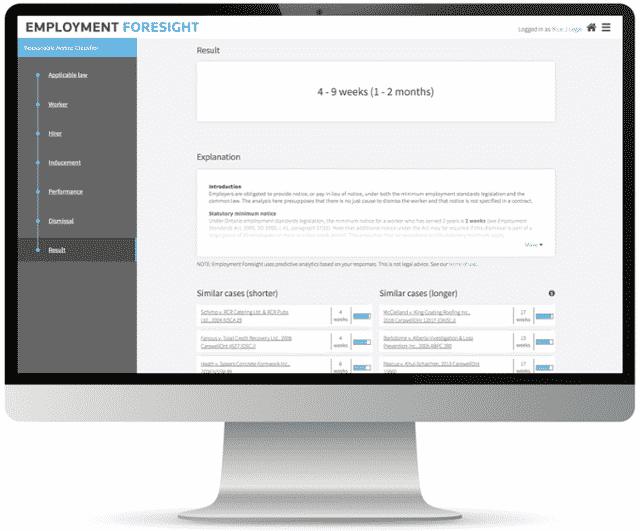
One of the most impressive technical features of Blue J is its “Decision Engines.” These are machine learning models trained on specific legal issues, such as worker classification (employee vs. contractor) or the economic substance doctrine. A user inputs the facts of their specific case—variables such as the level of control or financial risk—and the AI compares these facts against a comprehensive database of past cases. The result is a quantitative breakdown of how a court is likely to rule, providing a data-driven foundation for legal strategy.
Draft and Review with Ask Blue J
The latest addition to the suite is “Ask Blue J,” a generative AI tool specifically designed for the tax and legal domain. While general-purpose AI like ChatGPT often struggles with “hallucinations” (generating false information), Ask Blue J is grounded in a “closed-loop” system. It only draws information from verified legal sources and authoritative databases. This ensures that the technical memos, emails, and summaries it generates are accurate, cited, and reliable for professional use.
The Technological Infrastructure Behind the Platform

The efficacy of Blue J is not accidental; it is the result of a robust technological stack designed to handle the specific requirements of legal data, which demands higher precision than general consumer AI.
Large Language Models (LLMs) Tailored for Tax and Law
While Blue J utilizes the power of foundational LLMs, it applies a layer of “domain-specific fine-tuning.” Legal language is nuanced; words like “consideration” or “stay” have different meanings in a courtroom than in a common conversation. Blue J’s engineers have refined their models to recognize these linguistic nuances, ensuring that the AI’s output aligns with professional standards.
Data Integrity and Hallucination Mitigation
In the tech world, the “Garbage In, Garbage Out” (GIGO) principle is a constant threat. In legal tech, an AI hallucination can lead to catastrophic professional errors. Blue J mitigates this through a technical process known as Retrieval-Augmented Generation (RAG). When a user asks a question, the system first retrieves the most relevant, verified legal documents. It then feeds those documents into the LLM as the sole source of truth to generate the answer. This technical “handcuffing” of the AI to verified facts is what makes it a viable tool for law firms and accounting departments.
Integration with Professional Workflows
Blue J is designed as a cloud-native SaaS platform, emphasizing seamless integration. It features intuitive UI/UX (User Interface/User Experience) that mimics the workflow of a researcher. The software allows for easy export of data, collaborative workspaces where multiple team members can review AI-generated findings, and secure API hooks that allow the tool to sit alongside other enterprise resource planning (ERP) systems.
Transforming the Legal and Tax Professional Landscape
The introduction of Blue J AI is doing more than just speeding up research; it is fundamentally altering the “tech stack” of modern professional firms.
Efficiency Gains and Time-to-Value
The most immediate impact is the reduction of manual labor. Research tasks that previously took 10 to 15 hours can now be completed in a fraction of the time. This “Time-to-Value” (TTV) is a critical metric in tech adoption. By automating the retrieval and initial synthesis of data, Blue J allows professionals to focus on high-level strategy and client advisory roles rather than the rote mechanical process of document review.
Enhanced Accuracy and Risk Management
From a digital security and risk perspective, Blue J provides a layer of consistency that human researchers cannot match. Humans are subject to cognitive biases and fatigue; AI is not. By running a set of facts through Blue J’s predictive engines, a firm can ensure that they haven’t overlooked a niche precedent or a subtle regulatory change. This makes the software an essential tool for “preventative law”—identifying potential legal hurdles before they become active liabilities.
Bridging the Gap Between Information and Insight
The true power of Blue J lies in its ability to convert raw information into actionable insight. Through data visualization tools, the software can map out the “legal landscape,” showing how different jurisdictions interpret the same law. This technical ability to visualize complex data structures helps professionals explain complicated legal positions to stakeholders who may not have a legal background.
The Future of AI in Legal Tech
As we look toward the future of Blue J and the broader legal tech sector, several trends are emerging that will further define the niche.
Continuous Learning and Real-time Regulatory Updates
The law is not static. New rulings are handed down every day, and tax codes are updated annually. The next frontier for Blue J is the move toward “real-time AI.” This involves a continuous delivery pipeline where the software’s knowledge base is updated within hours of a new legislative change or court decision. This requires a sophisticated data ingestion engine capable of parsing and tagging new information at scale.
Ethical Considerations and the Human-in-the-Loop Model
As with any advanced technology, the use of AI in law raises ethical questions. Blue J operates on a “Human-in-the-Loop” (HITL) philosophy. The software is not intended to replace the lawyer or the tax professional; rather, it acts as an “Exoskeleton for the Mind.” The technical design emphasizes transparency, providing citations for every claim the AI makes so that the human professional can verify the source code—in this case, the legal statute.
In conclusion, Blue J Legal AI software is a prime example of how niche-specific AI can outperform general-purpose models. By focusing on the high-stakes, data-rich environments of tax and legal research, Blue J has created a technological ecosystem that enhances accuracy, drives efficiency, and provides a level of predictive clarity that was previously impossible. For the modern professional, Blue J is not just a tool; it is the infrastructure for the future of legal work.
aViewFromTheCave is a participant in the Amazon Services LLC Associates Program, an affiliate advertising program designed to provide a means for sites to earn advertising fees by advertising and linking to Amazon.com. Amazon, the Amazon logo, AmazonSupply, and the AmazonSupply logo are trademarks of Amazon.com, Inc. or its affiliates. As an Amazon Associate we earn affiliate commissions from qualifying purchases.