
In the high-stakes world of business finance, disputes are often viewed as a “sunk cost”—an inevitable drain on resources, time, and focus. Whether it is a disagreement over the valuation of a startup during a Series B round, a conflict regarding an earn-out provision in a merger, or a dispute over licensing fees, the traditional path of litigation or standard arbitration can be prohibitively expensive. However, a specific financial and legal mechanism known as “baseball arbitration” (or final offer arbitration) has emerged as a powerhouse strategy for resolving financial deadlocks with surgical precision and cost-efficiency.

Despite its name, baseball arbitration is far more than a sports-centric novelty. It is a sophisticated game-theory-based approach to dispute resolution that shifts the power dynamics of a negotiation, forcing all parties toward the “rational middle.” For financial officers, investors, and entrepreneurs, understanding this tool is essential for protecting assets and ensuring business continuity.
The Mechanics of Final Offer Arbitration
To understand why baseball arbitration is so effective in a financial context, one must first understand its unique procedural DNA. In traditional arbitration, an arbitrator acts as a judge and jury, often crafting a “split-the-baby” compromise that leaves neither party fully satisfied but provides a middle ground. Baseball arbitration removes this discretionary power from the arbitrator entirely.
The Binary Choice Framework
The core principle of baseball arbitration is simplicity. Both parties in a dispute are required to submit a single, final monetary figure to the arbitrator. After hearing the arguments and reviewing the evidence, the arbitrator is strictly prohibited from choosing a number in between or creating their own valuation. They must choose one of the two submitted figures—and only one.
This “all-or-nothing” framework fundamentally changes the psychology of the negotiation. In a standard financial dispute, parties are incentivized to take extreme positions, hoping that the arbitrator’s eventual compromise will land near their desired target. In baseball arbitration, an extreme or “bad faith” offer is a strategic death sentence. If Party A submits an outrageous valuation and Party B submits a reasonable, market-supported valuation, the arbitrator is virtually guaranteed to pick Party B’s number.
Why Certainty Beats Compromise
From a financial management perspective, the primary benefit of this mechanism is the elimination of the “middle-ground fallacy.” In corporate finance, certainty is often more valuable than the potential for a slightly better but highly unpredictable outcome. By utilizing this binary choice, the parties involved are pressured to conduct rigorous internal audits and market research before submitting their offers. This ensures that the figures presented to the arbitrator are backed by hard data rather than optimistic projections.
Financial Implications for Corporate Strategy
When integrated into corporate strategy, baseball arbitration serves as a risk-mitigation tool that protects a company’s balance sheet from the volatility of prolonged legal battles.
Mitigating the Costs of Litigation
Legal fees in complex financial disputes can easily reach six or seven figures. Traditional litigation involves discovery, depositions, and multiple hearings that can drag on for years. Because baseball arbitration requires a quick submission of final offers and a swift decision by the arbitrator, the “burn rate” of legal expenses is dramatically reduced.
Furthermore, because the parties know the arbitrator must choose one of the two offers, they are much more likely to settle the dispute privately before the arbitration even begins. The mere presence of a baseball arbitration clause in a contract acts as a powerful deterrent against unreasonable demands, effectively acting as a “peacekeeper” in long-term financial partnerships.
Incentivizing Realistic Valuations
One of the greatest challenges in business finance is the “valuation gap”—the difference between what a seller thinks a company is worth and what a buyer is willing to pay. This is particularly prevalent in the tech and pharmaceutical sectors, where intangible assets like intellectual property are difficult to quantify.
By mandating baseball arbitration for future valuation disputes, companies force their financial analysts to be conservative and realistic. If an executive knows that an inflated valuation will result in the arbitrator choosing the buyer’s lower offer, they will naturally gravitate toward a figure that can be defended with logic and market comparables. This creates a culture of financial integrity and reduces the likelihood of “valuation bubbles” within internal corporate accounting.
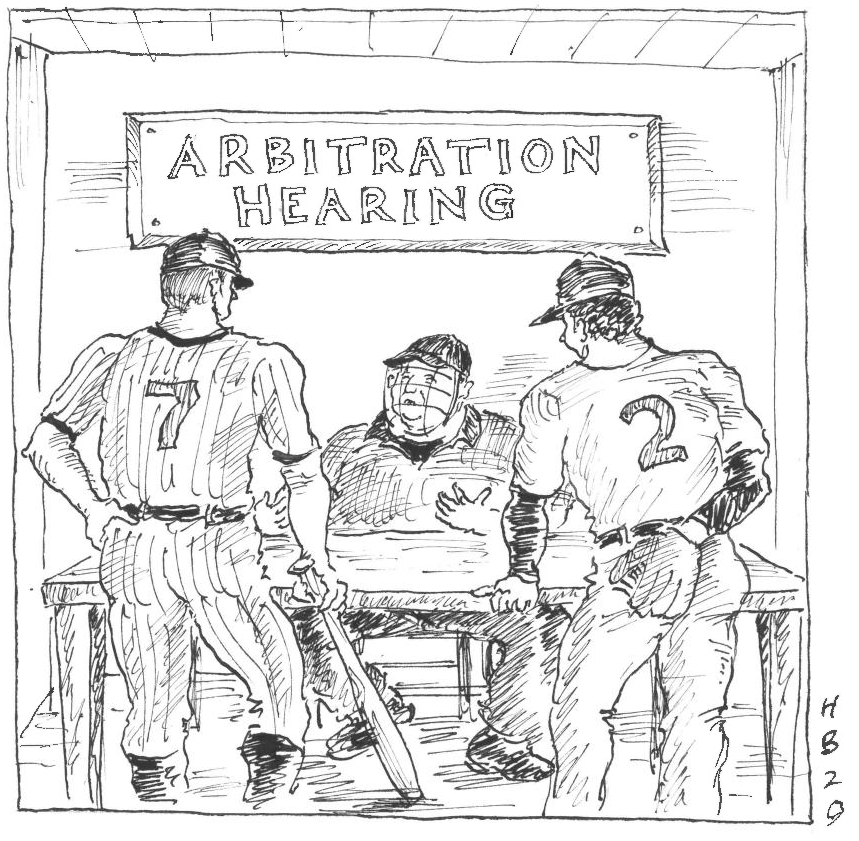
Applications Beyond the Diamond: Modern Business Finance
While its roots are in Major League Baseball salary disputes, the application of this method has expanded into the most complex corners of the global economy.
Mergers, Acquisitions, and Earn-outs
In many M&A transactions, a portion of the purchase price is structured as an “earn-out”—a payment contingent on the acquired company hitting certain financial milestones after the sale. These are notorious for triggering disputes. A former owner might claim the milestones were met, while the new corporate parent might argue that accounting adjustments tell a different story.
Baseball arbitration is the gold standard for resolving earn-out disputes. It prevents the new parent company from lowballing the payment and prevents the former owner from demanding an unjustified windfall. By forcing both sides to submit their “best and final” number based on the audited financials, the dispute is often settled within weeks rather than years.
Resolution in Joint Ventures and Partnerships
Joint ventures often involve complex profit-sharing agreements and capital call requirements. If one partner believes the other is not contributing their fair share of capital or is miscalculating the net present value (NPV) of a project, the partnership can paralyze.
Using baseball arbitration in these scenarios ensures that the joint venture remains operational. Instead of the project stalling due to a deadlock, the parties submit their financial positions, a neutral third party chooses the most reasonable one, and the project moves forward. This is especially critical in capital-intensive industries like infrastructure, energy, and real estate, where delays can result in millions of dollars in lost revenue.
Implementing Baseball Arbitration in Your Financial Agreements
Incorporating this mechanism into a financial strategy requires more than just a passing mention in a contract. It requires careful drafting to ensure that the process remains fair and effective.
Drafting the Arbitration Clause
A well-drafted baseball arbitration clause should specify exactly what the arbitrator is allowed to see. There are two main variations:
- “Standard” Baseball: The arbitrator sees both offers and the supporting evidence before making a choice.
- “Night” Baseball: The arbitrator develops their own valuation without seeing the parties’ offers. After the arbitrator reaches a figure, the parties reveal their offers, and the one closest to the arbitrator’s figure is the one that becomes the binding agreement.
For most business finance applications, “Standard” baseball is preferred because it encourages the parties to show their work and justify their numbers to the arbitrator, which often leads to a pre-arbitration settlement.
Selecting the Right Neutral Party
The success of this process hinges on the expertise of the arbitrator. In a financial dispute, you do not necessarily need a judge; you need a subject-matter expert—perhaps a retired CFO, a senior investment banker, or a specialized forensic accountant. The contract should outline the qualifications required for the arbitrator to ensure that the “most reasonable” offer is chosen based on industry standards rather than a superficial understanding of the numbers.

The Future of Dispute Resolution in Global Finance
As the global economy becomes more digitized and fast-paced, the demand for “lean” legal processes is growing. Baseball arbitration fits perfectly into the modern financial landscape because it rewards transparency, data-driven logic, and reasonableness.
In an era where “time is money” is not just a cliché but a competitive necessity, the ability to resolve a multimillion-dollar valuation dispute in thirty days rather than three years is a significant strategic advantage. For the modern CFO or investor, baseball arbitration is not just a way to settle a fight; it is a financial tool used to enforce discipline, encourage realistic valuations, and protect the bottom line from the unpredictability of the legal system.
By shifting the focus from “winning at all costs” to “being the most reasonable person in the room,” baseball arbitration transforms the nature of business conflict. It turns a potential financial catastrophe into a manageable, predictable, and ultimately rational business process. Whether you are scaling a startup or managing a multinational portfolio, this “final offer” approach is a heavyweight champion in the arena of business finance.
aViewFromTheCave is a participant in the Amazon Services LLC Associates Program, an affiliate advertising program designed to provide a means for sites to earn advertising fees by advertising and linking to Amazon.com. Amazon, the Amazon logo, AmazonSupply, and the AmazonSupply logo are trademarks of Amazon.com, Inc. or its affiliates. As an Amazon Associate we earn affiliate commissions from qualifying purchases.