
In the landscape of modern entrepreneurship, the most lucrative opportunities often hide in plain sight—or more specifically, in the “boring” corners of domestic life. While many investors and side-hustlers chase the volatility of cryptocurrency or the saturated markets of high-tech gadgets, savvy business owners are looking toward the “slow burn” of the home fragrance industry. Central to this specialized market is a small, often overlooked tool: the wick dipper.
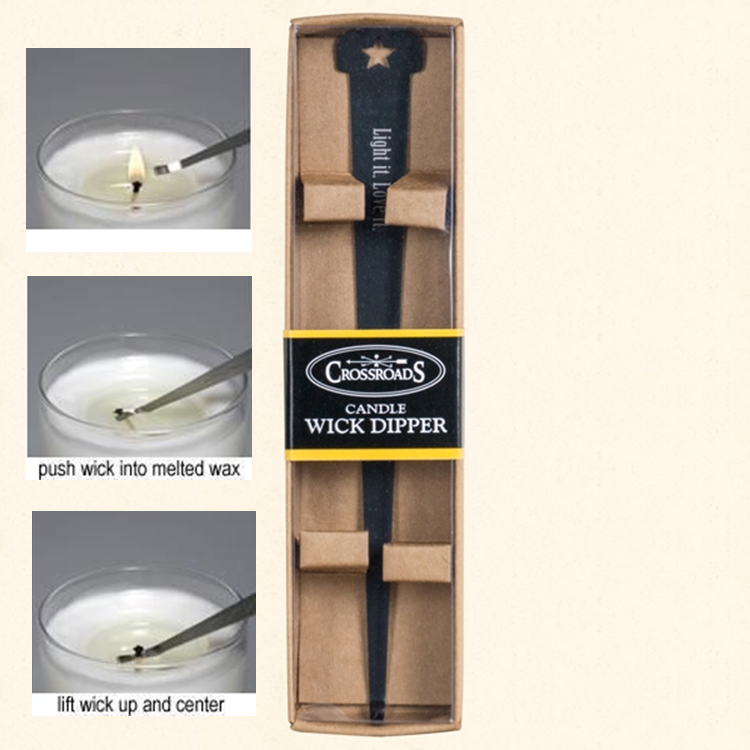
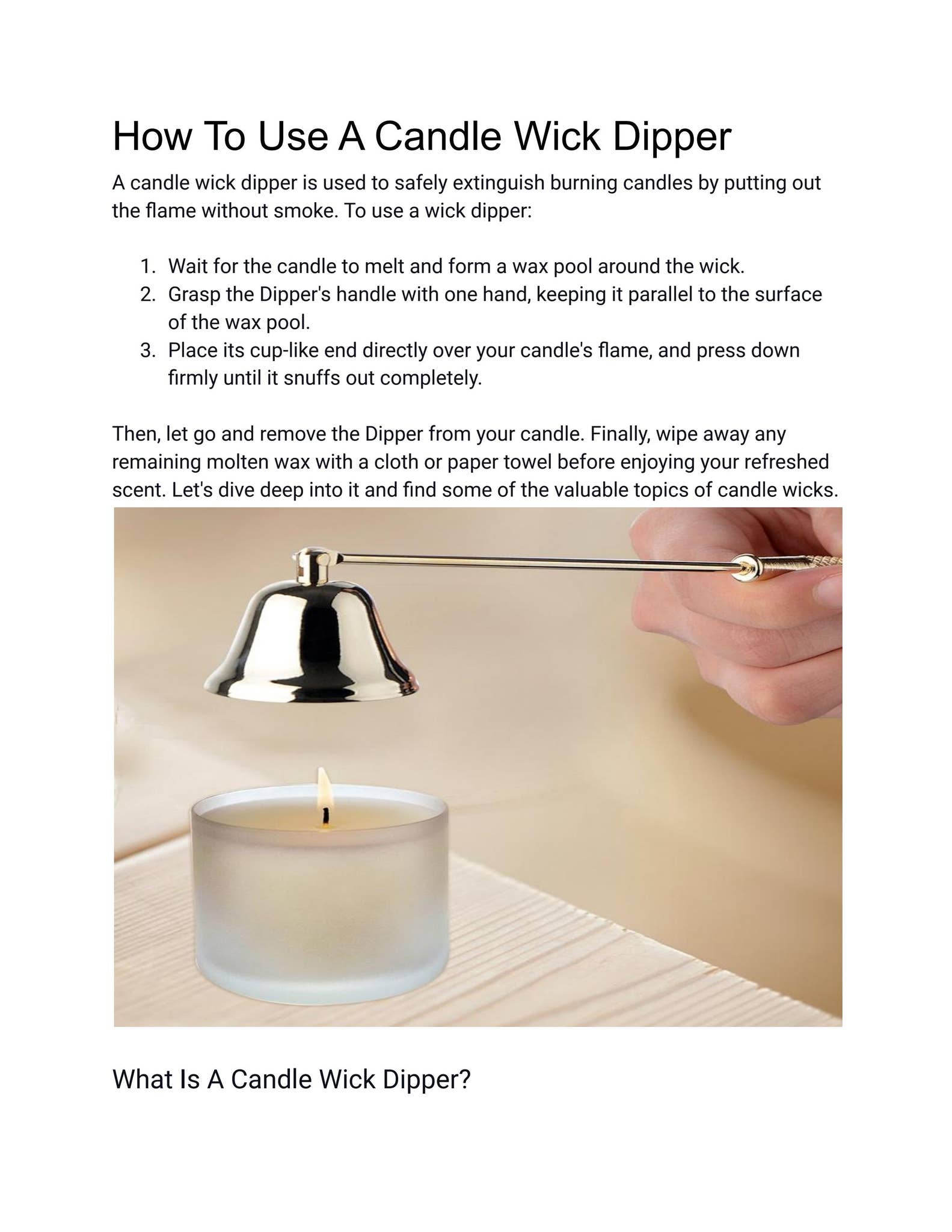
At its surface, a wick dipper is a simple, hook-shaped metal instrument used to extinguish a candle by pushing the lit wick into the pool of melted wax and then lifting it back out. However, from a financial and business strategy perspective, the wick dipper represents a masterclass in niche product positioning, high-margin upselling, and the “premiumization” of the home decor market. To understand what a wick dipper is, we must look beyond its functional utility and analyze its role as a vehicle for wealth generation in the e-commerce sector.

The Economics of the Candle Accessory Market
To understand the financial viability of a tool like the wick dipper, one must first understand the scale of its parent industry. The global scented candle market is projected to reach several billion dollars by the end of the decade. As consumers spend more on premium, artisanal candles—often priced between $30 and $70 per unit—they become increasingly protective of their investment. This “care culture” has birthed a secondary market for accessories.
Market Size and Consumer Psychology
The financial allure of the wick dipper lies in consumer psychology. When a customer purchases a luxury candle, they are not just buying a scent; they are buying an experience. A traditional candle snuffer can cause smoke or soot, which ruins the lingering fragrance and blackens the glass of an expensive jar. The wick dipper solves this “pain point” by providing a smoke-free extinguishment. For a business owner, this creates a classic “problem-solution” marketing funnel. By identifying a minor annoyance in a high-spending demographic, you can position a low-cost tool as an essential premium accessory.
Profit Margins in Metal and Handcrafted Goods
From a manufacturing standpoint, wick dippers are exceptionally cost-effective. Typically made from stainless steel, brass, or wrought iron, the raw material cost per unit is often under $1.00 when sourced in bulk. However, in a retail or e-commerce environment (such as Etsy or a branded Shopify store), these tools regularly retail for $10.00 to $25.00. This represents a gross profit margin that can exceed 900%. When compared to the razor-thin margins found in consumer electronics or competitive apparel, the financial argument for niche home accessories becomes undeniable.
Launching a Wick Dipper Side Hustle: Step-by-Step
For those looking to generate online income, the “candle care” niche offers a lower barrier to entry than most retail sectors. The wick dipper, specifically, is an ideal “entry-level” product because it is lightweight, non-perishable, and inexpensive to ship.
Sourcing vs. Custom Manufacturing
There are two primary financial paths for entering this market. The first is white-label sourcing. Platforms like Alibaba or Global Sources allow entrepreneurs to purchase generic wick dippers in bulk, which can then be branded with custom packaging. This requires low capital investment and allows for quick testing of market demand.
The second path is the “artisanal” route. By partnering with local blacksmiths or metalworkers, a brand can offer hand-forged wick dippers. While the cost per unit is higher, the “Made in the USA” or “Handcrafted” label allows for a significantly higher price point, appealing to the luxury segment of the market where price sensitivity is lower. This strategy focuses on “value-based pricing” rather than “cost-plus pricing.”
Strategic Branding and Packaging
In the “Money” niche, branding is the primary driver of perceived value. A wick dipper sold as a loose piece of metal is a commodity. A wick dipper sold in a gold-foiled, velvet-lined box as part of a “Candle Longevity Kit” is a luxury good. For an online business, the investment should be focused on the digital presentation—high-quality photography, SEO-optimized descriptions focusing on “smoke-free candle care,” and influencer partnerships within the home decor space.
Scaling Your Online Income Through Niche Upselling
The real wealth in the candle accessory business isn’t necessarily made from the single sale of a wick dipper; it is made through the architecture of the “Average Order Value” (AOV). A wick dipper is the perfect “tripwire” product or add-on.
Bundling Strategies for Higher AOV
Financial success in e-commerce is often a game of shipping efficiencies. Shipping a single $12 wick dipper may not be profitable once customer acquisition costs (CAC) and postage are factored in. However, bundling the dipper with a wick trimmer, a bell snuffer, and a tray creates a “Candle Care Set” that can retail for $45 to $60.
By grouping these tools, the business owner amortizes the shipping and marketing costs over a much larger transaction. This is the “McDonald’s Fries” strategy applied to home decor: the candle is the burger (the main draw), and the wick dipper is the high-margin side that rounds out the profit.
Digital Marketing and SEO for Niche Tools
From a financial tool perspective, leveraging SEO for niche keywords like “how to put out a candle without smoke” or “candle wick maintenance” allows a business to capture organic, high-intent traffic without the heavy cost of Pay-Per-Click (PPC) advertising. In the long run, organic traffic provides the highest Return on Investment (ROI). Investing in content that educates the consumer on why they need a wick dipper builds a “moat” around the brand, making it harder for competitors to displace you based on price alone.
Financial Forecasting and Long-term Viability
Before committing capital to this niche, it is essential to look at the long-term financial health of the “candle care” accessory model. Unlike many trend-based products, the demand for home fragrance tools is relatively stable, though it does exhibit specific seasonal patterns.
Navigating Seasonality in the Home Fragrance Industry
The home fragrance market is heavily weighted toward Q4 (October through December). For a business owner, this means that cash flow management is critical. Profits generated during the holiday season must be reinvested or managed to cover the leaner spring and summer months. However, the wick dipper also fits into the “Wedding Favor” and “Corporate Gifting” markets, which can provide a steady stream of B2B (Business to Business) income throughout the year, smoothing out the seasonal revenue spikes.
Overhead Costs and Logistics
One of the most attractive financial aspects of the wick dipper business is the “storage-to-value” ratio. Because the tools are small and durable, you can store thousands of dollars worth of inventory in a small closet or a single pallet at a third-party logistics (3PL) warehouse. This minimizes overhead costs and makes the business highly “lean.” In the world of personal finance and side hustles, a business with low storage costs and no expiration dates is a “low-risk, high-reward” asset.
Conclusion: The Strategic Value of the “Boring” Business
What is a wick dipper? To the casual observer, it is a simple tool. To the entrepreneur, it is a high-margin, low-overhead component of a sophisticated e-commerce strategy. It represents an opportunity to tap into a multi-billion dollar industry by providing a specialized solution to a discerning customer base.
By focusing on niche accessories rather than the main commodity (the candle itself), a business owner can avoid the complexities of fragrance formulation and the high shipping weights of glass and wax. Instead, they can focus on branding, bundling, and high-margin retail. In the pursuit of financial independence and online income, sometimes the most effective path to wealth is not inventing the next big technology, but rather refining the tools of a timeless tradition. The wick dipper is proof that in business, there is often significant money to be made in the smallest details.
aViewFromTheCave is a participant in the Amazon Services LLC Associates Program, an affiliate advertising program designed to provide a means for sites to earn advertising fees by advertising and linking to Amazon.com. Amazon, the Amazon logo, AmazonSupply, and the AmazonSupply logo are trademarks of Amazon.com, Inc. or its affiliates. As an Amazon Associate we earn affiliate commissions from qualifying purchases.