
In the realm of personal finance, the difference between a comfortable retirement and a missed opportunity often lies in the digits to the right of the decimal point or the small numerator atop a fraction. While we are taught the basics of “what is a fraction and decimal” in primary school, their application in the world of money is far from elementary. They represent the architecture of modern markets, the mechanics of interest rates, and the democratization of equity through fractional ownership.
To master your money, you must move beyond whole numbers. Whether you are analyzing a stock’s price-to-earnings ratio, calculating the impact of a 0.25% interest rate hike, or purchasing a sliver of an expensive tech stock, you are operating in a world defined by parts of a whole. This article explores the critical role of fractions and decimals in the financial landscape, providing the insight needed to leverage these mathematical tools for wealth creation.
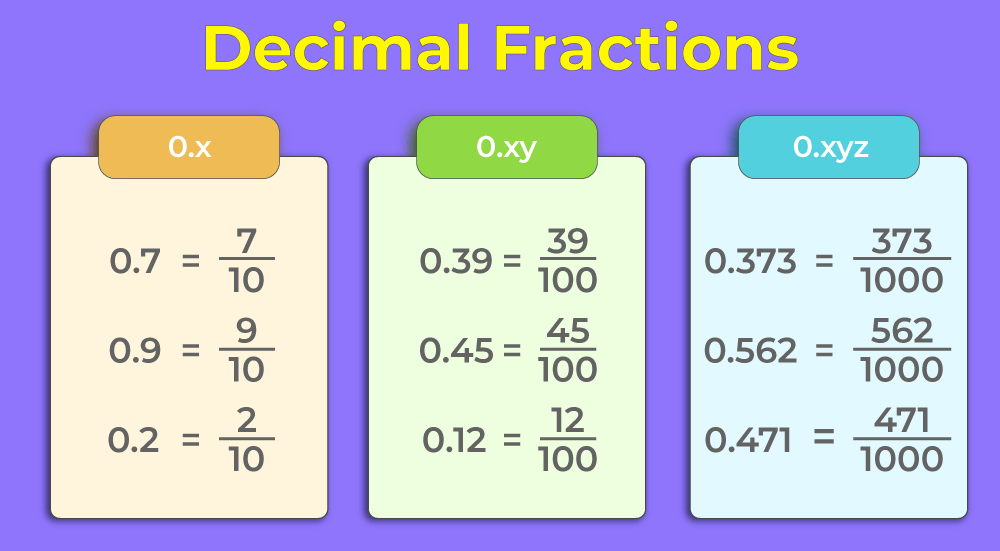
The Core of Financial Literacy: Understanding the Anatomy of Fractions and Decimals
At their most fundamental level, both fractions and decimals are ways to represent values that are not whole. However, in finance, they serve different psychological and functional purposes. Understanding their anatomy is the first step toward high-level financial literacy.
The Rationality of Fractions: Portions of a Whole
A fraction represents a part of a whole, expressed as a numerator over a denominator. In the financial world, fractions are the traditional language of ownership. When you own “shares” in a company, you own a fraction of that entity. Historically, the New York Stock Exchange even quoted stock prices in fractions (like 1/8th or 1/16th of a dollar) until the “decimalization” of the markets in 2001.
Today, we use fractions primarily to understand ratios. A debt-to-income ratio of 1/3 tells a clearer story than its decimal equivalent when planning a household budget. It provides an immediate visual of how much of your “pie” is being consumed by obligations. In partnership agreements, fractions define the “split”—whether it’s a 50/50 venture or a 70/30 distribution of profits.
The Precision of Decimals: The Base-10 Language of Money
Decimals are a way of expressing fractions using a base-10 system, making them the universal standard for currency. Because our global monetary system is decimal-based (100 cents to a dollar, 100 pence to a pound), decimals allow for seamless addition, subtraction, and computer processing of financial transactions.
In investing, decimals provide the precision necessary for high-frequency trading and valuation. When a stock is valued at $150.75, the decimal allows for a granular understanding of market sentiment. More importantly, decimals are the vehicle for expressing percentages. A 5% return is mathematically 0.05. In the world of compound interest, those decimal places determine the trajectory of your net worth over decades.
Fractions in the Modern Market: The Rise of Fractional Share Investing
One of the most significant shifts in the “Money” niche over the last decade has been the move toward fractional share investing. This innovation has fundamentally changed how the average person interacts with the stock market by utilizing the concept of fractions to bypass high entry costs.
Breaking the Barrier to High-Value Equities
In the past, if a single share of a high-performing company like Berkshire Hathaway (Class A) or a major tech giant cost thousands of dollars, a small investor was effectively locked out. They simply didn’t have the “whole” amount required to play.
Enter fractional shares. Modern brokerage platforms now allow investors to buy a fraction of a share—perhaps 1/10th or even 1/1000th of a stock. By using fractions, the “entry price” of an investment becomes irrelevant. You no longer ask, “How many shares can I buy?” but rather, “How much money do I want to allocate?” This shift has democratized the market, allowing someone with $10 to own a piece of the world’s most powerful corporations.
Diversification Through Granular Allocation
Fractions also enable superior diversification. If an investor has $1,000, they might only be able to buy two or three “whole” shares of various companies, leading to a concentrated and risky portfolio. By utilizing fractional units, that same $1,000 can be spread across an ETF or a basket of 50 different stocks. This granular allocation ensures that the “whole” of the portfolio is balanced, reducing the impact of a single company’s volatility. This is the practical application of fractions: dividing a limited resource into optimized segments to mitigate risk.
Decimals as the Language of Debt and Growth: Interest Rates and APY

While fractions define ownership, decimals define growth and the cost of capital. In the world of banking, lending, and credit, the decimal point is the most powerful character on the page.
The Power of the Basis Point
In professional finance, we often talk about “basis points.” A basis point is 1/100th of a percentage point, or 0.0001 in decimal form. While a 0.25% change in an interest rate might seem negligible to a casual observer, to a mortgage holder or a corporate treasurer, that decimal shift represents thousands or even millions of dollars in interest expense over time.
When you compare a high-yield savings account offering 4.1% APY (Annual Percentage Yield) to one offering 4.5% APY, you are looking at a decimal difference of 0.4%. Understanding that this 0.4% is not just a small number, but a 10% increase in your earning power, is the hallmark of a sophisticated financial mind.
Compounding Effects: How Decimals Drive Long-Term Wealth
The magic of compound interest is a decimal game. The formula for compound interest—$A = P(1 + r/n)^{nt}$—relies entirely on the decimal representation of the interest rate ($r$).
Consider the “Rule of 72,” a shortcut to see how long it takes for money to double. If you earn 7% (0.07), your money doubles in about 10.2 years. If you earn 10% (0.10), it doubles in 7.2 years. That small decimal difference—0.03—results in a three-year difference in reaching your financial goals. Over a 30-year career, that small decimal advantage can lead to a portfolio that is hundreds of thousands of dollars larger.
Financial Accuracy: The Role of Fractions and Decimals in Accounting and Taxation
For business owners and freelancers, the mastery of fractions and decimals is not just about investing; it’s about survival. Financial reporting and tax compliance require a level of numerical precision where “close enough” is never sufficient.
Precision in Profit Margins and Ratios
Profitability is often measured in “margins,” which are expressed as percentages or decimals. A gross profit margin of 20% (0.20) means that for every dollar earned, 20 cents are kept after the cost of goods sold. In high-volume businesses, such as retail or manufacturing, a decimal fluctuation of even 1% (0.01) in margins can be the difference between a profitable quarter and a net loss.
Furthermore, lenders use “current ratios” (current assets divided by current liabilities) to determine the health of a business. A ratio of 1.5 indicates a healthy buffer, while a ratio of 0.9 suggests a looming liquidity crisis. These decimals are the “vital signs” of a business, signaling health or distress to investors and creditors alike.
Avoiding Rounding Errors in Tax Compliance
The IRS and other global tax authorities operate on precise figures. While some tax forms allow you to round to the nearest whole dollar, the calculations that lead to those numbers—such as depreciation schedules, capital gains adjustments, and dividend tax rates—are all decimal-heavy.
A “fractional” error in calculating your cost basis for a stock sale can lead to an incorrect tax filing. For instance, if you sold 10.5 shares of a stock, you must account for that 0.5 accurately. In the eyes of the law, decimals represent accountability. Proper bookkeeping ensures that every fraction of a cent is tracked, protecting the business from audits and penalties.
Developing a “Numerical Intuition” for Financial Success
Ultimately, the goal of understanding “what is a fraction and decimal” in a financial context is to develop a “numerical intuition.” This is the ability to look at a financial offer, a stock chart, or a business contract and immediately grasp the underlying value.
Strategic Decision-Making Using Ratios
A sophisticated investor uses fractions to perform “relative value” analysis. They might look at the Gold/Silver ratio (a fraction comparing the price of one to the other) to decide which metal is undervalued. They might look at the “dividend payout ratio” to see what fraction of a company’s earnings is being returned to shareholders versus being reinvested. These ratios provide a perspective that raw, whole numbers cannot.
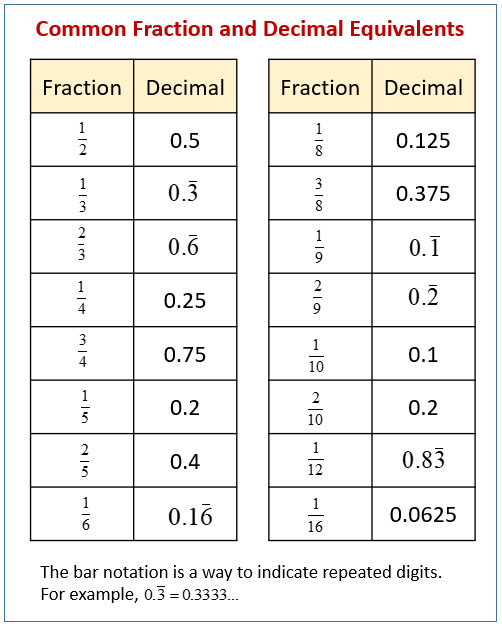
Conclusion: The Bottom Line on Precise Valuation
In the world of money, fractions and decimals are not mere abstractions; they are the tools of precision. They allow us to own pieces of the world’s greatest companies, calculate the long-term impact of our savings, and measure the health of our enterprises.
By embracing the complexity of these numbers, you move from being a passive participant in the economy to an active architect of your financial future. Whether you are calculating a 0.5% management fee on an index fund or buying 0.25 units of a cryptocurrency, remember that in finance, the small numbers carry the heaviest weight. Mastery of the fraction and the decimal is, quite literally, the key to mastering your wealth.
aViewFromTheCave is a participant in the Amazon Services LLC Associates Program, an affiliate advertising program designed to provide a means for sites to earn advertising fees by advertising and linking to Amazon.com. Amazon, the Amazon logo, AmazonSupply, and the AmazonSupply logo are trademarks of Amazon.com, Inc. or its affiliates. As an Amazon Associate we earn affiliate commissions from qualifying purchases.