
In an era dominated by global retail conglomerates and venture-capital-backed delivery apps, the food cooperative (co-op) stands as a resilient, alternative financial model. While the average consumer may view a food co-op simply as a place to buy organic produce, from a financial and business perspective, it represents a sophisticated structure of decentralized ownership and wealth distribution. For those interested in personal finance, community investment, and sustainable business models, understanding the mechanics of food co-ops is essential.
The Financial Architecture of the Cooperative Model
At its core, a food co-op is a business corporation that is owned and democratically controlled by the people who use its services. Unlike traditional retail giants such as Walmart or Amazon, where the primary objective is to maximize shareholder value, the financial objective of a food co-op is to provide value to its member-owners while ensuring the long-term solvency of the organization.

Member-Ownership and Equity Capital
The financial lifecycle of a co-op begins with the “share.” To become a member-owner, an individual typically pays a one-time equity investment or an annual fee. This capital is not a “sunk cost” like a membership fee at a warehouse club; rather, it is a form of equity. This pooled capital provides the co-op with the necessary liquidity to secure leases, purchase inventory, and pay staff without relying solely on high-interest commercial loans. From a business finance perspective, this is a form of “patient capital”—funding provided by stakeholders who are more interested in the service’s existence than in immediate, high-percent returns on investment.
Patronage Refunds and Profit Allocation
One of the most distinct financial features of a co-op is the patronage refund. At the end of a fiscal year, if the co-op has generated a surplus (profit), the board of directors decides how to allocate those funds. A portion is usually reinvested into the business for infrastructure or emergency reserves. The remainder, however, is returned to the member-owners in proportion to how much they spent at the store. This effectively lowers the cost of living for the members, acting as a retroactive discount and keeping wealth within the local ecosystem rather than siphoning it off to distant shareholders.
Food Co-ops as a Personal Finance Strategy
For the individual consumer, engaging with a food co-op is a strategic move in personal finance. While there is a common misconception that co-ops are inherently more expensive, a closer look at the “unit price” and long-term benefits reveals a different story.
The Economics of Bulk Purchasing and Direct Sourcing
Co-ops often leverage “Collective Buying Power.” By aggregating the demand of hundreds or thousands of members, the co-op can negotiate better rates with local farmers and wholesalers. Furthermore, co-ops frequently prioritize bulk bins—items sold without expensive branding and packaging. For the budget-conscious consumer, buying staples like grains, spices, and oils in bulk can lead to a 20-30% reduction in grocery expenses compared to pre-packaged premium brands at conventional supermarkets.
The “Work-for-Discount” Financial Incentive
Many traditional food co-ops utilize a “member-labor” model. In exchange for a few hours of work per month—stocking shelves, cleaning, or administrative tasks—members receive a significant percentage discount on their purchases (often ranging from 10% to 25%). In terms of “side hustle” economics, this can be viewed as an tax-free return on labor. For a household spending $600 a month on groceries, a 20% discount is equivalent to a $120 monthly dividend, which often outweighs the hourly rate of a low-level part-time job when taxes are factored in.
The Business Case: Resilience and the Local Multiplier Effect

From a macro-economic standpoint, food co-ops serve as anchors for local financial stability. They operate on the principle of the “Local Multiplier Effect,” which suggests that a dollar spent at a locally owned business circulates through the community much more frequently than a dollar spent at a national chain.
Wealth Retention and the Circular Economy
When a consumer spends money at a corporate retail chain, a significant portion of that revenue immediately leaves the community to pay for corporate overhead, national advertising, and executive bonuses. In contrast, food co-ops prioritize local procurement. By sourcing products from regional farmers and vendors, the co-op ensures that its expenditures become the income of other local businesses. This creates a circular economy where the “money” stays within a specific geographic radius, supporting local jobs and tax bases.
Social Capital as a Business Asset
In traditional business finance, “goodwill” is an intangible asset on the balance sheet. In a co-op, this is magnified through “Social Capital.” Because the customers are also the owners, the business enjoys an incredibly high level of brand loyalty. During economic downturns or supply chain disruptions, co-op members are more likely to support their store even if prices fluctuate, because they have a vested interest in the store’s survival. This reduces marketing costs and provides a financial cushion that traditional retailers lack.
Investing in the Cooperative Movement
For the sophisticated investor, the co-op movement offers avenues for “Impact Investing”—placing capital where it can achieve social good alongside a financial return.
Community Bonds and Preferred Shares
When a co-op needs to expand or open a new location, it often bypasses traditional banks in favor of “Member Loans” or “Preferred Shares.” Member-owners can lend the co-op money at a fixed interest rate (often 2% to 5%). For the investor, this offers a way to diversify a portfolio with a tangible, local asset. While these investments are not as liquid as stocks traded on the NYSE, they provide a steady yield and the transparency of knowing exactly how the capital is being deployed.
Risk Management and Financial Sustainability
Like any business, co-ops face financial risks, including mismanagement, shifting consumer habits, and thin margins. However, the democratic governance model acts as a unique risk-mitigation tool. Because the board of directors is elected by the members, there is a high level of accountability regarding financial audits and transparency. If a co-op is underperforming, the “owners” (the customers) are the first to know, and they have the collective power to pivot the business strategy, adjust pricing, or launch a capital campaign to stabilize the books.
The Future of Collaborative Finance in Retail
As the global economy becomes increasingly volatile, the food co-op model offers a blueprint for a more stable and equitable financial future. It challenges the “extractive” nature of modern retail by proving that a business can be both profitable and community-centric.
Scalability and Digital Integration
The next frontier for the economics of food co-ops is digital integration. New software platforms are allowing co-ops to streamline their inventory management and offer online ordering, reducing the overhead costs that traditionally made co-ops less competitive on price. By adopting “FinTech” solutions, co-ops are finding ways to maintain their democratic roots while operating with the efficiency of a modern tech-driven enterprise.
Conclusion: A Strategic Asset for the Modern Economy
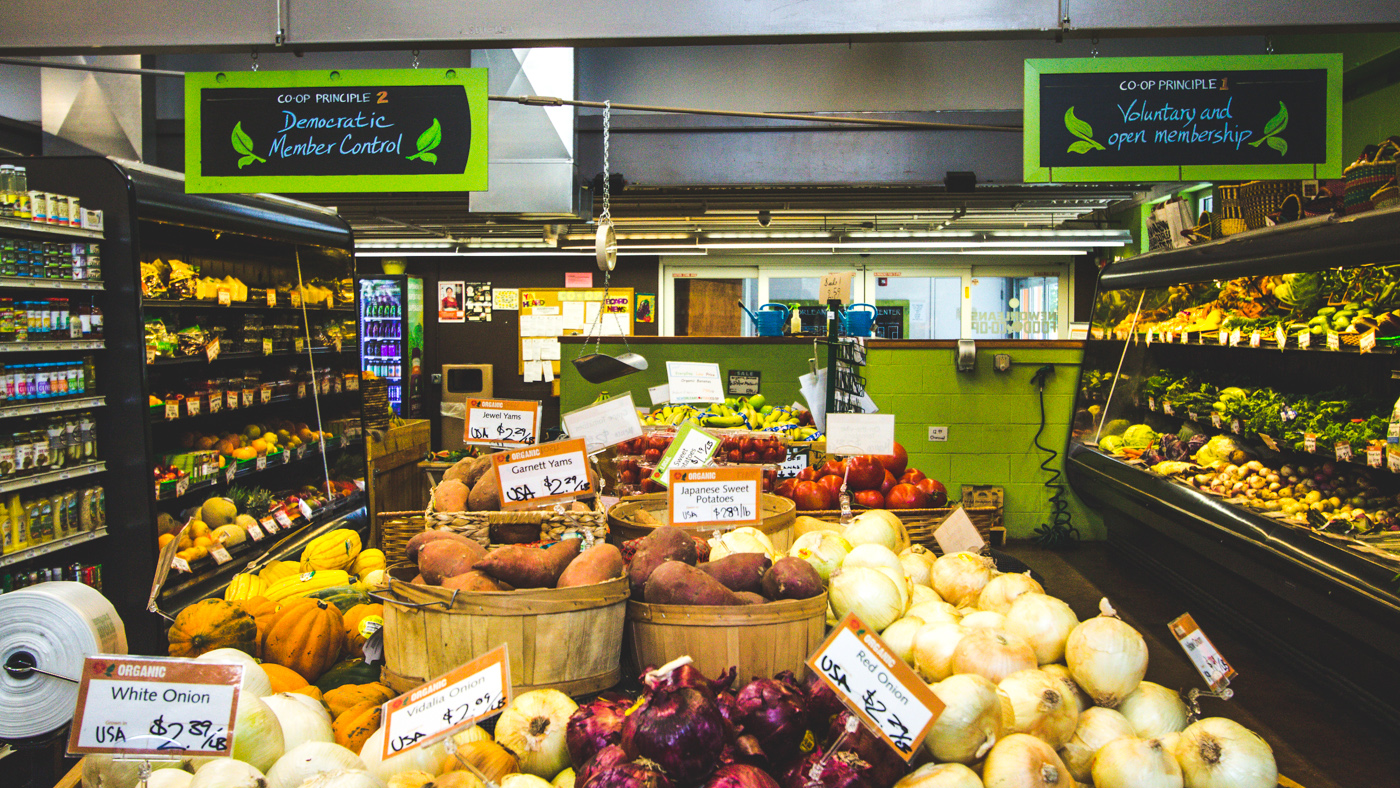
What are food co-ops? Beyond the aisles of fresh produce, they are engines of local wealth creation and laboratories for democratic finance. For the individual, they offer a way to optimize personal spending and earn “dividends” on everyday necessities. For the community, they represent a firewall against economic leakage. By shifting the focus from “profit for the few” to “value for the many,” food co-ops demonstrate that the most sustainable way to manage money is to share the ownership of the systems that sustain us. In the portfolio of a community-minded individual, a co-op membership is perhaps one of the most undervalued financial assets available today.
aViewFromTheCave is a participant in the Amazon Services LLC Associates Program, an affiliate advertising program designed to provide a means for sites to earn advertising fees by advertising and linking to Amazon.com. Amazon, the Amazon logo, AmazonSupply, and the AmazonSupply logo are trademarks of Amazon.com, Inc. or its affiliates. As an Amazon Associate we earn affiliate commissions from qualifying purchases.