
In the landscape of modern healthcare, the transition from a Registered Nurse (RN) to a Nurse Practitioner (NP) is often framed as a clinical evolution—a shift from bedside care to diagnostic authority. However, for the professional looking at their career through the lens of a long-term financial strategy, this shift represents a significant capital investment. Understanding the difference between a nurse and a nurse practitioner requires more than a look at their daily duties; it requires a rigorous analysis of earning potential, educational debt-to-income ratios, and the entrepreneurial opportunities that come with advanced practice.

When we strip away the clinical terminology, we are looking at two different economic tiers within the healthcare industry. This article analyzes the financial divergence between these roles, providing a roadmap for those evaluating whether the “NP” suffix is a sound fiscal move.
The Initial Investment: Analyzing the Cost of Education and Opportunity
Every professional advancement begins with a capital outlay. In the case of moving from a nurse to a nurse practitioner, the primary investment is educational. While a Registered Nurse typically enters the workforce with an Associate Degree in Nursing (ADN) or a Bachelor of Science in Nursing (BSN), a Nurse Practitioner must pursue a Master of Science in Nursing (MSN) or a Doctor of Nursing Practice (DNP).
Undergraduate vs. Graduate Tuition: A Comparative Look
The cost of becoming an RN is relatively modest compared to other professional degrees. A BSN can range from $40,000 to $100,000 depending on the institution. In contrast, an MSN program often adds an additional $30,000 to $70,000 to that total, while a DNP can push the total educational debt well north of $150,000. From a “Money” perspective, the NP degree is a high-cost asset that demands a high rate of return to justify its acquisition.
The Hidden Costs: Licensing, Board Certifications, and Continuing Education
Beyond tuition, the financial burden includes the “cost of doing business.” Nurse Practitioners face higher licensing fees and the necessity of national board certification through bodies like the AANP or ANCC. Furthermore, the cost of Continuing Medical Education (CME) is often higher for NPs, who must maintain a broader scope of knowledge to satisfy prescriptive authority requirements and state mandates.
Opportunity Cost: Income Foregone During Advanced Study
Perhaps the most overlooked financial factor is the opportunity cost. If a nurse leaves full-time bedside work to pursue a full-time NP program over two to three years, they are not just paying tuition; they are losing $70,000 to $90,000 in annual salary. This “lost income” must be factored into the total investment cost. For many, the hybrid approach—working as an RN while studying—is the only way to mitigate this financial drain, though it often extends the duration of the “low-income” phase of their career.
Income Trajectories and Earning Potential
Once the investment phase is complete, the focus shifts to the “yield.” The most immediate difference between a nurse and a nurse practitioner is the baseline salary. According to data from the Bureau of Labor Statistics (BLS), the median annual wage for Registered Nurses hovers around $81,000, whereas Nurse Practitioners command a median wage of approximately $121,000.
Base Salary Comparison: RN vs. NP Benchmarks
This $40,000 annual delta is the primary driver for the transition. Over a twenty-year career, an NP can expect to earn roughly $800,000 to $1,000,000 more than an RN in base salary alone. However, the financial story doesn’t end at the base pay. The “Money” niche recognizes that wealth is built on the margin, and the NP role offers significant marginal advantages.
Geographic Arbitrage and Specialization Premia
Just as in the world of finance or tech, location and specialization dictate income. A nurse practitioner specializing in Psychiatric Mental Health (PMHNP) or Neonatology often sees a “specialization premium,” with salaries frequently exceeding $150,000 in high-demand markets. Furthermore, NPs have greater flexibility for “geographic arbitrage”—moving to states with a lower cost of living but high demand for primary care providers, thereby increasing their discretionary income.
Overtime Pay vs. Salary Stability
One interesting financial nuance is the structure of payment. Most RNs are hourly employees, meaning their high-earning years are often the result of grueling overtime shifts. Nurse Practitioners, conversely, are typically salaried professionals. While this provides income stability, it can sometimes mean that a highly motivated RN working 60 hours a week might out-earn a standard-hour NP. However, from a sustainable wealth-building perspective, the higher hourly “effective rate” of the NP is the superior financial position.

Career Equity and Long-term Wealth Building
When evaluating a career move, one must look beyond the monthly paycheck to “career equity”—the total value of one’s professional standing and its ability to generate wealth over time.
Retirement Contributions and Employer Matching
Higher base salaries for Nurse Practitioners lead to larger employer contributions in 401(k) or 403(b) plans. If an employer matches 5% of a salary, the match for an NP earning $125,000 is significantly more impactful over 30 years than the match for an RN earning $80,000. Due to the power of compound interest, the NP’s higher salary scales their retirement wealth at an exponential rate compared to the RN.
The “Break-Even” Point: When Does the NP Degree Pay Off?
In personal finance, the “break-even point” is the moment an investment pays for itself. For an RN-to-NP transition, this usually occurs between year five and year eight of practice. This calculation includes the repayment of student loans and the recouping of lost wages during the study period. For those entering the NP field in their 20s or 30s, the long-term ROI is massive. For those closer to retirement, the financial math becomes tighter, requiring a more strategic approach to education costs.
Tax Strategy and Professional Deductions
Nurse Practitioners often operate as “1099” independent contractors, especially in locum tenens (traveling) roles. This opens the door to sophisticated tax strategies that are generally unavailable to W-2 bedside nurses. Business expense deductions, home office credits, and specialized retirement accounts like SEP-IRAs allow NPs to keep a larger percentage of what they earn, effectively widening the wealth gap between the two roles.
The Entrepreneurial Edge: Nurse Practitioners as Business Owners
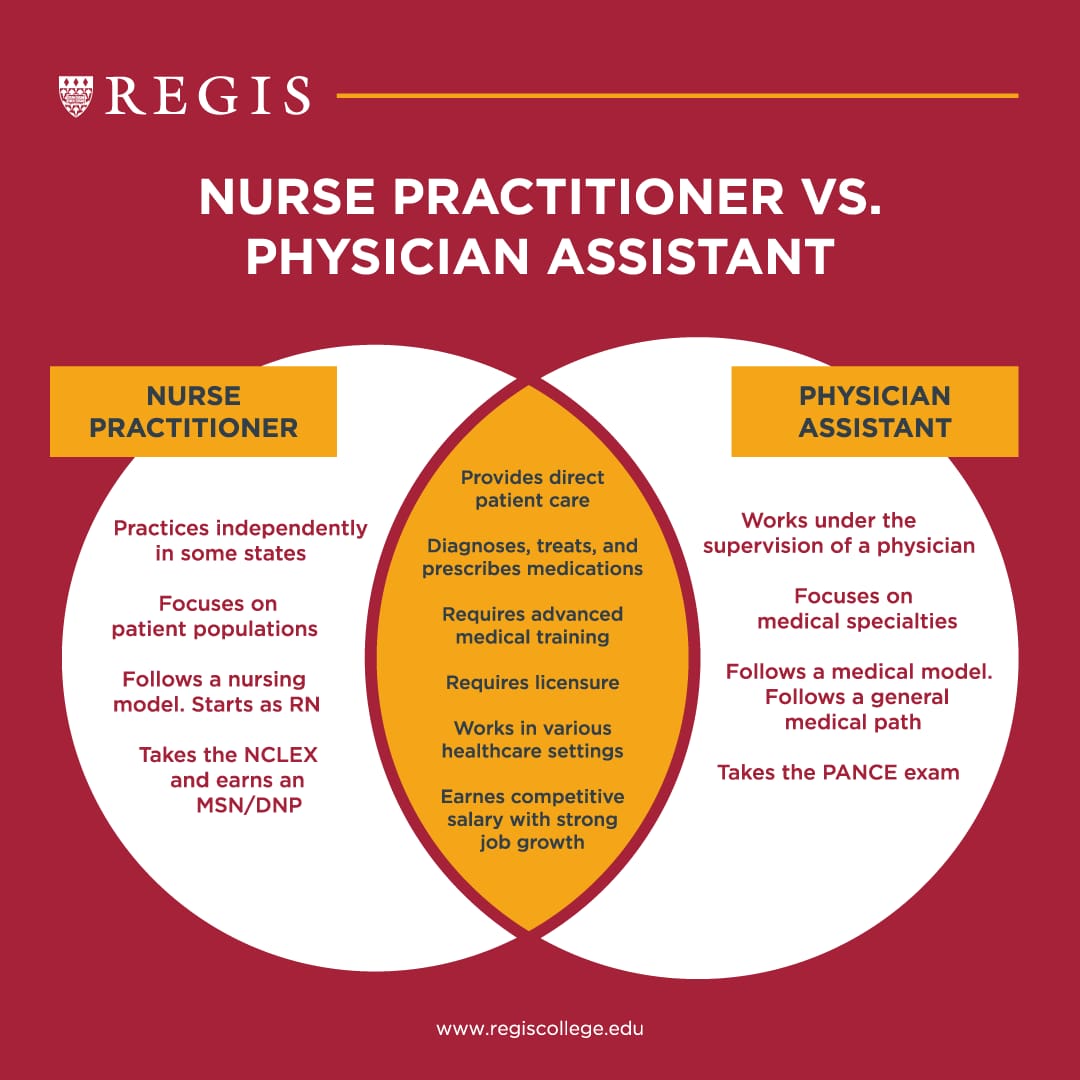
The most profound “Money” difference between a nurse and a nurse practitioner lies in the legal ability to own the means of production. In many states (Full Practice Authority states), Nurse Practitioners can open their own private practices without the supervision of a physician.
Private Practice vs. Institutional Employment
An RN is almost always an employee of a system. Their income is capped by the hospital’s budget. A Nurse Practitioner, however, can transition from an employee to a business owner. By opening a specialized clinic—be it in aesthetics, primary care, or mental health—an NP moves from selling their time to building a scalable business. In this scenario, the income potential is no longer tied to a salary cap but to the profitability of the enterprise.
Revenue Streams and Scalability in Healthcare Entrepreneurship
Successful NP entrepreneurs often diversify their income. They might combine patient care with telemedicine, consulting for med-tech firms, or even legal nurse consulting. This diversification is a classic wealth-building strategy. While a nurse is largely limited to “trading hours for dollars,” a nurse practitioner has the credentials to build a brand, hire other providers, and generate passive or semi-passive income through a clinical business model.
Risk Management and Insurance Costs
Of course, with higher income and ownership comes higher risk. NPs must carry professional liability insurance (malpractice), which is a significant annual expense that RNs typically do not bear personally. However, in the context of a business owner, these are deductible expenses that form part of a robust financial ecosystem. The transition from nurse to nurse practitioner is, in essence, a transition from a labor-based income to an asset-based income.
Conclusion: Making the Financial Decision
The difference between a nurse and a nurse practitioner is not just a matter of “more responsibility”; it is a fundamental shift in one’s financial trajectory. While the RN path offers lower entry costs and immediate earning potential, the NP path offers a higher ceiling, better long-term ROI, and the unique opportunity for healthcare entrepreneurship.
For the individual focused on wealth accumulation, the decision to move from RN to NP should be treated as a business merger. You are merging your current clinical skills with a new set of high-value credentials. If managed with an eye toward minimizing debt, maximizing specialization, and exploring ownership models, the transition to Nurse Practitioner remains one of the most reliable “Money” moves in the modern economy. It is a path that transforms a stable job into a powerful engine for long-term financial independence.
aViewFromTheCave is a participant in the Amazon Services LLC Associates Program, an affiliate advertising program designed to provide a means for sites to earn advertising fees by advertising and linking to Amazon.com. Amazon, the Amazon logo, AmazonSupply, and the AmazonSupply logo are trademarks of Amazon.com, Inc. or its affiliates. As an Amazon Associate we earn affiliate commissions from qualifying purchases.