
The modern consumer landscape has been fundamentally reshaped by the “Amazon Effect,” a phenomenon where the expectation for rapid, precise, and transparent delivery has become the industry standard. At the heart of this expectation is a simple yet frequent question: What time does Amazon normally deliver? While the short answer is generally between 6:00 AM and 10:00 PM local time, the technological infrastructure that dictates these windows is a masterclass in data science, geospatial engineering, and algorithmic efficiency.
To understand Amazon’s delivery schedule is to understand one of the most sophisticated tech stacks in the world. It is not merely a matter of a driver following a paper map; it is a synchronized ballet of cloud computing, predictive analytics, and real-time IoT (Internet of Things) integration.
The Technological Infrastructure Behind Amazon’s Delivery Schedule
Amazon does not leave its delivery windows to chance. Every package that leaves a fulfillment center is part of a massive data-driven ecosystem designed to minimize “The Last Mile” friction—the most expensive and complex part of the supply chain.
Route Optimization Algorithms and Machine Learning
The specific time your package arrives is determined by proprietary route optimization software. Unlike traditional delivery services that might rely on static routes, Amazon utilizes dynamic routing. These algorithms process millions of data points every second, including historical traffic patterns, real-time road closures, weather conditions, and even the number of left-hand turns a driver must make (which are statistically more time-consuming and prone to accidents).
Machine learning models analyze previous delivery data to predict how long a driver will spend at a specific apartment complex versus a suburban cul-de-sac. If the data shows that a high-rise building takes an average of 12 minutes for a drop-off due to elevator wait times, the AI adjusts the rest of the day’s schedule accordingly to ensure the 10:00 PM cutoff is met.
The Role of Geospatial Data in Estimated Delivery Windows
Geospatial technology is the backbone of the “Map Tracking” feature seen in the Amazon app. By utilizing high-resolution GPS data and telematics, Amazon’s central logistics hub can monitor the exact coordinates of every van in its fleet (Amazon Logistics or AMZL).
This tech allows for the “10 stops away” notification. This isn’t just an estimate; it is a live calculation of the driver’s velocity and the spatial density of the remaining deliveries. The “normal” delivery time for a customer is often a reflection of their geographic “node” within a delivery cluster. If you are located near the beginning of a cluster’s geofence, you will consistently see 8:00 AM deliveries; if you are at the periphery, you may be a consistent 8:00 PM recipient.
Understanding Delivery Tiers and Digital Tracking Systems
The time of day your package arrives is also heavily influenced by the software-driven prioritization of the shipment. Amazon’s digital ecosystem categorizes packages based on urgency, subscription status, and the specific logistics “lane” they occupy.
Prime vs. Standard: How Software Prioritizes Shipments
Amazon Prime is more than a membership; it is a priority flag in the logistics database. The “Day One” philosophy extends to how the Warehouse Management System (WMS) sorts packages. Prime orders are often funneled into “Wave Picks,” where robots (Amazon Robotics) prioritize these items to ensure they reach the outbound docks for the earliest possible delivery cycles.
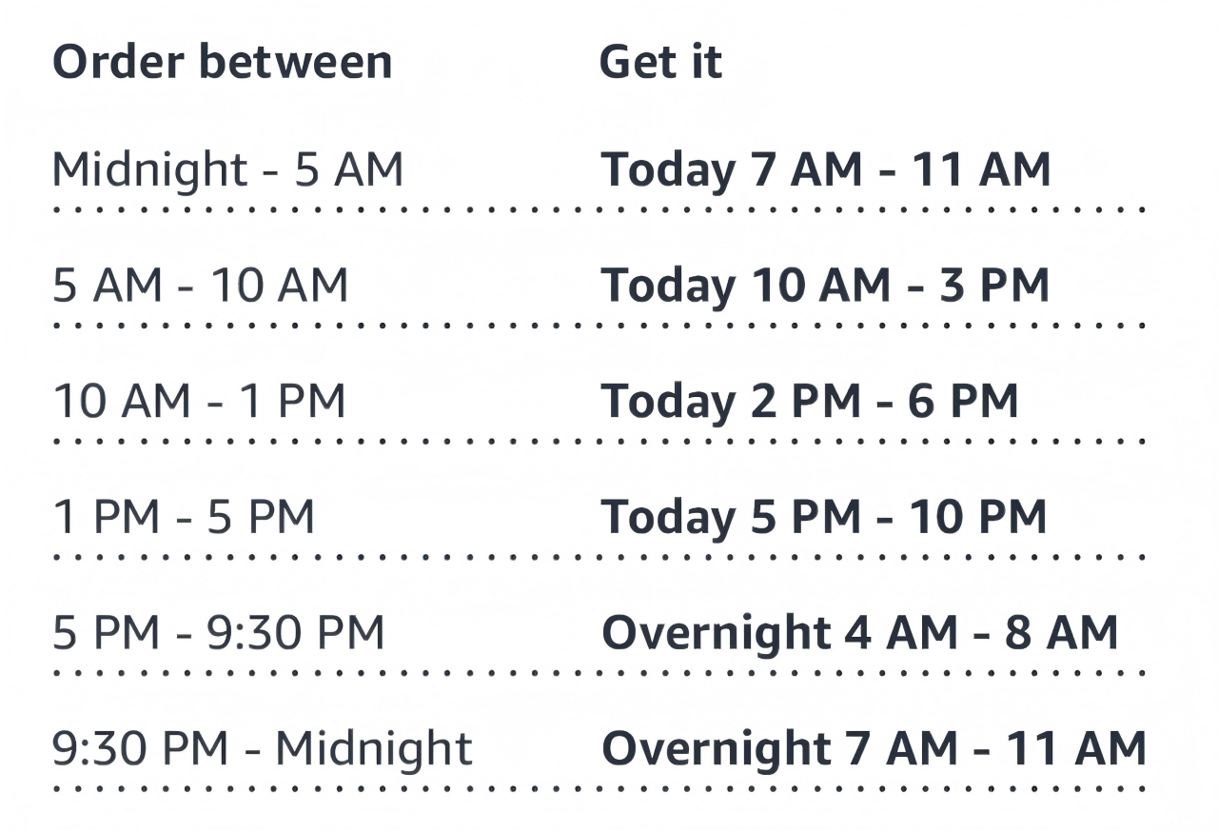
For “Same-Day Delivery” or “Overnight” options, the tech stack shifts. These orders are often processed through smaller, urban “Sub-Same-Day” (SSD) facilities. Because these facilities are located closer to city centers, the delivery windows are much tighter—often occurring in four-hour blocks (e.g., 4:00 AM to 8:00 AM). The tech required to manage this—balancing inventory in small spaces based on predictive local demand—is one of Amazon’s greatest competitive advantages.
Real-Time Map Tracking and the “Share Your Delivery” Feature
One of the most significant tech updates in recent years is the integration of real-time visibility for the end-user. Through the Amazon app, customers can see exactly where their package is once the driver is within a certain radius.

This transparency is powered by an API that bridges the driver’s handheld Rabbit device (the proprietary Android-based tool used by drivers) and the customer’s interface. This system provides more than just peace of mind; it reduces “failed delivery attempts” by ensuring customers are home for packages that require signatures, thereby optimizing the fleet’s overall efficiency and ensuring the “normal” delivery window isn’t pushed back by avoidable delays.
Factors Influencing Your Delivery Window: Data-Driven Insights
While the algorithms strive for consistency, several variables can shift your delivery from a morning slot to an evening slot. Amazon uses predictive analytics to mitigate these factors, but they remain a part of the logistical equation.
Proximity to Fulfillment Centers and Sorting Facilities
The physical architecture of the internet of things plays a role here. Amazon’s “Middle Mile” technology tracks packages as they move from massive fulfillment centers to smaller sorting centers. If you live within a 10-mile radius of a sorting center, your “normal” delivery time is likely to be earlier in the day because your package is among the first to be loaded onto a Delivery Service Partner (DSP) van.
Amazon’s software also uses “Anticipatory Shipping”—a patented technology that allows them to move inventory to local hubs before a customer even hits the buy button. By predicting what a neighborhood will buy based on historical trends, they can ensure that items are ready for early-morning delivery cycles, effectively shortening the time between the digital click and the physical doorbell.
Seasonal Demand and Predictive Analytics for Peak Performance
During events like Prime Day or the Q4 holiday season, the “normal” delivery window can expand. Amazon’s tech infrastructure scales up during these periods using AWS (Amazon Web Services) to handle the massive influx of tracking requests and routing calculations.
During peak seasons, the AI might shift a customer’s usual morning delivery to the evening to accommodate “Dynamic Infill.” This is where the system adds stops to an existing route to maximize the capacity of every van. The software calculates whether it is more energy-efficient (and cost-effective) to send two vans to the same neighborhood at different times or one van with a longer, more dense route.
The Future of Amazon Logistics: Automation and Robotics
As we look toward the future, the “normal” delivery time may soon become a 24/7 reality, driven by advancements in autonomous technology and robotics.
Amazon Scout and the Rise of Autonomous Delivery Tech
Amazon has been testing “Scout,” a fully electric autonomous delivery move-bot. These robots are designed to navigate sidewalks and deliver packages at a walking pace. The technology involves a complex array of cameras, ultrasonic sensors, and LiDAR to navigate obstacles in real-time.
The integration of Scout into the delivery ecosystem would change “normal” times significantly. Since robots do not have the same labor hour restrictions as human drivers, deliveries could theoretically happen during off-peak hours (such as late at night or early morning) without the overhead of human shift management. This would decentralize the delivery window entirely.

Drone Integration: The Vision of Prime Air
Prime Air is Amazon’s ambitious project to deliver packages via specialized drones within 30 minutes of an order. The tech hurdles here are immense—requiring “sense-and-avoid” systems that allow drones to detect and navigate around power lines, birds, and other aircraft.
When Prime Air becomes a standard part of the tech stack, the question “what time do they deliver” becomes obsolete. The answer will be “immediately.” This shift from a scheduled route model to a point-to-point “on-demand” model represents the pinnacle of logistical technology. It moves away from the constraints of traffic and road networks into the three-dimensional space of aerial logistics, powered by sophisticated flight-path algorithms.
In conclusion, while the average customer sees a blue van and a cardboard box, the reality of Amazon’s delivery timing is a high-tech symphony. From the machine learning algorithms that plot the most efficient path, to the geospatial sensors that track every movement, and the future of autonomous robotics, Amazon is not just a retailer—it is a global leader in logistical technology. The “normal” delivery time is simply the visible output of a massive, invisible, and incredibly fast digital brain.
aViewFromTheCave is a participant in the Amazon Services LLC Associates Program, an affiliate advertising program designed to provide a means for sites to earn advertising fees by advertising and linking to Amazon.com. Amazon, the Amazon logo, AmazonSupply, and the AmazonSupply logo are trademarks of Amazon.com, Inc. or its affiliates. As an Amazon Associate we earn affiliate commissions from qualifying purchases.