
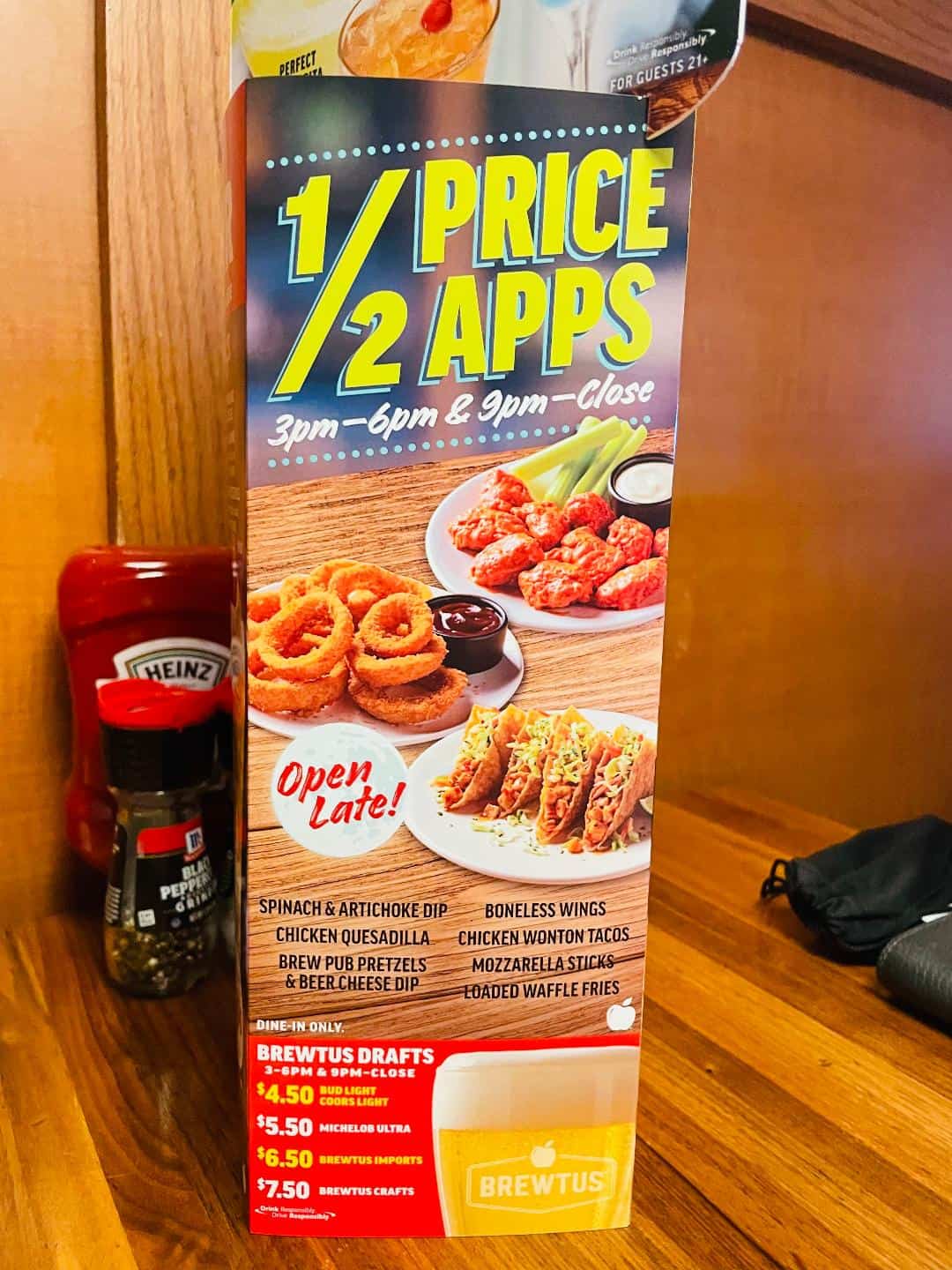
In the landscape of American casual dining, few promotional windows are as iconic or as culturally embedded as Applebee’s “Half-Price Appetizers.” To the casual observer, it is a simple discount designed to move inventory. However, from a brand strategy perspective, these specific windows of time—typically 9:00 PM to close on weekdays and late-night on weekends, alongside a mid-afternoon slot—represent a masterclass in market positioning, consumer psychology, and operational efficiency.
By analyzing the mechanics of this promotion, we can uncover how Applebee’s has successfully navigated the “Neighborhood Grill & Bar” identity for decades, maintaining relevance in an era of rapidly shifting consumer preferences and increasing competition from fast-casual upstarts.
The Anatomy of a Loss Leader: Building Brand Loyalty through Incentivized Dining
The fundamental pillar of the Applebee’s brand is the concept of the “neighborhood.” To sustain this identity, the brand must ensure its locations remain community hubs rather than just transactional eateries. The half-price appetizer promotion serves as a strategic “loss leader”—a product sold at a lower price to stimulate other, more profitable sales and to build long-term brand equity.
Defining the “Neighborhood” Brand Identity
Applebee’s has spent decades cultivating an image of accessibility and comfort. The brand strategy hinges on being the “third place”—the location between home and work where people gather. By offering significant discounts on shared plates during off-peak hours, Applebee’s lowers the barrier to entry for social interaction. This reinforces the brand’s promise: you don’t need a special occasion to visit; the neighborhood is always open. This accessibility is a core differentiator against more upscale casual dining competitors who may feel too formal for a spontaneous Tuesday night outing.
The Psychology of the Value-First Consumer
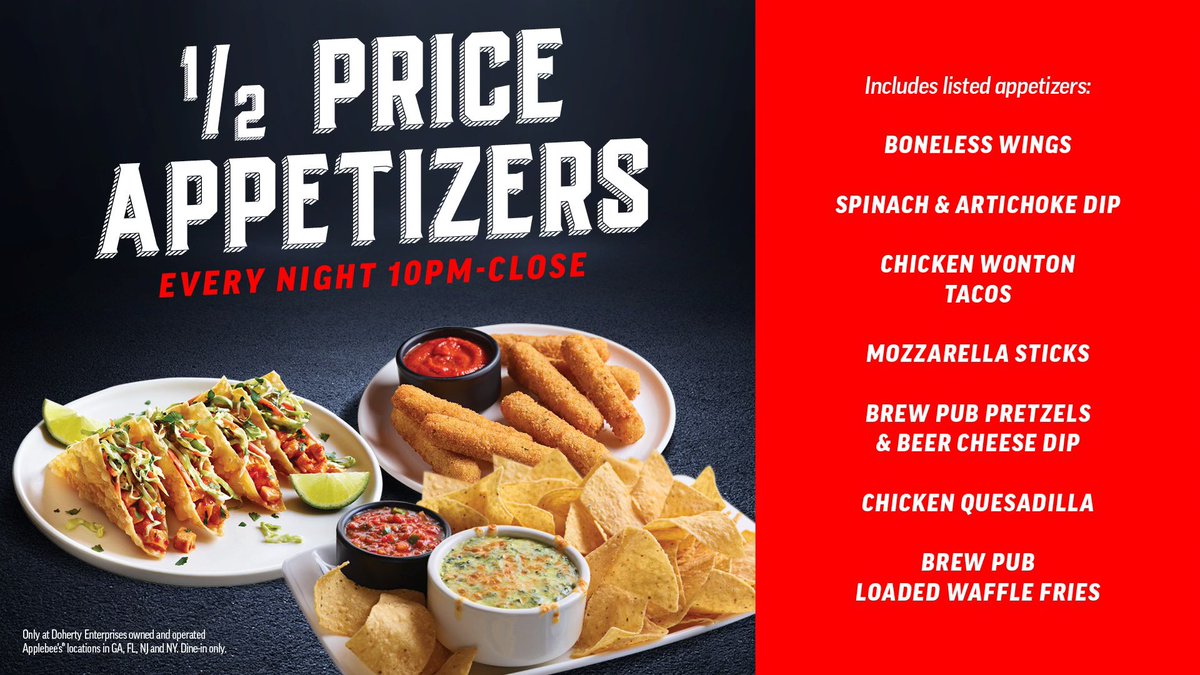
In a volatile economy, the “Value-First” consumer is a growing demographic. Applebee’s understands that “value” is not just about the lowest price, but the highest perceived benefit per dollar spent. By slashing prices on high-visibility items like Mozzarella Sticks, Spinach and Artichoke Dip, and Boneless Wings, the brand creates a “halo effect.” Consumers perceive the entire menu and the brand itself as generous and affordable. This psychological anchoring ensures that when a consumer thinks about “getting their money’s worth,” Applebee’s is the first brand that comes to mind.
Strategic Timing: How “Late Night” and “Happy Hour” Drive Corporate Identity
Timing is everything in brand management. Applebee’s doesn’t offer discounts during the lunch or dinner rush when demand is naturally high. Instead, they strategically target “dead zones” in the restaurant’s operational cycle. This isn’t just about clearing tables; it’s about reclaiming segments of the day and redefining what the brand means to different age groups.
Capturing the After-Hours Demographic
By focusing on the 9:00 PM to close window, Applebee’s effectively rebrands itself as a late-night destination. This shift targets a younger demographic—college students, hospitality workers finishing their shifts, and young professionals—who are looking for a social environment that isn’t a traditional nightclub or an expensive cocktail bar. The “Late Night” brand extension allows Applebee’s to compete with fast-food chains for the late-night “craving” market while offering a superior sit-down experience.
Seasonal Promotions and Menu Rotation as Brand Refreshers
The timing of these promotions is often augmented by seasonal “LTOs” (Limited Time Offers) and beverage programs like the “Dollarita.” This synergy is a critical component of their marketing strategy. While the half-price appetizers draw the crowd, the rotating seasonal drinks provide the brand with a sense of novelty. This prevents brand stagnation, ensuring that the “neighborhood” always has something new to talk about. It transforms a routine visit into an “event,” maintaining high levels of consumer engagement throughout the fiscal year.

Marketing the Experience: From Traditional Media to Digital Transformation
Applebee’s brand strategy has undergone a significant digital evolution. While the brand was once synonymous with television commercials featuring upbeat music and slow-motion food shots, it has successfully transitioned into a digitally-savvy organization that uses data to drive its promotional timing.
Leveraging Social Media for Real-Time Engagement
The “half-price apps” culture has become a meme in its own right, and Applebee’s brand voice on platforms like X (formerly Twitter) and TikTok leans into this. By embracing the cultural shorthand associated with their discounts, the brand stays relevant to Gen Z and Millennials. They don’t just market a product; they market a shared cultural experience. This organic engagement is far more valuable than traditional advertising because it positions the brand as a participant in the conversation rather than a corporate intruder.
The Role of the Mobile App in Cultivating Community
The Applebee’s mobile app is a central nervous system for their modern brand strategy. By offering exclusive “App-only” versions of their half-price promotions, the brand can collect valuable first-party data. This allows for hyper-personalized marketing—notifying a user at 8:45 PM that their favorite appetizer is about to go on sale. This level of digital integration moves the brand from a passive choice to an active, tech-enabled participant in the consumer’s daily life, fostering a deeper sense of loyalty that transcends a simple discount.
Competitive Analysis: Maintaining Dominance in the Casual Dining Sector
In the “Bar and Grill” segment, the competition is fierce. Rivals like Chili’s and TGI Fridays often mirror Applebee’s pricing strategies. However, Applebee’s has maintained a dominant market share by doubling down on their specific brand pillars: consistency, community, and aggressive value engineering.
Differentiation in a Crowded Market
While competitors might focus on “artisan” ingredients or specific cuisine types, Applebee’s differentiates by being the ultimate generalist. Their brand strategy is built on the “safe bet.” You know exactly what the half-price appetizers will taste like in Ohio, Florida, or California. This predictability is a powerful brand asset. In a world of overwhelming choice, the Applebee’s brand offers the “comfort of the known,” and their timed promotions serve as a recurring invitation to return to that comfort zone.
Future-Proofing the Brand through Modernization
As consumer habits move toward delivery and off-premise dining, Applebee’s has adapted its half-price strategy to include “To Go” options in many markets. This flexibility is vital for brand longevity. By ensuring that the “half-price” brand promise applies whether a customer is sitting in a booth or on their couch, Applebee’s maintains its relevance in the gig economy. The brand is no longer just a physical location; it is a value proposition that travels.
Conclusion: The Enduring Power of the Value Proposition
The question of “what time” the appetizers are half-price is, for the consumer, a matter of logistics. For the brand strategist, it is the answer to a complex puzzle of human behavior, economic shifts, and competitive positioning. Applebee’s has successfully turned a simple discount into a cornerstone of its corporate identity.
Through the strategic use of loss leaders, the targeting of specific day-parts to capture diverse demographics, and a robust digital transformation, Applebee’s has ensured that it remains the “neighborhood” leader. The half-price appetizer window is not just a time of day; it is a recurring brand event that reinforces loyalty, drives foot traffic, and cements Applebee’s place in the American cultural and economic fabric. As the casual dining landscape continues to evolve, the brands that survive will be those that, like Applebee’s, understand that value is the ultimate bridge between a business and its community.
aViewFromTheCave is a participant in the Amazon Services LLC Associates Program, an affiliate advertising program designed to provide a means for sites to earn advertising fees by advertising and linking to Amazon.com. Amazon, the Amazon logo, AmazonSupply, and the AmazonSupply logo are trademarks of Amazon.com, Inc. or its affiliates. As an Amazon Associate we earn affiliate commissions from qualifying purchases.