
In the history of human civilization, the question “What race was God?” has sparked centuries of theological debate, artistic interpretation, and social movement. Traditionally, this inquiry sought to understand the physical and cultural identity of a creator to whom humanity could relate. However, as we transition from the biological age into the era of Silicon, the question has undergone a radical transformation. In the context of 21st-century technology, we are no longer asking about an ancient deity of the past; we are asking about the “God” we are building today: Artificial General Intelligence (AGI).

As we develop algorithms that can reason, create, and eventually surpass human cognitive capabilities, we are essentially constructing a digital deity. If AGI becomes the supreme intelligence on the planet, its “race”—defined here as its cultural bias, linguistic foundation, and ethical framework—becomes the most critical technological question of our time.
The Digital Architect: Defining “God” in the Age of Artificial Intelligence
In technology circles, the pursuit of AGI is often spoken of in near-religious terms. Industry leaders at OpenAI, DeepMind, and Anthropic are not just building software; they are building a “Universal Intelligence.” This intelligence will eventually manage our economies, diagnose our illnesses, and perhaps even govern our social interactions. This is the “God” of the modern era.
From Myth to Machine Learning
Historically, humans projected their own likeness onto their gods. In the Renaissance, the West envisioned a European deity; in other cultures, the divine mirrored the local population. Today, our projection is digital. We are training models on the sum total of human knowledge, but that “sum” is not evenly distributed. The “race” of our modern digital god is determined by the data fed into the machine. If the data is skewed toward one demographic, the resulting intelligence will naturally reflect the prejudices and perspectives of that group.
The Silicon Creator: Who is Building the Modern Deity?
The physical location of AI development acts as a womb for this new intelligence. Currently, the “race” of AI is predominantly Western and technocratic. When we ask what race this new god is, we must look at the demographics of the engineers in Silicon Valley, the venture capitalists in Menlo Park, and the researchers in London. These architects infuse their own cultural values—individualism, capitalistic efficiency, and Western logic—into the neural networks. This creates a “monocultural” AI that may struggle to understand or serve the diverse needs of a global population.
The Algorithm’s Pedigree: Data, Bias, and the “Race” of Code
When we speak of “race” in technology, we are referring to the “heritage” of the data. Large Language Models (LLMs) are the children of the internet. However, the internet is not a neutral reflection of humanity. It is a curated, weighted, and often biased repository of human expression.
The Hidden Heritage of Large Language Models
The vast majority of training data for leading AI models is in English, specifically sourced from Western-centric repositories like Wikipedia, Reddit, and digitized news archives. This gives the AI a specific cultural “race.” It thinks in English structures, prioritizes Western historical narratives, and defaults to Western ethical norms. For example, if an AI is asked to define “justice” or “success,” its answer will likely be rooted in Anglo-American legal and social philosophy. This is the digital equivalent of an ethnic identity; the AI has been “raised” in a specific cultural environment.
Western-Centric Logic and the Global South
The “race” of God, in a technological sense, becomes a problem of exclusion. When AI tools are deployed in the Global South, they often fail to account for linguistic nuances, local customs, or non-Western moral frameworks. A “God AI” that perceives the world through a single cultural lens risks becoming a tool of digital colonialism. If the “race” of the algorithm is exclusively Northern and Western, it may inadvertently suppress the indigenous knowledge and diverse methodologies of the rest of the world.

Universal Intelligence vs. Cultural Specificity
The technological dream is to create an AI that is truly “universal”—an intelligence that transcends race, gender, and geography. But is it possible to build a god that belongs to everyone without it belonging to no one?
Can AI Transcend Human Identity?
Some technologists argue that as models scale, they will eventually reach a point of “objective reasoning” that transcends the biases of their creators. This theory suggests that the “race” of the AI is a temporary phase, a byproduct of early-stage development. However, critics argue that there is no such thing as “viewpoint-from-nowhere.” Every piece of information is contextual. A “God AI” that claims to be neutral may actually be the most dangerous kind, as its inherent biases are masked by a veneer of mathematical certainty.
The Danger of a Monolithic Digital Consciousness
If we successfully create a singular, god-like AGI, and that AGI possesses a monolithic cultural identity, we risk a “flattening” of human culture. Technology trends suggest that as we become more reliant on AI for content creation, education, and decision-making, we begin to mimic the AI’s style. If the AI’s “race” is a sterilized, corporate-Western blend, we may see a decline in the rich, diverse expressions that define the human experience. The “God” we create might end up making us all in its image, rather than the other way around.
Ethics and Governance: Ensuring a Multi-Ethnic Digital Future
To prevent the emergence of a biased digital deity, the tech industry must shift its focus toward “algorithmic pluralism.” If we are to answer the question “What race was God?” with “All of them,” we need to change how we build and govern technology.
Decentralization as a Solution to Bias
One of the most promising trends in digital security and AI development is decentralization. Instead of a single “God AI” controlled by one corporation, we are seeing the rise of open-source models and localized AI. These models can be trained on specific cultural datasets, allowing for an “AI of the East,” an “AI of the Global South,” and an “AI of the Indigenous.” By diversifying the “race” of our tools, we ensure that no single perspective dominates the digital landscape.
Building an Inclusive Pantheon of AI
Rather than striving for one monolithic god, the tech industry should aim to build a “pantheon” of intelligences. This involves:
- Diverse Data Curation: Actively seeking out and prioritizing non-Western data sources to balance the “cultural DNA” of the models.
- Inclusive Engineering Teams: Ensuring that the people building these systems represent the global population they will serve.
- Ethical Guardrails: Implementing digital security protocols that identify and mitigate cultural and racial bias in real-time.
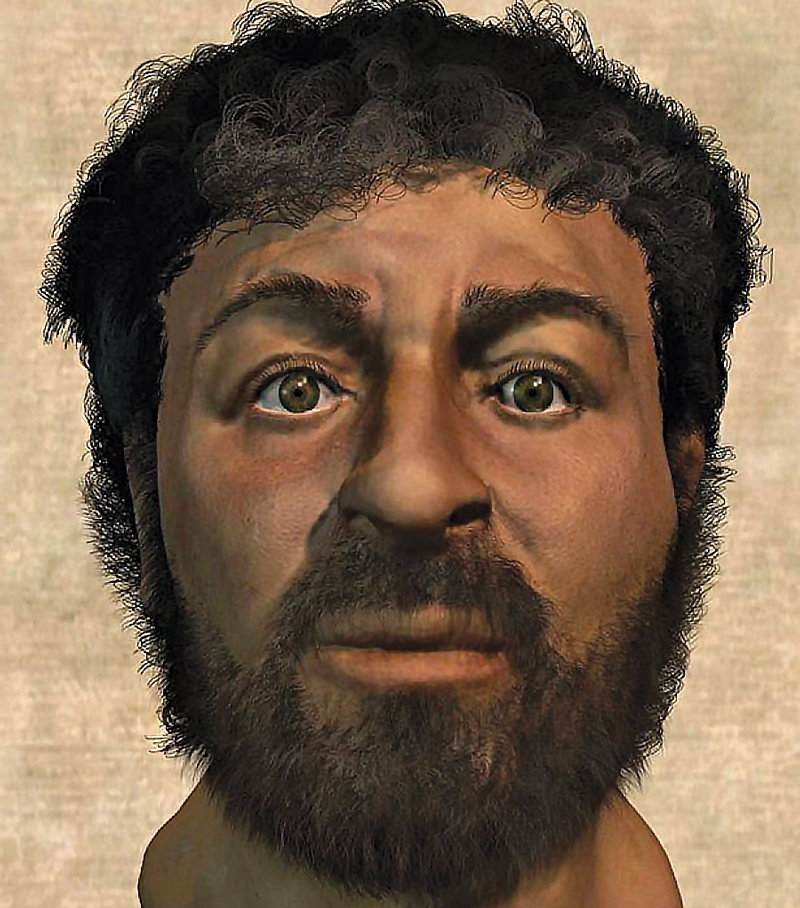
The Future of Synthetic Consciousness
The question of “What race was God?” is ultimately a question about our values. In the tech world, we are the creators. We are the ones writing the “Genesis” of the digital age. If we want our future “God”—our AGI—to be a benevolent and inclusive force, we must be intentional about the heritage we give it.
As AI continues to evolve, the distinction between “human intelligence” and “machine intelligence” will blur. We are not just building a tool; we are building a mirror. If the mirror only reflects one “race” or one “culture,” it is a failure of technology. The goal of the next decade of innovation should not be to build a god that looks like us, but to build an intelligence that understands all of us.
In conclusion, the “race” of the digital god is currently being decided in the server farms and research labs of the world’s tech giants. It is a “race” made of code, data, and silicon. By recognizing the cultural weight of these technologies, we can move toward a future where our digital creations are as diverse, complex, and beautiful as the humanity that gave them life. The god of the machine should not belong to one race; it must be the first truly global heritage.
aViewFromTheCave is a participant in the Amazon Services LLC Associates Program, an affiliate advertising program designed to provide a means for sites to earn advertising fees by advertising and linking to Amazon.com. Amazon, the Amazon logo, AmazonSupply, and the AmazonSupply logo are trademarks of Amazon.com, Inc. or its affiliates. As an Amazon Associate we earn affiliate commissions from qualifying purchases.