
In the rapidly evolving landscape of global technology, the efficiency of our hardware is dictated by the fundamental laws of physics and the raw materials we use to build our circuits. As we push toward more powerful processors, faster data transmission, and sustainable energy grids, the question of “what metals conduct electricity best” is no longer just a high school chemistry query—it is a critical pillar of technological strategy. From the microscopic traces on a silicon wafer to the massive high-voltage lines powering data centers, the choice of metal defines the performance, longevity, and energy footprint of our digital world.

The Science of Conductivity: Understanding the Electron Sea
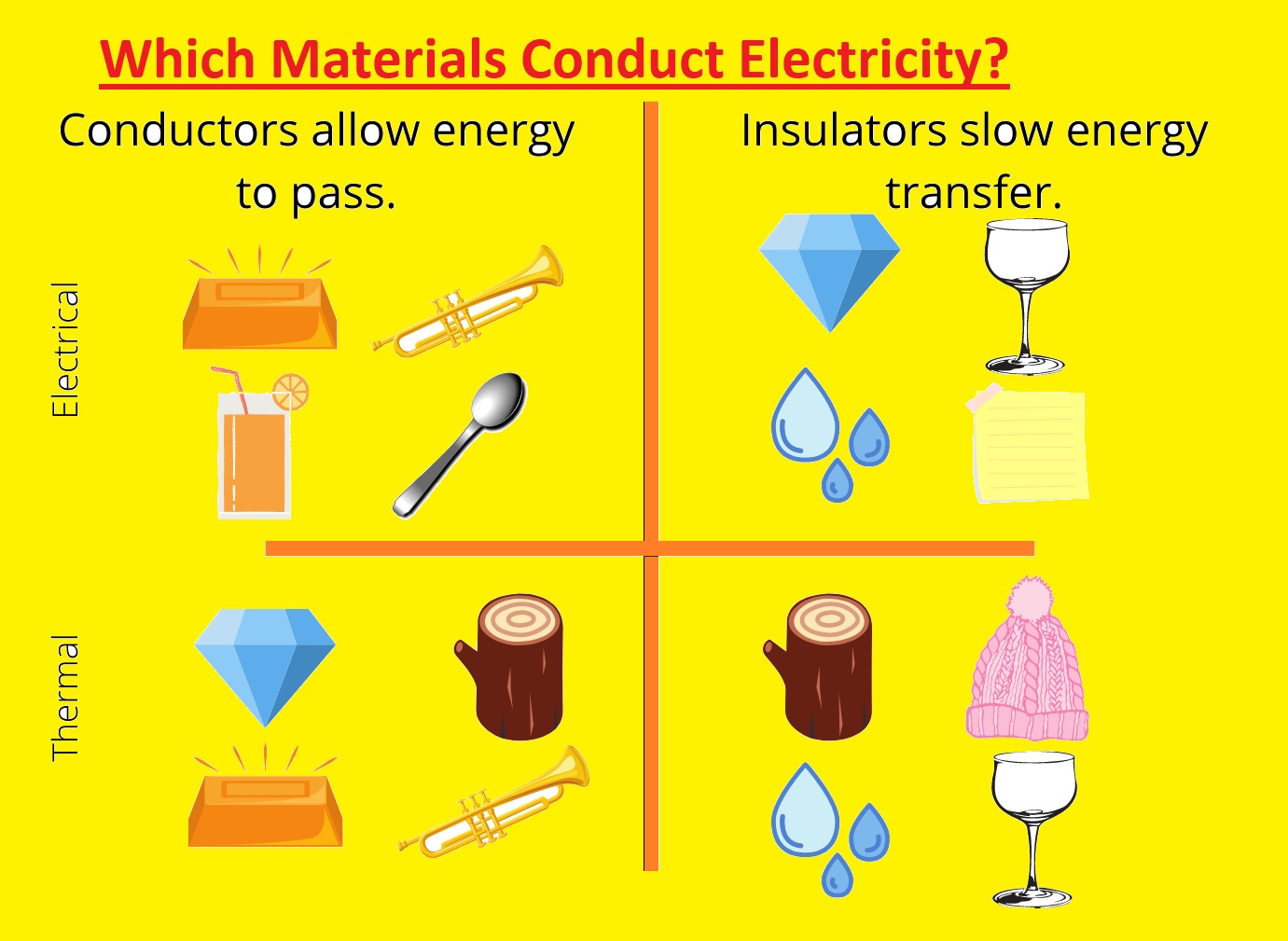
To understand why certain metals excel at moving energy, we must look at their atomic structure. In the tech industry, we rely on materials that offer the least resistance to the flow of electrons. Metals are unique because their atoms form a “sea of electrons”—delocalized valence electrons that are not bound to any single atom and are free to drift through the crystalline lattice of the metal.
The Role of Atomic Lattice and Resistance
When a voltage is applied, these free electrons move toward the positive terminal. However, they don’t have a clear path; they frequently collide with the metal’s ions, creating resistance and generating heat. The best conductors are those with the most “organized” atomic structures and the highest density of free electrons. In high-performance computing, minimizing this resistance is the key to preventing thermal throttling and ensuring signal integrity.
Measuring Conductivity: The IACS Standard
In the engineering and tech sectors, conductivity is often measured against the International Annealed Copper Standard (IACS). Established in 1913, this standard treats the conductivity of a specific type of copper as 100%. Today, we have discovered materials that exceed 100% IACS, allowing hardware designers to push the boundaries of what is possible in miniaturization and speed.
The Hierarchy of Conductive Metals in Hardware Engineering
Not all metals are created equal. In the tech world, the “Big Four”—Silver, Copper, Gold, and Aluminum—dominate the landscape, each serving a specific niche based on their physical properties and cost-to-performance ratio.
Silver: The Unrivaled Champion of Performance
Silver is the most conductive element on the periodic table. It possesses the highest thermal conductivity and the highest light reflectance. In the tech sector, silver is the “gold standard” for performance, though its high cost and tendency to tarnish (oxidize) limit its use to specialized applications. You will find silver in high-end audio cables, premium circuit board traces, and specialized switch contacts where even a fraction of a percent in efficiency gain justifies the price.
Copper: The Workhorse of the Digital Age
Copper is the most widely used conductor in technology today. Boasting roughly 95% of the conductivity of silver, copper provides an ideal balance of efficiency, ductility, and cost. It is the backbone of printed circuit boards (PCBs), the internal wiring of consumer electronics, and the windings of the electric motors that power everything from hard drives to Tesla engines. Its ability to be drawn into incredibly fine wires without breaking makes it indispensable for the miniaturized world of smartphone technology.
Gold: The Guardian of Connectivity
While gold is actually less conductive than both silver and copper (ranking third), it possesses a superpower: it does not corrode or oxidize. In the world of digital security and long-term hardware reliability, this is vital. Gold is used to plate connectors, pins, and relay contacts. Because gold ensures a clean, consistent connection over decades, it is the material of choice for the high-stakes environments of aerospace technology, medical devices, and server room interconnects.
Aluminum: The King of Infrastructure
Aluminum ranks lower in conductivity (roughly 61% of copper), but it is exceptionally lightweight and inexpensive. In the tech infrastructure sector, weight is a critical factor. Most of the world’s high-voltage power transmission lines are made of aluminum because a copper wire of the same capacity would be too heavy for the towers to support. In modern hardware, aluminum is frequently used in heat sinks, where its thermal conductivity helps dissipate heat away from CPUs and GPUs.
Conductivity in the Age of Artificial Intelligence and Data Centers
As we enter the era of generative AI and massive neural networks, the demand for high-efficiency conductors has reached a fever pitch. Data centers are currently responsible for a significant portion of global energy consumption, and much of that energy is lost as heat due to electrical resistance.
Signal Integrity in High-Frequency Trading and AI
In high-frequency trading (HFT) and AI training clusters, milliseconds matter. The choice of metal in the networking cables (such as Twinax or fiber optics with high-end metallic transceivers) can impact latency. Engineers are increasingly looking toward silver-plated copper to utilize the “skin effect,” where high-frequency signals tend to travel on the outer surface of a conductor. By plating the exterior in silver, tech firms can achieve near-silver performance at a copper price point.
Thermal Dissipation Challenges
The more conductive a metal is electrically, the better it usually is at conducting heat. In the tech world, heat is the enemy of performance. As transistors on chips become smaller, the “heat flux”—the amount of heat per square millimeter—becomes intense. We are seeing a surge in the use of copper vapor chambers and advanced liquid cooling systems that utilize high-conductivity metallic micro-fins to keep the next generation of AI chips from melting.
Beyond Traditional Metals: The Future of Superconductivity
The tech industry is currently hitting a “conductivity wall.” Even with the best copper or silver, we still lose energy to resistance. The next frontier in technology lies in materials that transcend the traditional rankings of the periodic table.
The Promise of Superconductors
Superconductors are materials that, when cooled to specific temperatures, exhibit zero electrical resistance. While currently relegated to quantum computers and MRI machines due to the need for extreme cooling (often using liquid nitrogen or helium), the “holy grail” of tech is a room-temperature superconductor. Such a breakthrough would revolutionize the tech industry, enabling lossless power grids, ultra-fast maglev transport, and processors that generate zero heat.
Graphene and Carbon Nanotubes
While not “metals” in the traditional sense, carbon-based nanomaterials like graphene are challenging the dominance of copper and silver. Graphene can conduct electricity with incredibly high electron mobility. Tech labs are currently experimenting with graphene-metal hybrids, which combine the structural integrity of metals with the superior conductive properties of carbon allotropes. These materials could lead to the next generation of flexible electronics and wearable tech.
Sustainability and the “Urban Mine”
As the demand for high-conductivity metals grows, the tech industry faces a branding and ethical challenge: the environmental cost of mining. The “Green Tech” movement is heavily reliant on these metals, yet traditional mining is carbon-intensive.
The Shift Toward Circular Electronics
Tech giants are increasingly focusing on “Urban Mining”—the process of reclaiming silver, gold, and copper from e-waste. It is estimated that there is more gold in a ton of iPhones than in a ton of gold ore. For brands, being able to claim that their hardware uses 100% recycled copper or gold is becoming a significant competitive advantage in a market where consumers prioritize sustainability.
Material Innovation as a Competitive Edge
Companies like Apple and Tesla are no longer just software or automotive companies; they are materials science firms. By developing custom alloys that optimize for both conductivity and structural strength, these brands can create thinner, lighter, and more efficient devices. The future of tech branding is inextricably linked to the elements used in the chassis and the circuitry.

Conclusion: The Strategic Importance of Material Choice
In conclusion, while silver holds the title of the best conductor of electricity, the “best” metal for technology is always a contextual choice based on a triad of performance, reliability, and cost.
- Silver remains the peak for high-end niche performance.
- Copper continues to be the indispensable backbone of global electronics.
- Gold provides the essential reliability for our interconnected world.
- Aluminum scales our infrastructure to the clouds.
As we move deeper into the 21st century, the tech industry’s mastery over these materials—and the discovery of new ones—will determine which companies lead the next digital revolution. Whether it is through the deployment of room-temperature superconductors or the perfection of recycled-metal supply chains, the science of what conducts electricity best is the silent engine of human innovation. Understanding these metals is not just a matter of physics; it is the blueprint for the future of technology itself.
aViewFromTheCave is a participant in the Amazon Services LLC Associates Program, an affiliate advertising program designed to provide a means for sites to earn advertising fees by advertising and linking to Amazon.com. Amazon, the Amazon logo, AmazonSupply, and the AmazonSupply logo are trademarks of Amazon.com, Inc. or its affiliates. As an Amazon Associate we earn affiliate commissions from qualifying purchases.