
In the rapidly evolving landscape of thermal engineering and hardware design, the PTC (Positive Temperature Coefficient) heater has emerged as a cornerstone technology. Unlike traditional heating elements that rely on resistance wires like nichrome, PTC heaters utilize advanced semiconductor ceramics to provide a safer, more efficient, and intelligent thermal solution. As we move toward a world dominated by electric vehicles (EVs), smart home ecosystems, and high-performance industrial hardware, understanding the mechanics and technological advantages of PTC systems is essential for engineers, tech enthusiasts, and hardware innovators alike.
Understanding the Science Behind Positive Temperature Coefficient (PTC) Technology
At its core, “Positive Temperature Coefficient” refers to a unique physical property of certain materials where electrical resistance increases as the temperature rises. This characteristic is the fundamental principle that distinguishes PTC heaters from conventional resistive heating elements.
The Physics of Semiconductor Ceramics
Most PTC heaters are constructed from specialized polycrystalline ceramic materials, typically based on barium titanate ($BaTiO_3$) doped with other compounds to fine-tune their electrical properties. In their natural state, these ceramics act as semiconductors. At lower temperatures, the structure of the ceramic allows for relatively free movement of electrons, resulting in low electrical resistance and high heat output.
However, as the material reaches a specific “transition temperature” (often referred to as the Curie point), the crystalline structure of the ceramic undergoes a phase change. This shift dramatically increases the electrical resistance of the material, effectively “choking off” the flow of current.
The Self-Regulating Mechanism: Why PTC Heaters Don’t Overheat
The most revolutionary aspect of PTC technology is its inherent self-regulation. In traditional heating tech, if a controller fails or airflow is blocked, the heating element continues to draw the same amount of power, often leading to overheating, component melting, or fire hazards.
In a PTC system, the physics of the material acts as a built-in thermostat. Once the heating element reaches its pre-engineered design temperature, its resistance skyrockets. This creates a feedback loop: as it gets hotter, it allows less current to pass, which in turn slows down the heating process. This “self-limiting” feature ensures that the device stays at a stable, safe temperature without requiring complex external sensors or safety cut-offs, making it a masterpiece of passive safety engineering.
Key Components and Engineering Architecture
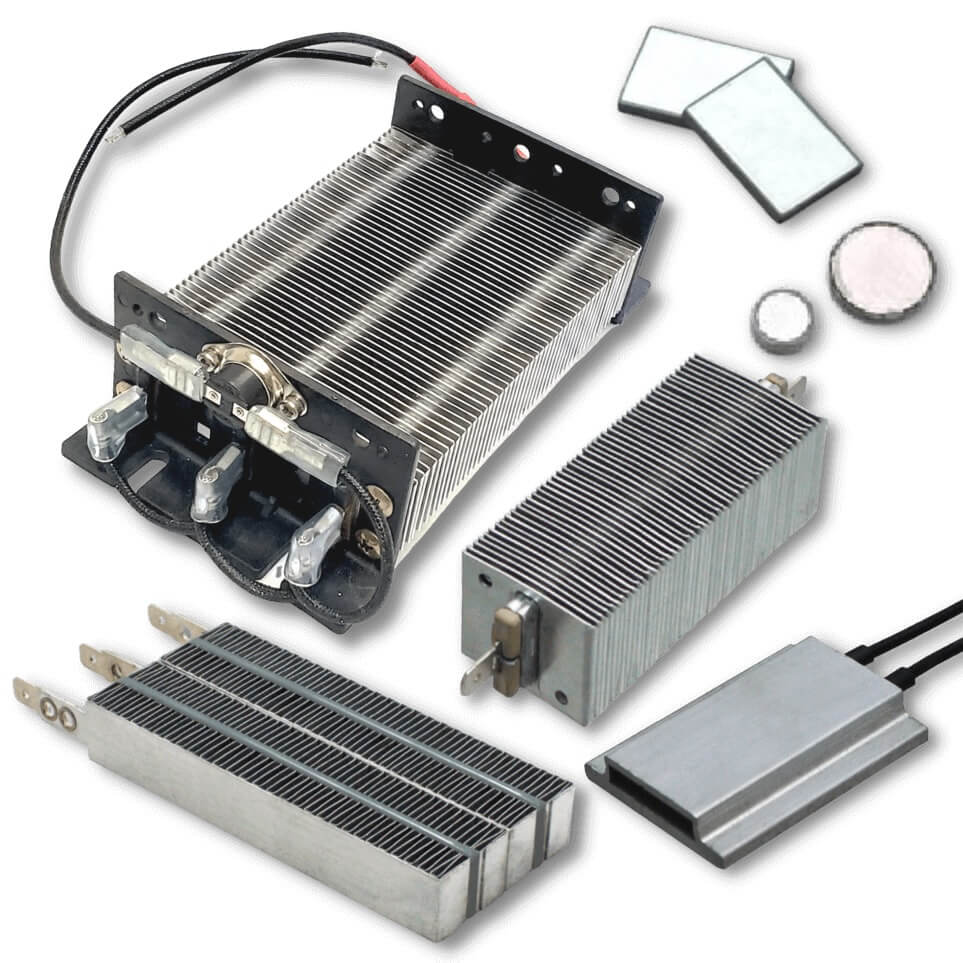
To integrate PTC technology into modern gadgets and industrial systems, the ceramic elements must be housed within a robust engineering framework. The architecture of a PTC heater is designed to maximize heat transfer while maintaining electrical insulation and structural integrity.
Ceramic Pellets and Heating Elements
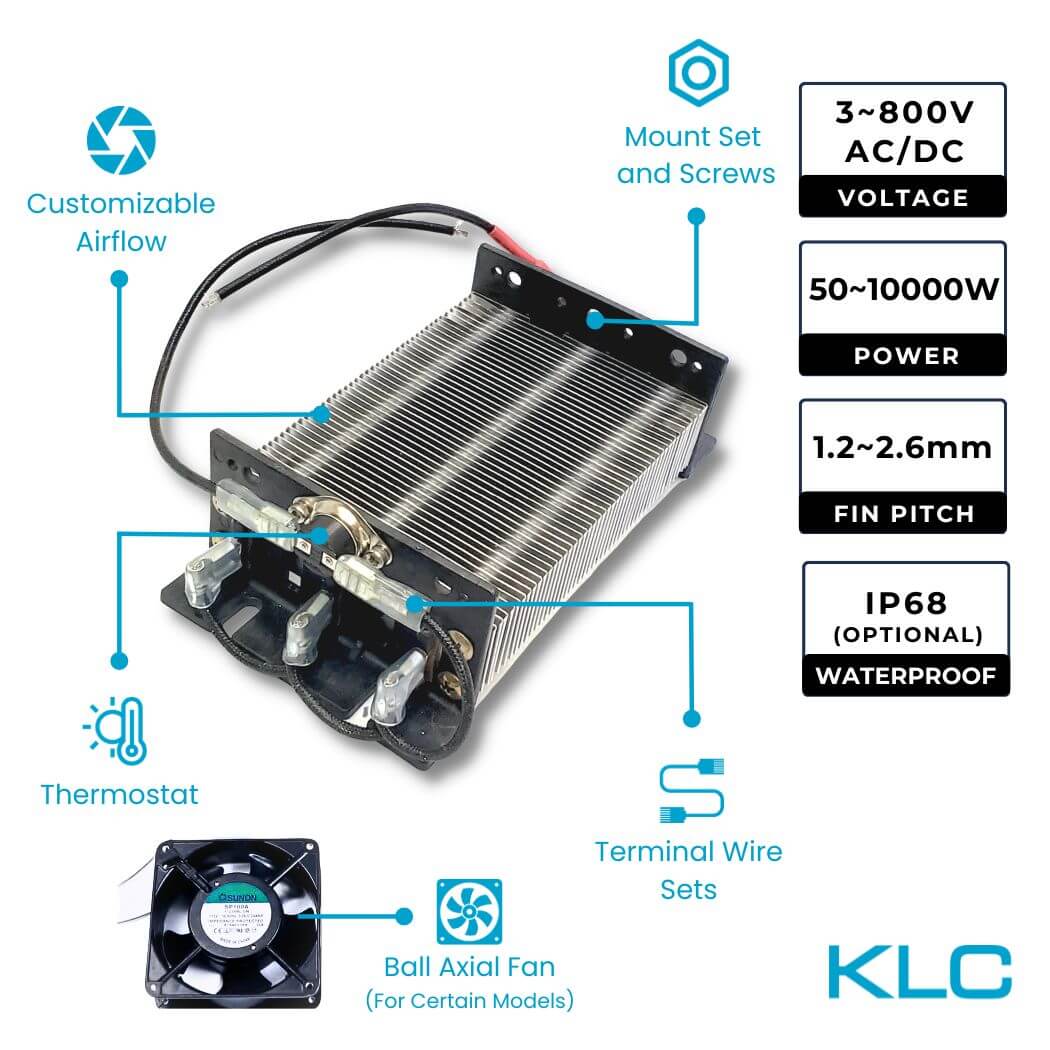
The heart of the system consists of PTC ceramic stones or pellets. These are often shaped into small rectangular blocks or discs. To facilitate heat dissipation, these stones are sandwiched between aluminum fins or contact plates. Aluminum is the material of choice due to its high thermal conductivity and lightweight properties. In “finned” PTC heaters, air is forced through the aluminum fins via a fan, transferring the heat from the ceramic core to the surrounding environment with extreme efficiency.
Integration with Control Circuitry and Thermal Management Systems
While the PTC material is self-regulating, modern high-tech applications (such as those found in smart homes) integrate these elements with Pulse Width Modulation (PWM) controllers and microcontrollers. This allows for precise “active” management on top of the “passive” safety of the ceramic. By using software-driven thermal management, devices can ramp up heat rapidly when needed and then settle into a low-energy “maintenance mode,” optimizing the power-to-thermal output ratio.
Modern Applications in the Tech Ecosystem
The unique properties of PTC heaters have led to their adoption in some of the most critical sectors of modern technology. From the cars we drive to the devices that keep our hardware running, PTC elements are the invisible workhorses of thermal management.
Electric Vehicles (EVs) and Thermal Efficiency
One of the most significant shifts in automotive technology is the move from Internal Combustion Engines (ICE) to Electric Vehicles. In an ICE vehicle, “waste heat” from the engine is used to warm the cabin. EVs, however, do not generate significant waste heat from their motors.
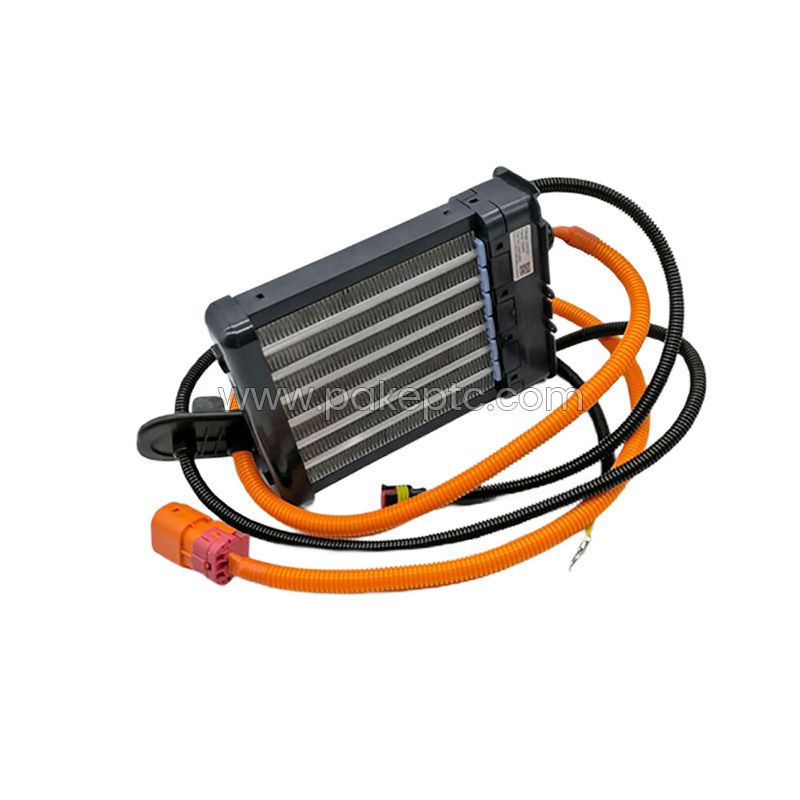
This is where PTC heaters become vital. They are used in EV cabin heating systems to provide nearly instantaneous warmth. Furthermore, they play a critical role in “Battery Thermal Management Systems” (BTMS). Lithium-ion batteries must be kept within a specific temperature range to maintain efficiency and safety, especially in cold climates. PTC heaters are used to pre-condition battery packs, ensuring optimal charging speeds and extending the lifespan of the vehicle’s most expensive component.
Smart Home Gadgets and Consumer Electronics
In the consumer tech space, companies like Dyson and other premium appliance manufacturers have popularized PTC-based heaters. Because these heaters do not reach the glowing-red temperatures of traditional coils, they do not burn dust particles (which can cause unpleasant odors) and are significantly safer for use around children and pets.
Additionally, PTC technology is found in smaller-scale electronics, such as 3D printer beds, hair straighteners, and high-end photographic equipment, where maintaining a precise, steady temperature is more important than raw heat output.
Industrial IoT and Specialized Hardware
In the realm of the Industrial Internet of Things (IIoT), PTC heaters are used to protect sensitive outdoor electronics from freezing. Telecom towers, outdoor security cameras, and automated weather stations use miniaturized PTC elements to prevent condensation and ensure that mechanical components—like lens shutters or hard drives—remain functional in sub-zero environments.
The Advantages of PTC Heaters Over Traditional Resistance Heating
When comparing PTC technology to traditional heating methods (like NiCr wire), the technological advantages become clear, particularly regarding safety, efficiency, and longevity.
Enhanced Safety and Reliability
Traditional heaters are a leading cause of electrical fires because they can theoretically heat up until they fail or ignite surrounding materials. A PTC heater, by contrast, has a “ceiling temperature.” Even if the control electronics fail, the physical properties of the ceramic prevent it from exceeding its Curie temperature. This makes them ideal for environments where safety is paramount, such as hospitals, airplanes, and nurseries.
Energy Efficiency and Operational Longevity
PTC heaters are inherently more efficient because they only draw the power necessary to maintain their target temperature. When the ambient air is cold, they draw more power to heat up; as the air warms, they automatically throttle back their power consumption.
Furthermore, because PTC elements do not operate at the extreme stress levels of red-hot wires, they suffer from significantly less thermal fatigue. This translates to a longer operational lifespan and higher reliability for the gadgets they power. In a world where “Right to Repair” and product longevity are becoming key consumer values, PTC tech represents a more sustainable choice for hardware manufacturers.
Future Trends: The Evolution of Thermal Engineering
As we look toward the future of hardware, PTC technology is evolving to meet the demands of miniaturization and artificial intelligence.
Miniaturization and Wearable Tech
We are beginning to see the emergence of flexible PTC heating elements. By embedding PTC particles into conductive polymers or specialized fabrics, engineers are developing smart clothing and wearable medical devices that can provide therapeutic heat without the risk of skin burns. These “film-style” PTC heaters are ultra-thin and can be integrated into the linings of jackets or medical wraps, controlled via smartphone apps to maintain a perfect micro-climate for the user.
Smart PTC Solutions for AI-Driven HVAC Systems
The next generation of smart buildings will utilize AI-driven HVAC (Heating, Ventilation, and Air Conditioning) systems that deploy localized PTC heating. Instead of heating an entire office floor, sensors will detect where people are sitting and activate high-efficiency PTC units in those specific zones. This “hyper-local” heating strategy, powered by the quick-response time of PTC elements, could reduce the energy footprint of commercial buildings by up to 30%.
Conclusion
The PTC heater is far more than a simple heating component; it is a sophisticated marriage of materials science and electrical engineering. Its ability to provide self-regulating, safe, and efficient heat has made it an indispensable tool in the modern tech stack—from the battery packs of the latest Teslas to the smart sensors on remote industrial rigs.
As technology continues to prioritize safety and energy efficiency, the role of PTC heaters will only expand. For the tech-forward consumer and the innovative engineer, the PTC heater represents the gold standard of thermal management, proving that sometimes the best way to control heat is to build the control directly into the atoms of the material itself.
aViewFromTheCave is a participant in the Amazon Services LLC Associates Program, an affiliate advertising program designed to provide a means for sites to earn advertising fees by advertising and linking to Amazon.com. Amazon, the Amazon logo, AmazonSupply, and the AmazonSupply logo are trademarks of Amazon.com, Inc. or its affiliates. As an Amazon Associate we earn affiliate commissions from qualifying purchases.