
In the high-stakes world of business finance and operational management, efficiency is the primary driver of profitability. While many entrepreneurs and financial analysts focus on top-line revenue growth, the most sustainable way to increase a company’s valuation is often through the meticulous reduction of waste. This is where DPMO, or Defects Per Million Opportunities, becomes a critical metric.
DPMO is a calculation used in quality management—specifically within the Six Sigma framework—to measure the performance of a process by identifying the number of defects that occur for every million opportunities. In financial terms, every defect represents a lost investment, a wasted resource, or a potential liability. Understanding and optimizing DPMO is not just a technical exercise for engineers; it is a fundamental strategy for improving a company’s bottom line and ensuring long-term financial health.

Understanding DPMO: The Metric of Operational Profitability
To manage a business’s finances effectively, one must understand how value is lost during the production of goods or the delivery of services. DPMO provides a standardized way to look at “defects” across different departments, products, or industries, allowing financial officers to compare performance on a level playing field.
Defining DPMO vs. Defect Rate
It is common for business owners to confuse the standard “defect rate” with DPMO, but the difference is vital for financial accuracy. A traditional defect rate measures the percentage of faulty units produced (e.g., 5 out of 100 units were bad). However, DPMO is much more granular. It looks at the opportunities for error within a single unit.
For example, if a financial software firm processes a single loan application, there might be 50 different data points (opportunities) where an error could occur. If one data point is wrong, the unit is defective, but the DPMO calculation accounts for the complexity of the task. By focusing on opportunities rather than just units, DPMO allows complex businesses to identify exactly where capital is being “leaked” through repetitive minor errors that eventually aggregate into massive financial losses.
The Calculation: Turning Errors into Financial Data
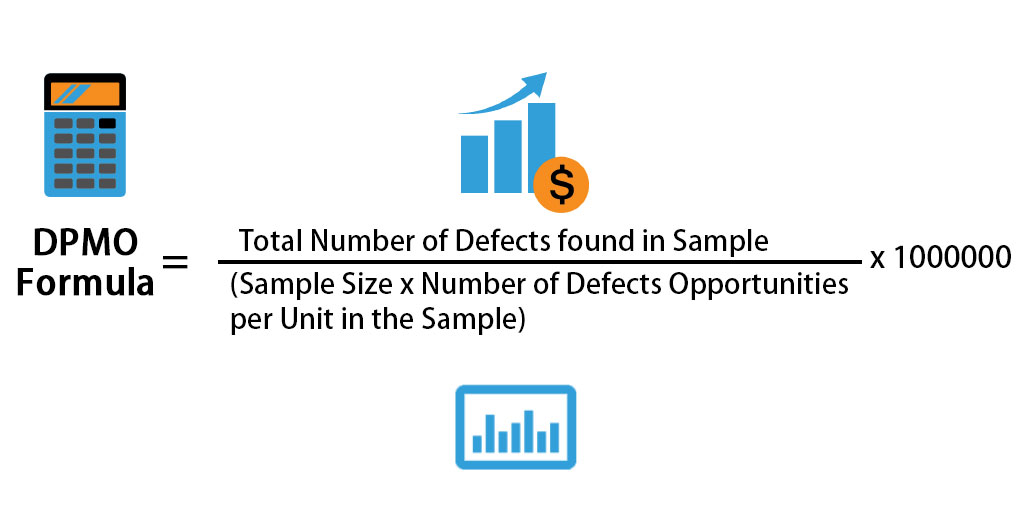
The formula for DPMO is straightforward but powerful:
DPMO = (Total Defects / (Total Units × Opportunities per Unit)) × 1,000,000
From a business finance perspective, this formula serves as a diagnostic tool. If a company has a high DPMO, it indicates that the current capital allocation toward labor and materials is yielding a poor return. When a financial manager looks at DPMO, they aren’t just looking at “mistakes”; they are looking at the “Cost of Poor Quality” (COPQ). Every defect identified by the DPMO calculation is a line item where the company paid for labor, overhead, and materials but received zero marketable value in return.
The Direct Link Between DPMO and the Bottom Line
The ultimate goal of tracking DPMO is to drive the company toward a state of operational excellence that maximizes profit margins. High-quality processes are inherently more profitable because they require less “re-work” and generate less waste.
Reducing the Cost of Poor Quality (COPQ)
In financial analysis, the Cost of Poor Quality (COPQ) is often a hidden “tax” on a business’s earnings. COPQ includes direct costs like scrap and rework, but it also includes indirect costs like warranty claims, customer service time, and the potential loss of future revenue due to a tarnished reputation.
By lowering the DPMO, a business directly reduces its COPQ. For instance, if a manufacturing plant reduces its DPMO from 66,807 (a 3-sigma level) to 3.4 (a 6-sigma level), the financial savings are astronomical. Labor costs that were previously spent fixing mistakes are redirected toward innovation or expansion. Inventory that would have been scrapped remains as a salable asset. In the world of business finance, DPMO is the lever used to move a company from “surviving” to “highly profitable.”
Six Sigma: Reaching the Gold Standard of Business Efficiency
DPMO is the primary unit of measurement for Six Sigma, a methodology designed to improve business processes by removing the causes of defects and minimizing variability. Achieving “Six Sigma” status means a process has a DPMO of only 3.4.
From an investment and finance standpoint, a Six Sigma-certified process represents a low-risk, high-yield asset. When variability is minimized, cash flow becomes more predictable. Predictable cash flow is the bedrock of corporate finance, allowing for better debt management, more accurate forecasting, and more aggressive reinvestment strategies. Investors are often willing to pay a premium for companies that demonstrate Six Sigma levels of DPMO because it signifies a disciplined management team that protects shareholder value.
Implementing DPMO Analysis in Business Finance
Integrating DPMO into your financial reporting allows for a deeper level of insight than traditional profit-and-loss statements. It moves the focus from “what happened” to “why it happened” and “how much it cost us.”
Identifying Opportunities for Cost Savings
Financial leaders should use DPMO to perform a “gap analysis” on their operations. By calculating the DPMO for different product lines or service branches, management can see which areas of the business are hemorrhaging cash.
If Department A has a DPMO of 500 and Department B has a DPMO of 5,000, Department B is effectively a “money pit” that requires immediate intervention. Using DPMO as a financial metric allows for data-driven decision-making regarding where to cut costs and where to invest in better training or technology. It moves the conversation away from emotional or anecdotal evidence and centers it on the objective reality of process performance.
Budgeting for Process Improvement and ROI
One of the hardest tasks for a CFO is deciding whether to approve a large expenditure for new equipment or software. DPMO provides the necessary data to calculate a clear Return on Investment (ROI).
If a proposed $500,000 upgrade to an automated assembly line is projected to lower the DPMO from 1,000 to 100, the financial team can calculate exactly how much money will be saved in reduced waste and increased throughput over the next five years. If the savings exceed the $500,000 cost plus the cost of capital, the investment is financially sound. Without a metric like DPMO, these types of capital expenditure (CapEx) decisions are often based on guesswork rather than hard financial data.
DPMO as a Tool for Investor Confidence and Risk Management
In the modern economy, data is as valuable as cash. Investors and stakeholders are increasingly looking at operational metrics like DPMO to gauge the internal health of an organization before committing capital.
Scalability and Long-Term Financial Health
Scalability is the holy grail of business finance. A business is scalable if it can increase its revenue without a proportional increase in costs. However, if a business has a high DPMO, scaling will actually accelerate its losses.
If a process is inefficient at a small scale, those inefficiencies are magnified as the volume increases. A DPMO analysis ensures that the “engine” of the business is tuned before the company tries to drive faster. From a financial planning perspective, lowering DPMO is a prerequisite for a successful IPO or a major round of venture capital funding. It proves to investors that the business model is robust and that their capital will be used to fuel growth rather than to patch holes in a leaky bucket.

Mitigating Financial Risk through Quality Control
Every defect is a potential liability. In industries like medical devices, aerospace, or fintech, a single defect can lead to multi-million dollar lawsuits, regulatory fines, and a complete collapse of market share.
DPMO is a vital component of a comprehensive risk management strategy. By maintaining a low DPMO, a company minimizes its exposure to catastrophic financial risks. This proactive approach to quality control is often reflected in lower insurance premiums and better credit ratings. Financial institutions and insurers view a low DPMO as evidence of a “low-risk” borrower, which can lead to lower interest rates on corporate debt—further improving the company’s net income.
In conclusion, “What is DPMO?” is more than just a question about a statistical formula. It is a question about the very viability of a business’s financial future. By viewing Defects Per Million Opportunities through the lens of business finance, leaders can transform their operations from wasteful and unpredictable to lean, profitable, and highly attractive to investors. In the pursuit of wealth and business success, DPMO is the ultimate compass, pointing the way toward maximum efficiency and peak financial performance.
aViewFromTheCave is a participant in the Amazon Services LLC Associates Program, an affiliate advertising program designed to provide a means for sites to earn advertising fees by advertising and linking to Amazon.com. Amazon, the Amazon logo, AmazonSupply, and the AmazonSupply logo are trademarks of Amazon.com, Inc. or its affiliates. As an Amazon Associate we earn affiliate commissions from qualifying purchases.