
In the rapidly evolving landscape of high-fidelity looter shooters, The First Descendant has emerged as a benchmark for graphical fidelity and complex gameplay systems. Developed on Unreal Engine 5, the game integrates a variety of technical mechanics designed to balance challenge with player engagement. Among these systems, one of the most critical for team-based survival is the “DBNO” state.
For many players entering the sci-fi world of Ingris, encountering the acronym DBNO is a rite of passage. While the term is a staple in modern action game design, its specific implementation in The First Descendant involves intricate software logic, user interface (UI) feedback loops, and strategic layerings that define the cooperative experience. Understanding DBNO is not just about knowing when to press a button; it is about understanding the technical architecture of player survivability.
The Technical Framework of DBNO (Down But Not Out)
DBNO stands for “Down But Not Out.” In the realm of software and game mechanics, this represents a conditional state where a player character has exhausted their primary health pool (HP) but has not yet reached the “Game Over” or “Respawn” state. Instead of immediate removal from the game field, the player enters a secondary, vulnerable state that allows for potential recovery through teammate intervention.
Defining the State: Beyond the Health Bar
From a programming perspective, the DBNO state is a transition in the character’s state machine. When a player’s health reaches zero, the game logic triggers a “downed” flag. In The First Descendant, this transforms the player’s movement capabilities—restricting them to a slow crawl—and disables their offensive capabilities, such as weapon firing or skill casting.
This state is essentially a buffer. It functions as a “second chance” mechanic that prevents the friction of constant reloading or respawning, which can disrupt the flow of high-intensity combat. The technical goal here is “player retention within the action loop.” By keeping the player on the field, even in a diminished capacity, the game maintains the tension and encourages social interaction through the revive mechanic.
The Logic Behind the Bleed-Out Timer
Once in DBNO, a secondary resource bar appears: the Bleed-Out Timer. This is a time-decay variable that dictates how long a player can remain in the downed state before “completely expiring” and requiring a full respawn at a checkpoint.
The speed of this decay is often dynamic. In The First Descendant, certain enemy attacks or environmental hazards can accelerate the bleed-out process. From a design standpoint, this timer creates a “weighted objective” for the remaining teammates. The software must track the location, remaining time, and proximity of allies for every downed player simultaneously, ensuring that the UI reflects real-time data to the entire squad.
Game Engine Implementation: How Unreal Engine 5 Handles Player States
The fluidity of The First Descendant is largely attributed to its utilization of Unreal Engine 5 (UE5). The transition from a standing, active combatant to a DBNO participant requires seamless animation blending and robust server-client synchronization.
State Machines and Player Transitions
In game development, player behavior is managed through “Finite State Machines” (FSM). When a player enters DBNO, the FSM switches the player’s “Character Blueprint” from the Combat State to the Incapacitated State. This switch must be handled with precision to ensure that physics hitboxes adjust to the crawling posture and that enemy AI (Artificial Intelligence) recognizes the change in player status.
For instance, some AI archetypes in The First Descendant are programmed to ignore downed players to focus on active threats, while others may “finish” a player to force a respawn. This logic requires constant communication between the game’s server and the local client to ensure that what the player sees (their character crawling for cover) matches the server’s calculation of their position and health.
Networking and Latency in Revive Mechanics
One of the most technically demanding aspects of the DBNO system is the “Revive” interaction. When an ally interacts with a downed player, a “Revive Channel” begins. This is a timed progress bar that must be synchronized perfectly across all players in the session.
In a peer-to-peer or server-client environment, latency (ping) can interfere with this. If a player starts reviving at 100ms latency, the server must validate that the player is indeed within the interaction radius. The First Descendant utilizes sophisticated “netcode” to ensure that even if there is slight packet loss, the revive progress doesn’t jitter or reset unfairly, which is vital in high-stakes “Void Intercept” boss battles.
Strategic Integration: The Role of DBNO in Looter Shooter Ecosystems
The inclusion of a DBNO mechanic is a deliberate choice in brand and game strategy. It moves the title away from “hardcore” permadeath simulations and toward a “cooperative power fantasy” model.
Balancing Difficulty via Recovery Windows
Game difficulty in The First Descendant is not just about how much damage enemies deal, but about how much “forgiveness” the DBNO system allows. In lower-level missions, the DBNO timer might be generous, allowing plenty of time for coordination. In high-level “Hard Mode” content, developers often shorten these windows or limit the number of times a player can enter DBNO, effectively using the mechanic as a modular difficulty slider.
This technical balancing acts as a safety net that facilitates the “carry” culture inherent in looter shooters. High-level players can rescue lower-level teammates, fostering a community of mentorship and cooperative play that is essential for the long-term health of an online service game.
Character-Specific Interaction with DBNO States
The First Descendant features various “Descendants” (characters) with unique skill sets. Some characters have kits specifically designed to interact with the DBNO state. For example, Yujin, the game’s dedicated healer, possesses abilities that can accelerate the revive process or even provide buffs to players after they are brought back from DBNO.
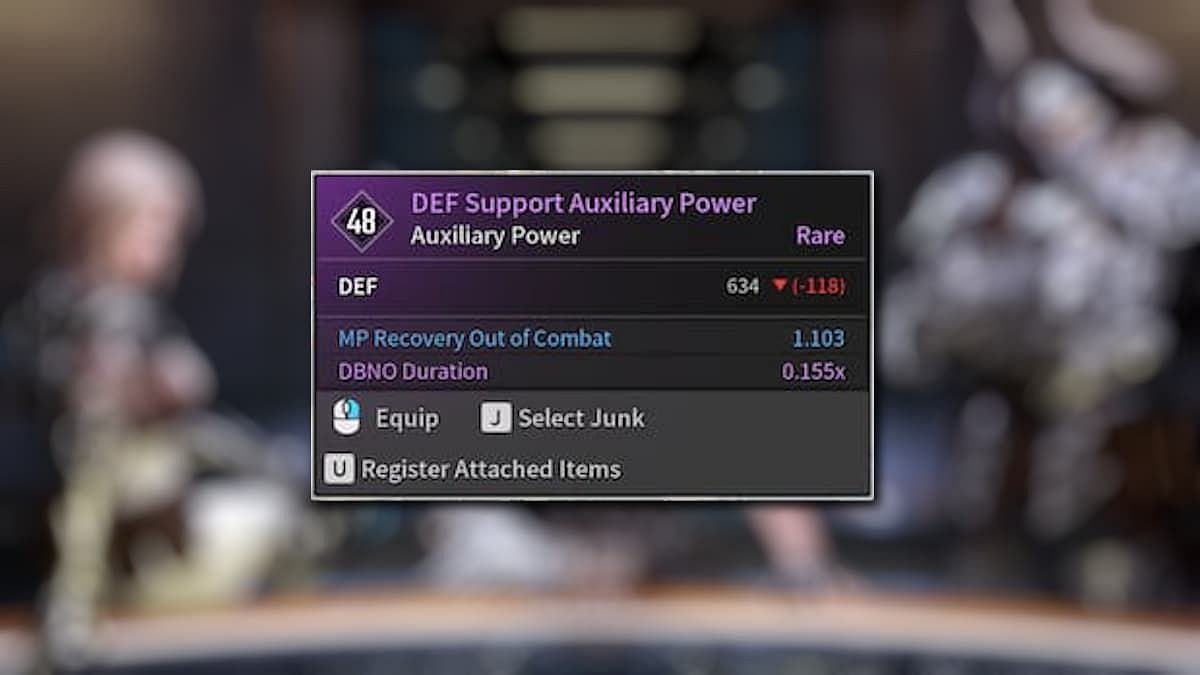
This adds a layer of “Tech-RPG” depth. The game’s software must account for “Revive Speed” modifiers as a stat within the player’s build. When a player optimizes their gear for “Support,” the engine calculates a reduced duration for the revive interaction, showing how the DBNO mechanic is deeply integrated into the game’s mathematical progression systems.
User Experience (UX) and Visual Feedback Systems
For a DBNO system to be effective, the communication between the software and the player must be instantaneous. This is where User Experience (UX) design takes center stage.
HUD Indicators and Audio Cues
When a player goes into DBNO, the visual landscape of the game changes. The screen often desaturates, and a prominent “Critical Condition” warning appears. For teammates, a unique icon—usually a red cross or a pulsing marker—appears on their Heads-Up Display (HUD) and world-space UI.
These indicators are crucial for “situational awareness.” Developers use “3D UI elements” that track the downed player’s position even through walls. This ensures that the “Tech” of the game serves the “Play,” minimizing the time spent searching for a teammate and maximizing the time spent engaging in the rescue. Audio cues, such as character-specific distress calls or a distinct alarm sound, provide a multi-sensory prompt that demands immediate attention.
Improving Squad Coordination through UI
Beyond simple icons, modern games like The First Descendant use the DBNO state to provide tactical data. The UI might show the progress of another teammate’s revive attempt, preventing two people from wasting time on the same rescue. This “concurrency logic” in the UI design streamlines team behavior, making the software feel intuitive and responsive to the needs of a fast-paced environment.
The Future of Iterative Mechanics in Modern Action RPGs
The DBNO system in The First Descendant is a microcosm of modern game development: a blend of networking, state-based programming, and player psychology. As we look toward the future of the genre, these systems are likely to become even more reactive.

Evolving Beyond Traditional Death Loops
We are seeing a trend where the “Down But Not Out” state is becoming more interactive. While The First Descendant currently focuses on crawling and waiting, future software updates or similar titles may allow downed players to use sidearms (a mechanic seen in other shooters) or trigger “last stand” tech gadgets.
The technical challenge here is maintaining balance. If a downed player remains too powerful, the “penalty” of losing health is neutralized. If they are too helpless, the experience becomes boring. The First Descendant strikes a professional balance by making the DBNO state a “vulnerability window” that requires active team management.
In conclusion, DBNO is far more than an acronym for being defeated. In The First Descendant, it is a sophisticated software feature that bridges the gap between individual failure and collective triumph. By leveraging the power of Unreal Engine 5, the developers have created a system that manages complex state transitions, maintains networking stability, and provides essential UX feedback—all while keeping the player immersed in the fight for humanity’s survival. Understanding the tech behind the “crawl” is the first step to mastering the “run” in the high-octane world of the Descendants.
aViewFromTheCave is a participant in the Amazon Services LLC Associates Program, an affiliate advertising program designed to provide a means for sites to earn advertising fees by advertising and linking to Amazon.com. Amazon, the Amazon logo, AmazonSupply, and the AmazonSupply logo are trademarks of Amazon.com, Inc. or its affiliates. As an Amazon Associate we earn affiliate commissions from qualifying purchases.