
In the landscape of prestige television, characters are often measured by their moral failings or their capacity for violence. However, if we examine The Sopranos through the lens of professional development and financial risk management, one character stands out as a masterclass in “cutting one’s losses.” Finn DeTrolio, the one-time fiancé of Meadow Soprano, represents the quintessential outsider who successfully navigated a high-risk merger with a toxic entity—the DiMeo crime family—and managed to divest before a total market collapse.
What happened to Finn in The Sopranos is more than a story of a breakup; it is a narrative about recognizing a “bad investment” and executing a strategic exit to protect one’s long-term professional equity.

The Financial Landscape of the Soprano Association
When Finn DeTrolio entered the orbit of the Soprano family, he was not merely a romantic interest; he was an asset being integrated into a complex, high-stakes portfolio. For Finn, a dental student with high earning potential, the association offered immediate “perks” that mirrored the seductive lure of high-risk venture capital.
The No-Show Job: Understanding Unearned Income and Its Liabilities
One of Finn’s first major encounters with the “family business” was his placement in a “no-show” construction job. In the world of business finance, a no-show job is the ultimate form of unearned income. On paper, the ROI is infinite: one receives a paycheck and benefits without providing labor.
However, Finn’s discomfort with this arrangement highlights a fundamental principle of financial ethics: there is no such thing as free capital. The “cost” of his paycheck was his complicity in a system of labor racketeering. For a future medical professional, the liability of being associated with a fraudulent payroll could have catastrophic effects on future licensing and professional standing. Finn’s internal conflict was a rational response to a high-liability asset.
Class Mobility and the Dentist’s Income Potential
Finn represented a specific socioeconomic demographic: the upper-middle-class professional. Unlike the mobsters he surrounded, whose wealth was volatile, liquid, and subject to federal seizure, Finn’s wealth was built on “human capital”—his education and specialized skills.
From a personal finance perspective, Finn’s career trajectory as a dentist offered a steady, compounding growth rate that far exceeded the “fast money” of the mob when adjusted for risk. By choosing to stay the course in dental school rather than being seduced by the easy money of the Soprano lifestyle, Finn demonstrated an understanding of long-term wealth preservation over short-term liquidity.
Calculating the Cost of Social Capital
In business, social capital—the value of your network—is often as important as liquid assets. For Finn, dating Meadow Soprano was an acquisition of high-status social capital. However, the “maintenance costs” of this particular social asset proved to be ruinously expensive.
The Meadow Soprano “Brand” and Personal Asset Protection
Meadow Soprano was the “public-facing” brand of a deeply troubled organization. To Finn, she represented intelligence, beauty, and upward mobility. However, as their relationship progressed, the “brand” revealed significant hidden debt. Meadow’s constant defense of her father’s “waste management” business required Finn to engage in cognitive dissonance—a mental overhead that began to drain his psychological resources.
In branding strategy, when a partnership begins to damage the primary brand’s reputation, a “de-coupling” is necessary. Finn realized that becoming “Finn Soprano” (metaphorically) would mean inheriting the legal and physical risks associated with the Soprano name. His eventual departure was an act of personal asset protection.
Risk Assessment: When the Dividend is No Longer Worth the Danger
The turning point for Finn’s risk assessment was the “suitcase” incident and the surrounding tension. He began to see that the “dividends” of the relationship—access to luxury, a high-status partner—were being outweighed by the physical risk of being around volatile “associates” like Eugene Pontecorvo or Vito Spatafore. In any business venture, when the risk-to-reward ratio skews too heavily toward “total loss,” the only logical move is to liquidate the position.
The “Vito Disclosure” and Corporate Whistleblowing

The most significant “business” event Finn participated in was his accidental discovery of Vito Spatafore’s private life. In the corporate world, this would be akin to discovering internal fraud or a massive HR violation that threatens the entire organization’s stability.
Managing Information as a Liability
In the DiMeo crime family, information is a currency, but for an outsider like Finn, it was a liability. Holding the secret about Vito was a “toxic asset” that Finn didn’t want. When Tony Soprano and his captains brought Finn in for “testimony” at the back of Satriale’s, it was effectively a high-stakes board meeting.
Finn was forced into the role of a whistleblower, but without the protections of a legal framework. He saw firsthand how the “company” handled outliers. This experience served as a “stress test” for his relationship with the family. He realized that in this corporate culture, the individual is always expendable to protect the “firm’s” reputation.
The Exit Strategy: Abandoning Sunk Costs for Long-term Solvency
Many people stay in bad relationships or failing businesses because of the “sunk cost fallacy”—the idea that you must stay because you’ve already invested so much. Finn, however, avoided this trap. Despite the time invested in Meadow and the potential for a lucrative, albeit dangerous, future, he chose to walk away.
His departure from the series wasn’t a dramatic explosion; it was a quiet withdrawal. He finished his degree, moved on, and effectively “ghosted” the crime family. From a business standpoint, this was a perfect “quiet exit.” He didn’t make a scene that would require retaliation; he simply became an unprofitable lead that the Sopranos eventually stopped pursuing.
Post-Sopranos: A Financial Projection for Finn DeTrolio
While the show doesn’t follow Finn after his breakup with Meadow, we can use financial modeling to project his future. Freed from the volatile “Soprano Market,” Finn’s prospects as a dental professional likely followed a trajectory of stable, high-yield growth.
The Dental Professional’s Path to Wealth
A successful dentist in the mid-to-late 2000s and into the 2010s would have benefited from several economic trends. By focusing on his practice, Finn would have built a valuable business entity with a high resale value. Unlike Tony Soprano’s wealth, which required constant “earning” and protection from the FBI, Finn’s wealth would be shielded by legal structures, retirement accounts (401ks, IRAs), and malpractice insurance.
He likely moved to a different market—perhaps the West Coast or a quiet suburb in the Northeast—away from the New Jersey “territory.” This geographic diversification of his “life assets” ensured that he would never be collateral damage in the inevitable “downsizing” of the DiMeo family that occurred in the series finale.
Protecting Personal Equity from Extralegal Influences
Finn’s story ends with the preservation of his most valuable asset: his autonomy. In the world of The Sopranos, almost every character is “owned” by someone else—through debt, blackmail, or blood. By exiting the Soprano ecosystem, Finn regained 100% equity in himself.
In the final analysis, “what happened to Finn” is that he performed a successful divestiture. He recognized that the Soprano family was a “bubble” built on unsustainable practices and high-risk behavior. He sold his “shares” (his relationship) at the right time, took the hit on his emotional “capital,” and reinvested his time and energy into a regulated, stable, and high-growth industry.
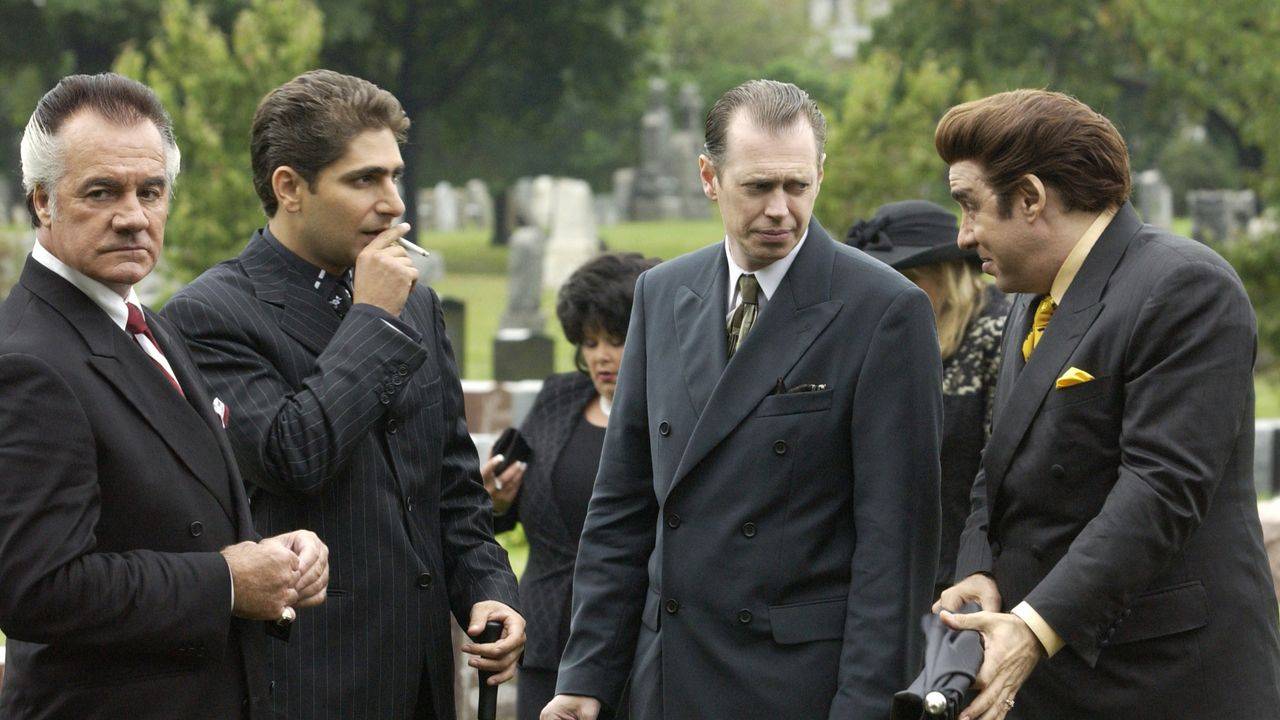
Conclusion: The Wisdom of the Clean Break
Finn DeTrolio remains one of the few characters in the Sopranos universe who “won.” He didn’t win by taking over the family or by finding a huge score; he won by maintaining his professional integrity and his financial future.
For the modern professional or investor, Finn’s journey offers several key takeaways:
- Identify Toxic Assets Early: If a “job” or “partnership” requires you to compromise your legal or ethical standing, the long-term cost will always exceed the short-term gain.
- Understand Your Risk Profile: Finn knew he wasn’t built for the high-stakes, high-violence world of organized crime. He chose a career that matched his risk tolerance.
- Don’t Fear the Sunk Cost: Walking away from a long-term relationship or a major life path is difficult, but it is often the only way to save your future “solvency.”
Finn DeTrolio didn’t disappear; he simply moved into a different, more profitable, and infinitely safer market. He traded the “waste management” business for the “oral healthcare” business—a move that any savvy financial advisor would recommend.
aViewFromTheCave is a participant in the Amazon Services LLC Associates Program, an affiliate advertising program designed to provide a means for sites to earn advertising fees by advertising and linking to Amazon.com. Amazon, the Amazon logo, AmazonSupply, and the AmazonSupply logo are trademarks of Amazon.com, Inc. or its affiliates. As an Amazon Associate we earn affiliate commissions from qualifying purchases.