
In the modern economic landscape, time is the ultimate currency. When individuals ask, “What gives the most community service hours?” the motivation is often more than just a desire to help—it is a strategic move to unlock financial opportunities, secure high-value scholarships, or enhance professional marketability. In the realms of personal finance and career development, high-volume community service acts as a powerful lever, transforming sweat equity into tangible financial assets.
By identifying the most “hour-dense” opportunities, strategic volunteers can maximize their output to meet the requirements of prestigious grants, tax-advantaged programs, and elite career networks. This article explores the highest-yielding community service avenues through the lens of financial growth and professional advancement.
High-Volume Volunteering: A Strategic Path to Scholarships and Grants
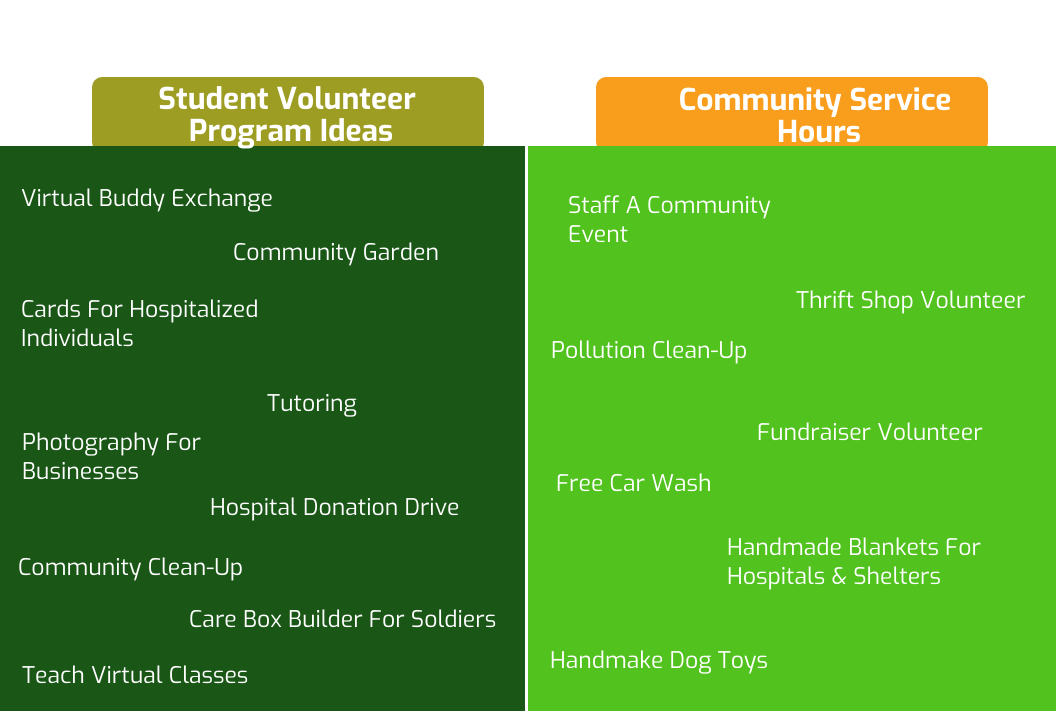
For students and early-career professionals, community service is often the gateway to non-dilutive capital—specifically scholarships and grants. Many of the most lucrative financial awards are tied to specific hour thresholds. Understanding which roles allow you to accumulate these hours rapidly is essential for a high return on investment (ROI).
The Presidential Volunteer Service Award (PVSA) and Federal Incentives
The PVSA is a premier recognition program in the United States that rewards significant time commitments. For those in the “Young Adult” or “Adult” categories, reaching the Gold level requires 250 to 500+ hours within a single year. While the award itself is a medal, the financial implications are profound. Holding a Gold PVSA is a significant signal to admissions committees at top-tier universities, which often gatekeep millions of dollars in institutional aid.
To hit these high numbers, one should look toward “integrated” service roles. These are positions where service is part of your daily life rather than a weekend hobby. Roles in hospitals, such as patient advocacy or clinical support, often allow for 10–20 hours per week. Over a summer, a student can easily clear 200 hours, positioning them for “full-ride” merit scholarships that value civic leadership.
Tiered Scholarships for Service Milestones
Many private foundations, such as the Coca-Cola Scholars Foundation or the Equitable Excellence Scholarship, look for “sustained impact.” To maximize hours for these financial rewards, look for roles in crisis intervention or hotlines. Organizations like the Crisis Text Line offer intensive training and allow volunteers to log hours from home. Because these services operate 24/7, a dedicated volunteer can accrue hours during “off-market” time (nights and weekends), making it one of the most efficient ways to build a high-hour portfolio without sacrificing a primary income source.
Professional Skill-Based Volunteering: Trading Time for Career Capital
In the context of business finance and personal branding, not all hours are created equal. “Hour-dense” volunteering can also be “skill-dense,” allowing you to build a portfolio that justifies a higher salary or opens doors to lucrative consulting contracts. This is often referred to as “Pro Bono” work, which, when tracked correctly, serves as a powerful side-hustle precursor.
Pro Bono Consulting and Financial Auditing
If you possess skills in accounting, marketing, or financial planning, providing these services to non-profits is a high-yield strategy. Small non-profits often need comprehensive financial restructuring or long-term marketing campaigns. A single “rebranding” or “audit” project can take 100 to 150 hours.
From a personal finance perspective, these hours are “invested” into your resume. For a junior analyst, 200 hours of pro bono financial modeling for a global NGO is the equivalent of a high-level internship. When it comes time for a salary negotiation, that “community service” translates directly into a higher base pay because it demonstrates “senior-level” responsibility that a standard entry-level job might not provide.
Long-term Board Membership and Executive Networking
Serving on a non-profit board of directors is perhaps the most financially strategic form of high-hour service. While the direct hours might seem lower per month, the “cumulative” hours over a three-year term are substantial. More importantly, the financial ROI comes from the network.
Board members are typically high-net-worth individuals, CEOs, and industry leaders. Spending 50 hours a year in board meetings and committee work puts you in direct contact with capital allocators. In the world of business finance, these relationships can lead to venture capital leads, high-paying executive roles, or exclusive investment opportunities. Here, “what gives the most hours” is less about the quantity and more about the “compounding interest” of those hours over time.
Emergency and Intensive Service Roles: Scaling Hours Rapidly
If the goal is to accumulate 300 to 500 hours in the shortest timeframe possible—often to meet a graduation requirement or a specific grant deadline—intensive, “immersion-style” roles are the most effective. These roles treat community service like a full-time job, allowing for massive hour accumulation in just a few weeks.
Disaster Relief and International Missions
Organizations like the Red Cross or Team Rubicon provide opportunities for intensive service during localized or national emergencies. When a volunteer is deployed for disaster relief, they are often “on-call” or working 12-hour shifts for two weeks straight. A single deployment can yield 150+ hours.
From a financial standpoint, this is the most “time-efficient” way to clear large service requirements. While the work is grueling, the ability to “batch” your service hours allows you to spend the rest of the year focusing on income-generating activities or traditional employment. It is a “high-intensity interval training” approach to community service.
Residential Camp Counseling and Youth Mentorship
Summer programs for underprivileged youth or specialized medical camps (such as those for children with chronic illnesses) are “hour goldmines.” Because these are often residential programs, volunteers are technically “serving” 24 hours a day for the duration of the camp.
A two-week stint as a residential counselor can legitimately result in over 200 hours of community service. For someone looking to maximize their “service-to-time” ratio, residential programs are the undisputed leader. Financially, many of these programs also provide room and board, which reduces your personal living expenses for that period—essentially acting as a “tax-free” benefit while you build your service portfolio.
The Hidden Financial Value of High-Hour Commitment
Beyond scholarships and career advancement, there are direct financial mechanisms that reward those who commit to high-volume community service. These are often overlooked components of personal finance and tax strategy.
Tax Deductions and Out-of-Pocket Expenses
While you cannot deduct the “value” of your time on your taxes, high-hour volunteers often incur significant “out-of-pocket” expenses that are tax-deductible if you itemize. This includes mileage driven for service (at a standard rate set by the IRS), specialized uniforms, and travel expenses for service trips.
If you are logging 500 hours a year, your associated expenses can be substantial. For a high-earner in a significant tax bracket, these deductions can result in thousands of dollars in tax savings. In this way, “what gives the most hours” also gives the most potential for tax-advantaged spending. It is a method of “re-investing” your tax liability into a cause you care about while building your personal brand.
Networking in High-Net-Worth Circles
Large-scale community service events, such as charity galas, hospital fundraisers, or museum board events, require massive amounts of “volunteer labor” for planning and execution. Taking a leadership role in these committees can easily require 100+ hours of coordination.
The “Money” angle here is access. Being the person who manages the logistics for a million-dollar fundraiser puts you in the same room as the donors. For entrepreneurs and side-hustlers, this is “high-value prospecting.” The hours you spend volunteering are essentially your “acquisition cost” for high-level business contacts. In many industries—especially real estate, wealth management, and luxury goods—this is the most effective “marketing” spend you can make.
Conclusion: Strategic Altruism as a Financial Asset
When answering “what gives the most community service hours,” it is clear that the most effective opportunities are those that allow for immersion, skill-sharing, or residential commitment. However, the true value of these hours lies in how they are leveraged within your financial and professional life.
Whether you are batching hours through disaster relief to save time for your business, using pro bono work to leapfrog into a higher salary bracket, or hitting the 250-hour mark to unlock a prestigious scholarship, community service should be viewed as a strategic investment. By aligning your “give-back” strategy with your financial goals, you create a synergistic relationship between altruism and personal wealth, ensuring that your time is spent in the most impactful way possible for both the world and your bank account.
aViewFromTheCave is a participant in the Amazon Services LLC Associates Program, an affiliate advertising program designed to provide a means for sites to earn advertising fees by advertising and linking to Amazon.com. Amazon, the Amazon logo, AmazonSupply, and the AmazonSupply logo are trademarks of Amazon.com, Inc. or its affiliates. As an Amazon Associate we earn affiliate commissions from qualifying purchases.