
In the realm of finance, numbers are the map, but percentages are the compass. Whether you are tracking the growth of a retirement portfolio, calculating the true cost of a mortgage, or determining your monthly savings rate, understanding how to find and interpret percentages is the most fundamental skill any investor or consumer can possess. While a simple “part over whole” calculation might seem like middle-school math, its application in wealth management is nuanced, powerful, and often the difference between financial stagnation and exponential growth.
To truly master your money, you must move beyond looking at absolute dollar amounts and start viewing your financial life through the lens of ratios and rates. This guide explores the essential methods for finding percentages within the context of money, providing you with the analytical tools to make smarter, more informed financial decisions.
The Fundamental Role of Percentages in Money Management
At its core, a percentage is a way to express a number as a fraction of 100. In finance, this allows us to compare disparate figures on a level playing field. Without percentages, it would be impossible to compare the performance of a $1,000 stock investment against a $100,000 real estate venture.
Understanding the Core Formula
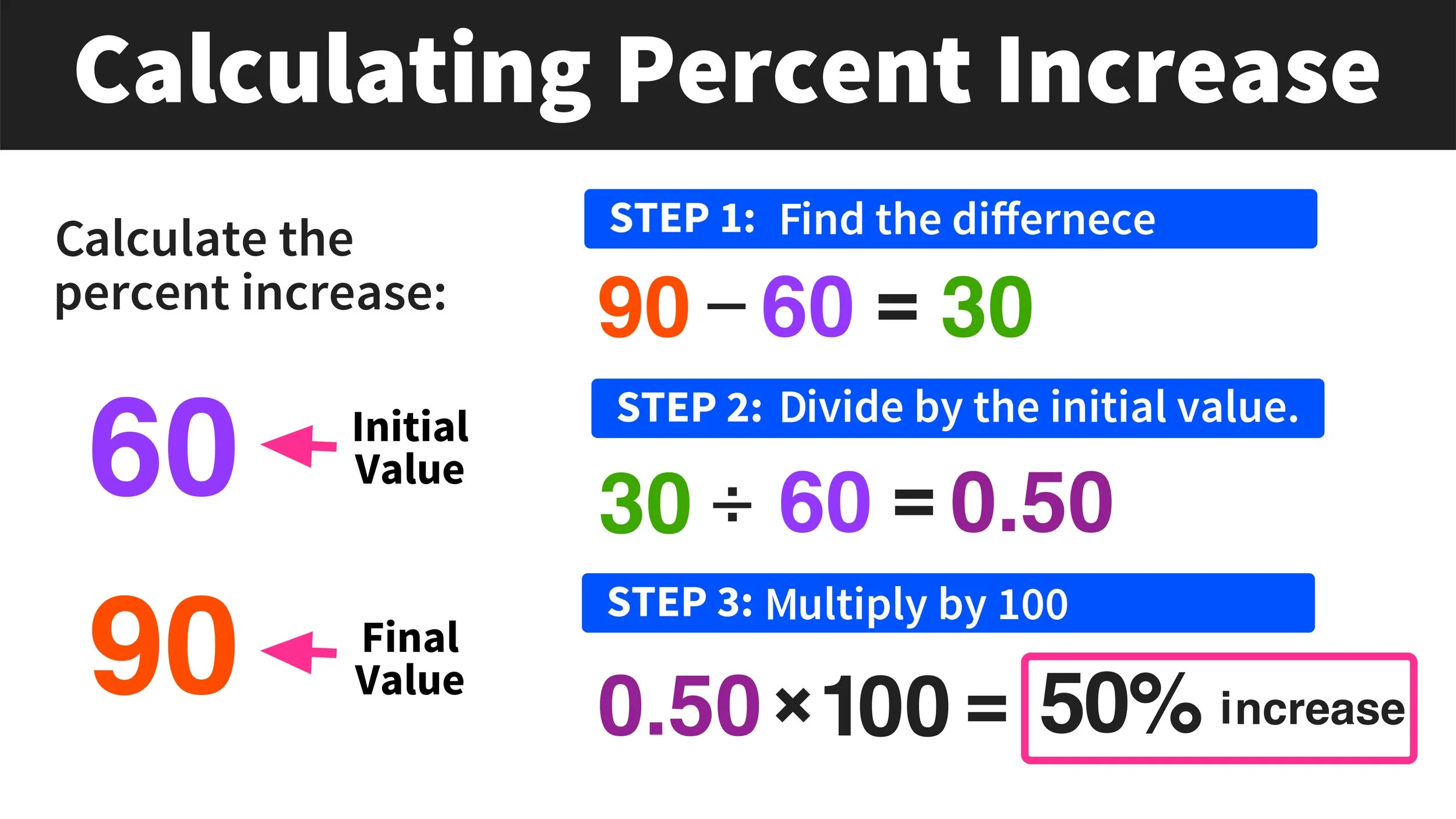
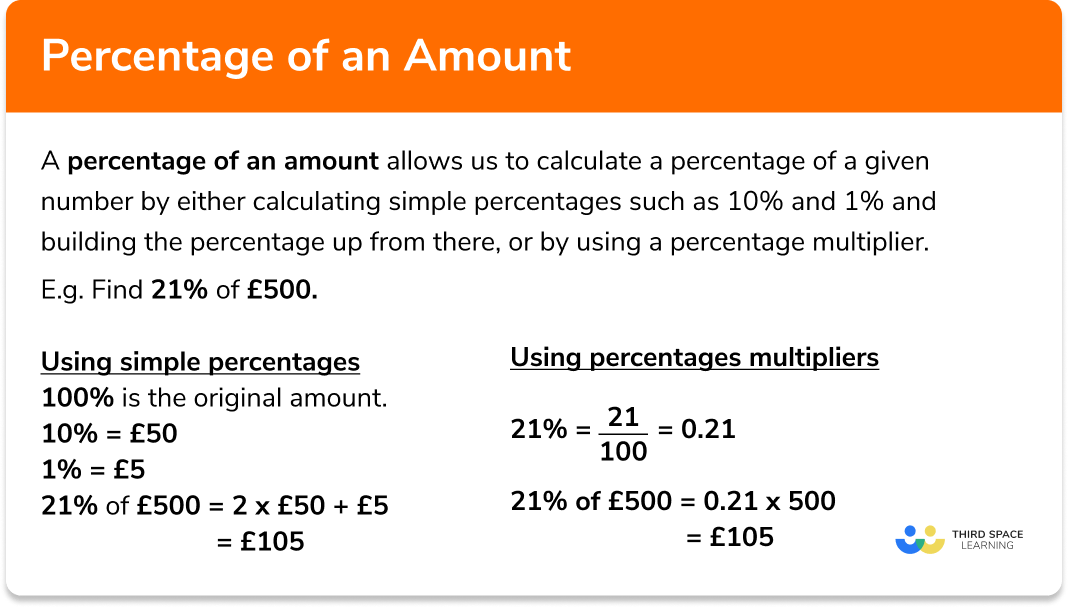
The basic mathematical formula to find a percentage is:
(Part / Whole) × 100 = Percentage
In a financial context, the “Part” is usually the change in value or a specific expense, while the “Whole” is the total budget or the original investment amount. For example, if you save $500 out of a $5,000 monthly salary, your savings percentage is ($500 / $5,000) × 100, which equals 10%. Mastering this simple division is the first step toward building a robust financial plan.
The Psychological Impact of Percentage Growth vs. Absolute Numbers
One of the most dangerous traps in personal finance is focusing on absolute gains rather than percentage growth. A gain of $1,000 feels significant, but its value depends entirely on the “Whole.” If you earned $1,000 on a $2,000 investment, you have a staggering 50% return. If you earned $1,000 on a $1,000,000 investment, you have a 0.1% return, which likely underperforms even the most basic savings account. By training your brain to “find the percentage,” you strip away the emotional weight of large numbers and focus on the efficiency of your capital.
Evaluating Investment Performance through Percentage Returns
Investing is essentially the act of putting your money to work so it can generate more money. To determine how hard your money is working, you must calculate the return on investment (ROI) and other growth-oriented percentages.
Return on Investment (ROI) Simplified
ROI is the most common percentage used to evaluate the efficiency of an investment. The formula is:
[(Current Value – Original Cost) / Original Cost] × 100
If you buy a share of a tech company for $150 and sell it for $200, your absolute profit is $50. To find the percentage return, you divide that $50 profit by the original $150 cost, resulting in a 33.3% return. This percentage allows you to compare that tech stock’s performance against other assets, such as gold, bonds, or index funds, regardless of the share price.
Compound Annual Growth Rate (CAGR): The Gold Standard
While simple ROI tells you how much you made in total, it doesn’t account for time. This is where the Compound Annual Growth Rate (CAGR) becomes essential. CAGR provides a smoothed annual percentage rate of return, assuming the investment compounded over a specific period. This is vital for long-term investors who need to know if their portfolio is meeting the 7% or 8% annual targets required for retirement. Without calculating the annualized percentage, a 100% return over 20 years might look impressive, but it actually represents a relatively modest annual growth rate.
Yield and Dividend Percentages
For income-focused investors, the “Dividend Yield” is the percentage that matters most. It is calculated by dividing the annual dividend payment by the current stock price. If a stock pays $5 in annual dividends and costs $100, the yield is 5%. This percentage is the “interest rate” the company pays you for owning their stock, and it is a critical metric for comparing the income-generating potential of different equities.

Navigating Debt and Interest Rates
If investment percentages represent the wind in your sails, debt percentages are the anchor holding you back. Understanding how to find and analyze the percentages associated with borrowing is essential for minimizing costs and maximizing net worth.
Annual Percentage Rate (APR) vs. Annual Percentage Yield (APY)
When borrowing money (credit cards, car loans) or saving money (high-yield savings accounts), you will encounter APR and APY.
- APR (Annual Percentage Rate): This is the basic interest rate calculated annually. It does not account for the effects of compounding within the year.
- APY (Annual Percentage Yield): This is the “effective” rate that does include the impact of compounding.
If you are a borrower, you want the lowest APR. If you are a saver, you want the highest APY. Finding the difference between these two percentages can save you thousands of dollars over the life of a mortgage or earn you significantly more in a retirement account.
The Cost of Debt: Calculating Interest Expense
Most people look at their monthly loan payment, but savvy financial managers look at the interest percentage of that payment. In the early years of a 30-year mortgage, for example, a high percentage of your payment goes toward interest rather than principal. By calculating what percentage of your payment is “lost” to interest, you can make informed decisions about whether to make extra principal payments to “guarantee” a return equal to your loan’s interest rate.
Budgeting and Asset Allocation: The Percentage Rules
Effective money management is rarely about counting every penny; it is about managing the percentages of your total income and total portfolio.
The 50/30/20 Rule for Cash Flow Management
One of the most popular budgeting frameworks is the 50/30/20 rule. This strategy suggests that you should find the percentage of your after-tax income and allocate it as follows:
- 50% to Needs: Housing, utilities, groceries, and insurance.
- 30% to Wants: Dining out, travel, and hobbies.
- 20% to Savings and Debt Repayment: Building an emergency fund or investing for the future.
By focusing on these percentages rather than fixed dollar amounts, your budget becomes scalable. Whether you earn $40,000 or $400,000, the percentage-based framework ensures you are living within your means and prioritizing your future self.
Percentage-Based Asset Allocation
In investing, “Asset Allocation” refers to how you divide your portfolio among different asset classes like stocks, bonds, and cash. A common strategy might be a “60/40” portfolio (60% stocks, 40% bonds). Over time, as stocks grow faster than bonds, your portfolio might shift to 70/30. To maintain your desired risk profile, you must periodically “rebalance”—calculating the current percentages of each asset and selling the winners to buy the laggards, bringing the percentages back to your original target.
Practical Tools and Strategies for Precision
While the math can be done on a napkin, the modern financial world provides tools that make finding percentages instantaneous and more accurate.
Leveraging Financial Calculators and Spreadsheets
Software like Microsoft Excel or Google Sheets is designed specifically to find and manipulate percentages. Using a formula like =(B2-A2)/A2 (where A2 is the starting value and B2 is the ending value) allows you to track your net worth growth automatically. Furthermore, online “Inflation Calculators” use historical percentage data to show you the purchasing power of your money over time. Understanding that a 3% inflation rate effectively “taxes” your cash by that same percentage is a crucial realization for any wealth builder.
Future-Proofing with Inflation Adjustments
When planning for long-term goals, you must find the “Real Rate of Return.” This is the nominal percentage return minus the inflation percentage. If your investments return 8% but inflation is 3%, your “real” growth is 5%. Calculating this percentage ensures that your retirement projections are based on actual purchasing power rather than hollow numbers.
In conclusion, the ability to find and interpret percentages is the cornerstone of financial literacy. It transforms “spending” into “allocation,” “profit” into “yield,” and “debt” into “cost of capital.” By consistently applying these percentage-based formulas to your income, expenses, and investments, you gain a level of clarity and control that absolute numbers can never provide. In the pursuit of wealth, the math is simple, but the mastery of its application is what separates the average consumer from the sophisticated investor.
aViewFromTheCave is a participant in the Amazon Services LLC Associates Program, an affiliate advertising program designed to provide a means for sites to earn advertising fees by advertising and linking to Amazon.com. Amazon, the Amazon logo, AmazonSupply, and the AmazonSupply logo are trademarks of Amazon.com, Inc. or its affiliates. As an Amazon Associate we earn affiliate commissions from qualifying purchases.