
In the high-stakes world of professional sports, every square inch of an athlete’s gear is a potential asset. From the swoosh on a jersey to the logo on a cleat, branding is omnipresent. However, one of the most primitive yet effective tools in an athlete’s arsenal sits directly beneath their eyes. While the technical answer to “what does eyeblack do” usually involves the physics of light absorption and glare reduction, the modern reality is far more complex. In the contemporary landscape of sports marketing and personal identity, eyeblack has evolved into a potent instrument for brand strategy, corporate identity, and personal storytelling.

The Evolution of Eyeblack: From Functional Utility to Brand Identity
To understand the branding power of eyeblack, one must first acknowledge its humble beginnings. Originally, eyeblack was a purely functional substance. Legend suggests that American football pioneer Bennie Owen was among the first to use it in the early 20th century, using coal soot to help players track the ball against the bright sun or stadium lights. The science is simple: the dark pigment absorbs light rather than reflecting it into the eye, thereby reducing “veiling glare.”
The Origins of the Iconic Look
For decades, eyeblack was viewed as a blue-collar tool of the trade. It was messy, rugged, and strictly utilitarian. However, as sports broadcasting transitioned from grainy black-and-white to high-definition color, the visual impact of those dark streaks became impossible to ignore. What started as a way to see the ball better became a visual signifier of the “warrior” archetype. This transition marked the first step in eyeblack’s journey from a piece of equipment to a branding element.
Shifting from Performance to Perception
In the modern era, the “performance” aspect of eyeblack is often secondary to its “perception” value. While many athletes still swear by its ability to reduce glare, studies have shown that its actual efficacy can vary significantly. Yet, the usage of eyeblack has never been higher. Why? Because it serves as a psychological brand builder. It frames the eyes, intensifies the gaze, and creates an immediate visual association with intensity and focus. For a brand, whether personal or corporate, this visual shorthand is invaluable.
Eyeblack as a Canvas for Personal Branding
In a world where professional athletes are their own CEOs, personal branding is paramount. Every time a camera zooms in on a quarterback’s face before a pivotal play, the area beneath their eyes represents the most valuable “real estate” in sports marketing. Athletes have recognized this, turning these small strips of skin into a canvas for communication.
Communicating Values and Beliefs
Perhaps the most famous example of eyeblack as a personal branding tool is Tim Tebow. During his college career, Tebow famously used his eyeblack stickers to display biblical verses, such as “John 3:16.” This was a masterclass in personal branding; it allowed him to communicate his core values and mission statement to millions of viewers without saying a single word. It made his face synonymous with his message, creating a brand identity that transcended the game of football. This led to “The Tebow Rule” in the NCAA, which eventually banned messages on eyeblack, further proving just how powerful this specific branding medium had become.
The “Intimidation Factor” in Athletic Branding
Personal branding isn’t always about a written message; often, it’s about a visual aesthetic. Players like Bryce Harper in Major League Baseball or various NFL linebackers have used exaggerated, “war paint” styles of eyeblack. This isn’t about glare; it’s about creating a persona. By extending the eyeblack down the cheeks or into jagged patterns, the athlete builds a visual brand centered around ferocity and intimidation. Fans recognize the “look” instantly, and it becomes a signature part of their public-facing identity, much like a logo or a specific color palette would for a corporation.
Corporate Branding and the Commercialization of the Face
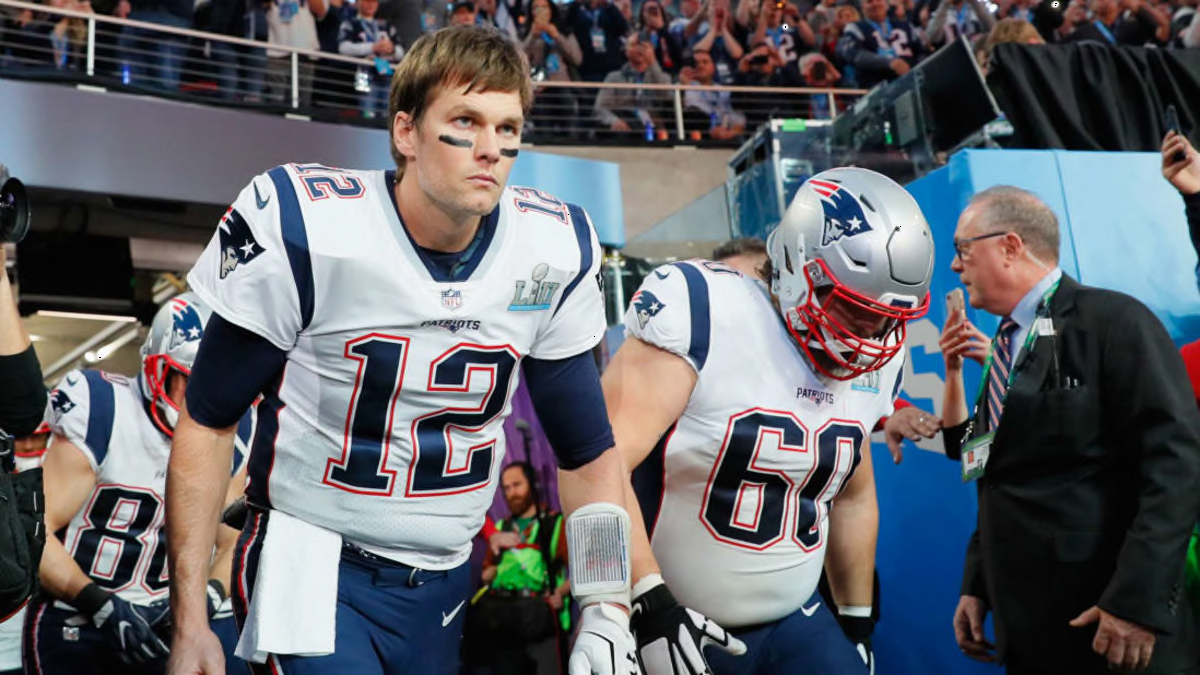
As the visual impact of eyeblack became undeniable, corporations saw an opportunity to capitalize on this high-visibility space. The shift from messy grease to manufactured “eyeblack stickers” opened the door for commercialization.
Strategic Product Placement
The invention of the eyeblack sticker—a piece of medical-grade tape with a matte finish—changed the game for corporate branding. Suddenly, these strips could be mass-produced with precision-printed logos. Companies like Nike, Under Armour, and various collegiate programs began distributing stickers featuring their iconic logos. When an athlete wears a Nike “Swoosh” on their eyeblack, it is the ultimate form of native advertising. It is embedded in the most emotional and intense moments of the broadcast, ensuring that the brand is literally part of the athlete’s “game face.”
Customization and Fan Engagement
Corporate branding through eyeblack extends beyond the players to the fans. Eyeblack has become a staple of “fan-wear” and promotional giveaways. By providing fans with stickers that mirror what the pros wear—often emblazoned with the team’s logo or a sponsor’s name—brands create a physical connection between the consumer and the team. This is a brilliant branding strategy: it encourages the consumer to “wear the brand” in a way that feels like participation rather than just consumption. It turns the fan’s face into a mobile billboard, fostering a sense of tribalism and brand loyalty.
Why Brands Should Care: Lessons from the Field
The use of eyeblack offers profound lessons for brand strategists in any industry. It serves as a case study in how to take a functional necessity and transform it into a symbolic asset.
Visual Consistency and Recognition
One of the core tenets of branding is consistency. Eyeblack provides a consistent visual anchor. Regardless of whether a team changes its jersey design or moves to a new stadium, the presence of eyeblack remains a constant thread in the visual narrative of the sport. For businesses, this highlights the importance of finding a “signature” element—a specific visual cue that remains constant even as other marketing tactics evolve. Just as the eyeblack signals “game time,” a brand should have a visual or experiential cue that signals its core promise to the customer.
Creating Emotional Resonance through Symbolic Design
Eyeblack works because it taps into deep-seated human psychology. It evokes the imagery of ancient warriors and the intensity of the hunt. This emotional resonance is what every brand strives for. By understanding the symbols and archetypes that resonate with their target audience, brands can move beyond selling a product (the grease) to selling an identity (the warrior).
The lesson for modern marketers is clear: Branding is not just about what you do; it’s about how you make people feel and what you help them represent. Eyeblack does not just reduce glare; it builds a bridge between the athlete’s internal drive and the external world’s perception.
Conclusion: The Enduring Legacy of the Game Face
When we ask, “what does eyeblack do?” we are really asking about the intersection of human performance and visual communication. In the context of brand strategy, eyeblack is a reminder that the most effective branding is often the most visible and the most personal. It is a tool that has evolved from a practical solution for a sun-drenched outfielder into a sophisticated medium for expression, intimidation, and commercial messaging.
As digital media continues to shorten our attention spans and heighten our focus on visual storytelling, the importance of “face-level” branding will only grow. Whether it is through the literal use of eyeblack on a field or the metaphorical “eyeblack” of a company’s social media aesthetic, the goal remains the same: to reduce the noise, focus the gaze, and tell a powerful story in a single glance. In the end, eyeblack is the ultimate proof that even the smallest strip of space can hold the weight of a global brand if used with strategic intent.
aViewFromTheCave is a participant in the Amazon Services LLC Associates Program, an affiliate advertising program designed to provide a means for sites to earn advertising fees by advertising and linking to Amazon.com. Amazon, the Amazon logo, AmazonSupply, and the AmazonSupply logo are trademarks of Amazon.com, Inc. or its affiliates. As an Amazon Associate we earn affiliate commissions from qualifying purchases.