
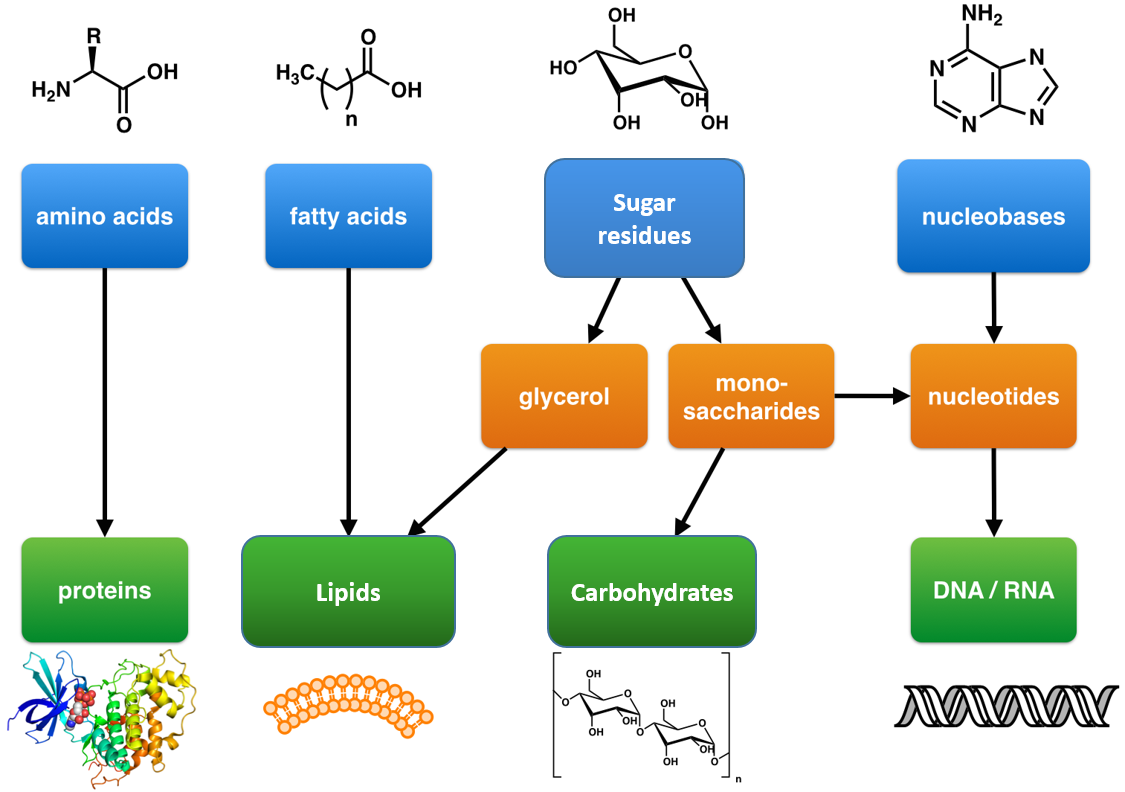
In the biological world, macromolecules—proteins, lipids, carbohydrates, and nucleic acids—form the essential components of life. They are complex structures built from simpler subunits that, when combined, create the functional systems of living organisms. In the modern era, a similar phenomenon exists within the realm of technology. As our digital landscape grows in complexity and scale, we must look at the foundational elements that constitute the “digital macromolecules” of our age.
Understanding the building blocks of technology is not merely an academic exercise for engineers; it is a prerequisite for any professional seeking to navigate the current digital transformation. From the raw data that fuels artificial intelligence to the silicon chips that provide the physical skeleton for computation, these building blocks determine the durability, scalability, and efficiency of the global tech stack. This article explores the core components that serve as the monomers of our digital reality and how they synthesize into the complex systems we rely on today.
Data: The Primary Monomer of the Digital Organism
If we consider a software ecosystem as a biological organism, data is the primary monomer—the fundamental unit that provides the information necessary for function. Just as amino acids sequence into proteins to perform specific tasks, data points are aggregated and processed to generate insights, drive automation, and facilitate human-computer interaction.
Structured vs. Unstructured Data: The Raw Materials
The first step in understanding data as a building block is distinguishing between its various forms. Structured data, often stored in relational databases (SQL), is highly organized and easily searchable. It represents the “rigid” structures of the digital world, such as financial records or inventory lists.
In contrast, unstructured data—comprising emails, social media posts, videos, and sensor readings—represents the vast majority of new data generated today. This raw material is more difficult to process but contains the “genetic” richness required for advanced machine learning models. The ability to transform unstructured data into actionable intelligence is what separates modern tech giants from legacy enterprises.
Big Data and the Cloud as Cellular Storage
As these data monomers multiply, they require sophisticated storage and management systems. Cloud computing serves as the cellular membrane of the digital macromolecule, providing a secure, scalable environment where data can be stored and retrieved.
Technologies like data lakes and data warehouses allow organizations to aggregate massive datasets, creating a “primordial soup” from which valuable insights can be distilled. The shift from localized servers to distributed cloud architectures (AWS, Azure, Google Cloud) has allowed these digital building blocks to reach a scale previously thought impossible, enabling the birth of global-scale applications.
Code and Algorithms: The Genetic Sequencing of Software
While data provides the information, code provides the instructions. In this analogy, code and algorithms function as the DNA of the technological macromolecule. They dictate how data is processed, how systems respond to stimuli, and how the overall “organism” evolves over time.
Compilers and Runtimes: Translating Intent into Action
At its core, all software is built upon layers of abstraction. High-level programming languages like Python, Java, and C++ allow humans to write complex instructions in a readable format. However, for these instructions to be executed, they must be translated into machine code—the binary language of 1s and 0s.
Compilers and runtimes act as the “ribosomes” of the tech world, reading the genetic instructions of the code and assembling the final functional output. The efficiency of these building blocks determines the performance and speed of an application, making them critical components of the technological infrastructure.
The Role of Artificial Intelligence in Self-Optimizing Code
The most significant advancement in the “genetic sequencing” of technology is the advent of Artificial Intelligence (AI) and Machine Learning (ML). We are moving from a world where humans write every line of code to a world where algorithms can generate, optimize, and debug themselves.
AI models are themselves complex macromolecules built from neural networks. These networks mimic the human brain’s structure, allowing software to learn from data patterns. This shift represents a fundamental change in the building blocks of tech: we are no longer just building tools; we are building systems capable of autonomous evolution.

Infrastructure and Hardware: The Physical Skeleton
Every macromolecule needs a physical medium to exist within. In biology, this is the cellular structure; in technology, it is the hardware. Without the physical skeleton of semiconductors, processors, and networking equipment, the “soul” of data and code would have no vessel.
Semiconductors and the Evolution of Processing Power
The semiconductor chip is the most fundamental physical building block of modern technology. Silicon-based transistors serve as the basic switches that allow for binary computation. Over the decades, Moore’s Law has guided the shrinking of these transistors, allowing more “cells” to be packed into the same physical space.
Today, we are seeing a diversification in hardware building blocks. Graphics Processing Units (GPUs), originally designed for rendering images, have become the backbone of AI development due to their ability to perform parallel processing. Tensor Processing Units (TPUs) and specialized AI chips represent the next stage of evolution, providing the raw muscular power needed to run massive neural networks.
Networking Protocols: The Synaptic Connections
A macromolecule is only effective if its constituent parts can communicate. Networking protocols—such as TCP/IP, 5G, and Fiber Optics—act as the synaptic connections of the global tech ecosystem. They define the rules for how data packets travel across the “nervous system” of the internet.
As we move toward the Internet of Things (IoT), these connections are becoming more pervasive. Every device, from a smart thermostat to an industrial robot, becomes a node in a larger digital macromolecule. The reliability and latency of these connections determine how cohesive the overall system remains.
Cybersecurity: The Immune System of the Digital World
In a world of increasing complexity, the risk of “infection” or systemic failure rises. Cybersecurity is not just an additive feature; it is a foundational building block—the immune system that protects the integrity of the digital macromolecule from external threats and internal corruption.
Encryption as a Protective Membrane
Encryption is the primary defense mechanism of the digital world. By using mathematical algorithms to scramble data, encryption ensures that even if information is intercepted, it remains unreadable to unauthorized entities. It acts like a semi-permeable membrane, allowing authorized “nutrients” (data) to pass through while blocking harmful “pathogens” (hackers).
Advanced encryption standards (AES) and public-key infrastructure (PKI) are the essential proteins of this defense system. Without these building blocks, the entire structure of digital commerce and communication would collapse under the weight of insecurity.
Proactive Threat Detection and Machine Learning
Modern cybersecurity has evolved beyond static barriers. Today’s immune systems use machine learning to identify anomalies in real-time. By analyzing patterns of network traffic, these systems can detect a “virus” (malware) or an “autoimmune response” (systemic glitch) before it causes widespread damage. This proactive stance is a critical building block for maintaining the uptime and reliability of the global digital infrastructure.
The Future of Technological Macromolecules
As we look toward the horizon, the building blocks of macromolecules in technology are undergoing a radical transformation. We are entering an era where the traditional boundaries between hardware, software, and data are blurring, leading to entirely new forms of digital existence.
Quantum Computing: Reshaping the Core Elements
Quantum computing represents a shift in the very atoms of technology. By moving from bits (0 or 1) to qubits (which can exist in multiple states simultaneously), we are fundamentally changing how computation occurs. This is akin to moving from carbon-based life forms to a new, more efficient biological paradigm. Quantum building blocks will allow us to solve problems in chemistry, logistics, and cryptography that are currently impossible for classical “macromolecules” to handle.

Edge Computing and Decentralized Architectures
Finally, the structure of the digital organism is becoming more decentralized. Edge computing moves the processing power—the “brain” of the operation—closer to the source of the data. Instead of a single, centralized “nucleus,” we are seeing a distributed network of smaller, highly efficient nodes.
Combined with blockchain technology, which provides a decentralized ledger for trust and verification, these building blocks are creating a more resilient and transparent digital future. By understanding these fundamental components—data, code, hardware, and security—we can better prepare for the next generation of technological innovation. The macromolecules of today are merely the foundation for the digital lifeforms of tomorrow.
aViewFromTheCave is a participant in the Amazon Services LLC Associates Program, an affiliate advertising program designed to provide a means for sites to earn advertising fees by advertising and linking to Amazon.com. Amazon, the Amazon logo, AmazonSupply, and the AmazonSupply logo are trademarks of Amazon.com, Inc. or its affiliates. As an Amazon Associate we earn affiliate commissions from qualifying purchases.