
In the modern digital economy, the barrier to entry for starting a business has never been lower, yet the challenge of consistent content creation has never been higher. For entrepreneurs, side-hustlers, and digital marketers, time is the most valuable currency. This is where Private Label Rights (PLR) come into play. Often misunderstood or dismissed as low-quality filler, PLR is, in reality, a powerful financial lever that allows individuals to acquire intellectual property, rebrand it, and monetize it with minimal overhead.
This article explores the intricacies of PLR from a financial and business-building perspective, detailing how you can use these digital assets to build sustainable online income streams and maximize your return on investment (ROI).

The Mechanics of PLR: A Strategic Asset for the Modern Entrepreneur
At its core, Private Label Rights (PLR) is a type of license where the creator sells the intellectual property rights of a product to a buyer. Unlike standard consumer licenses, PLR grants the buyer the authority to edit, rebrand, and often claim authorship of the content. In the context of “Money” and “Online Income,” PLR functions as a shortcut to product development, allowing a business owner to skip the expensive and time-consuming “R&D” phase.
Understanding the Spectrum of Digital Rights
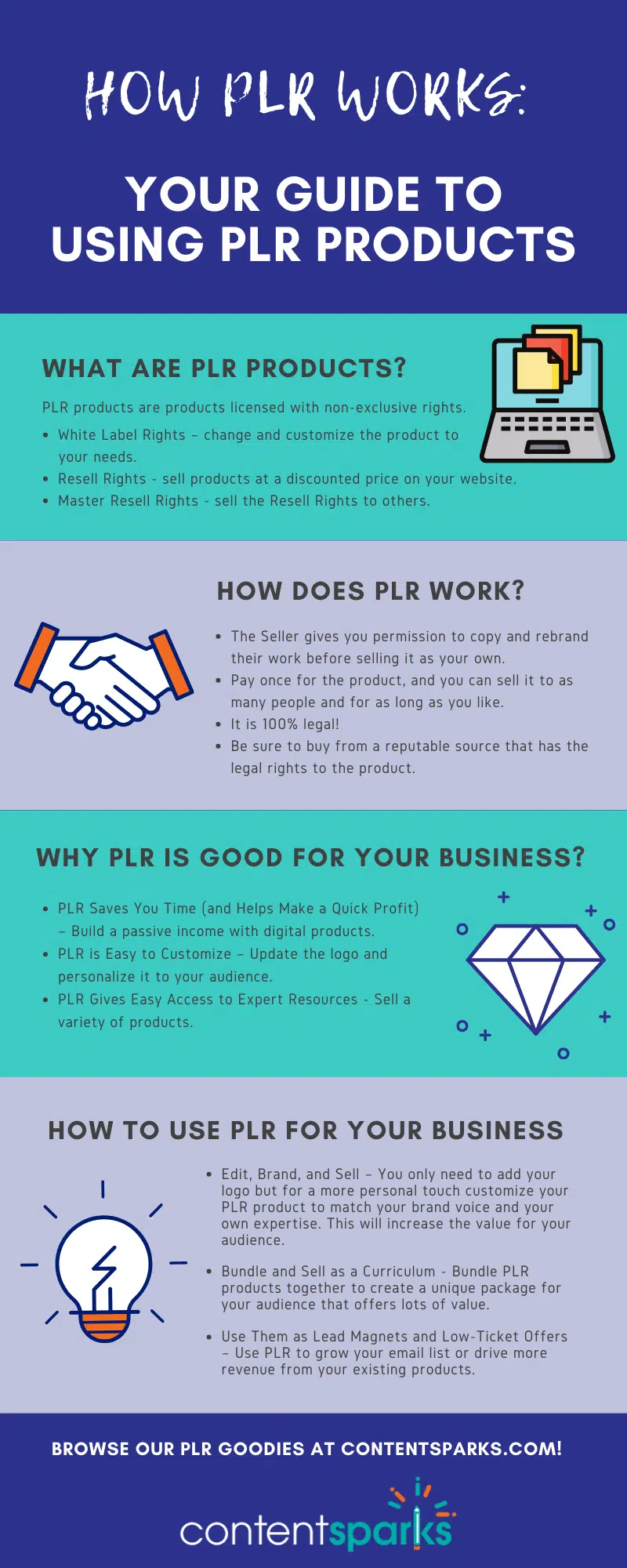
To navigate the PLR market profitably, one must understand the hierarchy of licensing. Not all “resell” rights are created equal, and choosing the wrong one can limit your income potential.
- Resell Rights (RR): You can sell the product to customers, but the customers cannot resell it. You cannot change the content.
- Master Resell Rights (MRR): You can sell the product to customers, and you can also sell the rights to sell the product to others. Again, you usually cannot edit the content.
- Private Label Rights (PLR): This is the gold standard for income generation. You can edit the text, change the graphics, break the content into smaller pieces, or bundle it with other products. This flexibility is what allows you to create a unique “Value Proposition” that separates you from the competition.
The Economics of PLR vs. Custom Content
From a financial standpoint, PLR is a masterpiece of cost efficiency. To hire a high-level ghostwriter to create a 50-page e-book on “Investment Strategies for Gen Z,” you might pay anywhere from $500 to $2,500. Conversely, a high-quality PLR package on the same topic might cost $50.
While the PLR product is not exclusive to you, the massive gap in “Cost of Goods Sold” (COGS) allows for a significantly higher profit margin. By investing a few hours into customizing that $50 asset, you create a product that can be sold indefinitely, turning a one-time micro-investment into a recurring revenue stream.
Maximizing Profitability: Proven Strategies for Monetizing PLR
Acquiring PLR is an expense; monetizing it is an investment. To generate significant online income, you must move beyond simply “flipping” the content. The real money in PLR lies in how you package and position the assets within your financial ecosystem.
Creating High-Ticket Information Products
One of the most effective ways to use PLR is as the “skeleton” for a comprehensive digital course or a premium e-book. Instead of selling a generic PLR report for $7, you can use the content as a curriculum outline, add your own case studies, record video modules based on the text, and sell a “Premium Masterclass” for $97 or $197. By adding your unique insights, you transform a commodity into a specialized financial asset.
Building High-Converting Affiliate Funnels
In the world of affiliate marketing, the “Lead Magnet” is king. To earn commissions, you need an email list. Creating a free giveaway from scratch takes time you could be spending on traffic generation. By using PLR reports as “ethical bribes,” you can build an email list of subscribers interested in specific financial niches (e.g., cryptocurrency, real estate, or budgeting). Once they are on your list, you can market high-ticket affiliate products to them, creating a passive income loop fueled by the initial PLR asset.
Membership Sites and Recurring Revenue
The holy grail of online income is the recurring subscription model. PLR is an ideal solution for the “content treadmill” problem faced by membership site owners. By sourcing high-quality PLR articles, videos, and worksheets, you can provide monthly value to your members without burning out. As long as the content solves a problem or provides a financial benefit to the subscriber, they will continue to pay the monthly fee, ensuring your business has a predictable cash flow.
The “Rebranding” Blueprint: Turning Generic Data into Premium Intellectual Property
The primary risk with PLR is “market saturation”—the idea that many people are selling the same thing. To protect your brand’s financial integrity and ensure high conversion rates, you must treat PLR as raw material rather than a finished product.
Developing a Unique Value Proposition (UVP)
If you buy a PLR pack on “Side Hustles,” and so do 100 other people, the value of that information drops unless you change the context. To maximize the financial return, you must re-contextualize the content.
- Target a Niche: Instead of “Side Hustles,” make it “Side Hustles for Stay-at-Home Parents” or “Side Hustles for Software Engineers.”
- Update the Data: Ensure all financial statistics, tax implications, or platform-specific advice are current. Fresh data commands a higher price point.
Multi-Channel Distribution and Content Repurposing
A single PLR e-book can be dismantled to create multiple revenue-generating assets. This is known as “modular content strategy.”
- Blog Posts: Use chapters as SEO-optimized blog posts to drive organic traffic to your sales pages.
- Social Media Content: Turn key insights into “hooks” for Twitter (X), LinkedIn, or Instagram to build your personal brand authority.
- Podcasts/Video: Use the PLR text as a script for YouTube videos. Monetize through ad revenue and descriptions links.
By spreading the content across multiple platforms, you increase the “surface area” of your business, making it easier for potential customers to find your paid offers.
Financial Risk Management and Sustainability in PLR Investing
While PLR offers high rewards, it is not without its pitfalls. A savvy business owner must approach PLR with the same due diligence used in stock market investing or real estate.
License Compliance and Legal Protection
The first rule of PLR is to read the “Terms of Use” file. Some licenses prohibit selling the content on platforms like Amazon Kindle (KDP) or require that you change at least 50% of the content before claiming authorship. Violating these terms can lead to your storefront being banned or legal action from the original creator. Always ensure you have the explicit right to “Private Label” the content, which includes the right to put your name on it.
Avoiding the “Duplicate Content” Trap
From an SEO (Search Engine Optimization) perspective, Google penalizes sites that provide no unique value. If you copy and paste PLR text directly onto your website, you are unlikely to rank in search results, which cuts off a major source of free, high-intent traffic. To turn PLR into a long-term financial asset, you should rewrite the headlines, introductions, and conclusions. Use AI tools to assist in paraphrasing, but always add a personal “voice” to ensure the content resonates with your audience and satisfies search engine algorithms.
Quality Control: The “Junk” Filter
The PLR market is flooded with outdated, poorly written content. Buying cheap, $1 PLR bundles is often a “sunk cost” because the time required to fix the errors exceeds the cost of starting from scratch. To ensure a positive ROI, source your content from reputable PLR vendors who specialize in high-quality, researched material. Investing $50 in a “Gold Standard” package is always more profitable than spending $5 on “digital trash” that damages your brand’s reputation.

Conclusion: Building a Wealth Engine with PLR
In the context of personal finance and online income, Private Label Rights (PLR) represent one of the most efficient ways to scale a digital business. By acting as a “content aggregator” rather than just a creator, you can move from a “trading time for money” model to a “leveraging assets for profit” model.
The secret to success with PLR is not in the buying, but in the application. When you treat PLR as a foundation—rebranding it, tailoring it to a specific niche, and integrating it into a strategic sales funnel—you create a “Wealth Engine” that works 24/7. Whether you are building a side hustle to pay off debt or looking to establish a full-time digital empire, PLR provides the speed and flexibility needed to thrive in today’s fast-paced financial landscape. By investing in the right licenses and applying a rigorous rebranding process, you can transform generic information into a lucrative portfolio of digital property.
aViewFromTheCave is a participant in the Amazon Services LLC Associates Program, an affiliate advertising program designed to provide a means for sites to earn advertising fees by advertising and linking to Amazon.com. Amazon, the Amazon logo, AmazonSupply, and the AmazonSupply logo are trademarks of Amazon.com, Inc. or its affiliates. As an Amazon Associate we earn affiliate commissions from qualifying purchases.