
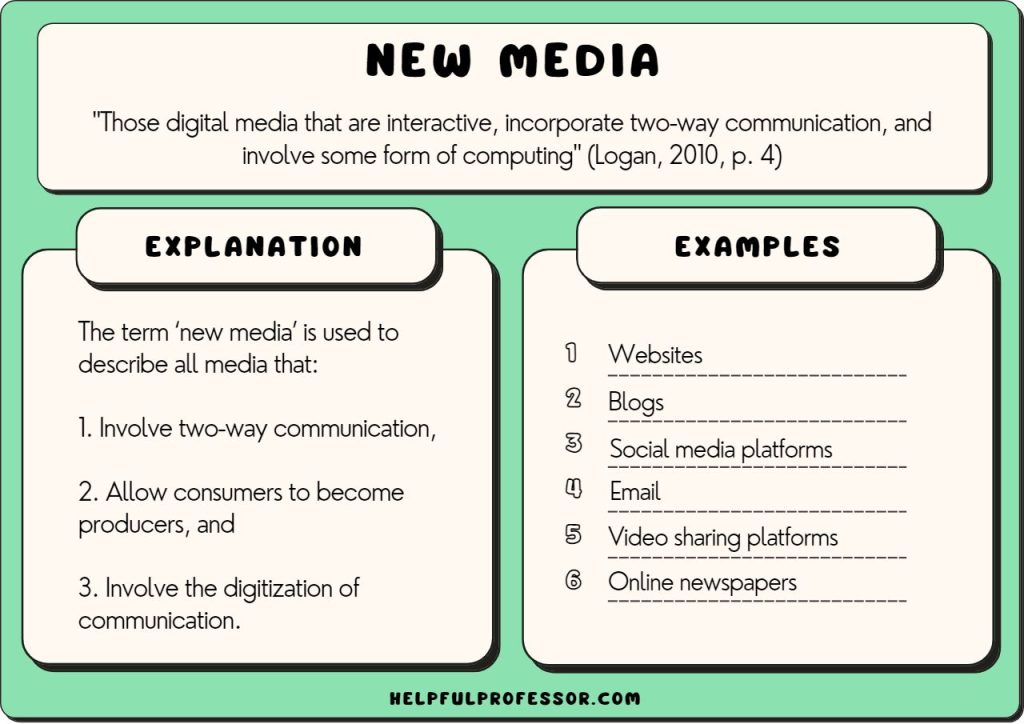
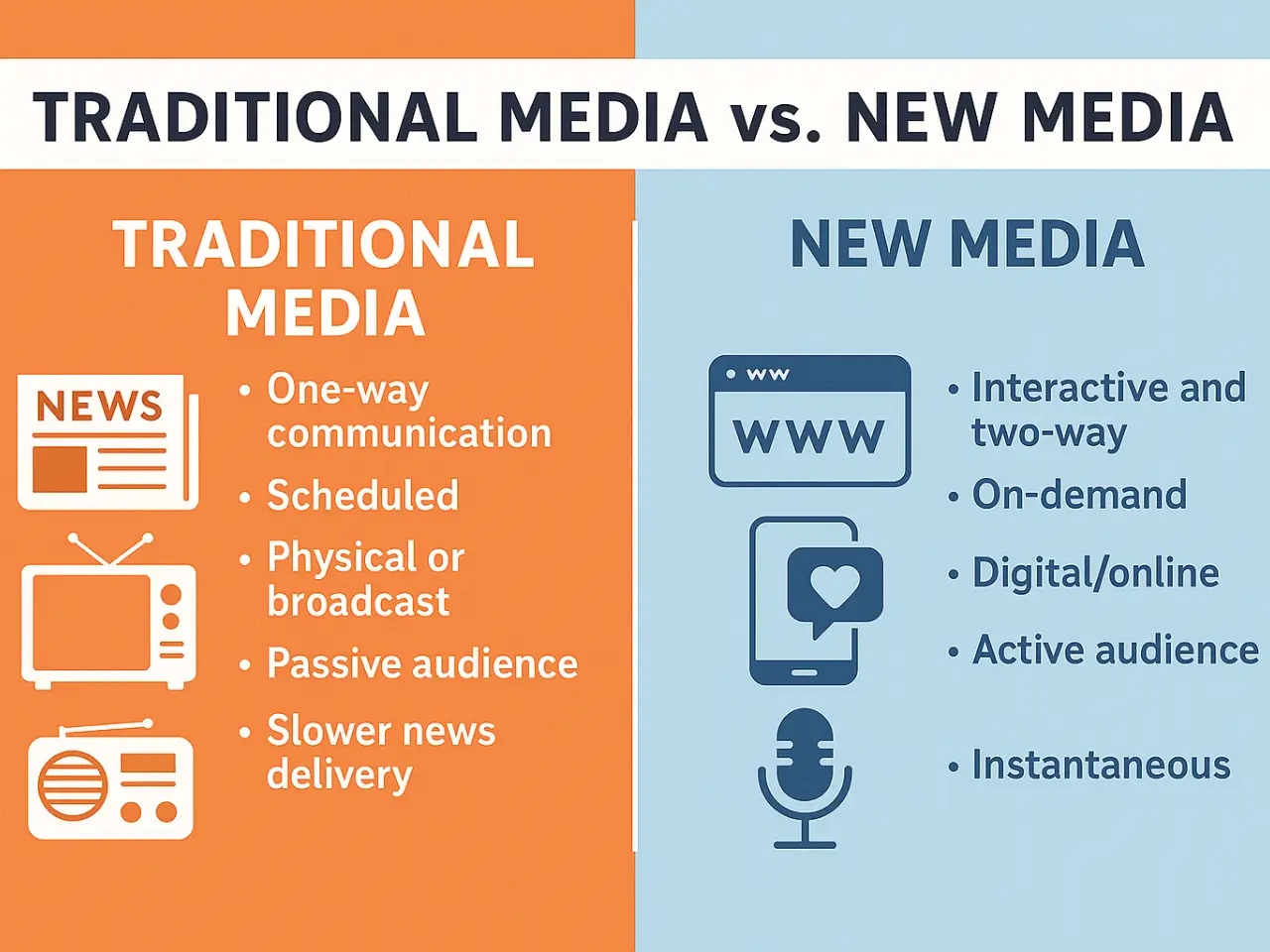
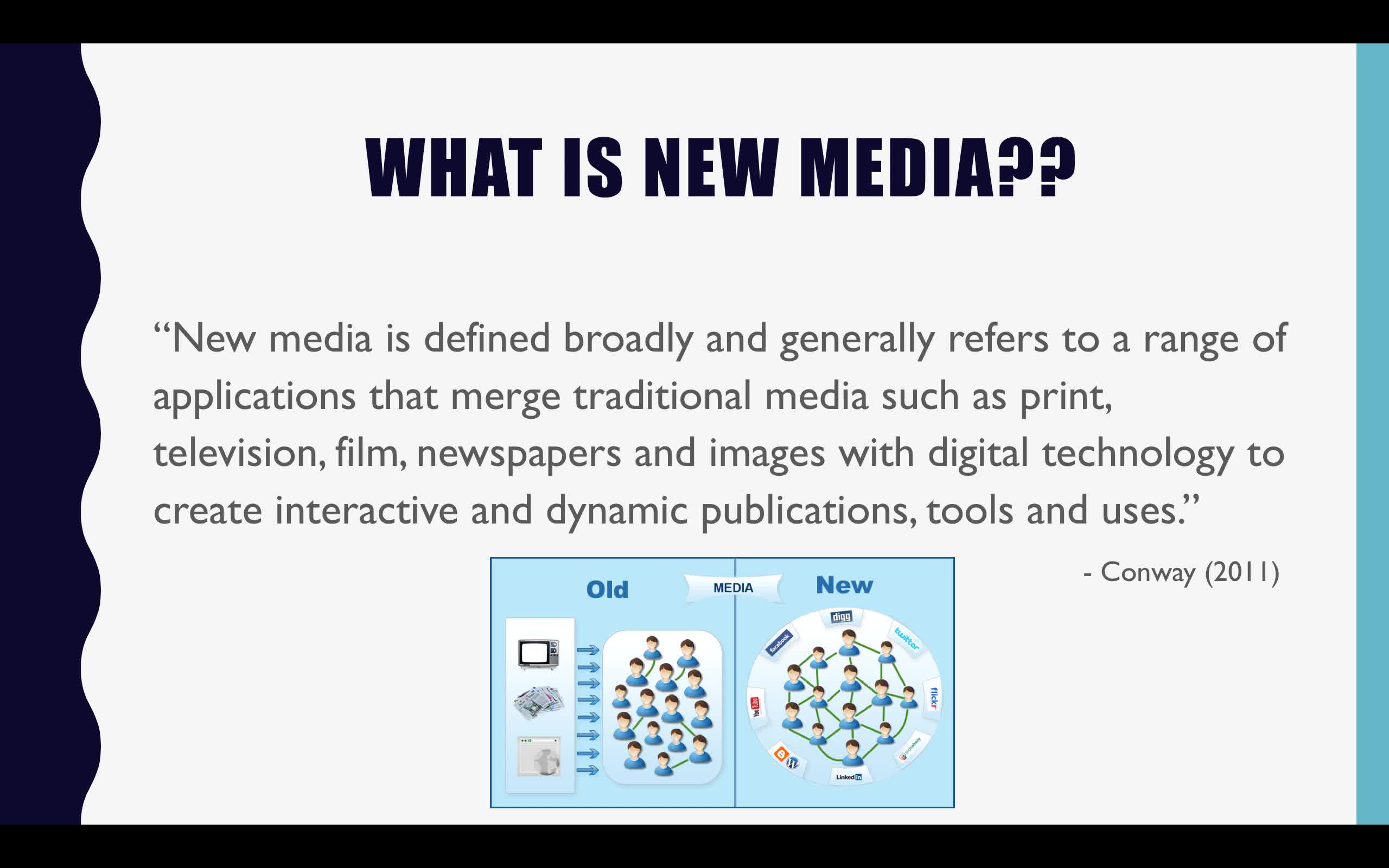
In the modern era, the term “New Media” has evolved from a buzzword into a foundational pillar of the technological landscape. At its core, New Media refers to any form of communication that relies on digital technology and computer-based distribution. Unlike traditional media—such as print newspapers, television broadcasts, and radio, which operate on a one-to-many, linear model—New Media is characterized by its interactivity, accessibility, and reliance on real-time data processing.
The shift from analog to digital has not merely changed how we consume content; it has fundamentally restructured the architecture of human interaction. From the algorithms that curate our social feeds to the cloud infrastructure that delivers high-definition streaming, New Media is a technological phenomenon that continues to redefine the boundaries of software, hardware, and data science.
Defining New Media through Technological Evolution
To understand New Media, one must first understand the technological transition from analog signals to digital bits. Traditional media utilized physical formats—ink on paper, or electromagnetic waves transmitted through the air—to deliver information. New Media, however, exists as binary code, allowing for infinite reproducibility and instant transmission across global networks.
From Analog to Digital: The Foundation
The primary differentiator of New Media is digitization. When information is digitized, it is converted into a format that can be processed by computers. This allows for “numerical representation,” a concept popularized by media theorist Lev Manovich. Because New Media objects are composed of digital code, they can be manipulated algorithmically. This means that a digital photograph, a video stream, or a text file can be edited, compressed, and searched with a level of precision that was impossible with analog film or physical print.
Interactivity and the Two-Way Data Stream
Perhaps the most disruptive aspect of New Media technology is interactivity. Traditional media is a monologue; the broadcaster speaks, and the audience listens. New Media is a dialogue. Through the use of User Interface (UI) design and complex backend databases, New Media platforms allow users to interact with content in real-time. Whether it is commenting on a blog, navigating an immersive 3D environment, or influencing a live stream through a chat interface, the technology facilitates a two-way data stream that makes the consumer an active participant in the media experience.
On-Demand Access and the Death of the Broadcast Schedule
New Media has replaced the “appointment viewing” of the 20th century with an “on-demand” architecture. This is made possible by high-speed internet protocols and server-side storage. Instead of waiting for a specific time to watch a program, users access content via Content Delivery Networks (CDNs). This shift represents a move from synchronous to asynchronous communication, where the timing of consumption is determined by the user’s software preferences rather than a centralized broadcast schedule.
The Technological Pillars of New Media
The existence and expansion of New Media are supported by several critical technological pillars. These infrastructures allow for the seamless delivery and management of massive amounts of data across the globe.
Cloud Computing and Global Distribution
Without the cloud, New Media as we know it would cease to function. Cloud computing provides the scalable storage and processing power necessary to host millions of hours of video, billions of images, and endless streams of text. Services like Amazon Web Services (AWS) and Google Cloud act as the backbone for New Media platforms, ensuring that data is replicated across various geographical regions to minimize latency. This distributed architecture allows a user in Tokyo and a user in New York to access the same piece of digital media simultaneously with minimal delay.
The Role of Algorithms and AI in Content Curation
In the ocean of New Media, the “algorithm” is the navigator. As the volume of digital content exploded, the need for automated curation became paramount. Machine learning algorithms analyze user behavior—clicks, dwell time, and interaction patterns—to serve personalized content. This is “New Media” in its most advanced form: a software-driven experience where the medium itself learns from the user to optimize the delivery of information. Artificial Intelligence (AI) now handles everything from real-time language translation in videos to the automated moderation of community forums.
Mobile First: The Ubiquity of Personal Devices
The hardware transition from desktop computers to smartphones has been a catalyst for New Media growth. Mobile technology, characterized by high-density touchscreens, GPS sensors, and constant 5G connectivity, has made New Media ubiquitous. The “always-on” nature of mobile devices means that New Media is no longer something we sit down to engage with; it is an integrated layer of our physical reality. Apps are the primary interface through which we access this media, utilizing sophisticated APIs (Application Programming Interfaces) to pull data from various sources into a single, cohesive user experience.
Software and Tools Driving the New Media Ecosystem
Behind every New Media platform is a sophisticated stack of software and developer tools. These technologies democratize content creation, allowing anyone with a computer to become a “media outlet.”
Content Management Systems (CMS) and Low-Code Web Dev
In the early days of the web, publishing required deep knowledge of HTML and CSS. Today, Content Management Systems like WordPress, Ghost, and specialized headless CMS architectures allow for the rapid deployment of media-rich websites. Furthermore, the rise of “low-code” and “no-code” platforms has empowered non-technical creators to build complex digital experiences. These tools abstract the underlying code, allowing for the visual manipulation of digital assets while the software handles the complex backend logic.
Real-Time Communication Protocols
New Media is increasingly defined by “live” experiences. This is powered by protocols such as WebRTC (Web Real-Time Communication) and WebSocket. These technologies allow for low-latency, peer-to-peer communication directly within web browsers and mobile apps. Whether it is a video conferencing tool, a live gaming stream on Twitch, or a collaborative workspace in Notion, these protocols enable the instantaneous exchange of data that defines the modern digital experience.
Immersive Tech: VR, AR, and the Metaverse
The next frontier of New Media involves the transition from 2D screens to 3D environments. Virtual Reality (VR) and Augmented Reality (AR) represent the pinnacle of media interactivity. By using spatial computing, these technologies blur the line between the digital and the physical. Software engines like Unity and Unreal Engine, originally designed for gaming, are now being used to create interactive news reports, virtual museums, and immersive educational tools. This “Metaverse” concept is essentially New Media evolving into a fully navigable, persistent digital space.
The Future of New Media: Emerging Tech Frontiers
As we look toward the future, New Media is poised to undergo another radical transformation driven by the maturation of cutting-edge technologies.
Generative AI and the Automation of Creativity
The emergence of Large Language Models (LLMs) and generative image/video AI is fundamentally changing the “production” side of New Media. Tools like ChatGPT, Midjourney, and Sora allow for the automated generation of high-quality content. We are entering an era where New Media may be “synthetic”—content generated by AI for human consumption, or even AI-to-AI communication. This poses significant technological challenges, particularly regarding the authentication of media and the battle against deepfakes.
Decentralized Media and Blockchain Technology
In response to the centralized control of New Media by a few tech giants, there is a growing movement toward decentralized media. Utilizing blockchain technology, developers are creating platforms where content is hosted on peer-to-peer networks rather than central servers. This “Web3” approach to New Media aims to give users more control over their data and digital identities. Smart contracts can automate the distribution of access rights, ensuring that the technology itself enforces the rules of the platform without the need for a central intermediary.
The Integration of IoT in Narrative Experiences
The Internet of Things (IoT) is expanding the canvas of New Media to include everyday objects. Imagine a news story that changes its tone based on the lighting in your room, or a podcast that adjusts its length based on your projected commute time provided by your smart car. As sensors become more integrated into our environment, New Media will become “context-aware,” utilizing real-world data to tailor the digital experience to the user’s physical circumstances.
In conclusion, New Media is not a static category but a continuous technological evolution. It is the intersection of software engineering, data science, and human-computer interaction. As our tools become more sophisticated, New Media will continue to move away from the screen and into the very fabric of our lives, driven by the relentless pace of digital innovation.
aViewFromTheCave is a participant in the Amazon Services LLC Associates Program, an affiliate advertising program designed to provide a means for sites to earn advertising fees by advertising and linking to Amazon.com. Amazon, the Amazon logo, AmazonSupply, and the AmazonSupply logo are trademarks of Amazon.com, Inc. or its affiliates. As an Amazon Associate we earn affiliate commissions from qualifying purchases.