
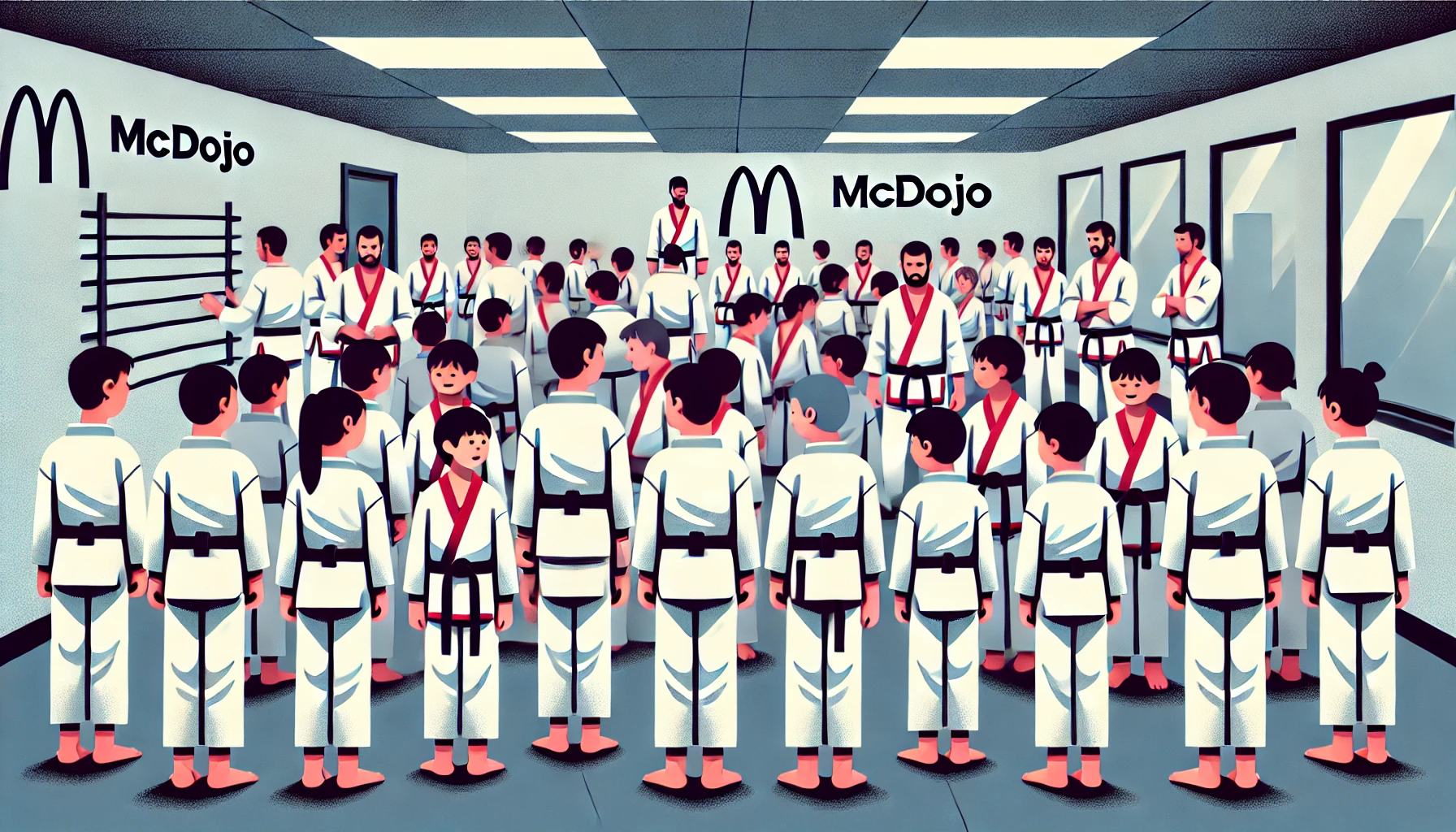
In the landscape of modern commerce, the term “McDojo” has evolved from a niche martial arts insult into a significant case study in brand dilution and predatory marketing. For brand strategists and entrepreneurs, the McDojo phenomenon represents a cautionary tale of what happens when the principles of “McDonaldization”—efficiency, calculability, predictability, and control—are applied to a craft that traditionally relies on authenticity and rigor.
To understand what a McDojo is from a branding perspective is to understand the tension between scaling a business and maintaining the integrity of the product. It is a study in how a brand can successfully attract consumers through polished marketing while simultaneously destroying its long-term equity by failing to deliver on its core promise.

Defining the McDojo: When Brand Identity Supersedes Quality
At its core, a McDojo is a martial arts school that prioritizes financial profit and rapid expansion over the genuine instruction of martial arts. However, from a brand strategy viewpoint, it is more accurately defined as a “commodity brand” masquerading as an “expert brand.”
The McDonaldization of Martial Arts
The term “McDojo” is a direct linguistic play on the fast-food giant McDonald’s. This comparison is not accidental. In brand theory, McDonaldization refers to the process by which the principles of the fast-food restaurant are coming to dominate more and more sectors of society.
In a McDojo, the brand is built on “predictability.” Parents know exactly when their child will receive a new belt, not because the child has reached a specific level of proficiency, but because the “brand schedule” dictates it. This creates a standardized, assembly-line experience. While this level of predictability is excellent for a burger franchise, it is antithetical to the brand promise of martial arts, which is rooted in personal transformation and the mastery of a difficult skill. When the process becomes too efficient, the “value” of the brand—the black belt—is devalued.
Signs of a Shallow Brand Strategy
A McDojo’s brand identity is often hyper-polished but lacks depth. You will often see an over-reliance on visual cues of authority—excessive trophies, flashy uniforms, and walls covered in certificates—without the technical substance to back them up.
In branding, we call this “over-signaling.” When a brand lacks a strong internal value proposition, it compensates by amplifying its external signals. A McDojo focuses on the aesthetic of martial arts rather than the utility of it. This strategy works well for short-term customer acquisition, particularly among demographics who cannot distinguish between high-quality instruction and high-quality “theater.”
The Business Model vs. The Brand Promise
Every brand makes a promise to its customers. For a martial arts school, that promise is usually centered on self-defense, discipline, or fitness. A McDojo’s brand failure lies in the disconnect between this promise and its actual business model, which is often built on predatory monetization.
Predatory Marketing and Long-Term Contracts
One of the hallmarks of McDojo branding is the shift from “service provider” to “creditor.” Instead of a monthly tuition model based on ongoing satisfaction, McDojos often utilize aggressive sales tactics to lock students into multi-year contracts.
From a brand strategy perspective, this is a “lock-in” strategy that prioritizes short-term cash flow over customer lifetime value (CLV) driven by loyalty. When a brand has to legally compel its customers to stay, it is an admission that the brand experience itself is not enough to retain them. This creates a negative brand sentiment in the community, leading to high churn rates that the school must then combat with even more aggressive (and often misleading) marketing.
The “Belt Factory” Revenue Stream
In a healthy brand ecosystem, milestones are earned. In a McDojo, milestones are sold. The “Belt Factory” model is a revenue-centric approach where frequent testing fees are a primary source of income.
To keep the revenue flowing, the brand must ensure that no student fails. If a student fails a test, they might get discouraged and stop paying tuition. Therefore, the “standard” of the brand is lowered to accommodate the lowest common denominator. While this maximizes the number of “products” (black belts) produced, it destroys the brand’s prestige. In the world of branding, if everyone has a “limited edition” item, it is no longer a limited edition. When a black belt is guaranteed by a payment plan rather than sweat, the brand’s “luxury” or “prestige” status evaporates.

Building a Sustainable Martial Arts Brand: The Alternative to the McDojo
The antithesis of a McDojo is the “Authentic Expert Brand.” These are schools that may not have the slickest marketing budgets, but they possess an incredible amount of brand equity because their “product” (the skill of the students) is undeniably high quality.
Authentic Value Proposition
A sustainable martial arts brand focuses on a “Value-First” proposition. Instead of selling a belt, they sell the journey. In branding, this is known as “Narrative Identity.” The customer isn’t just buying a service; they are becoming part of a story of hard work and achievement.
Authentic brands aren’t afraid to have a high barrier to entry. While this might seem counterintuitive to traditional marketing (which seeks to remove friction), in the context of martial arts, friction is the product. A brand that requires effort to join and effort to maintain gains a “cult-like” loyalty that no McDojo can replicate. This is why brands like Gracie Jiu-Jitsu or certain Muay Thai camps can charge premium prices without resorting to predatory contracts; their brand equity is built on the proven efficacy of their “product.”
Community-Centric Marketing
McDojos rely on “push” marketing—cold calls, aggressive flyers, and high-pressure sales pitches. In contrast, authentic brands rely on “pull” marketing. This is driven by word-of-mouth and community reputation.
For a martial arts school, the students are the walking billboards of the brand. If the students are unskilled, the brand is perceived as weak. If the students are disciplined and capable, the brand is perceived as elite. Investing in the quality of the student is, in itself, the most effective marketing strategy a martial arts school can employ. This “organic brand growth” is slower than the McDojo model but significantly more resilient to market fluctuations.
Protecting Brand Integrity in a Franchise World
As martial arts schools grow and seek to franchise, the risk of “McDojo-ification” increases. Maintaining brand integrity at scale is one of the greatest challenges in brand management.
Quality Control Mechanisms
To avoid the McDojo trap, a growing martial arts brand must implement rigorous quality control. This means that as the brand expands, the “Standard of Excellence” must be centralized.
Take, for example, a successful franchise like Alliance Jiu-Jitsu. They maintain their brand by ensuring that all affiliate instructors meet specific technical requirements. They don’t just sell the rights to use their logo; they sell a system of quality. If a franchise allows its standards to slip in exchange for more franchise fees, it has entered McDojo territory. Brand managers must realize that the weakest link in their chain defines the brand for the entire network.
Transparency and Trust
The final pillar of a strong martial arts brand is transparency. McDojos thrive on “hidden” costs—testing fees, association fees, and mandatory equipment purchases that were not disclosed upfront.
In the modern digital age, transparency is a competitive advantage. Brands that are upfront about their pricing, their lineage, and their expectations build a “Trust Reservoir.” When a brand is transparent, it signals to the consumer that it has nothing to hide. This trust is the foundation of long-term brand loyalty. A school that markets itself as “The hardest place you’ll ever love” is being more honest—and therefore building a stronger brand—than one that markets itself as “Black belt in 12 months, guaranteed.”
Conclusion: The Cost of the McDojo Label
In the world of branding, your name is your most valuable asset. Once a school or a chain is labeled a “McDojo,” that brand stain is nearly impossible to wash out. It signals to the market that the business values profit over people and marketing over mastery.
While the McDojo model may offer a blueprint for quick financial returns through high-volume turnover and aggressive monetization, it is a hollow strategy. True brand power in the martial arts industry—and indeed in any service industry—comes from the alignment of the brand promise with the customer experience. By focusing on authenticity, transparency, and the pursuit of excellence, martial arts entrepreneurs can build brands that don’t just occupy a space in a strip mall, but a place of respect in the culture.
aViewFromTheCave is a participant in the Amazon Services LLC Associates Program, an affiliate advertising program designed to provide a means for sites to earn advertising fees by advertising and linking to Amazon.com. Amazon, the Amazon logo, AmazonSupply, and the AmazonSupply logo are trademarks of Amazon.com, Inc. or its affiliates. As an Amazon Associate we earn affiliate commissions from qualifying purchases.