
In the rapidly evolving landscape of hardware engineering, the term “insulator” has moved far beyond simple rubber coatings on copper wires. As we push the boundaries of processing power, miniaturization, and energy density, the question of what constitutes a “good insulator” has become central to technological progress. Whether we are discussing the dielectric layers within a nanometer-scale transistor or the thermal barriers protecting a high-capacity lithium-ion battery, a good insulator is the silent guardian of modern electronics.
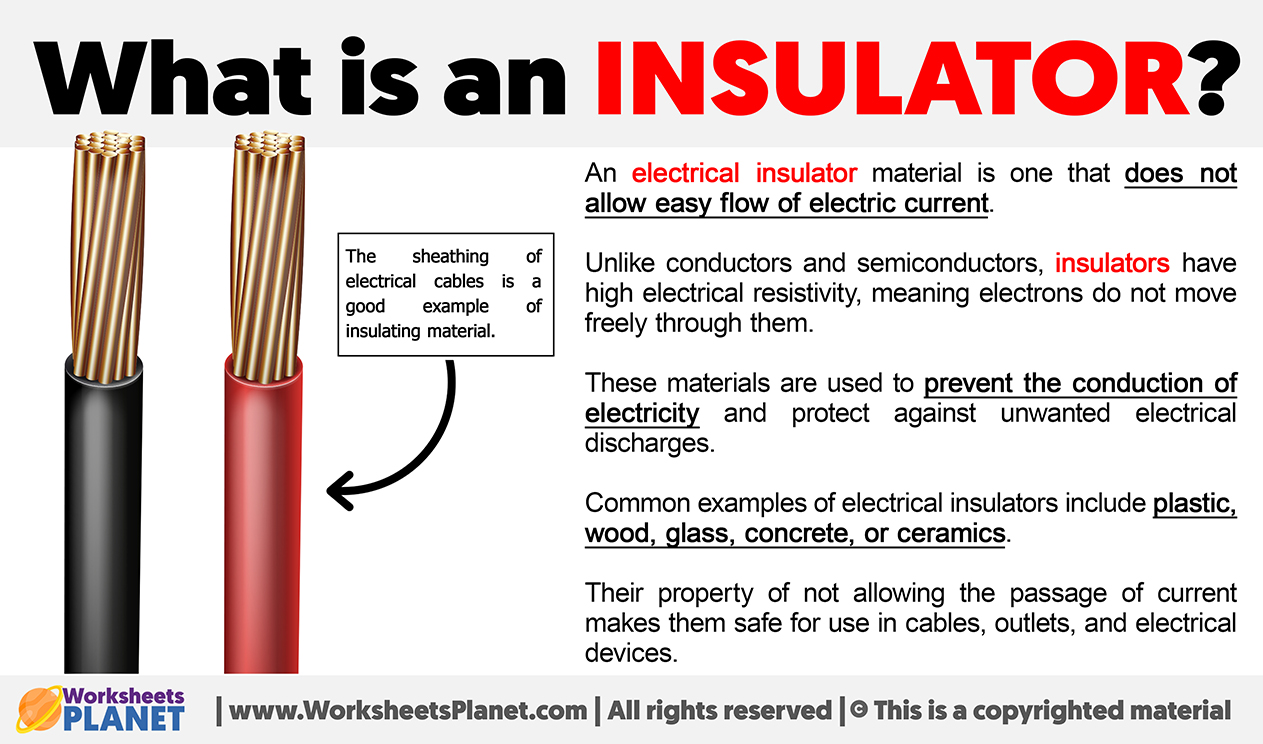
An insulator, by definition, is a material that resists the flow of heat or electricity. However, in the tech sector, “good” is a relative term defined by thermal resistance, dielectric strength, durability, and the ability to function under extreme conditions. This article explores the critical role of high-performance insulators in contemporary technology, from semiconductor fabrication to the infrastructure of global data centers.

1. The Fundamental Role of Dielectric Insulators in Semiconductor Design
At the heart of every smartphone, laptop, and AI server lies the silicon chip. Within these chips, millions of transistors act as tiny switches. For these switches to function efficiently, they require exceptional electrical insulation to prevent current leakage. In this context, a “good” insulator is measured by its dielectric constant and its ability to maintain integrity at a microscopic scale.
The Challenge of Miniaturization
As transistors shrink to the 3nm and 2nm nodes, the layers of insulation between components become incredibly thin—sometimes only a few atoms thick. Standard silicon dioxide (SiO2), which served the industry for decades, begins to fail at these scales because of “quantum tunneling,” where electrons simply jump through the insulator. To combat this, tech giants have turned to “High-k” dielectrics. These materials, such as hafnium oxide, provide superior insulation even when applied in ultra-thin layers, allowing Moore’s Law to continue its trajectory.
Preventing Parasitic Capacitance
In high-speed computing, insulation isn’t just about stopping a short circuit; it’s about signal integrity. Low-k dielectrics are used between the metal interconnects of a chip to reduce “parasitic capacitance.” A good insulator in this niche must have a low dielectric constant to ensure that signals move through the chip without being slowed down or distorted by the surrounding material. This balance between blocking current and allowing high-speed signal propagation is a cornerstone of modern CPU and GPU design.
Structural Integrity and Thermal Expansion
A semiconductor insulator must also be physically resilient. Chips generate heat, and materials expand when they get hot. If an insulator expands at a different rate than the silicon or copper it protects (a mismatch in the Coefficient of Thermal Expansion), the chip can crack or delaminate. Therefore, a “good” tech insulator is one that is thermally matched to its environment, ensuring longevity over thousands of heat cycles.
2. Thermal Management: Insulating the Future of High-Performance Computing
While electrical insulation keeps the electrons in their place, thermal insulation—and its counterpart, thermal interface materials—manages the byproduct of all that computation: heat. In the era of AI and heavy data processing, managing heat is the single greatest challenge facing hardware engineers.
Aerogels and the Frontier of Thermal Protection
One of the most exciting “good insulators” in the tech world today is silica aerogel. Often referred to as “frozen smoke,” aerogels are composed of over 90% air, making them one of the most effective thermal insulators known to man. In high-end hardware and aerospace tech, aerogels are used to shield sensitive sensors from the extreme heat generated by processors or external environments. Their ability to provide massive thermal resistance in a lightweight, thin profile makes them the gold standard for compact tech applications.
Phase-Change Materials (PCMs)
In mobile devices like tablets and high-end smartphones, there is no room for bulky fans. Here, a good insulator is often a smart material. Phase-Change Materials (PCMs) act as thermal buffers. They absorb heat as they transition from a solid to a liquid state, effectively “insulating” the user’s hand and the internal battery from the heat spikes of a hard-working SoC (System on a Chip). Once the device cools, the material solidifies again. This intelligent insulation is what allows modern devices to sustain “Turbo” speeds without overheating.
Insulating Data Centers for Efficiency
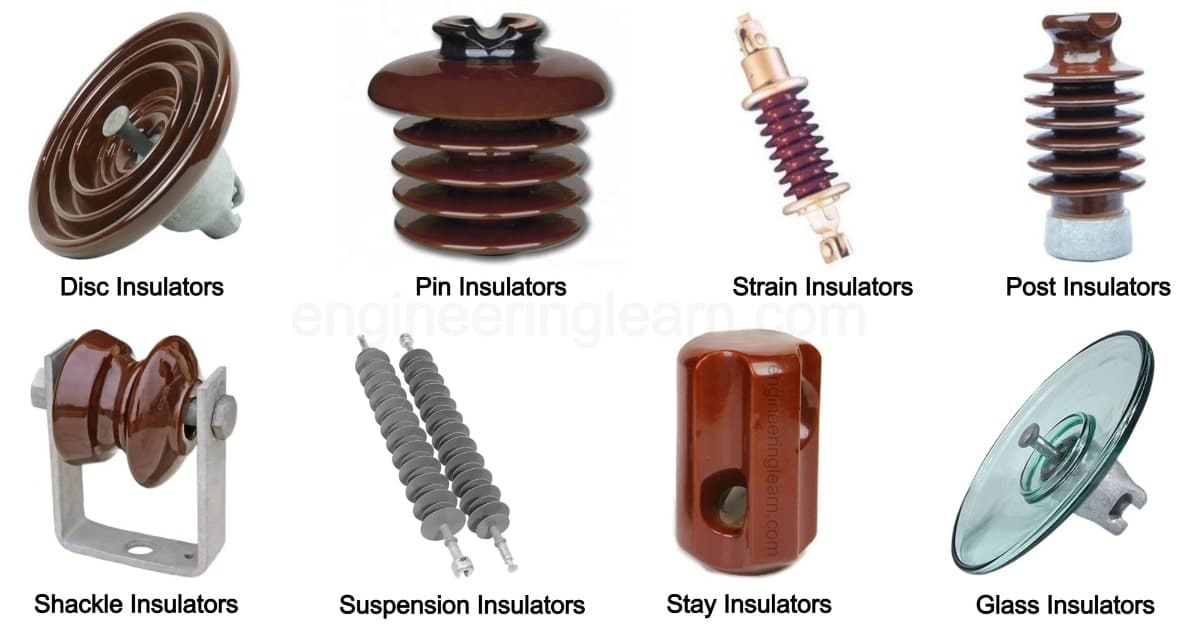
On a macro scale, “insulation” refers to the containment of airflow within data centers. A good insulator in a server farm isn’t just a material, but a system. Hot-aisle and cold-aisle containment systems use physical barriers—often made of high-grade, fire-resistant polymers—to ensure that cold air goes exactly where it’s needed and hot exhaust is kept away from intake valves. By insulating the cooling loops, data centers can achieve a lower Power Usage Effectiveness (PUE) ratio, saving millions in energy costs.
3. Battery Safety and the Evolution of Solid-State Electrolytes
The transition to electric vehicles (EVs) and portable gadgets has placed a spotlight on the insulators inside batteries. In a lithium-ion battery, the “separator” is a thin porous membrane that acts as an insulator between the anode and the cathode. If this insulator fails, the result is a catastrophic short circuit known as thermal runaway.
Ceramic-Coated Separators
A good insulator in a modern battery must be both an electrical blocker and a thermal stabilizer. Many manufacturers now use ceramic-coated separators. These materials can withstand much higher temperatures than traditional plastic separators. If a battery begins to overheat, the ceramic layer maintains its structural integrity, preventing the two halves of the battery from touching and causing a fire. This innovation is critical for the “fast-charging” tech we see in modern EVs.
The Shift Toward Solid-State Technology
The tech industry is currently racing toward the “Holy Grail” of energy storage: the solid-state battery. In these units, the liquid electrolyte is replaced by a solid insulating material, typically a ceramic or a solid polymer. This material acts as both the electrolyte and the separator. A good solid-state insulator must allow lithium ions to pass through while being a total barrier to electrons. This dual-nature material is expected to make batteries unburnable and significantly more energy-dense.
Polyimide and High-Voltage Insulation
In the power electronics of electric motors and grid-scale storage, insulators must handle thousands of volts. Polyimide films (like Kapton) are the industry standard here. They are “good” because they maintain their insulating properties across a massive temperature range, from near absolute zero to over 400 degrees Celsius. In the world of high-voltage tech, an insulator’s “goodness” is defined by its dielectric breakdown voltage—the point at which the material finally gives up and allows electricity to arc through it.
4. Materials Science: Defining the Next Generation of Insulators
As we look toward the future of tech—including quantum computing and flexible electronics—the requirements for what makes a good insulator continue to shift. We are moving away from passive materials toward “engineered” insulators that can be manipulated at the molecular level.
Insulators for Quantum Computing
Quantum computers operate at temperatures colder than deep space. At these cryogenic levels, standard insulators behave strangely. A good insulator for a quantum processor must have extremely low “dielectric loss.” If the insulator absorbs even a tiny amount of energy from the qubits, it can decohere the quantum state, causing the computer to lose its data. Engineers are currently experimenting with specialized crystalline structures and vacuum gaps to create the “perfect” insulator for the quantum age.
Flexible and Stretchable Insulators for Wearables
The next wave of tech is “wearable” and “biocompatible.” This requires insulators that are not rigid like glass or ceramic, but flexible and stretchable. Elastomeric insulators, such as specialized silicones and urethanes, are being developed to protect circuits that are woven into clothing or even implanted under the skin. Here, a good insulator must be “bio-inert,” meaning it won’t react with the human body, while still providing a robust barrier against moisture and salt—the natural enemies of electronic circuits.
Sustainability in Insulating Materials
Finally, the tech industry is facing a push for “Green Insulation.” Traditional flame retardants and synthetic polymers used in circuit boards are often difficult to recycle. The next generation of “good” insulators will likely be bio-derived or designed for “circularity.” Researchers are exploring cellulose-based substrates and biodegradable resins that provide high-performance insulation during the device’s life but break down safely when the tech is decommissioned.
Conclusion
In the world of technology, a good insulator is far more than a simple barrier; it is a high-performance material engineered to meet specific physical, electrical, and thermal demands. From the hafnium-based layers that allow our processors to shrink, to the ceramic separators that keep our electric vehicles safe, insulators are the unsung heroes of the digital age. As we move toward faster, smaller, and more powerful gadgets, the innovation in insulation technology will remain just as critical as the innovation in the conductive components they protect. Understanding the science of these materials is essential for anyone looking to grasp the future of hardware, energy, and global tech infrastructure.
aViewFromTheCave is a participant in the Amazon Services LLC Associates Program, an affiliate advertising program designed to provide a means for sites to earn advertising fees by advertising and linking to Amazon.com. Amazon, the Amazon logo, AmazonSupply, and the AmazonSupply logo are trademarks of Amazon.com, Inc. or its affiliates. As an Amazon Associate we earn affiliate commissions from qualifying purchases.