
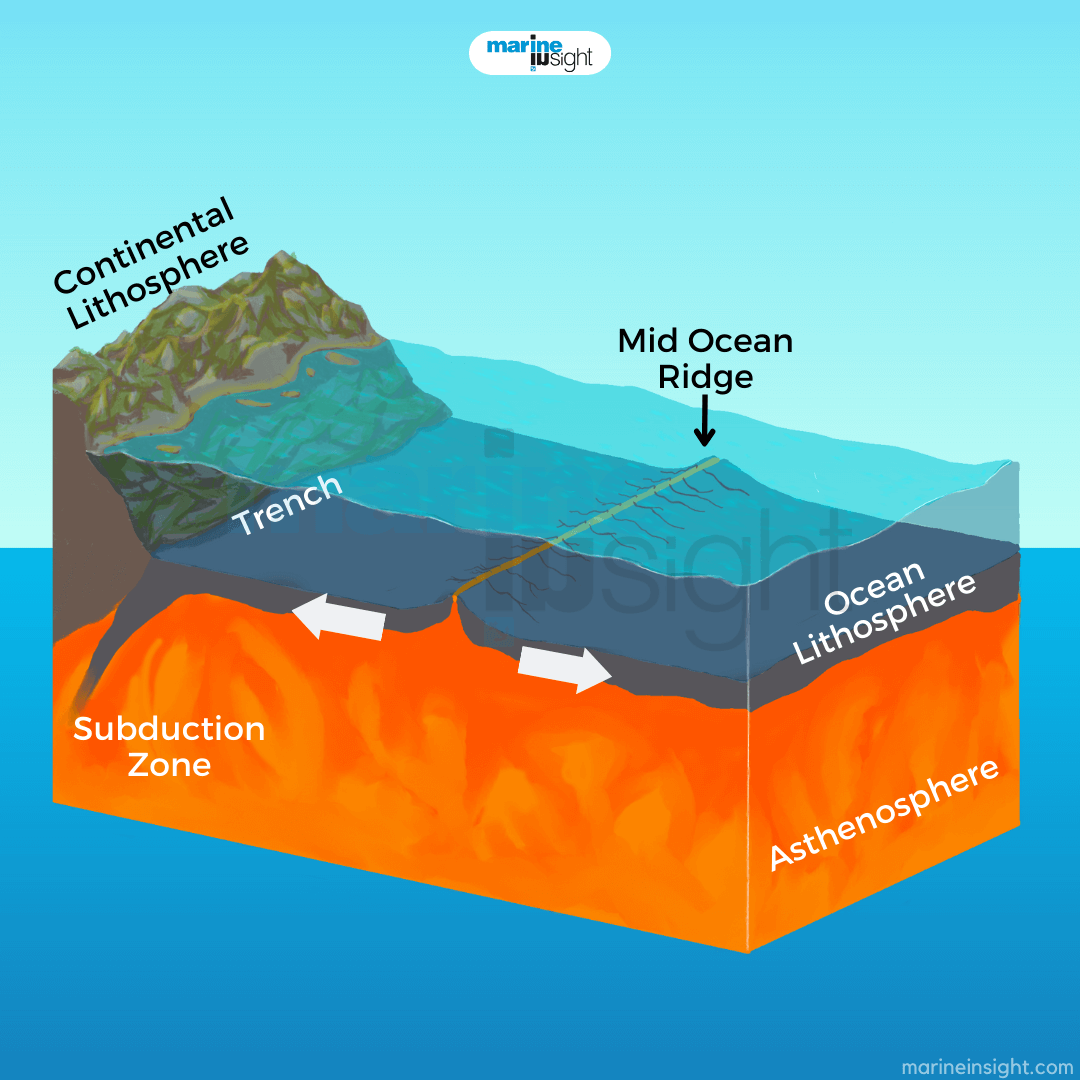
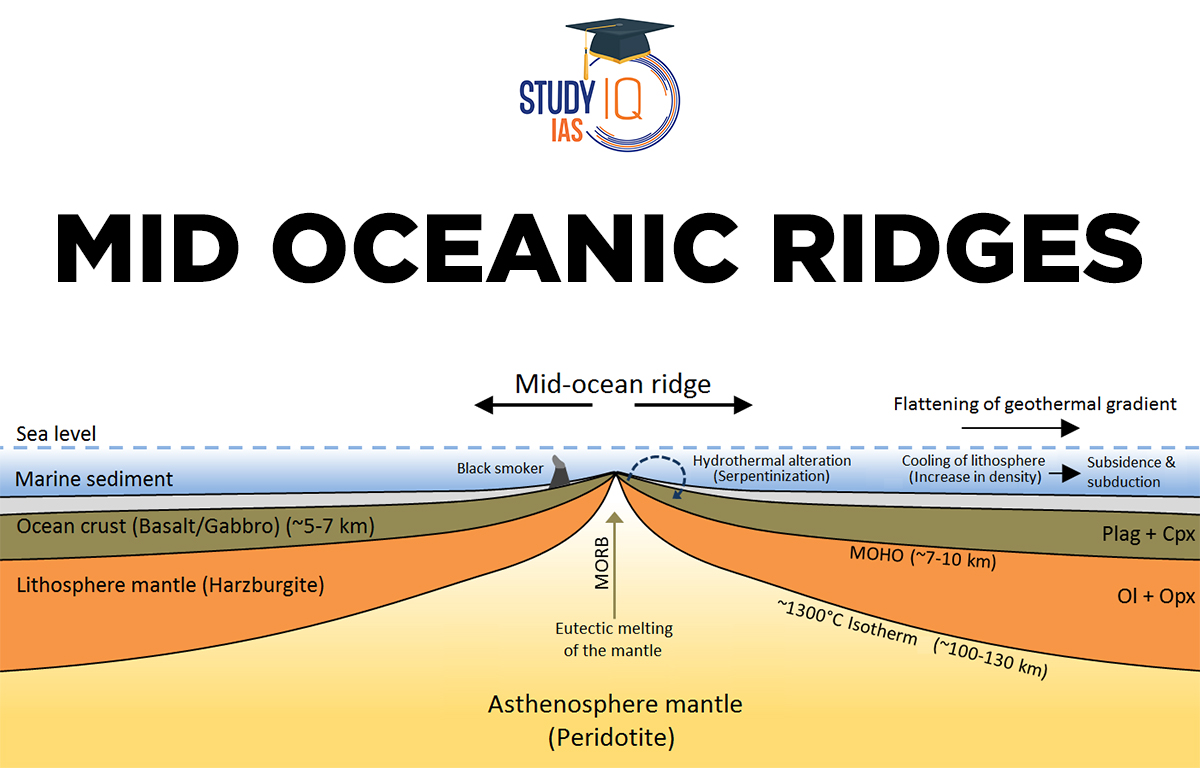
The mid-ocean ridge system is the longest mountain range on Earth, a 40,000-mile-long volcanic chain that wraps around the globe like the seams on a baseball. While geologists have long studied these zones as the birthplaces of tectonic plates, a new narrative is emerging from the abyss. Today, the mid-ocean ridge has become the ultimate testing ground for cutting-edge technology. From autonomous robotics and high-pressure sensor networks to the infrastructure of the global internet, what happens at a mid-ocean ridge is now as much about “Deep-Tech” as it is about deep-sea magma.
Robotics and Autonomy: Navigating the Abyssal Plain
The extreme conditions of a mid-ocean ridge—crushing pressures, absolute darkness, and corrosive mineral-rich waters—make it impossible for human divers to explore. Consequently, this environment has driven some of the most significant advancements in marine robotics. When we ask what happens at these ridges today, the answer involves a sophisticated dance of autonomous and remotely operated machines.
AUVs and ROVs: The Eyes and Ears of Discovery
Historically, exploration relied on Remotely Operated Vehicles (ROVs) tethered to surface ships by miles of fiber-optic cable. While effective, these are limited by the maneuverability of the surface vessel. The current shift is toward Autonomous Underwater Vehicles (AUVs). These robots are pre-programmed with AI-driven mission parameters, allowing them to glide over the rugged terrain of a mid-ocean ridge without human intervention. They utilize multibeam sonar to create high-resolution 3D maps of the seafloor, identifying hydrothermal vents and new volcanic flows with centimeter-level precision.
Machine Learning and Real-Time Navigation
Navigation at a mid-ocean ridge is a computational nightmare. There is no GPS under kilometers of seawater. Tech firms are now deploying Simultaneous Localization and Mapping (SLAM) algorithms—the same tech used in self-driving cars—to help AUVs navigate by recognizing geological landmarks. By processing visual and acoustic data in real-time, these robots can “see” the jagged cliffs of the ridge and adjust their flight paths, ensuring they can operate in the most complex terrains on the planet without getting lost or damaged.
Data Under Pressure: Submarine Cable Infrastructure and Connectivity
While the ridge is a site of geological creation, it is also a significant obstacle for the physical backbone of the internet. Over 95% of international data is transmitted via submarine fiber-optic cables, many of which must traverse the mid-ocean ridge to connect continents.
The Engineering Feats of Transoceanic Fiber Optics
Laying a cable across a mid-ocean ridge is one of the most complex engineering feats in the tech industry. The cable must be armored to withstand the pressure but flexible enough to drape over the tectonic rift. Tech giants like Google, Meta, and Microsoft, who now invest heavily in private cable routes, utilize specialized software to plot “low-risk” paths through the ridge’s volcanic gaps. These cables are engineered with ultra-pure glass fibers and repeaters powered by thousands of volts, ensuring that a “click” in London reaches a server in New York in milliseconds, despite passing through the most volatile volcanic zone on Earth.
Protecting Infrastructure from Seismic Activity
Because the mid-ocean ridge is a hub of seismic activity, the technology used to protect these cables is constantly evolving. Modern cables are equipped with “smart” sensors—Optical Time Domain Reflectometers (OTDR)—that can detect the exact location of a strain or break caused by a tectonic shift. Furthermore, some newer cables utilize the fiber-optic strand itself as a massive seismic sensor. Through a process called Distributed Acoustic Sensing (DAS), tech companies can monitor the vibrations of the Earth’s crust, turning global data infrastructure into a planetary-scale scientific instrument.

The Internet of Underwater Things (IoUT) and Sensor Networks
The concept of the Internet of Things (IoT) has moved from our living rooms to the bottom of the Atlantic and Pacific oceans. To understand what happens at a mid-ocean ridge in real-time, scientists and tech developers are deploying the “Internet of Underwater Things” (IoUT).
Real-Time Monitoring of Tectonic Shifts
Permanent subsea observatories are now hard-wired into the ridge. These networks consist of thousands of sensors measuring temperature, chemical composition, and seismic tremors. The data is converted from acoustic signals to digital packets and transmitted to the surface. This allows researchers to witness “digital twins” of the ridge—live, virtual models that react whenever a magmatic injection occurs or a new hydrothermal vent opens. This level of data density is crucial for predicting tsunamis and understanding the heat budget of our planet.
Energy Harvesting: Powering Tech with Hydrothermal Vents
One of the greatest challenges in deep-sea tech is power. Batteries have limited lifespans in the cold, and solar power is non-existent. However, the mid-ocean ridge offers a unique solution: geothermal energy. Emerging tech startups are experimenting with thermoelectric generators that sit atop hydrothermal vents. These “black smokers” belch water at temperatures exceeding 400°C. By leveraging the temperature gradient between the vent water and the near-freezing ambient ocean, these devices can generate a constant trickle of power, potentially allowing sensor networks and docking stations for AUVs to remain operational for decades without human maintenance.
The Future of Deep-Sea Mining Tech and Environmental Mitigation
As the global demand for batteries and green technology grows, the mid-ocean ridge has come under the spotlight for its mineral wealth. The tech being developed for “Deep-Sea Mining” is both revolutionary and controversial, representing the next phase of industrial engineering.
Precision Extraction and AI-Driven Impact Assessments
The minerals found at mid-ocean ridges—specifically copper, gold, and rare earth elements—are located in “polymetallic sulfides” formed by hydrothermal activity. The technology required to extract these materials involves massive, tank-like robotic harvesters. However, the focus in the tech sector is shifting toward “minimal-impact” extraction. This involves using AI to identify mineral-rich zones that are biologically inactive, ensuring that the unique ecosystems found at active vents are bypassed.
Advanced Filtration and Plume Modeling
A major technical hurdle in ridge-based mining is the “sediment plume”—the cloud of dust kicked up by machinery that could smother marine life. Engineering firms are developing closed-loop extraction systems that vacuum the minerals and filter the water internally before releasing it back at the seafloor level. Sophisticated fluid-dynamics software is used to model exactly how these plumes will behave in the unique currents of the ridge, allowing operators to adjust their speed and trajectory in real-time to minimize the environmental footprint.
Conclusion: A Digital Mirror of a Physical Force
What happens at a mid-ocean ridge is no longer a mystery hidden by miles of water; it is a high-definition, data-driven reality. As we deploy more sophisticated robotics, build more resilient data infrastructure, and develop sustainable energy-harvesting technologies, the ridge serves as a testament to human ingenuity.
The mid-ocean ridge is where the Earth’s crust is made, but it is also where the future of deep-sea technology is being forged. From the AI-enabled AUVs that map its peaks to the fiber-optic cables that pulse with the world’s data, this volcanic frontier is the next great theater of the digital age. As we continue to push the boundaries of what is possible in high-pressure engineering, the lessons learned at the ridge will undoubtedly influence tech trends back on the surface, from autonomous navigation to global connectivity and beyond.
aViewFromTheCave is a participant in the Amazon Services LLC Associates Program, an affiliate advertising program designed to provide a means for sites to earn advertising fees by advertising and linking to Amazon.com. Amazon, the Amazon logo, AmazonSupply, and the AmazonSupply logo are trademarks of Amazon.com, Inc. or its affiliates. As an Amazon Associate we earn affiliate commissions from qualifying purchases.