
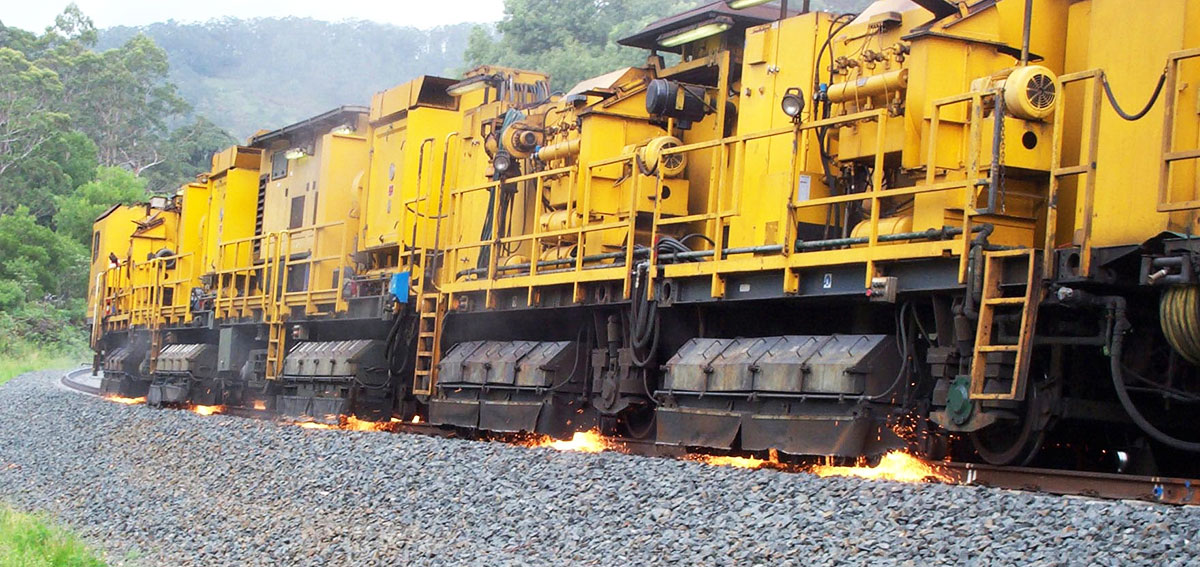
For decades, the name “Speno” was synonymous with the rhythmic sparks flying from the tracks in the middle of the night. To the casual observer, the Speno railgrinder was a massive, clanking yellow beast of burden. To the engineering world, it was a marvel of precision technology. However, in recent years, the visibility of the classic Speno units has shifted, leading many tech enthusiasts and railway historians to ask: what happened to the Speno railgrinder?
The answer is not one of obsolescence, but of profound technological evolution. The Speno railgrinder didn’t disappear; it underwent a digital and mechanical metamorphosis. As the global rail industry moved toward high-speed lines and heavier axle loads, the technology required to maintain those tracks shifted from brute-force abrasion to high-frequency digital profiling. This article explores the technological journey of Speno International, the engineering breakthroughs that defined its era, and the cutting-edge tech that has succeeded the classic grinders.

The Engineering Legacy of Speno International
To understand what happened to the Speno railgrinder, one must first appreciate the mechanical foundation upon which the company was built. Speno International, based in Geneva, Switzerland, was a pioneer in the “reprofiling” of rails. For the uninitiated, rail grinding is not merely about smoothing a surface; it is a high-tech procedure designed to restore the precise transverse profile of the rail head and remove fatigue-related defects.
From Mechanical Abrasives to Precision Engineering
The early Speno machines were primarily mechanical. They utilized a series of rotating grinding stones, controlled by hydraulic systems, to shave off fractions of a millimeter of steel. The “tech” of that era was focused on the durability of the grinding stones and the stability of the carriage at low speeds. However, as the 20th century closed, Speno led the transition into automated control systems.
The technological leap occurred when Speno integrated specialized software that allowed for “variable angle” grinding. This enabled the machine to adjust the angle of the grinding stones in real-time to match the specific curvature of the track. This was one of the first instances of “intelligent” maintenance machinery in the railway sector, moving away from a “one-size-fits-all” approach to a data-driven restoration process.
The Hardware Behind the Legend
The classic Speno railgrinder units—such as the RR 24 or the massive RR 48 series—were hardware powerhouses. These machines featured sophisticated dust extraction systems and fire suppression technology, which were essential given the intense heat and sparks generated during the process. The shift in “what happened” to these machines is largely found in the upgrade of their internal hardware. Many of the original chassis were stripped and refitted with modern computerized control units, essentially “re-skinning” the mechanical giants with 21st-century digital brains.
The Technological Shift: Why the Classic Grinder Disappeared
The primary reason the Speno railgrinder of old seems to have vanished is the radical shift in the “tech stack” used in railway maintenance. The industry moved from reactive maintenance (fixing a rail when it’s broken) to predictive and preventive maintenance. This required a level of technological sophistication that the older, purely mechanical Speno units could not provide without total system overhauls.
The Rise of Smart Grinding Systems
Modern rail maintenance is now dominated by “Smart Grinding.” What happened to the Speno units was their integration into a wider ecosystem of sensors and AI. Today’s successors to the Speno legacy utilize laser measurement systems that scan the rail profile thousands of times per second.
Instead of a technician manually lowering the stones, the “Smart” systems use the data from these lasers to automatically adjust the pressure and duration of the grind. This prevents “over-grinding”—the unnecessary removal of metal—which extends the life of the rail significantly. The technology changed from a focus on the act of grinding to a focus on the data that dictates the grind.

Digital Integration and Real-Time Data
One of the most significant technological advancements that changed the Speno landscape was the implementation of “Measurement-While-Grinding” (MWG). In the past, a separate measurement car would inspect the tracks, and weeks later, the Speno grinder would arrive to fix the issues.
Modern units integrated these two functions. This “all-in-one” tech approach meant that the grinder could measure the rail, calculate the required metal removal, execute the grind, and verify the results in a single pass. This integration of Big Data and heavy machinery is what effectively “replaced” the older Speno models. The machines became mobile data centers that just happened to have grinding stones attached.
Modern Successors: The New Frontier of Rail Surface Management
While the Speno brand remains active and prestigious, the technology has branched out into specialized niches. The “what happened” is a story of diversification. We are now seeing the rise of high-speed grinding (HSG) and autonomous maintenance units that make the original Speno machines look like relics of the steam age.
Autonomous Operations and AI Implementation
The current trend in rail technology is the removal of the human element from the hazardous environment of the trackside. New-generation grinders are increasingly autonomous. They use GPS and localized “track fingerprinting” to identify exactly where they are on a global network.
Artificial Intelligence now plays a role in analyzing “rolling contact fatigue” (RCF). By using ultrasonic and eddy current testing—technologies that Speno helped integrate into their later fleets—AI can predict when a crack is about to form deep within the steel. The “grinder” is now a precision surgical tool guided by an AI surgeon, far removed from the manual grinding of the 1970s.
Measurement-While-Grinding (MWG) Tech
The tech niche has evolved to a point where “non-contact” maintenance is becoming a reality. While Speno specialized in stones, newer technologies are experimenting with milling and high-energy lasers. However, Speno’s legacy continues in the MWG systems. These systems utilize sophisticated algorithms to compensate for the vibration of the train, ensuring that the laser measurements remain accurate even while the massive grinding motors are engaged. This requires high-level digital signal processing (DSP) and ruggedized hardware capable of withstanding extreme electromagnetic interference.
The Future of Railway Infrastructure Technology
Looking forward, the “Speno” lineage is evolving toward sustainability and even deeper data integration. The railway industry is under pressure to reduce its carbon footprint, and the tech behind rail grinding is not exempt.
Predictive Analytics and Lifecycle Management
The future of this tech lies in “Digital Twins.” Engineering firms are now creating digital replicas of entire rail networks. Every time a grinder (the descendant of the Speno units) passes over a section of track, it updates the Digital Twin with new metallurgical data.
This allows infrastructure managers to run simulations to see how the rail will wear over the next five years. We are moving toward a “set and forget” maintenance model where the software determines the maintenance schedule based on real-time wear patterns, rather than a fixed calendar. This transition from “machine” to “platform” is the ultimate answer to what happened to the Speno railgrinder.
Sustainability and Electric Propulsion in Maintenance Tech
Finally, the “tech” is going green. The traditional diesel-belching power plants of the old Speno units are being replaced by hybrid and battery-electric systems. This is a massive engineering challenge; providing enough torque to grind hardened steel while running on battery power requires advanced power electronics and high-capacity energy storage systems.
The evolution of the Speno railgrinder is a testament to the broader trends in the tech world: the movement from analog to digital, the shift from manual to autonomous, and the transition from isolated machines to interconnected data-driven systems. The Speno railgrinder didn’t disappear; it became the foundation for the most sophisticated infrastructure management technology in history. It transitioned from a tool that smoothed the rails to a system that thinks about the rails. For those who follow technology trends, the story of Speno is a perfect case study in how heavy industry survives by embracing the digital revolution.
aViewFromTheCave is a participant in the Amazon Services LLC Associates Program, an affiliate advertising program designed to provide a means for sites to earn advertising fees by advertising and linking to Amazon.com. Amazon, the Amazon logo, AmazonSupply, and the AmazonSupply logo are trademarks of Amazon.com, Inc. or its affiliates. As an Amazon Associate we earn affiliate commissions from qualifying purchases.