
The 2017 dystopian sci-fi thriller What Happened to Monday (released as Seven Sisters in some markets) represents a fascinating case study in the intersection of high-concept storytelling and advanced visual effects (VFX) technology. While casual search queries often focus on specific narrative moments, such as the “Monday sex scene,” the real technical marvel lies in how the production team managed to have seven distinct characters—all played by a single actress, Noomi Rapace—interact seamlessly within the same physical space.
Executing a film where one actor occupies multiple roles simultaneously is a monumental technological challenge. It requires a sophisticated blend of motion control photography, complex digital compositing, and a rigorous data management workflow. In this analysis, we explore the technical infrastructure that made these scenes possible and how modern cinema utilizes “Digital Doubling” to push the boundaries of reality.
The Engineering of Multiplicity: Motion Control and Camera Tech
The foundation of any film featuring an actor playing multiple roles is the “Motion Control” (Mo-Sys) camera rig. Unlike a traditional handheld or static shot, a motion control rig is a robotic arm programmed to repeat the exact same movement with mathematical precision. This allows the director to film Noomi Rapace in one position as “Monday,” then reset the scene and film her as “Tuesday” or “Saturday” while the camera moves through the environment in an identical fashion.
The Precision of Repeatable Camera Movements
In What Happened to Monday, the technical crew utilized specialized rigs to ensure that every pan, tilt, and zoom was frame-accurate across multiple takes. This is essential for the “compositing” phase. If the camera’s movement deviates by even a fraction of a millimeter between the filming of two different sisters, the backgrounds will not align, causing a visual “ghosting” effect that breaks the immersion.
The technology used here involves proprietary software that syncs the camera’s mechanical movements with the lighting cues. For the more intimate or action-heavy scenes, this meant Noomi Rapace had to perform to “nothing”—reacting to tennis balls or earpiece cues—while the robot arm moved around her with clinical accuracy.
Managing Spatial Continuity with Seven Characters
One of the most difficult technical hurdles is “eye-line” continuity. In scenes where multiple sisters interact, the production used a combination of laser pointers and stand-in actors. However, to make the tech work, the stand-ins often had to wear green hoods or specialized tracking markers. The camera tech had to account for the physical volume of seven people in a confined apartment set, which required the VFX supervisors to pre-visualize (Pre-Viz) the entire scene in a 3D digital environment before a single frame was shot. This ensured that the “virtual” sisters wouldn’t accidentally clip through each other’s digital space during the final composite.
Visual Effects and Digital Compositing in High-Stakes Narrative
Once the motion control footage is captured, the heavy lifting shifts to the post-production house. This is where the “Monday sex scene” and other character-dense moments are constructed through digital compositing. This process involves layering multiple “plates” (strips of film) on top of each other to create a single, cohesive image.
The Integration of Body Doubles and Face-Replacement
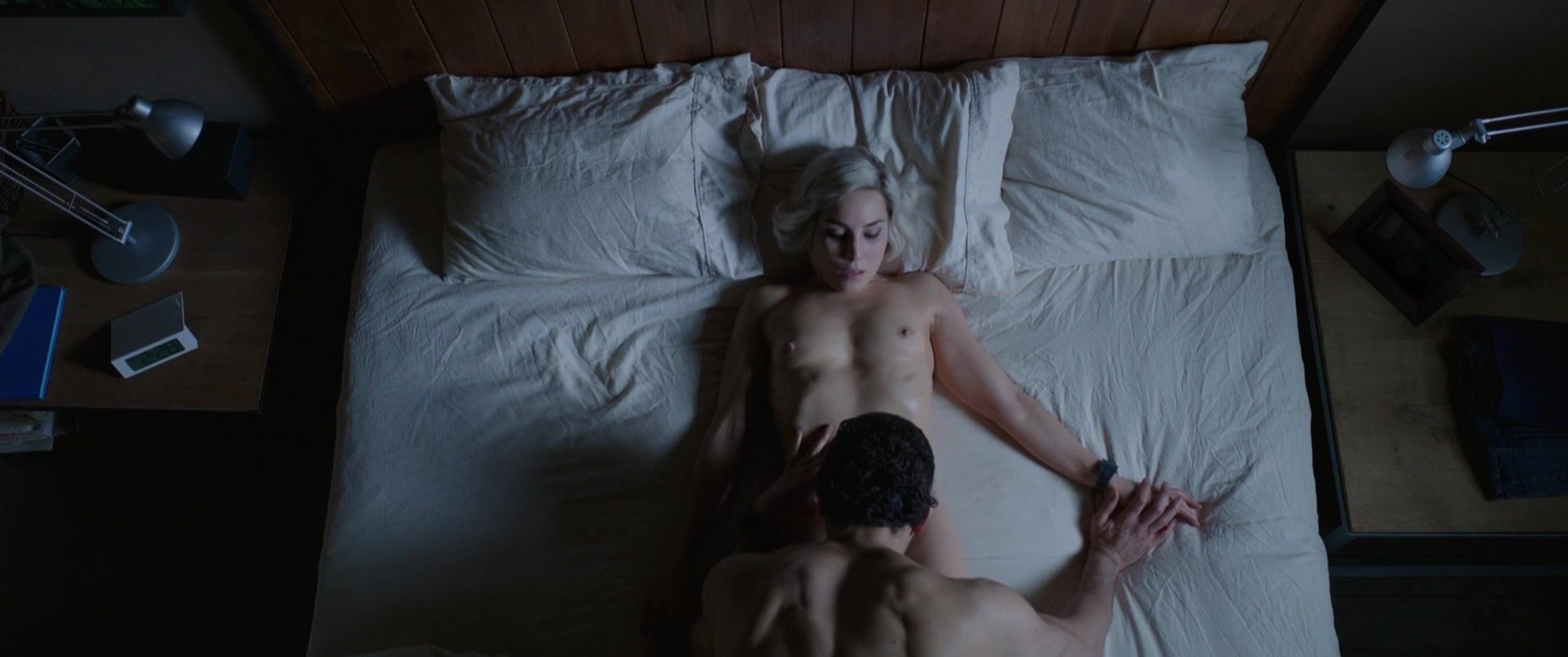
In scenes where the sisters have physical contact—such as a hug, a fight, or the aforementioned intimate scene between Monday and the character Adrian—the tech shifts from simple layering to complex “Face-Replacement.”
- Body Doubles: Professional body doubles with similar physical builds to Noomi Rapace perform the physical interaction.
- Tracking Markers: The double wears tracking markers on their face.
- The Digital Wrap: Noomi Rapace is later filmed in a “light stage”—a rig with hundreds of LEDs—performing the facial movements and dialogue for that specific sister.
- CGI Mapping: VFX artists then “glue” Rapace’s digital face onto the body double’s head.
This requires immense processing power and high-end rendering engines like Arnold or RenderMan to ensure the skin textures, sweat, and micro-expressions look authentic under the harsh lighting of a sci-fi set.

Lighting and Shading Challenges in Shared Physical Spaces
The most common way a VFX shot “breaks” is through inconsistent lighting. If “Monday” is standing near a lamp, she should cast a shadow on “Thursday” who is sitting on the couch. However, since they are filmed at different times, the shadow doesn’t exist in the raw footage.
To solve this, the tech team uses HDRIs (High Dynamic Range Images) to capture 360-degree lighting data of the set for every single take. This data is then fed into a 3D engine to generate “digital shadows.” In the more complex scenes of the film, nearly 60% of what the audience sees is a digital reconstruction of the environment designed to make the interaction between the sisters feel grounded in physics.
The Influence of AI and Deep Learning on Contemporary Sci-Fi Production
Since the release of What Happened to Monday, the technology used to create such scenes has evolved rapidly, moving away from manual rotoscoping toward AI-driven solutions. Neural networks are now being used to automate the most tedious parts of the digital doubling process.
Streamlining Post-Production with Neural Networks
In 2017, masking out an actor to place them in a different plate took hundreds of man-hours. Today, AI tools like “Deepfakes” or neural rendering allow editors to swap faces or remove background elements with a fraction of the effort. For a film like What Happened to Monday, modern AI could have analyzed Noomi Rapace’s performance and automatically adjusted the lighting on her digital double to match the environment, a process known as “re-lighting.”
Future Implications for Digital Human Technology
The tech showcased in this film paved the way for more ambitious “digital human” projects. We are seeing the rise of “Volumetric Capture,” where an actor is filmed by 100+ cameras simultaneously to create a 3D asset that can be placed anywhere in a digital scene. This eliminates the need for restrictive motion control rigs, allowing for more fluid, handheld camera work even when one actor is playing multiple roles.
Data, Streaming, and the Visibility of “Specific” Scenes
Beyond the production side, there is a technological narrative regarding how films like What Happened to Monday are consumed on platforms like Netflix. The way users search for specific moments, such as the “Monday sex scene,” is a byproduct of how streaming metadata and AI-driven thumbnails work.
How Algorithms Categorize Content
Streaming platforms use machine learning to analyze every frame of a movie. These algorithms identify “high-engagement” moments—whether they are action sequences, emotional climaxes, or mature content. When a user searches for a specific scene, the search engine isn’t just looking at the title; it’s looking at metadata tags generated by an AI that has “watched” the film. This data helps the platform decide which thumbnail to show a user to maximize the “Click-Through Rate” (CTR).
The Compression and Bitrate Standards of Modern Streaming
From a technical distribution standpoint, dark and moody sci-fi films like What Happened to Monday present a challenge for streaming bitrates. High-motion scenes and dark shadows often result in “macroblocking” or pixelation if the compression algorithm isn’t optimized.
To ensure that the intricate VFX and the seamless doubling of Noomi Rapace remain clear, Netflix utilizes “Per-Shot Encoding.” This tech adjusts the bitrate based on the complexity of the visual information in a specific shot. A static conversation between two sisters might require less data, while a fast-paced chase scene involving multiple doubles requires a spike in bandwidth to maintain visual fidelity.
Conclusion: The Technological Legacy of the Seven Sisters
What Happened to Monday serves as a bridge between the era of manual practical effects and the new frontier of AI-integrated filmmaking. The technical execution of the “Monday” character and her six sisters required a disciplined adherence to motion control physics and a sophisticated understanding of digital compositing.
While the “Monday sex scene” may be a point of curiosity for some, its existence is a testament to the seamless integration of body doubles and digital face-mapping tech. As we move deeper into the decade, the lessons learned from this production—specifically in the realms of data-driven lighting and automated rotoscoping—continue to inform how “Multi-Role” performances are handled in blockbuster cinema. The film remains a stellar example of how technology can be used not just for spectacle, but to allow a single performer to deliver a tour de force performance against themselves.
aViewFromTheCave is a participant in the Amazon Services LLC Associates Program, an affiliate advertising program designed to provide a means for sites to earn advertising fees by advertising and linking to Amazon.com. Amazon, the Amazon logo, AmazonSupply, and the AmazonSupply logo are trademarks of Amazon.com, Inc. or its affiliates. As an Amazon Associate we earn affiliate commissions from qualifying purchases.