
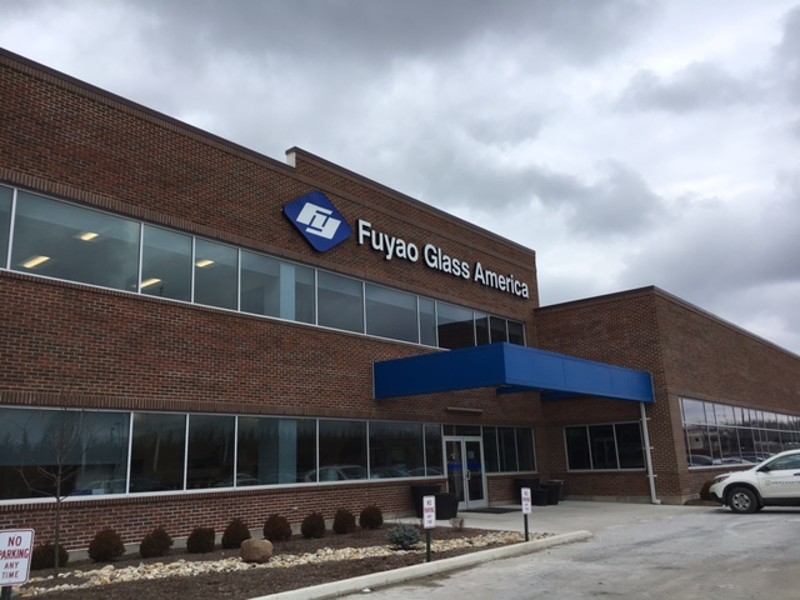
When the General Motors assembly plant in Moraine, Ohio, shuttered its doors in 2008, it wasn’t just a loss of 2,400 jobs; it was a symbolic wound to the American Rust Belt. However, the narrative took a dramatic turn in 2014 when Cho Tak Wong, the billionaire chairman of Fuyao Glass Industry Group, announced a massive capital injection to repurpose the site. What followed was one of the most significant and scrutinized examples of Foreign Direct Investment (FDI) in U.S. history.
Today, the question of “what happened to Fuyao Glass America” is best answered through the lens of business finance and industrial economics. It is a story of high-stakes capital expenditure, the navigation of varied operational cost structures, and the eventual realization of profitability in a volatile global market.
The Financial Landscape of Foreign Direct Investment (FDI)
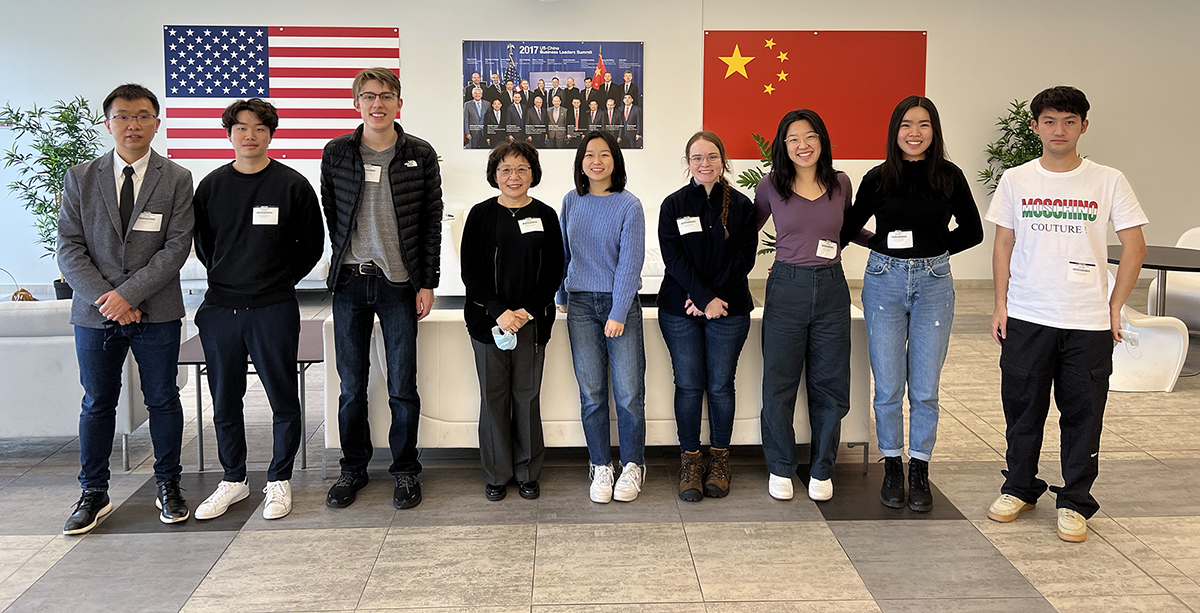
The entry of Fuyao into the United States was not merely a move to expand market share; it was a calculated financial maneuver designed to localize production for its primary customers. By establishing a massive footprint in Ohio, Fuyao aimed to eliminate the prohibitive logistics costs associated with shipping fragile automotive glass from China to North American assembly lines.
Capital Injection and the Resurrection of Moraine
Fuyao Glass Industry Group initially committed approximately $450 million to the Moraine project. Over time, that investment swelled to over $1 billion. This level of capital expenditure (CAPEX) was aimed at transforming a derelict facility into the world’s largest single-site automotive glass manufacturing plant. From a business finance perspective, this was a “greenfield” investment that required massive upfront liquidity with a long-term ROI horizon. The company had to weigh the immediate drain on cash reserves against the potential for high-margin domestic sales to “The Big Three” (GM, Ford, and Stellantis).
Tax Incentives and State Subsidies
A critical component of the financial viability of Fuyao Glass America (FGA) was the support from state and local governments. To lure the Chinese giant to Ohio, the state offered a package of incentives, including nearly $10 million in grants and potentially millions more in tax credits based on job creation targets. These subsidies served as a financial cushion, reducing the initial “burn rate” of the company as it navigated the complex transition from construction to full-scale production. For investors and financial analysts, these incentives represented a strategic reduction in the cost of capital, making the American venture more attractive than other global alternatives.
Operational Costs and the Profitability Puzzle
The transition from a Chinese manufacturing model to an American one presented a unique set of financial hurdles. The disparity in labor costs, energy pricing, and regulatory compliance created a volatile environment for FGA’s early balance sheets.
Labor Costs: The Union vs. Non-Union Debate
One of the most significant financial risks FGA faced was the potential for unionization. In the financial world, labor unions are often viewed through the lens of fixed-cost increases and potential operational disruptions. In 2017, workers at the Moraine plant voted on whether to join the United Auto Workers (UAW). From a management and financial perspective, a “no” vote was seen as a victory for cost control. By remaining non-union, Fuyao maintained greater flexibility over its wage structures and work rules, which was pivotal in its push toward its first profitable year. The company opted for a competitive base pay model that, while lower than historic GM wages, was high enough to sustain a massive local workforce without the added “legacy costs” often associated with unionized manufacturing.
Logistics and Supply Chain Efficiencies
While labor in the U.S. was significantly more expensive than in China, Fuyao’s financial team identified major savings in other areas. Natural gas and electricity—vital for glass production—are considerably cheaper in the United States. Furthermore, by producing glass within a few hundred miles of major automotive hubs, Fuyao drastically reduced its “Days Sales Outstanding” (DSO) and lowered inventory carrying costs. The financial trade-off was clear: higher labor costs were offset by lower energy prices and a leaner, more responsive supply chain. This optimization of the “Cost of Goods Sold” (COGS) was the engine that eventually drove the company out of the red.

Scaling to Success: Revenue and Market Dominance
The early years of Fuyao Glass America were marked by significant losses—reportedly losing nearly $40 million in 2016. However, the trajectory shifted as the plant reached economies of scale and refined its production efficiency.
Diversifying the Client Portfolio
Fuyao’s financial stability in the U.S. was cemented by its ability to secure long-term contracts with a diverse range of Original Equipment Manufacturers (OEMs). Beyond the domestic giants like Ford and GM, FGA successfully bid for contracts with European and Japanese automakers operating in the U.S., such as BMW, Honda, and Toyota. More recently, Fuyao became a key supplier for Tesla. This diversification acted as a financial hedge; if one automaker faced a slump, the others would stabilize FGA’s revenue stream. By 2019, Fuyao Glass America was reporting annual profits in the tens of millions, proving that the $1 billion gamble was paying off.
Reaching the Break-Even Point
The “break-even analysis” for a facility as large as Moraine is complex. It required the plant to operate at high capacity-utilization rates to cover its massive fixed costs. By 2018, the facility had achieved the throughput necessary to turn a profit. Since then, FGA has consistently contributed a significant portion of the parent company’s global net income. In financial reports, Fuyao Glass Industry Group often highlights FGA as its flagship overseas subsidiary, noting that its presence in the U.S. market accounts for nearly 25% of the total global automotive glass market share.
The Global Economic Impact: Lessons in Industrial Finance
Fuyao’s journey provides a blueprint for how global capital can be successfully deployed in high-cost environments. It serves as a case study in “reshoring” or “near-shoring,” where the proximity to the consumer outweighs the benefits of low-cost labor abroad.
The “China-Plus-One” Strategy
From an investment strategy standpoint, Fuyao Glass America is a prime example of the “China-Plus-One” model. By diversifying its manufacturing base away from a purely China-centric model, Fuyao protected itself against geopolitical risks, such as tariffs and trade wars. When the U.S.-China trade tensions escalated in 2018 and 2019, Fuyao’s domestic production in Ohio became a massive competitive advantage. While competitors shipping from overseas faced 25% duties, FGA’s products remained duty-free, allowing them to maintain price leadership without sacrificing margins.
Risk Management in Transnational Corporations
The financial success of Fuyao also hinged on its ability to manage cultural and regulatory risks. The company had to invest heavily in safety compliance and environmental standards, which are more stringent in the U.S. than in many parts of Asia. While these represented significant “compliance costs” on the balance sheet, they protected the company from the catastrophic financial impact of legal liabilities or federal shutdowns. Today, the company continues to reinvest its profits into automation. By replacing high-cost manual labor with robotics, Fuyao is further “de-risking” its financial future against labor shortages and wage inflation.
Conclusion: A Financial Success Story
What happened to Fuyao Glass America is a testament to the power of strategic capital allocation. After a turbulent start characterized by cultural clashes and heavy initial losses, the company has emerged as a profitable, indispensable pillar of the North American automotive supply chain.
Financially, the venture has matured from a high-risk speculative investment into a stable, cash-flow-positive asset. In 2023, the company announced further expansions, including a $300 million investment in its Ohio and South Carolina facilities to meet the growing demand for glass used in Electric Vehicles (EVs). This continued reinvestment signals a strong “buy” sentiment from the parent company regarding the American market. For business leaders and investors, Fuyao’s story confirms that with enough capital, strategic patience, and operational adaptation, the American “Rust Belt” can still yield significant financial returns in the modern global economy.
aViewFromTheCave is a participant in the Amazon Services LLC Associates Program, an affiliate advertising program designed to provide a means for sites to earn advertising fees by advertising and linking to Amazon.com. Amazon, the Amazon logo, AmazonSupply, and the AmazonSupply logo are trademarks of Amazon.com, Inc. or its affiliates. As an Amazon Associate we earn affiliate commissions from qualifying purchases.