
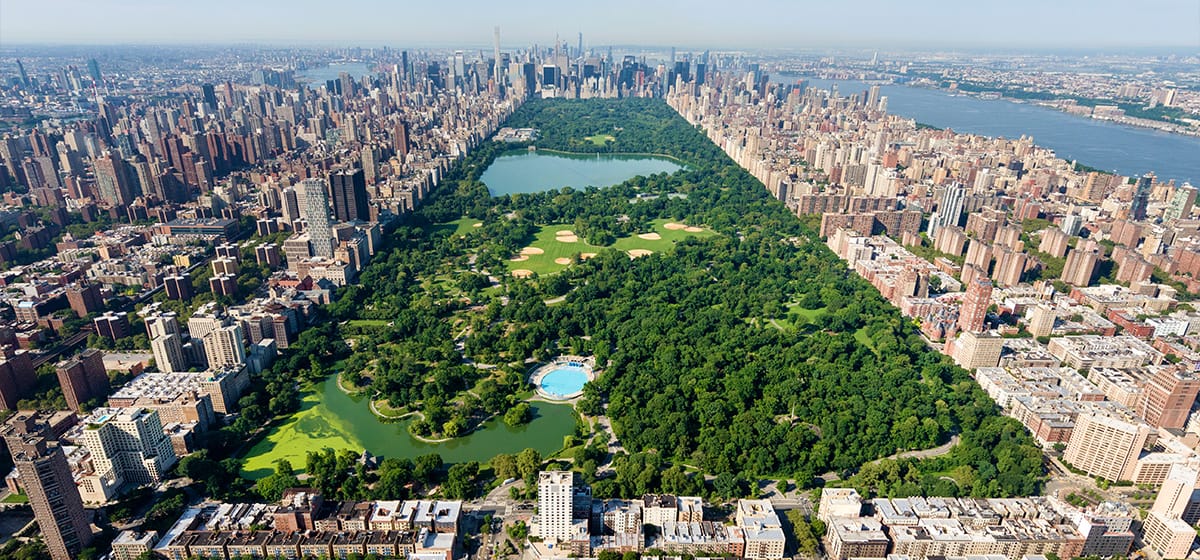
In the heart of Manhattan, Central Park has long served as the lungs of New York City, a 843-acre sanctuary of greenery amidst a landscape of glass and steel. However, what is happening in Central Park today extends far beyond traditional horticulture and leisure. We are currently witnessing a profound digital transformation where the “Greenest Spot in NYC” is becoming a sophisticated hub for cutting-edge technology. From the integration of the Internet of Things (IoT) to the deployment of complex AI-driven environmental tools, the park is being redesigned as a “Smart Park,” setting a global precedent for how technology can coexist with and preserve natural ecosystems.

Smart Infrastructure and the Internet of Things (IoT) in the Park
The most significant tech shift occurring in Central Park today is the invisible layer of connectivity known as the Internet of Things (IoT). While visitors see rolling hills and tranquil lakes, underneath the surface—and often hidden within the landscape—is a network of sensors and smart devices that communicate in real-time to manage the park’s health and logistics.
AI-Driven Environmental Monitoring
Central Park is currently leveraging advanced AI tools to combat the localized effects of climate change. Today’s park management utilizes a suite of hyper-local weather stations and soil sensors that feed data into machine learning algorithms. These tools analyze variables such as evapotranspiration rates, soil moisture levels, and nitrogen content. By processing this “Big Data,” the AI can predict which sections of the park require irrigation hours before the grass shows signs of stress. This transition from reactive to predictive maintenance represents a massive leap in agricultural tech within an urban setting, ensuring that resources like water are used with maximum efficiency.
Intelligent Waste Management Systems
One of the less glamorous but technologically impressive facets of the park’s current operation is its smart waste management. To handle the millions of visitors who traverse the park, “Bigbelly” solar-powered trash compactors have been deployed. These devices are more than just bins; they are connected nodes. Each unit uses sensors to detect fill levels and compacts trash automatically to increase capacity. When a bin reaches its limit, it sends a wireless signal to the maintenance team’s centralized dashboard. This IoT application optimizes collection routes, reduces fuel consumption for maintenance vehicles, and ensures that the park remains pristine even during peak tourist hours.
Augmented Reality (AR) and the Future of Immersive Tourism
As mobile hardware becomes more powerful, Central Park is transforming into a canvas for Augmented Reality (AR). Today, the barrier between the physical and digital worlds is blurring, allowing visitors to experience the park’s history and biodiversity through the lens of their smartphones and AR wearables.
Digital Historical Reconstructions
The park’s history is rich and complex, and today, software developers are using geospatial data to bring that history to life. Through specialized AR apps, a visitor standing at Bethesda Terrace can point their device at the landscape and see a 3D digital overlay of the area as it appeared in the 1860s during its construction. These apps use precise GPS positioning and image recognition software to anchor digital assets to physical landmarks. This “digital time travel” provides an educational layer that traditional signage simply cannot match, turning the park into a living, interactive museum of urban planning.
Interactive Flora and Fauna Guides
Beyond history, technology is being used to categorize and explain the park’s diverse ecosystem. New AI-powered visual recognition tools—similar to Google Lens but specialized for local biodiversity—allow users to identify any of the park’s 20,000+ trees or hundreds of bird species instantly. By leveraging neural networks trained on vast botanical databases, these apps provide real-time information about the age, species, and health of the flora. This democratization of ecological data encourages “citizen science,” where visitors contribute to a live database of the park’s health by uploading their sightings, which are then analyzed by professional arborists and ornithologists.
Connectivity and Digital Security in Public Spaces
In a world where digital security and constant connectivity are paramount, Central Park has upgraded its infrastructure to meet the demands of the modern remote worker and the safety-conscious public. The park is no longer a “dead zone” for signal; it is a high-bandwidth environment.
The Expansion of Municipal Wi-Fi 6
Today, the rollout of high-speed Wi-Fi 6 across key areas of Central Park—such as the Sheep Meadow and the Great Lawn—has turned the park into a massive outdoor co-working space. This isn’t just about convenience; it’s about software-defined networking (SDN) that can handle tens of thousands of simultaneous connections. The integration of fiber-optic backhauls ensures that even during major events, the digital infrastructure remains resilient. For tech professionals, this means the ability to run high-bandwidth applications, participate in video conferences, and manage cloud-based workflows while surrounded by nature.
Advanced Surveillance and Public Safety AI
Public safety in a space as large as Central Park presents unique challenges that are today being addressed through sophisticated digital security tech. The park utilizes a network of smart cameras equipped with edge computing capabilities. These cameras do not just record footage; they use AI to detect “anomalous behavior,” such as a person entering a restricted area after hours or the sound of a distress call. Importantly, there is a growing focus on privacy-preserving tech, where data is processed locally (on the edge) to identify threats without necessarily storing personally identifiable information (PII) of every passerby. This balance of high-tech surveillance and digital ethics is a core component of the park’s modern security posture.
The Role of Apps in Park Governance and Maintenance
Behind the scenes, the management of Central Park is powered by a robust stack of Software-as-a-Service (SaaS) and Geographic Information Systems (GIS). The physical beauty we see today is the result of rigorous digital project management.
Crowdsourced Data and Real-Time Reporting
The “Central Park Today” experience is heavily influenced by user-generated data. The park’s official app and various third-party platforms allow visitors to report issues—such as a broken bench, a fallen limb, or a clogged drain—directly to the maintenance teams. These reports are geofenced and automatically categorized by an AI dispatcher, which then creates a ticket in the park’s asset management software. This allows for a rapid response time that was previously impossible, ensuring that minor tech or physical failures are addressed before they impact the visitor experience.
Streamlining Volunteer Coordination via SaaS
The Central Park Conservancy relies on thousands of volunteers, and the logistics of managing this workforce have moved entirely to the cloud. By using custom-built SaaS platforms, the park can track volunteer hours, assign specific tasks based on skill sets (from gardening to tech support), and provide digital training modules. This digital-first approach to volunteer management ensures that the human capital of the park is deployed as effectively as its technological capital.
Conclusion: The Synthesis of Nature and Technology
What is happening in Central Park today is a testament to the fact that technology and nature are not mutually exclusive. Instead, the park has become a flagship for how digital tools—AI, IoT, AR, and advanced software—can be used to preserve and enhance one of the world’s most famous natural landmarks.
As we look to the future, the lessons learned from Central Park’s digital transformation will likely serve as a blueprint for other urban spaces worldwide. The “tech-ification” of the park ensures its sustainability in a warming world, its relevance to a digitally native generation, and its safety in an increasingly complex urban environment. Central Park is no longer just a destination for a walk in the woods; it is a preview of the smart, connected, and data-driven future of the global city. Whether it is through the seamless Wi-Fi that allows for an outdoor office or the AI that monitors the health of an ancient elm tree, technology is the silent steward of the park today.
aViewFromTheCave is a participant in the Amazon Services LLC Associates Program, an affiliate advertising program designed to provide a means for sites to earn advertising fees by advertising and linking to Amazon.com. Amazon, the Amazon logo, AmazonSupply, and the AmazonSupply logo are trademarks of Amazon.com, Inc. or its affiliates. As an Amazon Associate we earn affiliate commissions from qualifying purchases.