
The final scene of Damien Chazelle’s Whiplash is often debated as either a triumphant moment of musical transcendence or a tragic descent into obsessive madness. However, when viewed through the lens of brand strategy and personal branding, the ending represents something far more calculated: the total synchronization of a creator’s identity with their product.
In the high-stakes world of competitive jazz, Andrew Neiman and Terence Fletcher are not merely a student and a teacher; they are two distinct brand identities clashing to define what “greatness” looks like. What happens at the end of Whiplash is the birth of a legacy brand—one forged in the fires of conflict, refined through relentless iteration, and finalized through a high-risk public performance.

The Culmination of a Personal Brand: Neiman’s Defiant Pivot
At the start of the final sequence, Andrew Neiman has been stripped of his brand. He is no longer the “prodigy” at Shaffer Conservatory; he is a college dropout working at a deli. His personal brand has collapsed. However, when Fletcher invites him to play at JVC, he offers Neiman a chance at brand repositioning. The ending begins with a betrayal—Fletcher attempts to sabotage Neiman publicly—but it ends with Neiman seizing control of the narrative.
From Protégé to Powerhouse
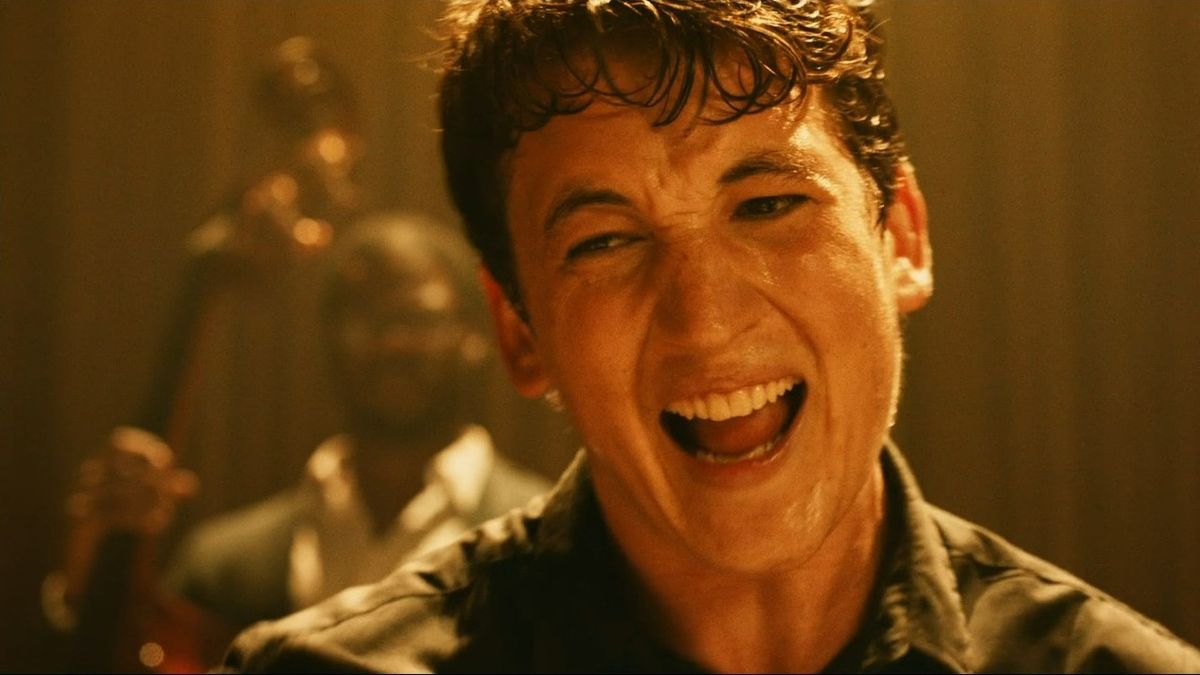
In the final moments, Neiman stops following Fletcher’s lead and begins to lead himself. In branding terms, this is the transition from a “white-label” talent to a standalone “signature brand.” By cutting off Fletcher’s introductory speech and launching into Caravan on his own terms, Neiman signals to the audience (the “market”) that he is the primary stakeholder of his own talent. He is no longer a tool used by a conductor; he is the engine. This pivot is essential for any high-level personal brand: there must come a moment where the creator steps out from the shadow of their mentors to claim total ownership of their output.
The Market Value of Resilience
What the audience witnesses during the final drum solo is the “stress test” of a brand. Neiman has endured physical pain, psychological warfare, and public humiliation. His ability to perform a solo of that magnitude under such extreme duress increases his “brand equity.” In the business world, a brand that thrives under pressure is valued significantly higher than one that only succeeds in a vacuum. Neiman’s endurance becomes his unique selling proposition (USP). He isn’t just a drummer; he is the drummer who cannot be broken.
Fletcher’s Methodology: Branding Through Fear vs. Branding Through Excellence
To understand the ending, one must analyze the brand architecture of Terence Fletcher. Fletcher’s entire career is built on a specific corporate identity: the search for the next “Great One.” His brand is synonymous with an uncompromising, often toxic, standard of excellence.
The “Charlie Parker” Narrative as Brand Storytelling
Fletcher repeatedly uses the story of Jo Jones throwing a cymbal at Charlie Parker as his brand’s foundational myth. Every strong brand needs a narrative—a “why” behind their “what.” Fletcher’s “why” is the belief that “there are no two words in the English language more harmful than ‘good job.'” At the end of the film, when he realizes Neiman is actually achieving the impossible, Fletcher’s facial expression shifts. He isn’t just happy for Andrew; he is seeing his brand’s promise fulfilled. The product (Neiman) finally matches the marketing (the legend of the next Charlie Parker).
Corporate Identity and the Culture of High Stakes
Fletcher’s band at the end of the film represents a high-performance corporate culture. It is an environment where the “brand” is more important than the individual employees. This is a common phenomenon in elite industries, from Silicon Valley startups to luxury fashion houses. The ending of Whiplash illustrates the logical conclusion of such a culture: the total erasure of the personal life in exchange for a perfected public identity. For Fletcher, the human cost is irrelevant as long as the “corporate identity” of the music reaches a level of objective perfection.
The Ethics of the Brand: Sustainability vs. Viral Success
The final “nod” shared between Neiman and Fletcher is the movie’s most controversial moment. From a brand management perspective, it represents a successful “merger,” but at what cost? We must ask whether this brand of excellence is sustainable or if it is a “flash in the pan” destined for a tragic decline.
The Burnout Factor in High-Performance Branding
A brand that requires 100% output at all times often faces the “burnout” trap. Neiman’s brand at the end of the movie is at its absolute peak, but it is built on a foundation of isolation and physical damage. In modern brand strategy, we often discuss “sustainable growth.” Neiman has opted for “explosive growth.” While he has achieved his goal of being “one of the greats,” he has sacrificed his relationships and mental health—the “infrastructure” of his personal brand. The ending suggests that while the brand is now world-class, the individual behind it may no longer exist outside of the performance.
Long-term Reputation Management
The “end” of Whiplash is actually the “launch” of Neiman’s professional reputation. In the jazz world depicted in the film, word of mouth is the primary marketing tool. The people in the audience at JVC are the influencers and stakeholders of the industry. By the time Neiman finishes his solo, his reputation is solidified. However, a brand built on defiance and conflict is difficult to manage. Will other conductors want to work with a “rogue” brand? Neiman has proven he is the best, but he has also proven he is uncontrollable. In the long term, this could lead to a niche brand identity—highly respected but difficult to partner with.
The Final Nod: When the Vision Aligns
The very last shot of the film is a close-up of Fletcher’s eyes, followed by Neiman’s. There is no dialogue, only a shared understanding. This is the moment of “Brand Alignment.”
Synergistic Branding in High-Pressure Partnerships
Throughout the film, Neiman and Fletcher were at odds because their brand visions were mismatched. Fletcher wanted a puppet; Neiman wanted to be a star. At the end, their visions align. Fletcher realizes that his “aggressive coaching” brand has finally produced the result he promised, and Neiman realizes that Fletcher’s “toxic” environment was the catalyst his brand needed to reach the next level. They become a “co-branded” entity. The success of the solo belongs to both of them, creating a synergy that neither could achieve alone.

The Conclusion of a Branding Journey
What happened at the end of Whiplash was the successful launch of a “prestige brand.” In the world of marketing and identity, a prestige brand does not care about being “liked”; it cares about being “unrivaled.” Neiman’s final solo was his official press release to the world. He moved beyond the need for validation and into the realm of objective dominance.
In conclusion, the ending of Whiplash serves as a powerful case study for any brand strategist or individual looking to build a personal brand. it demonstrates that a brand is not just a logo or a name; it is a promise of a certain level of quality, delivered consistently, even under the most grueling circumstances. Neiman didn’t just play the drums at the end of the movie—he finished the grueling process of “prototyping” his identity and officially brought his brand to market. The result was a performance that was undeniably “on-brand” for a legend in the making, proving that while the cost of greatness is high, the clarity of a perfected brand identity is the ultimate reward.
aViewFromTheCave is a participant in the Amazon Services LLC Associates Program, an affiliate advertising program designed to provide a means for sites to earn advertising fees by advertising and linking to Amazon.com. Amazon, the Amazon logo, AmazonSupply, and the AmazonSupply logo are trademarks of Amazon.com, Inc. or its affiliates. As an Amazon Associate we earn affiliate commissions from qualifying purchases.