
For decades, the electric meter was a silent, overlooked sentinel attached to the side of residential and commercial buildings. To the average person, it was merely a gray box with a spinning metal disk and a series of clock-like dials. However, as we move deeper into the era of the Internet of Things (IoT) and smart infrastructure, the physical appearance and internal complexity of the electric meter have undergone a radical transformation.
Understanding what an electric meter looks like today requires more than just a passing glance at a piece of hardware; it requires an understanding of the shift from analog mechanical engineering to sophisticated digital technology. In this guide, we explore the aesthetic and technical evolution of these devices, the interface designs of modern smart meters, and the cutting-edge technology that powers real-time energy monitoring.

The Evolution of Metering: From Analog Disks to Digital Displays
The traditional electric meter, known as an induction meter or electromechanical meter, dominated the landscape for nearly a century. If you are looking at an older home or a building that has not yet been upgraded to a smart grid system, the device you see will have a very distinct, mechanical look.
The Classic Electromechanical Meter
Visually, the electromechanical meter is housed in a heavy glass dome, designed to protect the internal components from the elements while allowing utility workers to read the data. Inside, the most prominent feature is a horizontal aluminum disk. This disk operates on the principle of electromagnetic induction. As electricity flows through the coils inside the meter, it creates a magnetic field that exerts torque on the disk, causing it to spin.
The faster the disk spins, the more electricity is being consumed. Above the disk, you will see a series of five small dials that look like miniature clocks. These dials are geared to the disk and record the total kilowatt-hours (kWh) used. Because the dials rotate in opposite directions (clockwise and counter-clockwise), they are notoriously difficult for the untrained eye to read. This “look” is synonymous with 20th-century utility infrastructure: rugged, transparent, and entirely analog.
The Transition to Electronic Meters
By the late 1990s and early 2000s, the “look” of the meter began to change. While many still retained the glass housing, the spinning disk and mechanical dials were replaced by a Solid State Electronic meter. These devices utilize non-moving parts—specifically current and voltage sensors—to measure energy flow.
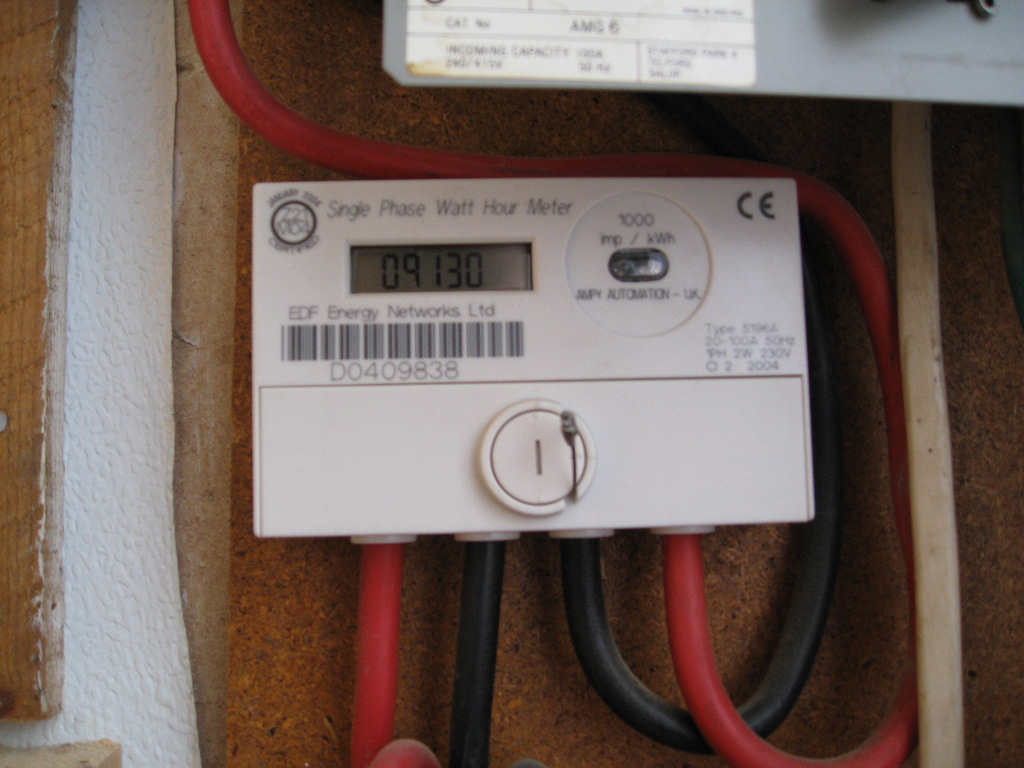
Externally, the most significant change was the introduction of the Liquid Crystal Display (LCD). Instead of squinting at five different dials, users and meter readers could see a digital numerical readout. This marked the first step toward the “gadgetization” of utility hardware, moving away from heavy machinery toward semiconductor-based technology.
Identifying Different Types of Smart Meters and Digital Interfaces
In the current technological landscape, most new installations are “Smart Meters,” technically referred to as Advanced Metering Infrastructure (AMI). These devices are the backbone of the modern smart grid. If you are looking at a smart meter today, it likely resembles a high-tech gadget more than a piece of industrial equipment.
LCD Interfaces and Digital Readouts
A modern smart meter usually features a sleek, durable plastic or high-impact glass casing. The centerpiece is a multi-function LCD screen. Unlike the old mechanical meters that only showed cumulative usage, the smart meter’s screen cycles through various data points.
When you look at a smart meter display, you might see:
- Cumulative kWh: The total energy used since the meter was installed.
- Instantaneous Demand: The exact amount of power being drawn at that very second.
- Voltage Levels: Ensuring the power quality entering the home is stable.
- Date and Time: Essential for time-of-use (TOU) pricing models.
The visual interface often uses “OBIS codes” (Object Identification System), which are small numbers in the corner of the screen that tell you what data point you are currently viewing. This transition to a digital interface allows for much higher precision and the ability for the hardware to self-diagnose hardware failures or power surges.
Understanding Indicator Lights and Icons
Beyond the screen, modern meters feature various LED indicator lights. You might notice a small red or green light that pulses. In many models, this pulse replaces the old spinning disk; the frequency of the flash indicates the rate of power consumption.
Additionally, you may see icons on the LCD that represent connectivity. Much like a smartphone or a Wi-Fi router, smart meters often display a signal strength icon or a “link” symbol. This indicates that the meter is successfully communicating with the utility’s central server. If you see a physical “optical port” (a small circular indentation) on the front, that is a high-speed data port used by technicians to program the device or extract diagnostic logs via infrared technology.
The Role of IoT and AMI in Modern Energy Management
What an electric meter “looks like” is increasingly defined by what is inside the box—specifically the communication hardware. The shift from a simple measuring tool to an IoT-enabled edge device is the most significant trend in utility technology.
How Smart Meters Communicate Data
Inside the casing of a modern smart meter sits a sophisticated communication module. This is what differentiates a standard digital meter from a “Smart” one. Depending on the geographic location and the utility provider, the meter may use one of several tech protocols:
- Radio Frequency (RF) Mesh: The meter acts as a node in a giant neighborhood network, hopping data from one meter to the next until it reaches a “collector” unit.
- Cellular LTE: Some meters have a built-in SIM card, allowing them to communicate directly over 4G or 5G networks, much like a tablet or smartphone.
- Power Line Communication (PLC): Data is sent directly through the existing electrical wires, using high-frequency signals.
Visually, you might notice a small antenna or a slightly larger plastic “hump” on the meter’s housing to accommodate these modules. This hardware allows for two-way communication, meaning the utility can update the meter’s firmware remotely or even disconnect/reconnect service without sending a technician to the site.
Security and Data Encryption in Digital Meters
Because these meters are now networked devices, their “look” includes digital security features that aren’t visible to the naked eye but are integral to their design. Modern meters utilize Advanced Encryption Standard (AES) 128 or 256-bit encryption to protect usage data. The hardware is designed to be “tamper-evident.” If the housing is opened or the meter is pulled from its socket, a digital “last gasp” signal is sent to the utility, alerting them of a potential security breach or a power outage.
Integrating Your Meter with Smart Home Ecosystems
The modern electric meter is no longer an isolated island of data; it is increasingly being integrated into the broader ecosystem of smart home apps and gadgets.
Home Energy Monitors and Real-Time Data
For tech enthusiasts who want more data than the meter’s small LCD provides, there is a growing market for secondary hardware that “reads” the meter. Devices like the Sense or Emporia Vue are gadgets installed inside the electrical panel that work in tandem with the meter.
Furthermore, many smart meters are equipped with a “Zigbee” or “HAN” (Home Area Network) radio. This allows the meter to “talk” directly to your smart thermostat or a dedicated in-home display (IHD). These IHDs are small, tablet-like gadgets that sit on your kitchen counter, providing a high-resolution graphical look at your energy tech data, including graphs, historical comparisons, and real-time alerts.
Software for Tracking Energy Consumption
The “visual” experience of an electric meter has largely shifted from the physical device to the smartphone screen. Modern utility apps provide a digital twin of your meter’s data. These apps use sophisticated APIs to pull data from the meter and present it in a user-friendly dashboard. Here, the “meter” looks like a series of interactive charts, heat maps of usage, and predictive software that estimates your future consumption based on machine learning algorithms.
Future Trends: AI and the Next Generation of Metering Tech
As we look toward the future, the electric meter is poised to become even more intelligent, moving from a passive recording device to an active manager of the home’s energy “operating system.”
Predictive Analytics and Grid Optimization
The next generation of meters will incorporate Artificial Intelligence (AI) directly at the “edge”—meaning the processing happens inside the meter itself rather than in the cloud. Future meters will be able to perform “Non-Intrusive Load Monitoring” (NILM). By analyzing the high-frequency “noise” in the electrical current, AI-enabled meters can identify the “fingerprint” of specific appliances.
Instead of just showing a total kWh number, the meter’s digital interface (or connected app) will be able to tell you exactly how much energy your 10-year-old refrigerator is using compared to your new HVAC system. This level of granular hardware analysis is the next frontier in energy tech.

Digital Security and Decentralized Grids
As we move toward decentralized energy—where homes have solar panels and EV batteries—the electric meter will transform into a “Bi-Directional Gateway.” It will look and act like a sophisticated network router, managing the flow of power both into and out of the home. This will require even more robust digital security protocols and perhaps even blockchain integration to verify “peer-to-peer” energy transactions between neighbors.
In conclusion, when you ask “what does an electric meter look like,” the answer depends entirely on the era of technology you are observing. While the old glass-domed mechanical meters are relics of a simpler industrial age, today’s smart meters are complex, networked computers. They are the essential hardware that bridges the gap between our physical homes and the digital smart grid, evolving from simple counters to the intelligent hubs of our modern, tech-driven lives.
aViewFromTheCave is a participant in the Amazon Services LLC Associates Program, an affiliate advertising program designed to provide a means for sites to earn advertising fees by advertising and linking to Amazon.com. Amazon, the Amazon logo, AmazonSupply, and the AmazonSupply logo are trademarks of Amazon.com, Inc. or its affiliates. As an Amazon Associate we earn affiliate commissions from qualifying purchases.