
In the contemporary landscape of automotive engineering, the internal combustion engine has evolved from a purely mechanical marvel into a sophisticated piece of hardware controlled by complex software ecosystems. When a driver encounters the term “cylinder misfire,” it is often viewed through the lens of traditional mechanics—greasy hands, wrenches, and physical parts. However, in the modern era of the “Software Defined Vehicle” (SDV), a cylinder misfire is primarily a data event. It is a failure of synchronization within a high-speed digital network that manages thousands of variables per second.

Understanding what a cylinder misfire means today requires a deep dive into the technology that monitors, manages, and mitigates these failures. From the Engine Control Unit (ECU) algorithms to the Internet of Things (IoT) diagnostic tools, the misfire is a gateway to understanding the intersection of hardware and software in modern transportation.
The Digital Nervous System: How the ECU Detects a Misfire
At the heart of every modern vehicle is the Engine Control Unit (ECU), a powerful microprocessor that acts as the “brain” of the car. To the ECU, a cylinder misfire isn’t just a physical stumble; it is a deviation from a mathematical model. The engine is essentially a series of controlled explosions, and the ECU’s job is to ensure these explosions happen with microsecond precision.
The Role of the Engine Control Unit (ECU)
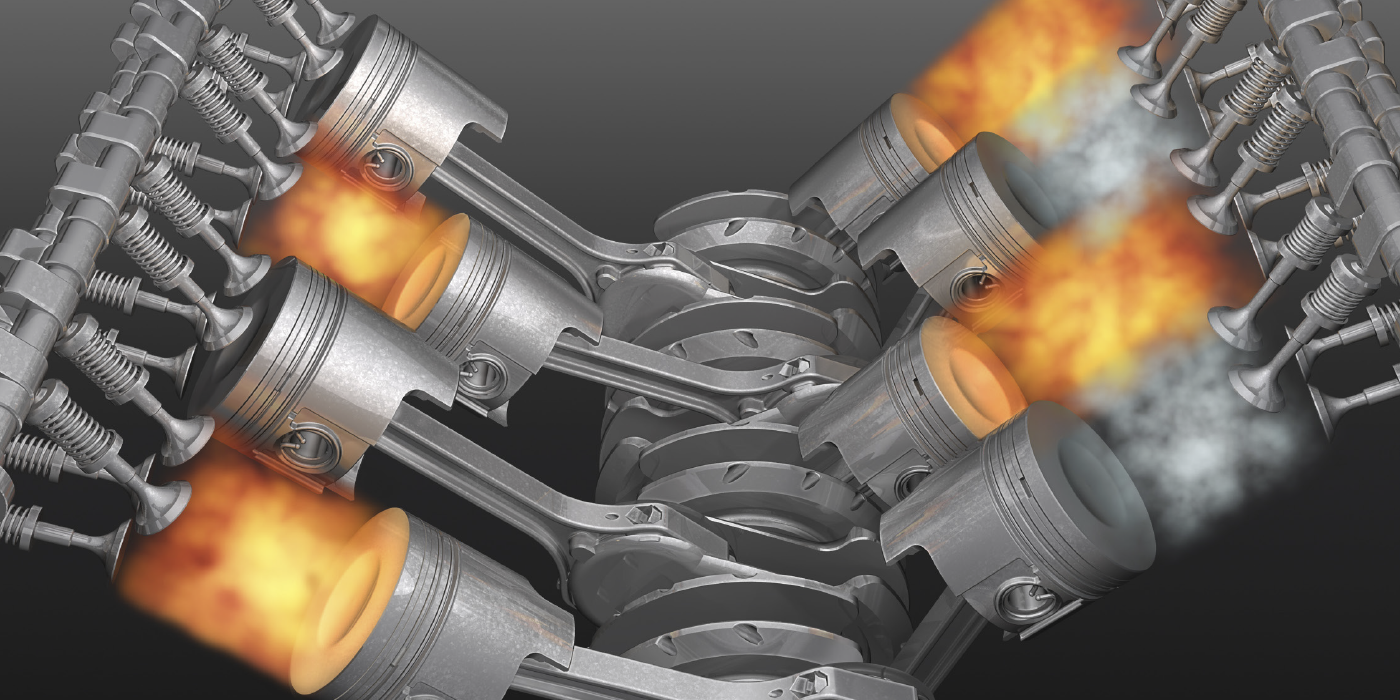
The ECU runs a continuous loop of software known as the “engine management logic.” This software monitors inputs from dozens of sensors to determine the optimal timing for fuel injection and spark ignition. When a misfire occurs, it means that one of the cylinders has failed to contribute its expected share of torque to the crankshaft. The ECU detects this not by “feeling” a vibration, but by monitoring the rotational speed of the crankshaft. If the software detects a sudden, infinitesimal deceleration during what should be a power stroke, it flags a misfire event.
Sensor Fusion: Crankshaft and Camshaft Position Sensors
Modern engine diagnostics rely on “sensor fusion”—the process of combining data from different sources to create a complete picture of performance. The Crankshaft Position Sensor (CKP) and Camshaft Position Sensor (CMP) work in tandem to provide the ECU with high-resolution data on the engine’s internal state. The CKP sensor often uses a “hall effect” or inductive signal to track the teeth on a reluctor wheel. By analyzing the time intervals between these teeth, the software can identify which specific cylinder is lagging. This level of granular data processing is what allows your car to tell you specifically that “Cylinder 3” is misfiring, rather than just giving a generic error.
Diagnostic Software and the OBD-II Ecosystem
The evolution of the On-Board Diagnostics (OBD) protocol has transformed how we interact with vehicle failures. Before the mid-1990s, diagnosing a misfire was often a process of elimination. Today, it is a data-mining exercise. The OBD-II system is a standardized digital interface that allows external software to communicate with the vehicle’s internal network.
Beyond the “Check Engine” Light: Data PIDs and Freeze Frame Data
When a misfire occurs frequently enough to exceed a programmed threshold (usually related to emissions or potential catalytic converter damage), the ECU illuminates the Malfunction Indicator Lamp (MIL), commonly known as the check engine light. However, the true tech story lies in the “Freeze Frame Data.” This is a digital snapshot of all sensor readings at the exact millisecond the misfire was detected.
Technicians and tech-savvy enthusiasts use software to analyze Parameter IDs (PIDs). These PIDs can show fuel trim percentages, oxygen sensor voltages, and mass airflow rates. By looking at these data points, software can determine if the misfire is “lean” (not enough fuel) or “rich” (too much fuel), or if it is an electrical failure in the ignition circuit.
Mobile Apps and Consumer-Grade Scanning Tech
The democratization of automotive technology has seen a surge in consumer-grade diagnostic tools. Bluetooth and Wi-Fi OBD-II dongles connect vehicle hardware to smartphone applications. These apps use sophisticated UI/UX to translate raw hex code from the car’s Controller Area Network (CAN bus) into readable graphs and dashboards. This allows users to perform “Mode $06” diagnostics—a specialized software mode that tracks “non-continuous monitors.” In simpler terms, it allows a user to see if a cylinder is misfiring occasionally, even if it hasn’t happened enough to trigger the dashboard warning light yet.
The Tech Behind the Failure: Electronic Ignition and Fuel Injection Systems
While the symptom is a misfire, the cause is often a failure in the electronic components that have replaced mechanical linkages. In modern tech-heavy engines, the traditional distributor has been replaced by “smart” ignition systems and high-pressure digital fuel injectors.
Precision Timing: Coil-on-Plug (COP) Technology
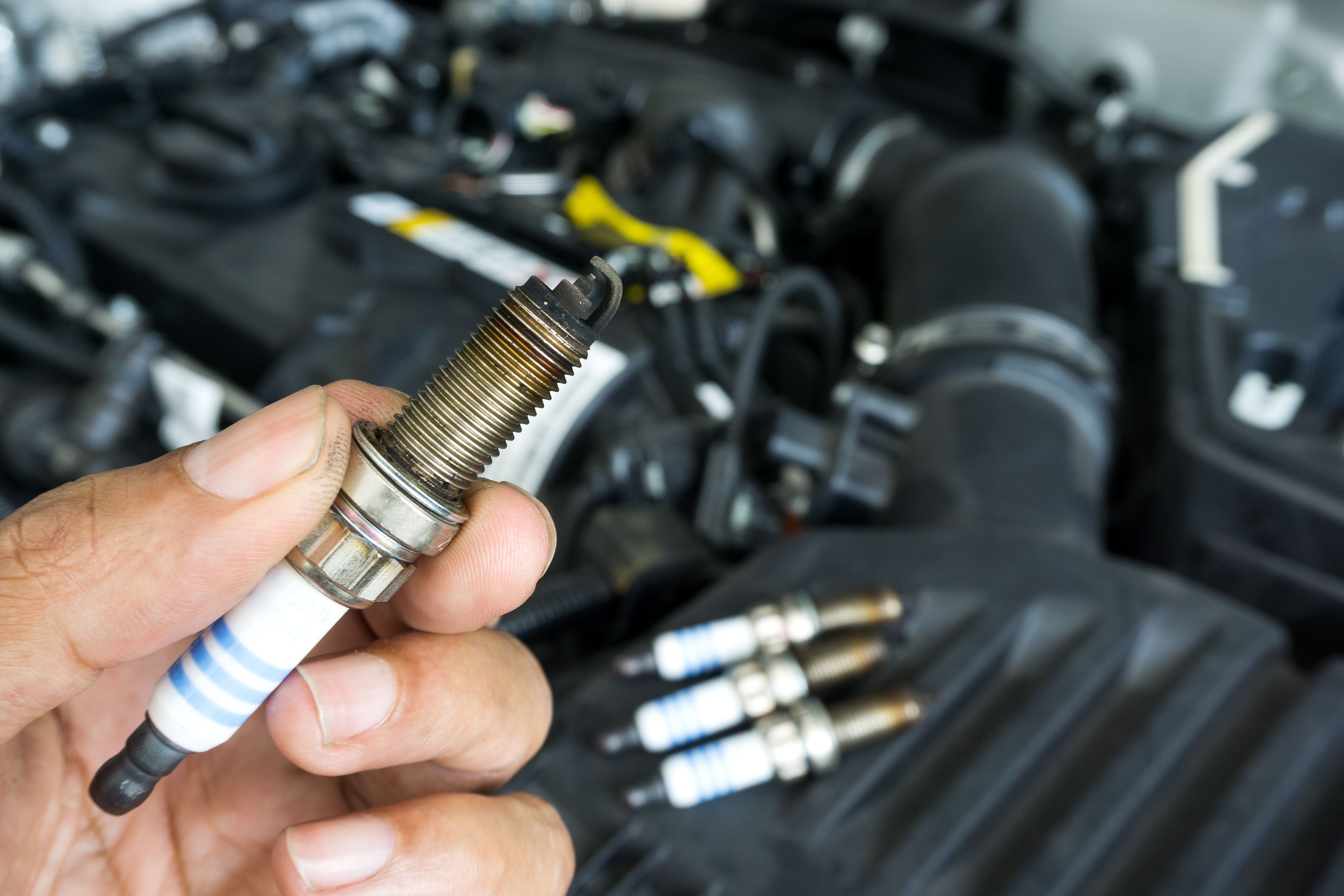
Most modern engines use Coil-on-Plug (COP) technology, where each spark plug has its own dedicated transformer (coil) sitting directly on top of it. These coils are triggered by transistors within the ECU. A cylinder misfire often points to a failure in the “primary” or “secondary” circuit of these coils. High-end diagnostic tech uses an oscilloscope to “see” the ignition waveform. By analyzing the digital signature of the spark, a technician can identify “electromagnetic interference” or a breakdown in the coil’s internal insulation, which are common tech-related failure points in high-voltage automotive systems.
Pulse Width Modulation and Fuel Delivery Software
Fuel delivery is no longer a mechanical suction process; it is a high-speed digital operation. The ECU uses Pulse Width Modulation (PWM) to control how long a fuel injector stays open. This is measured in milliseconds. If the software calculates that a cylinder needs 2.5ms of fuel but the injector is clogged or the driver circuit is faulty, the resulting combustion will be incomplete. In Direct Injection (DI) engines, the tech is even more complex, involving multiple injection pulses per single combustion cycle to optimize efficiency and reduce emissions. A misfire here is often a failure of the timing software to account for carbon buildup or sensor drift.
The Future of Diagnostics: AI and Predictive Maintenance
As we move toward the era of connected and autonomous vehicles, the concept of the cylinder misfire is being integrated into larger Artificial Intelligence (AI) and machine learning frameworks. We are moving away from reactive diagnostics (fixing it when it breaks) to predictive maintenance (fixing it before it breaks).
Machine Learning in Telematics
Many modern fleets and high-end consumer vehicles use telematics to stream engine data to the cloud in real-time. Cloud-based AI algorithms analyze this data across thousands of vehicles simultaneously. By using machine learning, manufacturers can identify patterns that precede a cylinder misfire. For example, if the AI notices a specific “jitter” in the crankshaft speed data across 10,000 vehicles of the same model, it can push a notification to other owners that a specific component is likely to fail within the next 500 miles.
Remote Over-the-Air (OTA) Updates for Performance Optimization
In some cases, a cylinder misfire isn’t caused by a broken part, but by a software “bug” or an inefficient calibration for certain environmental conditions (like high altitude or extreme cold). Modern vehicles equipped with OTA update capabilities can receive software patches that adjust the ignition timing or fuel maps to eliminate misfires without the vehicle ever visiting a repair shop. This represents the ultimate shift in automotive tech: solving mechanical symptoms through code optimization.
Conclusion
A cylinder misfire is far more than a mechanical hiccup; it is a critical data point in the sophisticated interplay between a vehicle’s hardware and its digital architecture. As automotive technology continues to advance, our ability to diagnose, understand, and prevent these events will rely increasingly on software engineering, data science, and high-speed processing.
For the modern driver and tech enthusiast, a “Check Engine” light for a misfire is an invitation to explore the car’s internal network. Whether through the analysis of OBD-II PIDs, the monitoring of sensor fusion, or the deployment of AI-driven predictive maintenance, the tech-centric approach to engine health ensures that our vehicles are becoming smarter, more efficient, and more reliable. The cylinder misfire, once a mysterious mechanical omen, has been decoded into a manageable stream of digital information.
aViewFromTheCave is a participant in the Amazon Services LLC Associates Program, an affiliate advertising program designed to provide a means for sites to earn advertising fees by advertising and linking to Amazon.com. Amazon, the Amazon logo, AmazonSupply, and the AmazonSupply logo are trademarks of Amazon.com, Inc. or its affiliates. As an Amazon Associate we earn affiliate commissions from qualifying purchases.