
In the modern real estate market, the traditional metric of “bigger is better” is being challenged by a more surgical approach to asset valuation. When we ask “what does 300 square feet look like,” we are no longer merely describing the dimensions of a studio apartment or a backyard tiny home. From a financial perspective, 300 square feet represents a high-density investment vehicle, a pivot point for personal debt management, and a microcosm of the global shift toward urban efficiency.
For the savvy investor or the person looking to optimize their personal balance sheet, 300 square feet looks like a strategic opportunity to maximize yield per inch. Understanding the financial implications of this footprint is essential for navigating the contemporary landscape of real estate, personal finance, and alternative investments.
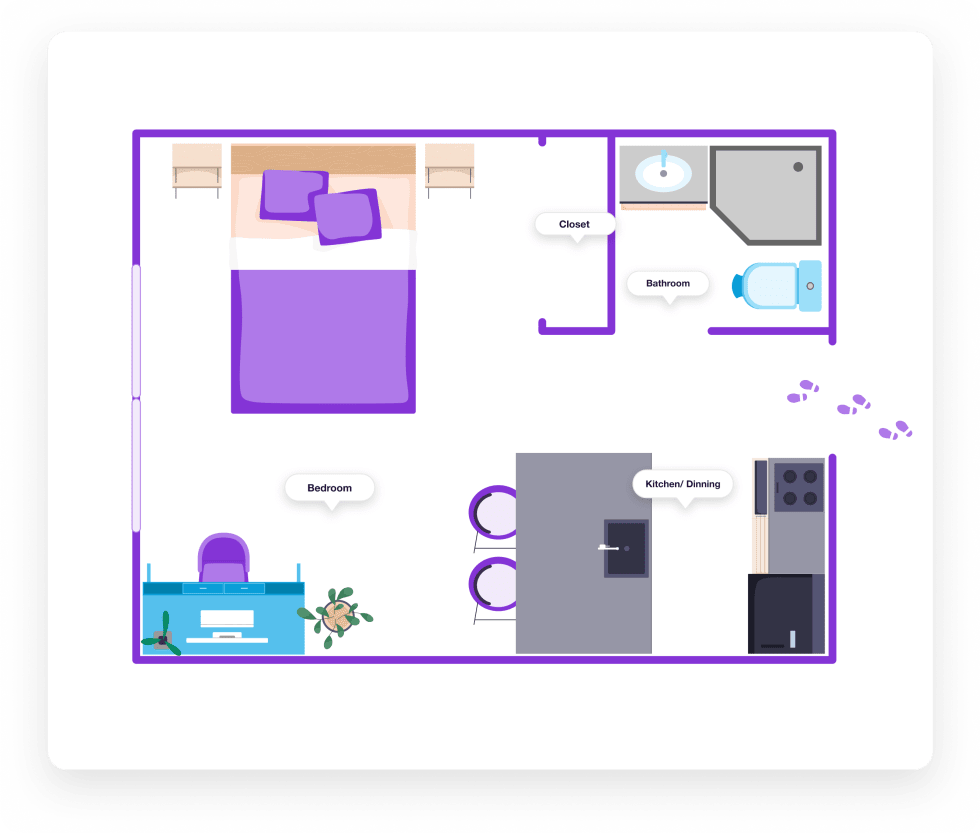
The Financial Anatomy of a 300-Square-Foot Investment
When looking at 300 square feet through the lens of a balance sheet, the primary focus is on the efficiency of the asset. In major metropolitan hubs—from New York and London to Tokyo and San Francisco—smaller units often command significantly higher price-per-square-foot ratios than their multi-bedroom counterparts.
Decoding the Price Per Square Foot in Urban Markets
In high-demand urban centers, 300 square feet often represents the “entry-level” luxury or the “professional’s pied-à-terre.” For an investor, the initial capital outlay for a 300-square-foot unit is lower than for a standard one-bedroom, yet the rental demand is disproportionately high. This creates a scenario where the price per square foot may be inflated on the purchase side, but the rental yield—calculated as a percentage of the total investment—frequently outperforms larger properties.
When you visualize 300 square feet, you should see it as a concentrated asset. It minimizes the “dead space” that an owner or landlord must maintain, heat, and insure, while maximizing the utility of the square footage that tenants are willing to pay a premium for. In the world of finance, this is known as maximizing the utility of the “rentable area.”
The Yield Potential of Micro-Apartments vs. Traditional Units
Micro-apartments, typically defined as living spaces under 350 square feet, have become a darling of institutional real estate investors. The logic is simple: a 1,200-square-foot building can be divided into one large three-bedroom unit or four 300-square-foot micro-units. In almost every major city, the combined rental income from four micro-units will significantly exceed the income from a single large unit.
Furthermore, 300-square-foot units tend to have lower vacancy rates. They cater to a growing demographic of single professionals, students, and digital nomads who prioritize location and “walkability” over internal volume. For the investor, 300 square feet looks like a diversified risk profile; losing one tenant in a multi-unit micro-complex is far less damaging to the bottom line than losing a tenant in a high-end, high-square-footage single-family rental.
Scaling Down to Level Up: 300 Square Feet and Personal Finance
Beyond the realm of institutional investing, the 300-square-foot footprint has become a symbol of the “financial independence, retire early” (FIRE) movement. For individuals, this space represents a radical re-evaluation of how housing costs impact long-term wealth accumulation.
The “Tiny Home” Path to Debt-Free Living
For many, 300 square feet looks like a path away from the 30-year mortgage. The “tiny home” movement is, at its core, a financial strategy. By opting for a 300-square-foot dwelling—often costing between $50,000 and $100,000—individuals can avoid the crushing interest payments associated with traditional home loans.
If we look at the math, a standard American home may cost $400,000. Over 30 years at a 7% interest rate, the total cost exceeds $900,000. In contrast, a 300-square-foot home purchased with cash or a short-term loan allows a homeowner to redirect thousands of dollars in monthly “saved” mortgage payments into high-yield savings accounts, index funds, or retirement portfolios. In this context, 300 square feet is not a limitation; it is a wealth-building engine.
Calculating the Hidden Savings of Micro-Living
The financial benefits of 300 square feet extend beyond the purchase price. There is a “multiplier effect” on savings that occurs when one downsizes to this degree:
- Utility Compression: Heating and cooling 300 square feet costs a fraction of the national average, often resulting in 60-70% lower utility bills.
- Property Tax Mitigation: In many jurisdictions, property taxes are assessed based on square footage or total value. A smaller footprint leads to a lower tax liability.
- Reduced Consumption: Perhaps the most overlooked financial benefit of 300 square feet is the physical limit it places on consumer spending. You cannot buy a 75-inch television, a massive sectional sofa, or endless kitchen gadgets if there is nowhere to put them. This “forced frugality” preserves capital that can be deployed into more productive financial assets.

Strategic Asset Management in Small-Scale Real Estate
Successfully managing or investing in 300-square-foot properties requires a different set of financial tools and insights than traditional real estate. There are specific hurdles and advantages that must be accounted for in any professional financial model.
Tax Implications and Depreciation of Micro-Assets
For the business-minded owner, 300 square feet of “short-term rental” space can offer significant tax advantages. Under current tax codes in many regions, small-scale modular units (often around 300 square feet) can sometimes be classified as personal property or equipment rather than permanent real estate improvements. This allows for accelerated depreciation, which can be used to offset other income on a tax return.
Furthermore, if the 300-square-foot space is used as a dedicated home office, the percentage of the home that can be deducted for business expenses is much higher relative to the total footprint. From a tax strategy perspective, 300 square feet looks like a highly efficient “write-off” that provides a physical utility while reducing the annual tax burden.
Financing Challenges and Solutions for Small-Footprint Properties
One of the complexities of 300 square feet is that traditional lenders are often hesitant to provide mortgages for units under a certain size (usually 400-500 square feet). This “financing gap” means that these assets often require creative financial engineering.
To a sophisticated investor, this lack of traditional financing is actually a competitive advantage. It keeps the “average” buyer out of the market, reducing competition. Those who can navigate the world of portfolio lenders, private money, or cash acquisitions can often secure these properties at a discount. Understanding how to bridge this financing gap is the difference between a stalled project and a high-yield asset.
The Future Value of Density: Trends in the 300-Square-Foot Market
As we look toward the next decade, the financial relevance of 300 square feet is only expected to grow. Economic shifts in how we work and live are driving the value of small, high-quality spaces upward.
The Rise of Short-Term Rentals and the “Nomad” Economy
In the age of Airbnb and luxury “glamping,” 300 square feet is the optimal size for a short-term rental unit. It is large enough to offer all the amenities of a hotel suite (kitchenette, full bath, sleeping area) but small enough to be cleaned and turned over quickly, minimizing labor costs.
The “Nomad Economy” consists of high-earning remote workers who move between cities every few months. They aren’t looking for 2,000-square-foot suburban homes; they are looking for “frictionless” 300-square-foot studios in central locations. For an investor, these units represent a “high-cash-flow” asset that capitalizes on the flexibility of the modern workforce.
ESG and Sustainability as Value Drivers
Environmental, Social, and Governance (ESG) criteria are increasingly influencing where institutional capital flows. 300-square-foot developments are inherently more sustainable. They require fewer materials to build and less energy to maintain. As carbon taxes and energy efficiency regulations become more stringent, these “micro-assets” will likely hold their value better than large, energy-inefficient mansions.
In the future, 300 square feet will look like a “green” hedge against rising energy costs and environmental regulations. For the forward-thinking financier, investing in density is not just a trend; it is a risk-mitigation strategy for a changing global economy.

Conclusion
What does 300 square feet look like? It looks like a concentrated, high-yield financial instrument. Whether it is used to slash personal living expenses and accelerate retirement or as a high-margin rental unit in a dense urban core, the 300-square-foot footprint is a testament to the power of efficiency. By focusing on the economics of the space rather than just the physical walls, investors and individuals can unlock a level of financial flexibility that larger properties simply cannot offer. In the modern economy, wealth is increasingly built not by how much space you own, but by how much value you can derive from every square foot you possess.
aViewFromTheCave is a participant in the Amazon Services LLC Associates Program, an affiliate advertising program designed to provide a means for sites to earn advertising fees by advertising and linking to Amazon.com. Amazon, the Amazon logo, AmazonSupply, and the AmazonSupply logo are trademarks of Amazon.com, Inc. or its affiliates. As an Amazon Associate we earn affiliate commissions from qualifying purchases.