
In the world of finance, numbers are the alphabet and ratios are the grammar. When a seasoned investor or a financial planner looks at the fraction “1/2,” they aren’t just seeing a mathematical value; they are seeing a strategic threshold. Whether it represents 50% of an asset, a half-share of a high-priced stock, or the fundamental split in a budgeting framework, the concept of “1/2” serves as a cornerstone for both wealth building and risk management.
In a modern economy where financial literacy is the primary differentiator between stability and struggle, understanding what “1/2” means in various monetary contexts is essential. This article explores the multifaceted role of this fraction across personal budgeting, equity markets, and debt management, providing a comprehensive guide to mastering the “Rule of Halves” in your financial life.
The 50% Rule: Decoding the “1/2” in Budgeting and Personal Finance
In personal finance, the fraction 1/2 is most famously associated with the 50/30/20 rule of thumb. This budgeting framework, popularized by Senator Elizabeth Warren in her book All Your Worth, suggests that half of your after-tax income should be allocated to “needs.” This is the primary “1/2” that dictates the lifestyle of millions of financially healthy individuals.
The Foundation of the 50/30/20 Framework
The brilliance of the 50/30/20 rule lies in its simplicity. By taking your total take-home pay and immediately earmarking 1/2 (50%) for essentials, you create a rigid structure that prevents “lifestyle creep.” In this context, “1/2” represents your survival baseline. It covers the non-negotiables: housing, utilities, groceries, transportation, and minimum insurance premiums.
When your “needs” exceed the 1/2 mark, it serves as a financial red flag. It indicates that you are “house poor” or “car poor,” meaning your fixed costs are so high that they jeopardize your ability to save for the future or enjoy the present. Mastering this 1/2 ratio ensures that you are living within your means while maintaining a buffer for economic volatility.
Allocating for “Needs”: Why 1/2 of Your Income is the Golden Ratio
Why is 50% considered the magic number? Historically, financial institutions and economists have found that when a household spends more than half of its income on fixed obligations, its “financial elasticity”—the ability to bounce back from an emergency—drops significantly.
If 1/2 of your money is spoken for before the month even begins, you still have the other half to split between discretionary spending (30%) and financial goals (20%). If your needs creep up to 60% or 70%, you are forced to cannibalize your savings or your quality of life. Therefore, in budgeting, “1/2” is not just a fraction; it is the boundary between financial freedom and paycheck-to-paycheck living.
Fractional Ownership: How 1/2 a Share Revolutionized Investing
For decades, the stock market was a playground for those who already had significant capital. If a single share of a major tech giant cost $3,000, an investor with only $1,500 was effectively locked out. However, the rise of fintech and “fractional shares” changed the definition of what it means to own a piece of a company. Today, “1/2” often refers to fractional ownership.
The Demystification of Fractional Shares
Fractional shares allow investors to buy a portion of a stock based on a dollar amount rather than a full unit. If you want to invest in a company but cannot afford a full share, you can buy 1/2, 1/10, or even 1/100 of a share. This “1/2” ownership grants you the same proportional benefits as a full-share owner.
For example, if the company pays a dividend, you receive exactly 1/2 of the dividend amount per share. If the stock price rises by 10%, your 1/2 share gains 10% in value. This democratization of the market means that the “1/2” symbol represents accessibility. It breaks down the barriers of “unit bias,” where investors used to believe they had to buy stocks in whole increments.
Lowering the Barrier to Entry for High-Value Stocks
The ability to own 1/2 of an asset is particularly vital for younger investors or those practicing “dollar-cost averaging.” Instead of waiting months to save enough for one expensive share, an investor can put $500 into the market every month, owning 1/2 a share here and 1/4 a share there.
This leads to better compound interest results over time, as the money is put to work immediately. In the context of modern portfolio theory, the “1/2 share” is the tool that allows for “precise diversification.” You can now build a balanced portfolio across dozens of companies with a relatively small amount of capital, ensuring that no single “full” share dominates your entire net worth.
The “Half-Life” of Debt: Managing Liabilities and Interest
In the world of credit and lending, “1/2” takes on a more sobering meaning. It often relates to the “halfway point” of a loan’s term or the utilization ratio of a credit line. Understanding the physics of interest at the 1/2 mark of a debt’s lifespan is crucial for anyone looking to minimize their interest payments.
Understanding the Impact of 1/2-Term Principal Reduction
Amortization schedules are weighted so that interest is paid upfront. When you are 1/2 of the way through a 30-year mortgage, you haven’t actually paid off 1/2 of the principal. Because of how interest is calculated on the remaining balance, the first 15 years are heavily tilted toward interest, while the latter 15 years focus on the principal.
Recognizing this “1/2” mark is essential for refinancing decisions. If you are more than 1/2 of the way through a loan, the benefit of refinancing to a lower rate diminishes because you have already paid the bulk of the interest. In debt management, “1/2” is a marker of “the tipping point”—the moment when your monthly payment finally begins to take a significant bite out of the actual debt rather than just feeding the bank’s profit.
Strategies for Early Pay-off and Interest Savings
The “Rule of Halves” can also be used aggressively to destroy debt. Many financial advisors suggest that if you can increase your payments to reach the 1/2 principal mark earlier, the compounding effect of interest works in your favor. By paying off 1/2 of a high-interest credit card balance, you don’t just reduce your debt; you exponentially lower the “interest drag” on your monthly cash flow.
Furthermore, the “1/2” rule applies to credit utilization. To maintain a high credit score, financial experts recommend never using more than 1/2 (and ideally less than 1/3) of your available credit limit. Here, 1/2 is the “danger zone”—the absolute ceiling you should never cross if you want to remain creditworthy in the eyes of lenders.
Half-and-Half: Diversification and Risk Management Strategies
In institutional investing and wealth management, “1/2” often describes the simplest form of a balanced portfolio: the 50/50 split. While complex algorithms now dominate Wall Street, the fundamental philosophy of “half-and-half” remains a benchmark for moderate risk.
The 50/50 Portfolio: Balancing Equity and Fixed Income
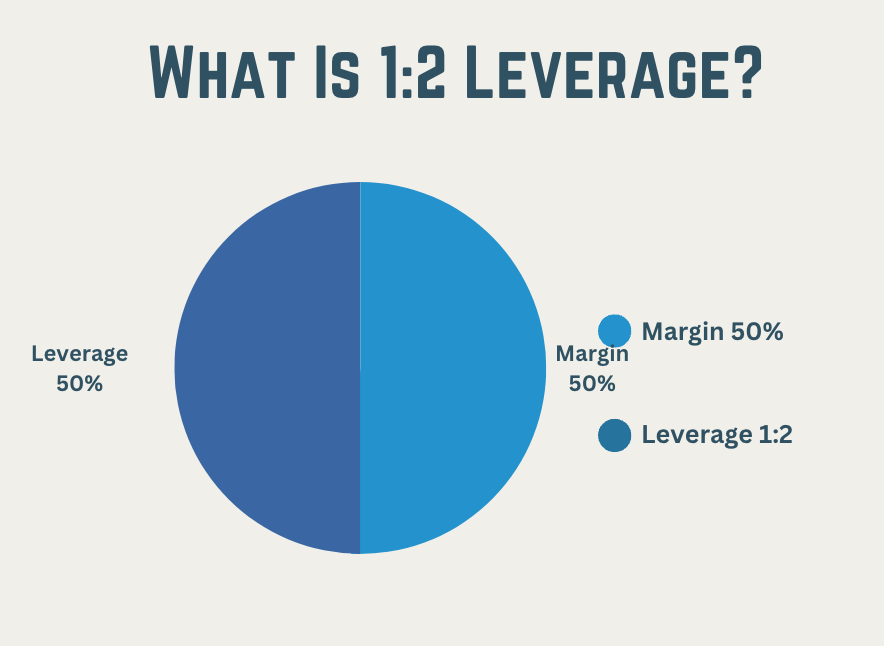
The classic “balanced” portfolio allocates 1/2 of its capital to equities (stocks) for growth and 1/2 to fixed income (bonds) for stability. This 1/2 ratio is designed to capture the upside of the market while providing a “floor” during a recession.
When the stock market is volatile, the 1/2 held in bonds acts as a stabilizer. Conversely, when interest rates are low and bonds are stagnant, the 1/2 held in stocks provides the necessary engine for wealth accumulation. For many retirees or conservative investors, “1/2” represents the perfect equilibrium between the fear of losing money and the fear of missing out on gains.
When to Rebalance: Keeping Your Financial Scales Level
The “1/2” target requires active maintenance known as rebalancing. If your stocks perform exceptionally well, they might grow to represent 60% of your portfolio, while your bonds shrink to 40%. To return to your 1/2-and-1/2 strategy, you must sell some of your winning stocks and buy more bonds.
This disciplined approach forces you to “buy low and sell high.” By constantly aiming for that 1/2 mark, you ensure that you aren’t overexposed to risk during a market peak or underexposed during a market bottom. In this sense, “1/2” is the North Star of a disciplined investment strategy, guiding the investor back to their intended risk profile regardless of market noise.
Conclusion: The Power of the Fraction
Whether it is the 50% limit on your housing costs, the 1/2 share of a premium stock, or the 50/50 balance of a diversified portfolio, the fraction “1/2” is a vital signal in the language of money. It represents balance, accessibility, and a threshold for risk.
By understanding what “1/2” means in these various financial contexts, you can move from a passive participant in the economy to an active strategist. You begin to see your income not as a single lump sum, but as a series of ratios to be managed. You see the stock market not as a gated community, but as a collection of fractional opportunities. Ultimately, mastering the “1/2” in your finances is about taking control of the proportions of your life, ensuring that every dollar is allocated for maximum impact.
aViewFromTheCave is a participant in the Amazon Services LLC Associates Program, an affiliate advertising program designed to provide a means for sites to earn advertising fees by advertising and linking to Amazon.com. Amazon, the Amazon logo, AmazonSupply, and the AmazonSupply logo are trademarks of Amazon.com, Inc. or its affiliates. As an Amazon Associate we earn affiliate commissions from qualifying purchases.