
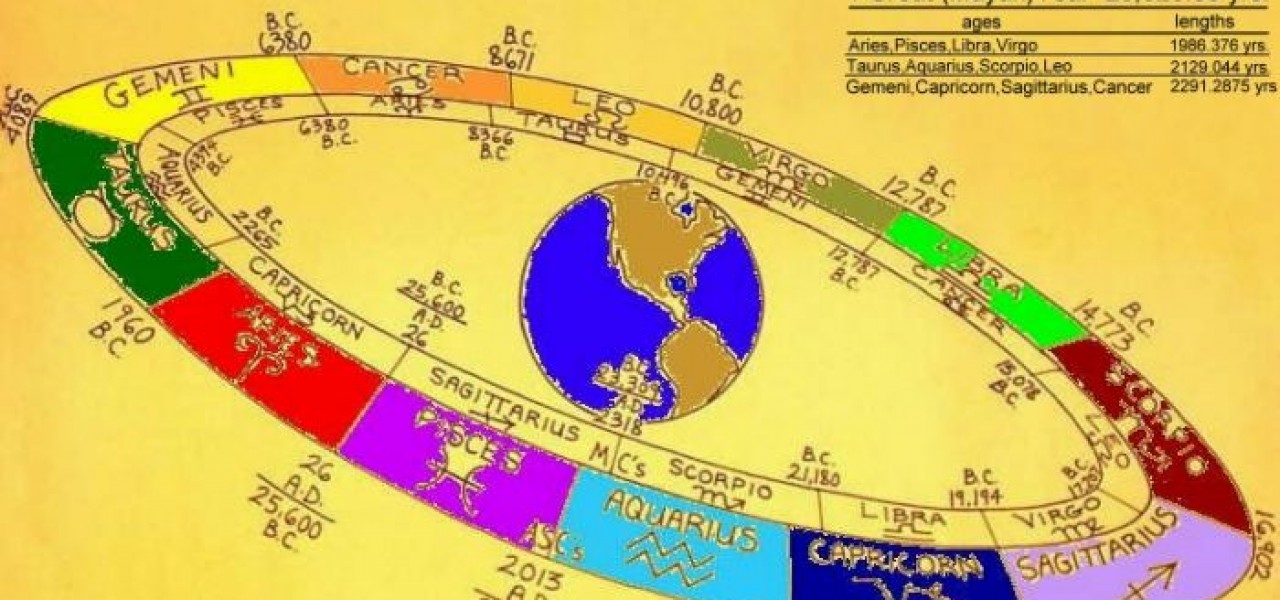
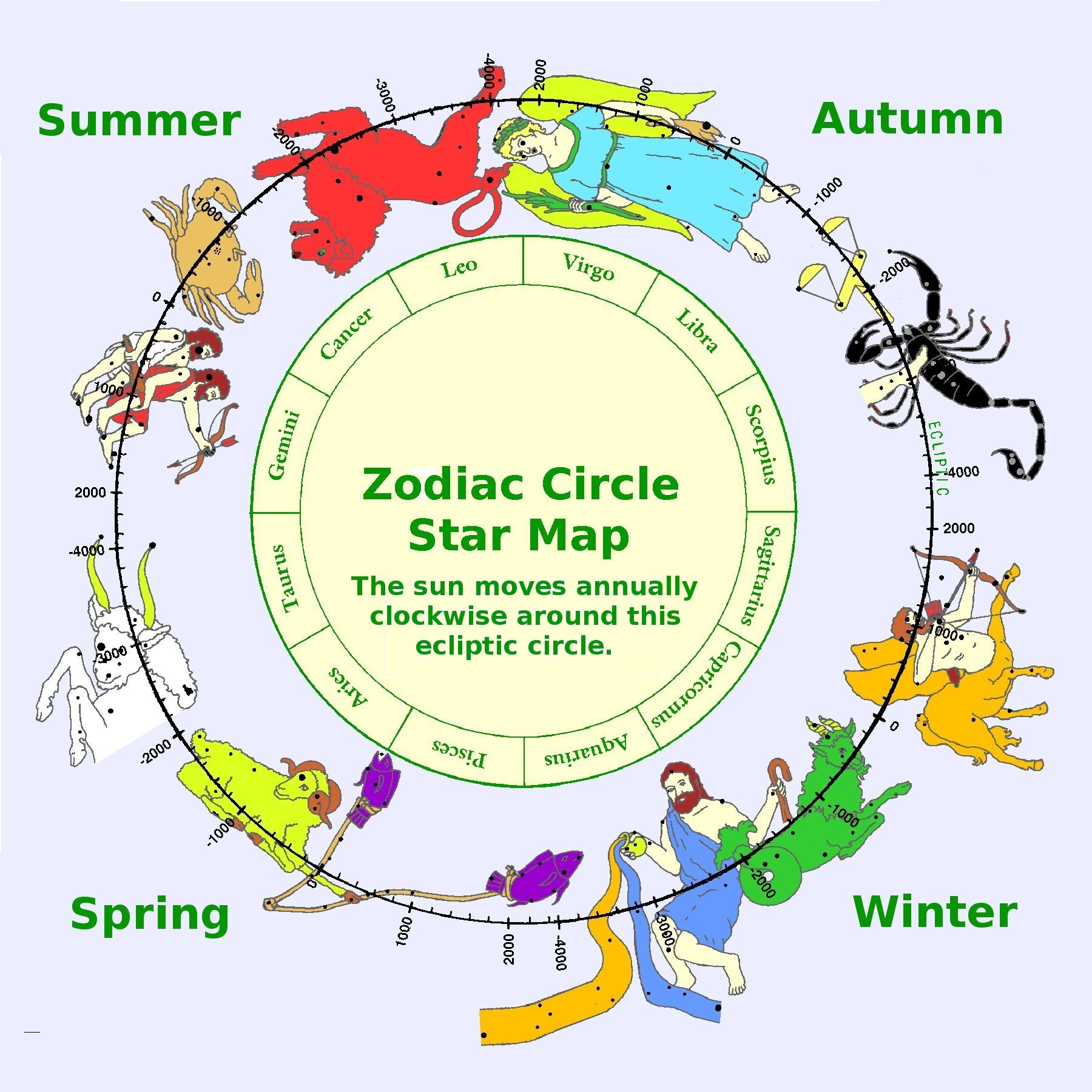
In the study of cosmic cycles, the transition between “Ages” signifies a fundamental shift in human consciousness, social structure, and progress. While traditional astrology debates whether we have fully entered the “Age of Aquarius,” a parallel and perhaps more tangible shift is occurring in the realm of global technology. If we define our current “Zodiac Age” by the tools we use and the way we organize our society, we are undeniably living in the Silicon Age—an era defined by the rapid decentralization of information, the rise of artificial intelligence, and a shift from physical labor to digital intelligence.

Understanding the “age” we are in requires more than looking at the stars; it requires looking at the architecture of our digital world. We are currently navigating a transition from the centralized, industrial paradigms of the 20th century to a networked, automated, and hyper-connected 21st century.
The Great Transition: From the Industrial Epoch to the Information Age
To understand the current technological “zodiac,” we must first look at where we came from. For nearly two centuries, the world was governed by the principles of the Industrial Age. This era was characterized by centralized power, physical production, and a linear approach to growth. In astrological terms, this mirrored a grounded, “Earth-based” focus on tangible assets and rigid hierarchies.
The Legacy of the Industrial Revolution
The previous age was defined by the steam engine, the assembly line, and the corporation. These technologies required humans to adapt to the rhythm of machines. Information was scarce and controlled by gatekeepers—governments, large media conglomerates, and educational institutions. This created a top-down structure where progress was measured by the extraction of resources and the efficiency of the factory floor.
The Digital Transformation Pivot
The shift into our current “age” began with the advent of the microprocessor and the birth of the internet. We transitioned from an age of “matter” to an age of “bits.” This was the first true indicator that we were entering a new technological zodiac. The barriers to information fell, and the hierarchy began to flatten. In this new epoch, value is no longer derived solely from physical ownership but from the ability to process, interpret, and leverage data.
The Age of Aquarius: Decentralization and the Blockchain Revolution
In astrological lore, the Age of Aquarius is defined by the spirit of the collective, the breaking of old structures, and the democratization of power. In the tech world, this manifest destiny is being fulfilled through decentralization. If the previous age was about “the institution,” this age is about “the network.”
Decentralization and the Blockchain Paradigm
At the heart of our current technological age lies the blockchain. This technology represents a fundamental departure from centralized authority. Whether through decentralized finance (DeFi) or distributed ledgers, we are seeing a shift where trust is no longer placed in a central bank or a single corporate entity, but in a transparent, mathematical consensus. This technological “vibration” matches the Aquarian ideal of a decentralized, peer-to-peer society. It removes the middleman, allowing for the direct exchange of value and information across borders without the need for traditional gatekeepers.
Connectivity and the Global Neural Network
The current age is also defined by the ubiquity of the “Global Neural Network”—the interconnected web of billions of devices known as the Internet of Things (IoT). We are no longer individuals working in isolation; we are nodes in a massive, real-time data exchange. This connectivity has fundamentally altered our social fabric, enabling movements to organize in seconds and allowing for the collaborative development of open-source software that powers the modern world. The “Age” we are in is one where the collective intelligence of the network often outweighs the expertise of the individual.
Artificial Intelligence: The New Cosmic Intelligence
If every age has a defining “spirit,” the spirit of our current technological epoch is Artificial Intelligence (AI). AI represents the transition from tools that help us do work to tools that help us think. This is the hallmark of a “mental” or “Air” age, where the primary currency is no longer physical strength or even basic data, but the synthesis of information into intelligence.
Generative AI and the Creative Shift
The emergence of Large Language Models (LLMs) and generative AI has signaled a turning point in human history. We are in an age where the boundary between human creativity and algorithmic output is blurring. This technology allows for the democratization of high-level skills—coding, design, writing, and analysis—making them accessible to anyone with an internet connection. This reflects a “New Age” philosophy where human potential is amplified by technology, rather than replaced by it. We are seeing a shift from “how do I do this?” to “what should be done?” as AI takes over the mechanical aspects of cognitive labor.
Ethics and Governance in a Machine-Driven Era
As we move deeper into this technological zodiac, the challenges we face are no longer just technical; they are philosophical and ethical. How do we govern an intelligence that we do not fully understand? How do we ensure that the algorithms driving our social media feeds, our credit scores, and our judicial systems are fair? The “zodiac age” we are in demands a new framework for digital ethics. We are currently in the “wild west” phase of this transition, where the technology is evolving faster than the laws designed to regulate it.
Digital Security and the Shield of Privacy
Every age has its risks. In the agrarian age, it was famine; in the industrial age, it was economic collapse. In our current technological age, the primary threat is the breach of digital identity. As our lives move entirely into the digital realm, “security” has been redefined.
Cybersecurity as the New Shield
We are currently in an age where data is more valuable than oil. Consequently, the battlegrounds of the 21st century are digital. Cybersecurity is no longer just a niche IT concern; it is the fundamental infrastructure of our civilization. From protecting national power grids to securing personal biometric data, the “walls” of our current age are made of encryption and code. The sophistication of cyber threats—driven by state actors and automated bots—requires an equally sophisticated, AI-driven defense system.
Navigating the Paradox of Data Privacy
Our current age is characterized by a deep paradox: we crave the convenience of a connected life, but we fear the loss of privacy. We are in an era of “Surveillance Capitalism,” where our every move is tracked and monetized. The next phase of our technological zodiac will likely be defined by the “Privacy Tech” movement—technologies like zero-knowledge proofs and decentralized identity (DID) that aim to give users control over their digital footprint. This represents the maturing of our current age, moving from reckless data sharing to a more conscious, sovereign digital existence.
The Future Outlook: Quantum Computing and the Next Great Leap
As we look toward the horizon of our current age, we see the silhouettes of technologies that will define the next century. Just as the telescope expanded our view of the physical universe, quantum computing and space-tech are set to expand our view of the digital and physical limits of reality.
The Quantum Frontier
We are standing on the precipice of the Quantum Age. While current computers operate on binary logic (0s and 1s), quantum computers utilize the principles of superposition and entanglement. This is not just a faster computer; it is a different way of processing reality. When this technology matures, it will solve problems in minutes that would take current supercomputers millennia to crack. This will be the “Golden Age” of discovery for materials science, pharmacology, and cryptography, marking the full realization of our current technological trajectory.
Preparing for an Automated and Augmented Future
What does it mean to be human in the “Age of the Machine”? As we integrate more deeply with our technology—through wearable devices, neural interfaces, and augmented reality—we are essentially evolving. The “Zodiac Age” of the present is one of transition, preparing us for a future where the distinction between biological and digital intelligence becomes increasingly academic. To thrive in this age, one must embrace continuous learning, digital literacy, and an adaptable mindset. We are no longer in an era where a single skill set can last a lifetime; we are in an age of constant iteration.
In conclusion, the “age” we are in is one of unprecedented change and profound opportunity. By aligning ourselves with the technological currents of decentralization, artificial intelligence, and digital sovereignty, we can navigate this epoch with purpose. Whether we call it the Age of Aquarius or the Silicon Age, the result is the same: a world that is more connected, more intelligent, and more dynamic than ever before.
aViewFromTheCave is a participant in the Amazon Services LLC Associates Program, an affiliate advertising program designed to provide a means for sites to earn advertising fees by advertising and linking to Amazon.com. Amazon, the Amazon logo, AmazonSupply, and the AmazonSupply logo are trademarks of Amazon.com, Inc. or its affiliates. As an Amazon Associate we earn affiliate commissions from qualifying purchases.