
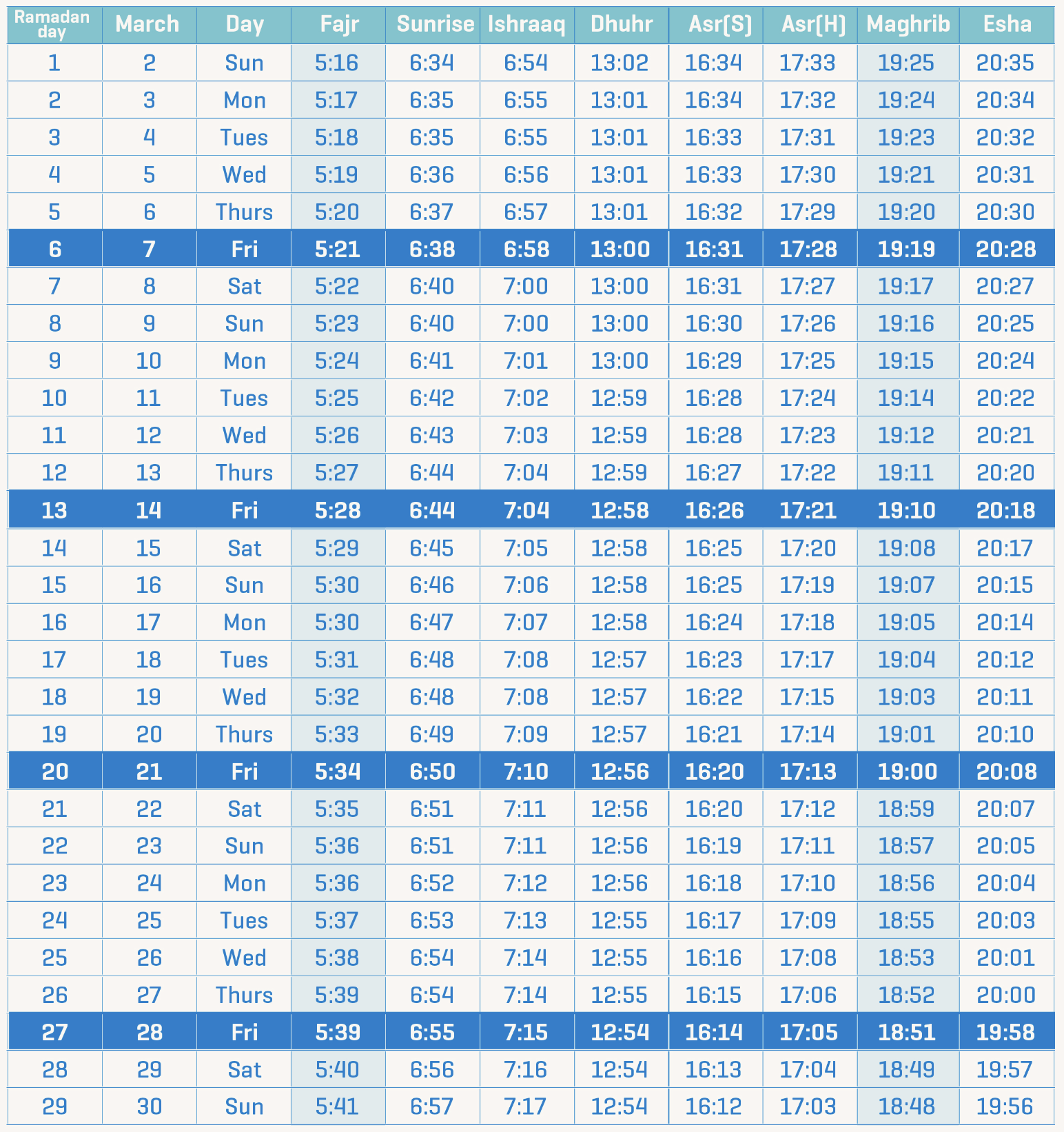
As the lunar calendar approaches the holy month of Ramadan in 2025, millions of observers worldwide face a recurring logistical challenge: determining the exact second the fast begins and ends. In the past, this was a communal act reliant on local sightings and mosque sirens. However, in the contemporary digital age, the question of “what time to break fast” has transitioned into a sophisticated intersection of astronomical data, geolocation algorithms, and high-performance software.
For the tech-savvy observer, Ramadan 2025 represents the pinnacle of “Deen-Tech”—a growing sector where developers use cutting-edge tools to ensure spiritual precision. From GPS-enabled mobile applications to AI-driven prayer schedules, technology is now the primary arbiter of the Iftar and Imsak timings.

The Engineering of Time: Astronomical Algorithms and Geolocation
The primary reason users turn to their devices to know when to break their fast is the sheer mathematical complexity involved in calculating the sun’s position relative to a specific coordinate on Earth. Unlike a standard alarm clock, Iftar (the meal to break the fast) is tied to the Maghrib prayer, which begins at sunset.
The Role of High-Precision Geolocation
In 2025, the accuracy of your Iftar time is only as good as your device’s GPS module. Modern smartphones utilize Assisted GPS (A-GPS), GLONASS, and Galileo satellite systems to pinpoint a user’s location within meters. This is critical because even a distance of a few miles—such as moving from a coastal area to a higher altitude inland—can alter sunset times by several minutes. Tech platforms now integrate these coordinates with “topographical corrections,” accounting for elevation. If you are on the 100th floor of a skyscraper in Dubai or New York, your “break fast” time is technically later than someone on the ground floor, a calculation now handled instantly by cloud-based servers.
Algorithmic Standards and Calculation Methods
Behind every “Ramadan 2025” app is a selection of mathematical conventions. Software developers must choose between various calculation methods, such as the University of Islamic Sciences (Karachi), the Islamic Society of North America (ISNA), or the Muslim World League. These algorithms determine the “Fajr” (dawn) and “Isha” (night) angles. For the tech-focused user, the ability to toggle between these calculation methods in an app’s settings is a masterclass in UI/UX design, allowing for hyper-localized religious compliance through code.
The App Ecosystem: Software Solutions for Ramadan 2025
The search for “what time to break fast” has birthed a massive ecosystem of mobile applications. These apps do more than just display a countdown; they serve as centralized hubs for spiritual productivity.
Advanced Features in Modern Prayer Apps
Leading apps in 2025 have moved beyond static PDFs of prayer tables. They now feature dynamic countdown widgets that reside on the smartphone’s “Always-On” display or “Live Activities” bar on iOS. This allows users to track the remaining minutes until Iftar without even unlocking their phones. Furthermore, API integrations with local mosques allow some apps to sync directly with the specific “Adhan” (call to prayer) timings of a user’s preferred community center, bridging the gap between global data and local tradition.
Offline Functionality and Edge Computing
One of the significant tech hurdles for Ramadan apps is ensuring functionality in areas with poor connectivity. Developers are increasingly utilizing “edge computing,” where the entire year’s prayer timing database is cached locally on the device using SQLite or similar lightweight databases. This ensures that even if a user is on a flight or in a remote area during Ramadan 2025, the algorithm can still compute the exact time to break fast based on the last known GPS coordinates and the device’s internal clock.
Wearable Tech and the Integration of the Internet of Things (IoT)

As we move into 2025, the quest for Iftar timings has moved from the pocket to the wrist and the home environment. The “Internet of Things” (IoT) is revolutionizing how observers interact with the sunset.
Smartwatch Complications and Haptic Alerts
Smartwatches have become the ultimate tool for the fasting professional. Using “complications”—small snippets of data on a watch face—users can view a real-time progress bar of their fasting day. More importantly, haptic feedback (vibrations) can alert a user to the exact moment of Iftar. This is particularly useful in professional environments where an audible alarm might be disruptive. Developers are now optimizing watchOS and Wear OS apps to consume minimal battery while maintaining a constant background refresh of timing data.
Smart Home Automation for Iftar
The integration of Ramadan timings into smart home ecosystems like Google Home, Amazon Alexa, and Apple HomeKit is a growing trend. In 2025, it is common to see “If This Then That” (IFTTT) recipes or Shortcuts that trigger a chain of events at the moment of Maghrib. For example, at the exact second of breaking the fast, the smart home system can automatically:
- Play the Adhan through multi-room speakers.
- Gradually brighten the dining room lights.
- Deactivate “Do Not Disturb” modes on family devices.
This automation relies on the seamless communication between cloud-based religious timing APIs and local home automation hubs.
AI and Machine Learning in Spiritual Planning
Artificial Intelligence is the defining tech trend of 2025, and its application in calculating and managing Ramadan schedules is profound. AI is no longer just predicting the weather; it is predicting the “fasting experience.”
Predictive Scheduling and Energy Management
New AI-driven productivity tools analyze the 2025 Ramadan timings to help users optimize their workdays. By looking at the duration of the fast (which varies depending on the time of year and geography), AI can suggest the best windows for “Deep Work” versus “Rest.” If the fast is particularly long in a certain region, the AI might suggest moving high-cognitive tasks to the early morning hours immediately after Sahur (the pre-dawn meal) when glucose levels are highest.
Personalized Health Monitoring
Tech-heavy fasting in 2025 also involves AI health integration. Wearables like the Oura Ring or Whoop, paired with specialized fasting apps, use machine learning to monitor a user’s heart rate variability (HRV) and sleep patterns during the month. If the AI detects that the late-night Iftar meals and early-morning Sahur are negatively impacting recovery, it can provide personalized suggestions on when to hydrate or rest, all while keeping the countdown to the next “break fast” time front and center.
Digital Security and Data Privacy in Faith-Based Tech
With the surge in downloads for “Ramadan 2025” apps, the tech industry has had to reckon with the massive amounts of personal data being generated. When a user asks an app “what time to break fast,” they are providing that app with their precise location, their religious affiliation, and their daily habits.
The Shift Toward Privacy-First Apps
In 2025, there is a significant push toward “Privacy-First” religious technology. Discerning users are looking for apps that perform calculations locally on the device rather than sending location data to a central server. Developers are responding by implementing “Zero-Knowledge” architectures and ensuring that location data is obfuscated—meaning the app knows the general vicinity to calculate the sunset but doesn’t track the user’s specific address or movements.
The Risks of Data Monetization
The tech community has become increasingly vocal about the “halal” status of data usage. In previous years, some prayer apps were caught selling location data to third-party brokers. In 2025, the standard for a reputable Ramadan app includes transparent open-source code or third-party security audits. For the tech-literate user, choosing an app to find out when to break the fast is now as much about digital security as it is about religious accuracy.
Conclusion: The Silicon-Enhanced Spirit
The question of “what time to break fast in Ramadan 2025” is no longer a simple query; it is an entry point into a sophisticated digital ecosystem. Through the lens of technology, we see a beautiful synergy between ancient tradition and modern innovation. Whether it is through the precision of astronomical algorithms, the convenience of IoT-integrated homes, or the personalized insights of AI, technology serves as a bridge, allowing the observer to focus less on the mechanics of the clock and more on the essence of the fast. As we look toward the future of Deen-Tech, the goal remains clear: using the best tools humanity has engineered to facilitate a more profound and seamless spiritual experience.
aViewFromTheCave is a participant in the Amazon Services LLC Associates Program, an affiliate advertising program designed to provide a means for sites to earn advertising fees by advertising and linking to Amazon.com. Amazon, the Amazon logo, AmazonSupply, and the AmazonSupply logo are trademarks of Amazon.com, Inc. or its affiliates. As an Amazon Associate we earn affiliate commissions from qualifying purchases.