
The integration of high-budget superhero narratives into the digital streaming landscape marked a pivotal shift in how technology companies approach content delivery. When Marvel Television partnered with Netflix to create the “Defenders Saga,” it wasn’t just a creative milestone; it was a technical masterclass in synchronized storytelling across a singular digital ecosystem. For viewers navigating this dense library today—now housed on Disney+—understanding the correct order is essential to maintaining narrative continuity and appreciating the technical evolution of the medium.
This guide provides a comprehensive technical walkthrough of the viewing order, the architectural structure of these interconnected series, and how to optimize your digital setup for the best possible experience.

Understanding the Technical Architecture of the Marvel-Netflix Ecosystem
Before diving into the specific watch order, it is important to understand the infrastructure of the “Netflix Marvel” era. These shows were developed as “street-level” counterparts to the grander Marvel Cinematic Universe (MCU), utilizing a darker, more grounded aesthetic that required specific technical approaches to cinematography and post-production.
The Evolution of Streaming Content Delivery
The collaboration between Marvel and Netflix served as a testing ground for 4K Ultra HD and High Dynamic Range (HDR) content. Unlike the theatrical releases, these shows were designed specifically for home-theatre software. The technical metadata embedded in these streams was optimized for the Netflix “Silverlight” and later HTML5 players, ensuring that the heavy use of shadows in Daredevil or the vibrant, color-coded lighting in Jessica Jones translated well across various screen types, from OLED smartphones to LED televisions.
Why Metadata and Continuity Management Define the Viewer Experience
The “Defenders Saga” utilizes a complex web of cross-references and shared assets. From a software perspective, this is a masterclass in narrative metadata. Characters, locations, and events mentioned in one “node” (series) have direct repercussions in another. Following the release order isn’t just a preference; it is a way to ensure that the narrative cache—the information you store as a viewer—is updated in the sequence intended by the architects of the series.
The Optimized Viewing Order: A Systematic Tutorial
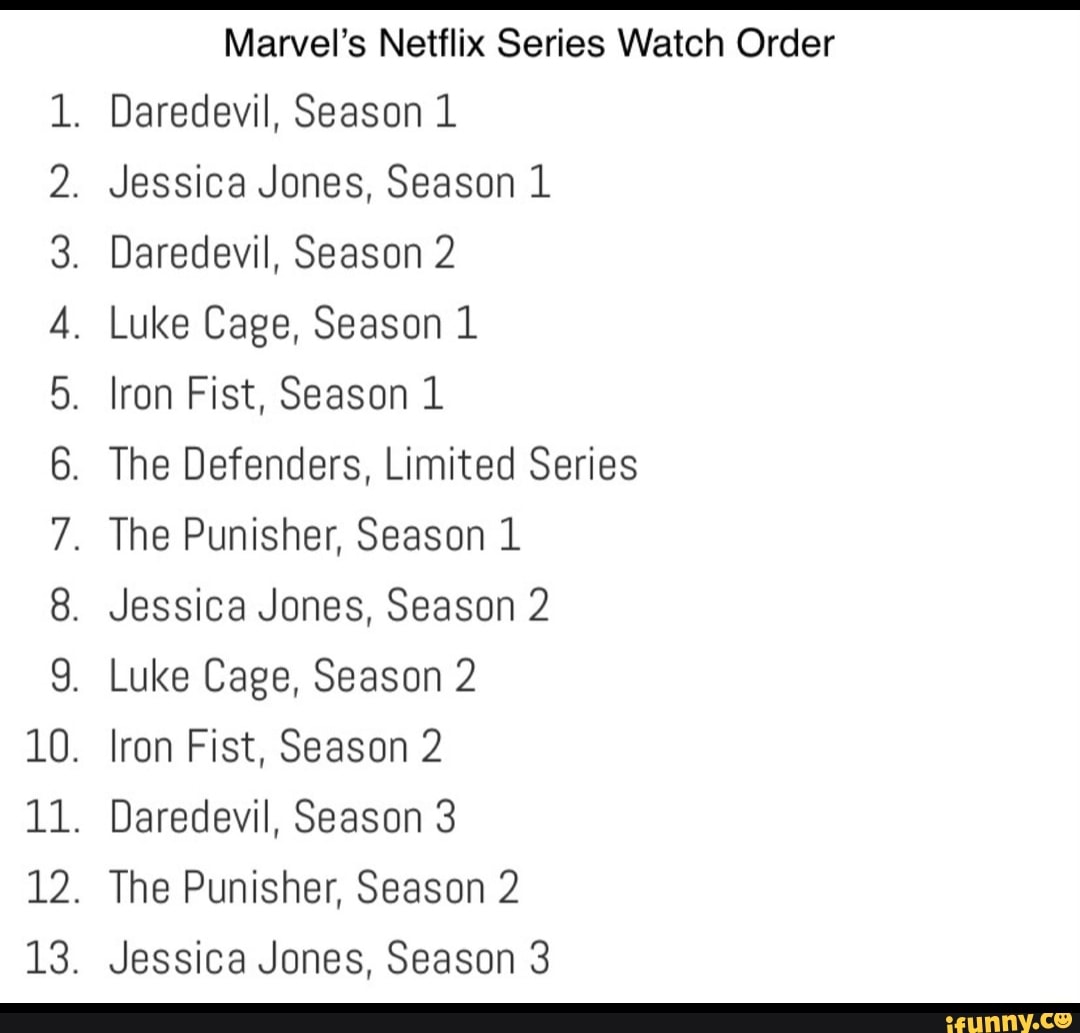
To experience the narrative without encountering “logic bugs” or spoilers, the release order is universally considered the gold standard. This sequence allows the technology of the storytelling to unfold as the creators intended.
Phase One: Building the Foundation
The first phase of this digital rollout focused on establishing individual silos before attempting a complex crossover.
- Daredevil (Season 1): This serves as the “Operating System” for the entire saga. It introduces the setting of Hell’s Kitchen and establishes the dark, gritty visual tone.
- Jessica Jones (Season 1): This expansion introduces the psychological thriller sub-genre to the ecosystem. It is technically significant for its use of purple hue-shifting in post-production to signify character influence.
- Daredevil (Season 2): This season introduces The Punisher and Elektra, significantly expanding the character database and setting the stage for the physical “Defenders” convergence.
Phase Two: Expanding the Network
Once the foundation was laid, the ecosystem expanded to include new protagonists, each with their own unique visual and sonic signatures.
- Luke Cage (Season 1): This series brought a distinct focus on audio engineering, utilizing a heavy 90s hip-hop influence and a warmer color palette to differentiate its Harlem setting from Hell’s Kitchen.
- Iron Fist (Season 1): The final piece of the quartet, focusing on corporate intrigue and martial arts, completing the character roster needed for the crossover event.
The Convergence: The Defenders and the Technical Climax
- The Defenders (Limited Series): This is the “hub” of the entire project. From a technical standpoint, The Defenders had to merge four distinct visual styles into a single cohesive stream. This required sophisticated color grading to ensure that when all four characters appeared on screen, the individual aesthetics (Red for Daredevil, Blue for Jessica, Yellow for Luke, and Green for Danny) were harmonized.

Phase Three: Post-Convergence Refinement
After the crossover, the series branched out into more specialized narrative paths.
- The Punisher (Season 1): A spin-off that utilized higher frame rates for action sequences and a more muted, tactical color grade.
- Jessica Jones (Season 2)
- Luke Cage (Season 2)
- Iron Fist (Season 2)
- Daredevil (Season 3): Widely considered the technical peak of the saga, featuring a legendary 11-minute “oner” (single-take action sequence) that pushed the limits of choreography and digital stitching.
- The Punisher (Season 2)
- Jessica Jones (Season 3): The final iteration of the original Netflix-produced era, closing out the character arcs before the rights migrated.
Navigating the Migration: From Netflix Infrastructure to Disney+ Integration
In early 2022, a significant shift occurred in the digital distribution of these shows. The licensing agreements between Netflix and Disney expired, leading to the “Great Migration.” This transition highlights several key aspects of Digital Rights Management (DRM) and platform-specific optimization.
Digital Rights Management and the Great Migration
The removal of the Marvel shows from Netflix was a high-profile example of how content “portability” works in the modern tech era. While the shows remained the same, the software environment hosting them changed. Disney+ had to integrate these TV-MA (Mature) rated files into a platform that was previously tailored for PG-13 content. This led to the implementation of more robust parental control software updates within the Disney+ app, allowing users to toggle specific content ratings—a direct technical response to the acquisition of these specific assets.
Enhanced Technical Features: 4K, Dolby Vision, and Audio Engineering
Upon moving to Disney+, the shows received technical “refreshes.” While they were already available in 4K on Netflix, the integration into the Disney+ infrastructure allowed for better compatibility with Dolby Vision and Dolby Atmos on a wider array of hardware. If you are watching these today, the bitrate management on Disney+ often provides a more stable high-definition stream than older legacy versions, particularly for users with high-bandwidth fiber connections.
Software and Tools to Enhance Your Binge-Watching Experience
To truly appreciate the technical nuances of these series, viewers should look beyond the play button and consider the hardware and software settings that bring the “Defenders Saga” to life.
Using Browser Extensions for Better Metadata Access
For viewers watching on a PC or Mac, certain browser extensions can enhance the experience. Tools that allow for “Custom Bitrate” selection can ensure that the dark, shadow-heavy scenes of Daredevil don’t suffer from compression artifacts (the blocky patches often seen in dark scenes on low-speed internet). Additionally, metadata extensions can provide IMDB ratings and cast information in an overlay, allowing for a more interactive viewing experience.
Smart TV Calibration for High-Contrast Cinematography
Because these shows were filmed with a “low-key” lighting technique, screen calibration is vital. Most modern Smart TVs have a “Filmmaker Mode” or “Cinema Mode.” Activating these settings disables artificial motion smoothing (the “soap opera effect”) and preserves the original frame rate and color temperature intended by the directors.
In Luke Cage or Iron Fist, the use of HDR is particularly prominent. Ensure your hardware’s HDR10 or Dolby Vision setting is “On” to see the detail in the shadows—a technical requirement for a series where much of the action happens at night or in dimly lit hallways.
Conclusion: The Legacy of a Digital Epoch
The Marvel Netflix series represent a unique moment in the history of streaming technology. They were among the first “prestige” digital series to utilize a shared-universe model, requiring meticulous attention to continuity, metadata, and high-end production standards. By following the release order—starting with Daredevil Season 1 and concluding with Jessica Jones Season 3—you aren’t just watching a story; you are observing the evolution of digital content delivery and the maturation of a streaming ecosystem.
Whether you are a newcomer or a returning fan, viewing these shows through a technical lens allows for a deeper appreciation of the work that goes into synchronized digital storytelling. As these characters begin to integrate further into the mainstream MCU via new software and platform updates, understanding their origins remains the best way to prepare for the future of digital entertainment.
aViewFromTheCave is a participant in the Amazon Services LLC Associates Program, an affiliate advertising program designed to provide a means for sites to earn advertising fees by advertising and linking to Amazon.com. Amazon, the Amazon logo, AmazonSupply, and the AmazonSupply logo are trademarks of Amazon.com, Inc. or its affiliates. As an Amazon Associate we earn affiliate commissions from qualifying purchases.