
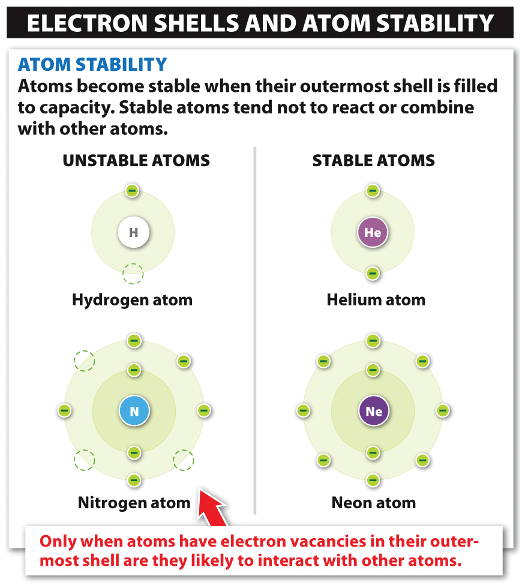
In the physical world, the stability of an atom is determined by the delicate balance between the forces in its nucleus. When the ratio of protons to neutrons is skewed, or when the binding energy is insufficient to hold the subatomic particles together, the atom becomes unstable, leading to radioactive decay. In the realm of modern technology—specifically in software engineering, system architecture, and digital infrastructure—the “atom” represents the smallest functional unit of a system.
Whether we are discussing a single line of code, a microservice, or an atomic database transaction, the principles of stability remain remarkably similar to nuclear physics. When the internal components of a technological system are poorly balanced or under excessive external pressure, the system becomes “unstable.” This instability leads to crashes, security breaches, and “technical decay.” Understanding what makes a technical atom unstable is critical for developers, architects, and CTOs who aim to build resilient, scalable, and high-performing digital environments.
The Atomic Components of Software Architecture
In software development, the concept of “atomicity” refers to an operation that is indivisible and irreducible. However, in a broader architectural sense, the “atoms” of a tech stack are the individual modules, functions, or components that make up the whole. Just as a physical atom needs a stable nucleus, a software atom needs a clear purpose and robust logic.
Defining the “Atomic” Unit in Modern Tech
The first step in diagnosing instability is identifying the units of the system. In modern web development, “Atomic Design” is a methodology used to create design systems through small, reusable components (atoms) that combine to form molecules, organisms, and eventually full pages. If an individual component—such as a button or an input field—is built with inconsistent logic or fragile dependencies, every larger structure built upon it becomes inherently unstable. In backend systems, an “atomic transaction” must either succeed entirely or fail entirely. If a transaction is “unstable,” it may leave the database in a corrupted, partial state, mirroring the unpredictable behavior of a decaying isotope.
The Importance of Cohesion and Coupling
In physics, the “strong force” holds the nucleus together. In technology, this force is represented by “cohesion.” Cohesion refers to how closely related and focused the responsibilities of a single module are. High cohesion leads to stability. Conversely, “coupling” refers to the degree of interdependence between software modules. “Tight coupling” is the primary driver of technical instability. When one “atom” (module) cannot function or change without triggering a reaction in another, the system becomes volatile. Like a chain reaction in a nuclear reactor, a single failure in a tightly coupled system can lead to a total meltdown.
Factors Leading to “System Decay” (The Decay Constant)
Just as certain elements are naturally prone to decay over time, software systems suffer from a phenomenon known as “Software Rot” or “Code Decay.” This isn’t usually the result of the code changing on its own, but rather the environment around the code evolving while the code remains static.
Technical Debt: The Slow Release of Radiation
Technical debt is perhaps the most common cause of instability in the tech world. It occurs when a team chooses an easy, short-term solution over a better approach that would take longer. Over time, these “short-term isotopes” accumulate. Much like radiation, technical debt is often invisible at first. However, as it builds up, it makes the system increasingly brittle. Refactoring code becomes dangerous because the “atomic” structures are so fragile that touching them might break the entire application. When the “half-life” of your code decreases—meaning it becomes obsolete or broken faster than you can maintain it—your technical ecosystem has reached a critical level of instability.
Dependency Hell and External Instability
No modern tech “atom” exists in a vacuum. Most software relies on third-party libraries, APIs, and frameworks. This creates a complex web of dependencies. Instability arises when a system relies on external components that are themselves unstable. If a core library (a “neutron” in our system) is updated with breaking changes or is no longer maintained, it creates a “mass imbalance” in the hosting application. This “Dependency Hell” is a leading cause of build failures and security vulnerabilities, as developers struggle to balance the version requirements of dozens of different “atomic” parts.
Cyber-Security and the Vulnerable Nucleus
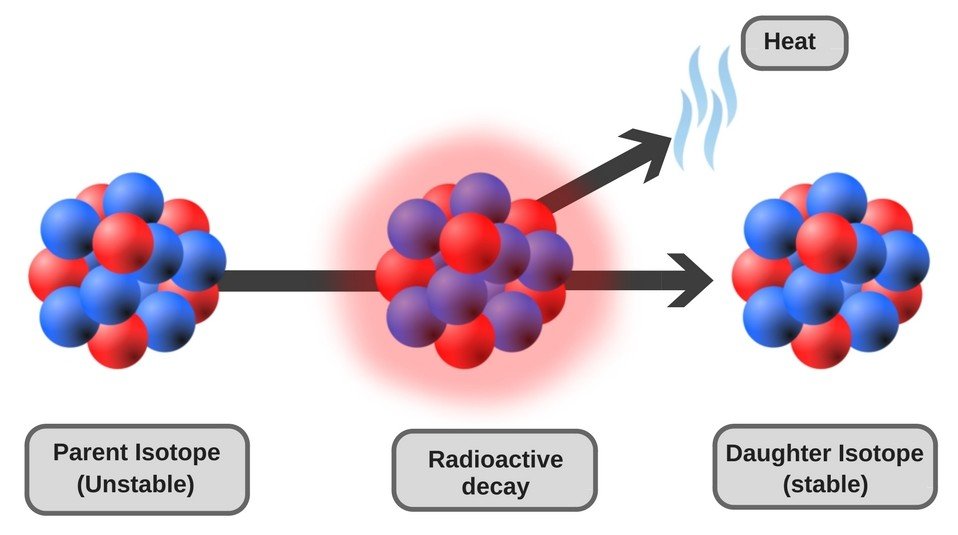
In nuclear physics, an unstable atom can be split through fission, releasing massive amounts of energy. In technology, an unstable component is an invitation for a cyber-attack. Security vulnerabilities are essentially “cracks” in the atomic structure of a program that allow external forces to disrupt its intended state.
Buffer Overflows and Atomic Crashes
One of the classic examples of technical instability is the buffer overflow. This occurs when a program attempts to write more data to a fixed-length block of memory (the “buffer”) than it can hold. This overflow can overwrite adjacent memory, leading to unpredictable behavior or providing an entry point for malicious code. In this context, the “atom” (the memory allocation) is unstable because it cannot handle the volume of “input energy” directed at it. Ensuring that data types and memory allocations are correctly “weighted” is the equivalent of stabilizing an atomic nucleus against external bombardment.
Zero-Day Exploits: Splitting the Core
A zero-day exploit targets a previously unknown instability in a system’s “atoms.” These are particularly dangerous because there is no existing “shield” (patch) to prevent the decay. When a vulnerability is found in a fundamental component—such as a widely used encryption library or a processor’s instruction set—it creates a global state of instability. The “shell” of the atom has been breached, and until a patch is applied, the integrity of the data within that nucleus is compromised. High-tech security involves constant “isotope scanning” (vulnerability testing) to identify these unstable points before they can be exploited by outside actors.
The Instability of Scaling: When the Load Hits the Limit
A stable atom can become unstable if it is subjected to extreme pressure or temperature. Similarly, a tech system that works perfectly under a light load can become catastrophically unstable when it is scaled up to handle millions of users.
Concurrency Issues and Atomic Operations
In a multi-threaded environment, “race conditions” are a primary source of instability. This happens when two or more “atomic” processes attempt to change the same piece of data at the same time. If the system does not have proper “locks” or synchronization mechanisms, the final state of the data becomes non-deterministic. This is the digital equivalent of quantum uncertainty. To maintain stability, developers must use “atomic operations”—instructions that the CPU guarantees will be executed without interruption. Without these, the “atoms” of the database or memory will eventually collide, leading to data corruption.
Maintaining Equilibrium in Distributed Systems
As companies move from monolithic architectures to distributed systems (microservices), the potential for instability grows. In a distributed system, the “atoms” are spread across different servers and geographical locations. The challenge is maintaining “CAP theorem” equilibrium: Consistency, Availability, and Partition Tolerance. It is nearly impossible to achieve all three perfectly. An unstable distributed system is one where the “latency” (the time it takes for particles/data to travel) causes the different nodes to fall out of sync. When the “nodes” of the system cannot agree on the state of truth, the entire “molecule” (the application) begins to break apart.
Stabilizing the Atom: Strategies for Resilient Infrastructure
Identifying what makes an atom unstable is only half the battle; the other half is implementing the “coolants” and “control rods” necessary to maintain equilibrium.
Refactoring as a Coolant
Just as a nuclear reactor needs a cooling system to prevent a meltdown, a software system needs regular refactoring to stay stable. Refactoring is the process of restructuring existing computer code without changing its external behavior. It “re-balances” the nucleus of the application, removing dead code, simplifying complex logic, and updating dependencies. By regularly “polishing the atoms,” tech teams can prevent the slow build-up of technical debt and ensure that the system remains stable even as it grows.
Implementing Observability and Fault Tolerance
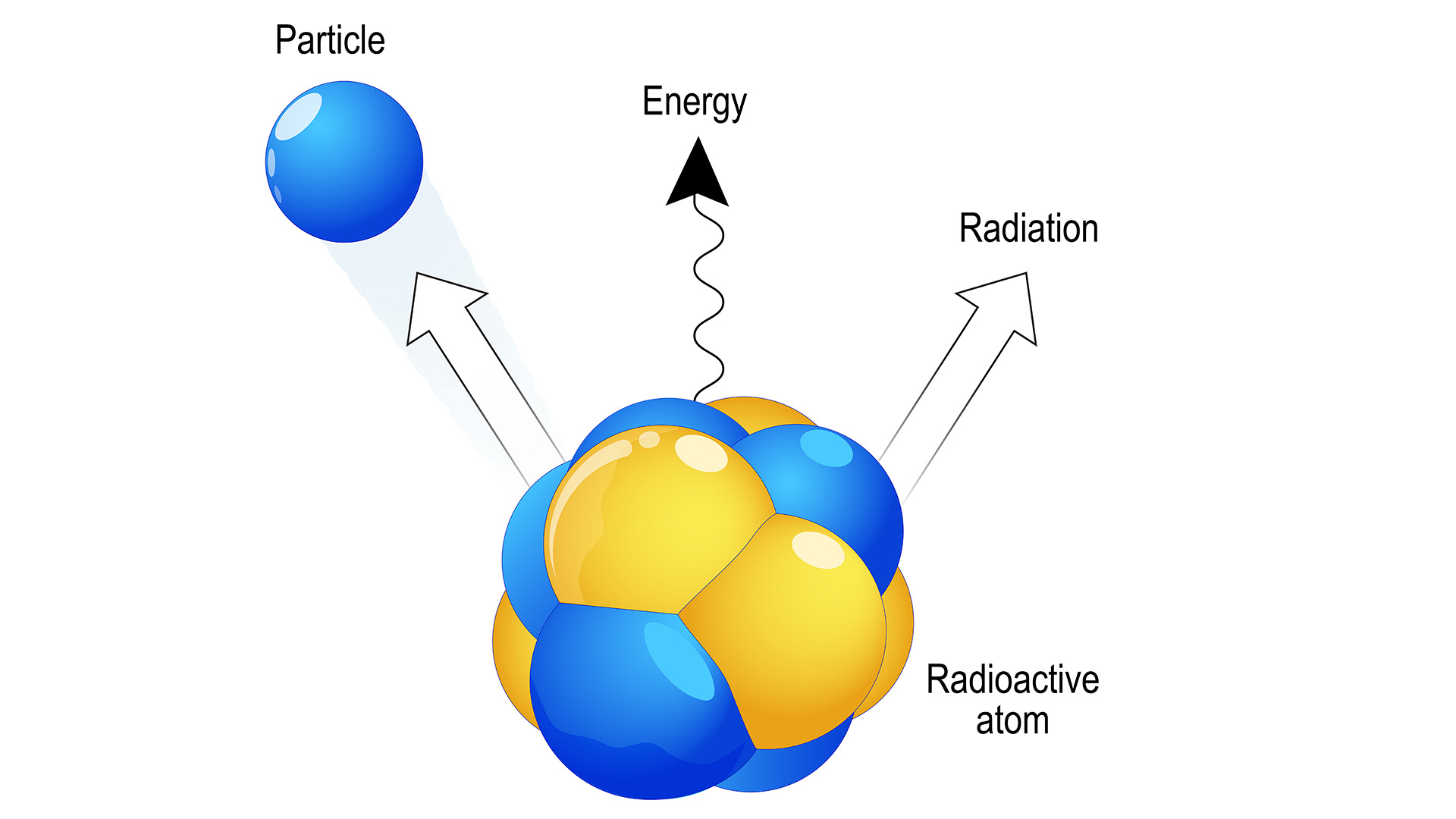
In high-tech environments, you cannot manage what you cannot measure. Observability tools allow engineers to monitor the “vibrations” of their system atoms in real-time. By tracking metrics like CPU usage, memory leaks, and request latency, teams can identify an unstable atom before it causes a total system failure. Furthermore, building “fault-tolerant” systems—using techniques like circuit breakers and redundant clusters—ensures that even if one “atom” decays and fails, the rest of the system remains intact. This creates a “stable isotope” of the business—a tech stack that can withstand the pressures of the modern digital economy without breaking under the weight of its own complexity.
aViewFromTheCave is a participant in the Amazon Services LLC Associates Program, an affiliate advertising program designed to provide a means for sites to earn advertising fees by advertising and linking to Amazon.com. Amazon, the Amazon logo, AmazonSupply, and the AmazonSupply logo are trademarks of Amazon.com, Inc. or its affiliates. As an Amazon Associate we earn affiliate commissions from qualifying purchases.