
In the realms of physics and engineering, precision is the currency of progress. When we ask, “What is the scientific unit of force?” the immediate answer is the Newton (N). However, in the context of modern technology, the Newton is much more than a static definition in a textbook. It is the foundational metric that allows us to build skyscrapers, design tactile smartphone interfaces, launch satellites into precise orbits, and develop the next generation of collaborative robotics.
Understanding the scientific unit of force is essential for anyone involved in technology trends, hardware development, or software simulation. This article explores the definition of the Newton and its critical application across the most influential tech sectors of the 21st century.
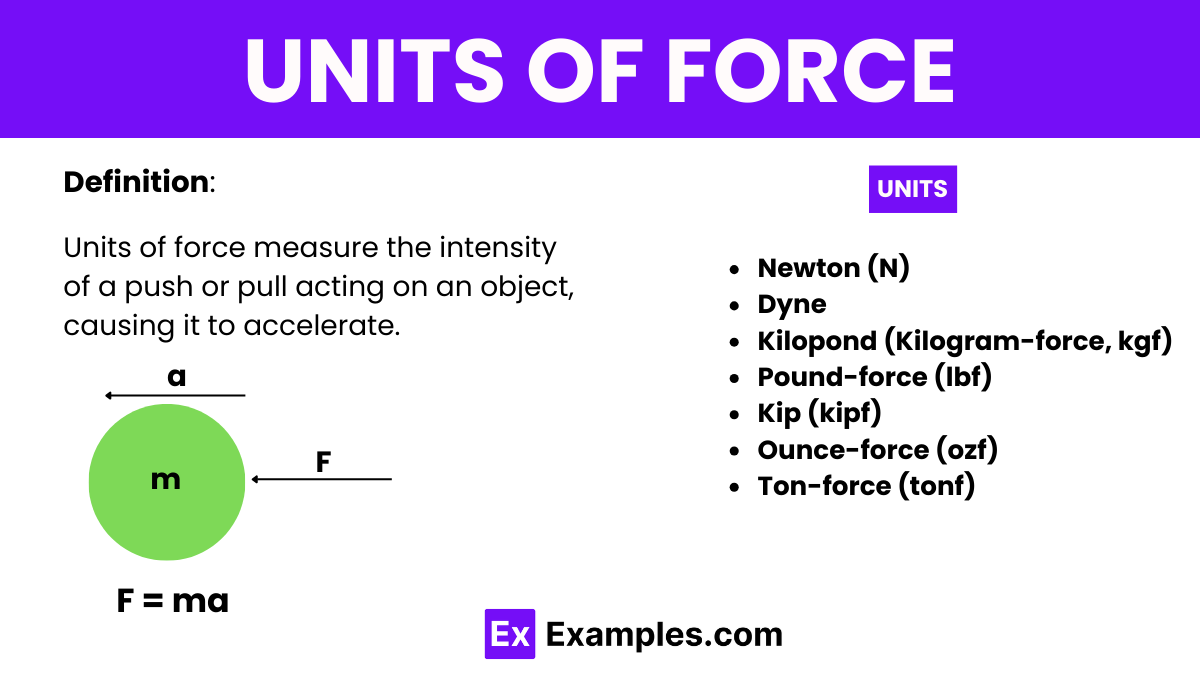
Defining the Newton: The Mathematical Core of Tech Engineering
The Newton is the International System of Units (SI) derived unit of force. Named after Sir Isaac Newton in recognition of his work on classical mechanics, it is defined as the amount of force necessary to accelerate one kilogram of mass at a rate of one meter per second squared ($1text{ N} = 1text{ kg} cdot text{m/s}^2$).
The SI Standard and Its Evolution
For technology to be global, its measurements must be universal. The Newton provides a standardized language for engineers in Silicon Valley, Tokyo, and Berlin to communicate the physical requirements of hardware. Historically, force was measured in various local units (like the pound-force), which led to significant errors in international collaboration. The adoption of the Newton as the universal standard has streamlined the manufacturing of everything from microchips to electric vehicle (EV) chassis.
In high-tech manufacturing, we often deal with “kilonewtons” (kN) for structural integrity or “milli-Newtons” (mN) for micro-electromechanical systems (MEMS). This scalability makes the Newton the most versatile tool in the technologist’s mathematical arsenal.
Vector Dynamics in Software Modeling
In the world of software development—specifically in Computer-Aided Design (CAD) and Computer-Aided Engineering (CAE)—force is treated as a vector. This means it has both magnitude (measured in Newtons) and direction. When a software engineer builds a digital twin of a new bridge or an aircraft wing, they apply “force vectors” to the model to simulate real-world stress.
Without the precise definition of the Newton, these simulations would lack the accuracy required to predict structural failure. Modern tech tools like SolidWorks or Autodesk Fusion 360 rely entirely on the Newton to calculate how materials will deform under load, saving companies billions of dollars in physical prototyping.
Force Sensors: The Nerves of the Internet of Things (IoT)
As we move toward a world populated by billions of connected devices, the ability to “feel” the physical world has become a tech priority. This is achieved through force sensors, which translate Newtons into digital data.
Piezoelectric and Strain Gauge Innovations
The “Internet of Things” (IoT) relies heavily on sensors that detect pressure, weight, and impact. At the heart of these sensors is the conversion of mechanical force into an electrical signal.
- Strain Gauges: These are used in industrial IoT to monitor the health of infrastructure. By measuring the Newtons of force applied to a support beam, sensors can alert engineers to potential collapses via cloud-based dashboards.
- Piezoelectric Sensors: These generate an electric charge when subjected to force. They are the backbone of smart-city tech, such as “smart pavement” that can count vehicles or even generate small amounts of electricity from the force of footsteps.
Haptics and Human-Computer Interaction (HCI)
In consumer gadgets, the measurement of force has revolutionized how we interact with our devices. Think of the “Force Touch” or haptic feedback engines in modern smartphones and trackpads. These devices don’t just detect a “touch”; they measure the Newtons of pressure applied by your finger.
Software algorithms interpret this force to provide different levels of functionality—a light tap might select an item, while a forceful press might open a preview window. This sophisticated use of the scientific unit of force has made user interfaces more intuitive and three-dimensional, moving beyond the flat interactions of early touchscreens.
The Role of Force in Advanced Robotics and Automation
Robotics is perhaps the field where the Newton is most vital. For a robot to interact with the world safely and effectively, it must be able to quantify and control the force it exerts.

Precision Gripping and Tactile Intelligence
In the past, industrial robots were powerful but “dumb”—they would move to a coordinate regardless of what was in their way. Modern AI-driven robotics utilizes “force-torque sensors.” These sensors allow a robotic arm to know exactly how many Newtons of force it is applying to an object.
This is crucial for delicate tasks, such as picking up an egg or assembling a fragile semiconductor component. By integrating force feedback loops, AI tools can adjust the robot’s grip in real-time, ensuring that the force remains within a specific “Newton window” to prevent damage. This development is a cornerstone of the trend toward high-precision automated manufacturing.
Collaborative Robots (Cobots) and Safety Metrics
One of the biggest trends in industrial tech is the rise of “Cobots”—robots designed to work alongside humans. Safety in these environments is measured in Newtons. International safety standards (such as ISO 10218) dictate the maximum force a robot can exert if it accidentally comes into contact with a human worker.
If a sensor detects a force exceeding a few Newtons during an unexpected collision, the software triggers an emergency stop. This reliance on the scientific unit of force is what allows humans and machines to share a workspace without the need for protective cages, significantly increasing floor-space efficiency in tech factories.
Physics Engines: Calculating Force in the Virtual Realm
The measurement of force isn’t limited to physical hardware. In the digital security and gaming industries, force is a critical component of virtual environment simulation.
Real-Time Simulations in Gaming and VR
When you play a modern video game or enter a Virtual Reality (VR) simulation, the “realism” you experience is governed by a physics engine (like Havok or Unreal Engine’s Chaos). These engines perform millions of Newton-based calculations per second.
If a virtual car hits a wall, the software calculates the Newtons of impact to determine how the car should crumple and how much momentum should be transferred to the environment. In VR training simulations for surgeons or pilots, the accurate depiction of force is essential for muscle memory development. If the virtual “feel” of the force is wrong, the training is ineffective.
Finite Element Analysis (FEA) in Digital Security
Digital security often extends to the physical protection of data centers. Engineers use Finite Element Analysis (FEA) software to simulate physical attacks or natural disasters (like earthquakes) on server racks. By applying simulated Newtons of force to these digital models, security experts can identify weak points in the physical infrastructure that houses our digital lives. This ensures that the hardware supporting the cloud remains resilient against physical kinetic threats.
The Future of Force Measurement: Quantum Metrology and Beyond
As we push the boundaries of technology into the micro and nano scales, the way we measure the scientific unit of force is evolving.
Quantum Force Sensing
In the world of Quantum Computing and Nanotechnology, even a single Newton is a gargantuan amount of force. Researchers are now developing sensors capable of measuring piconewtons ($10^{-12}$ Newtons). These sensors use light (optical tweezers) or magnetic fields to manipulate individual atoms. Measuring force at this level is key to breakthroughs in biotechnology, such as understanding the mechanical forces that allow viruses to bind to human cells.
AI-Driven Predictive Maintenance
The next frontier in tech is the marriage of force sensing and Artificial Intelligence. We are moving toward a “Predictive Maintenance” model where AI doesn’t just react to force data but predicts future stress. By analyzing patterns of force (vibrations and load cycles) over time, AI tools can predict when a component will fail before it ever happens. This is becoming standard in the aerospace and wind energy sectors, where the cost of failure is astronomical.

Conclusion: Why Precision Measurement Drives Technological Progress
“What is the scientific unit of force?” The answer—the Newton—is the invisible thread that connects a physics classroom to the most advanced laboratories in the world. In the technology sector, the Newton is more than a unit; it is a parameter for safety, a requirement for precision, and a catalyst for innovation.
From the haptic motor in your pocket to the robotic arms building the cars of the future, the ability to measure and manipulate force is what allows us to turn digital concepts into physical realities. As AI and sensor technology continue to evolve, our mastery over the Newton will only grow more refined, leading to smarter, safer, and more responsive technology. Understanding this fundamental unit is not just for scientists—it is a prerequisite for understanding the mechanical heart of the digital age.
aViewFromTheCave is a participant in the Amazon Services LLC Associates Program, an affiliate advertising program designed to provide a means for sites to earn advertising fees by advertising and linking to Amazon.com. Amazon, the Amazon logo, AmazonSupply, and the AmazonSupply logo are trademarks of Amazon.com, Inc. or its affiliates. As an Amazon Associate we earn affiliate commissions from qualifying purchases.