
Navigating the financial landscape of child support is a critical component of personal finance for many parents in the Lone Star State. In Texas, the system is designed to be predictable, utilizing a “Percentage of Income” model that allows both the paying parent (the obligor) and the receiving parent (the obligee) to forecast their monthly cash flows with reasonable accuracy.
However, understanding the raw percentages is only the first step. To truly master your financial planning in this context, you must understand how “Net Resources” are defined, how caps are applied to high earners, and how additional costs like healthcare premiums factor into the total monthly obligation. This guide provides a deep dive into the financial mechanics of Texas child support to help you manage your budget and fulfill your obligations effectively.
The Foundation: Understanding the Texas Guideline Percentages
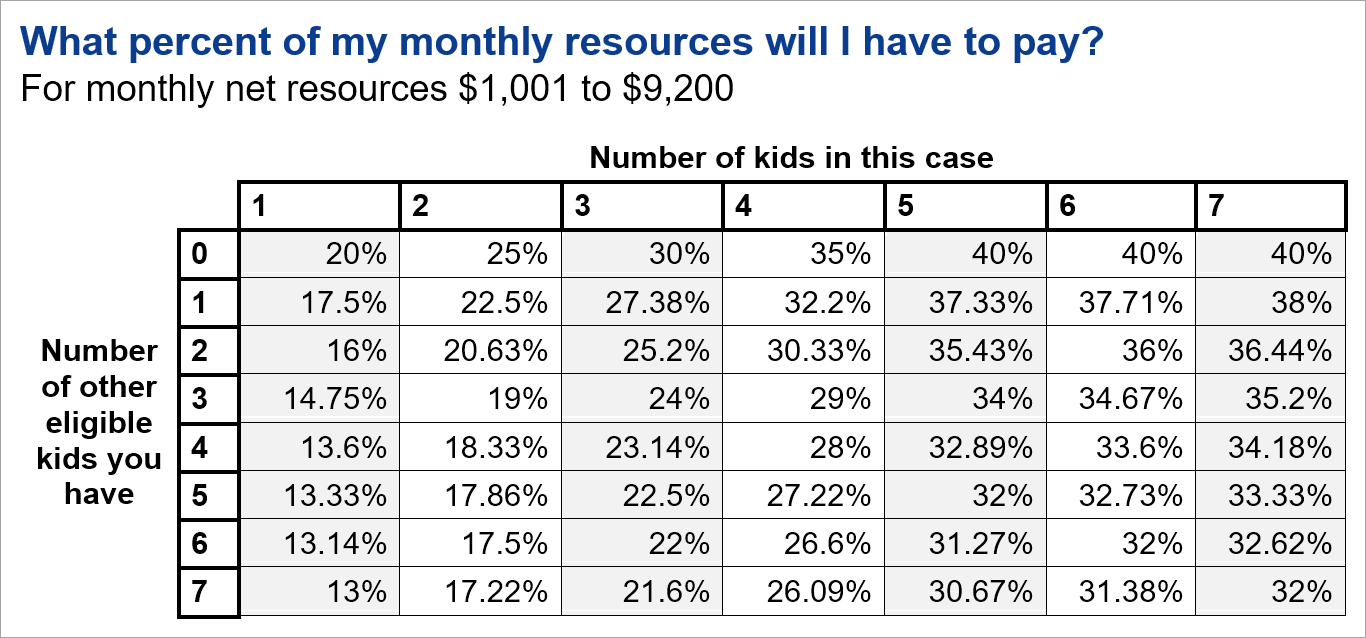
The Texas Family Code establishes a standardized set of percentages used to calculate child support. These guidelines apply to the first $9,200 of an obligor’s monthly net resources (a figure that is periodically adjusted for inflation). The percentage of support required depends primarily on the number of children involved in the case.
The Statutory Percentage Breakdown
For most standard cases where the children live in one household and the obligor does not have other children to support elsewhere, the percentages are as follows:
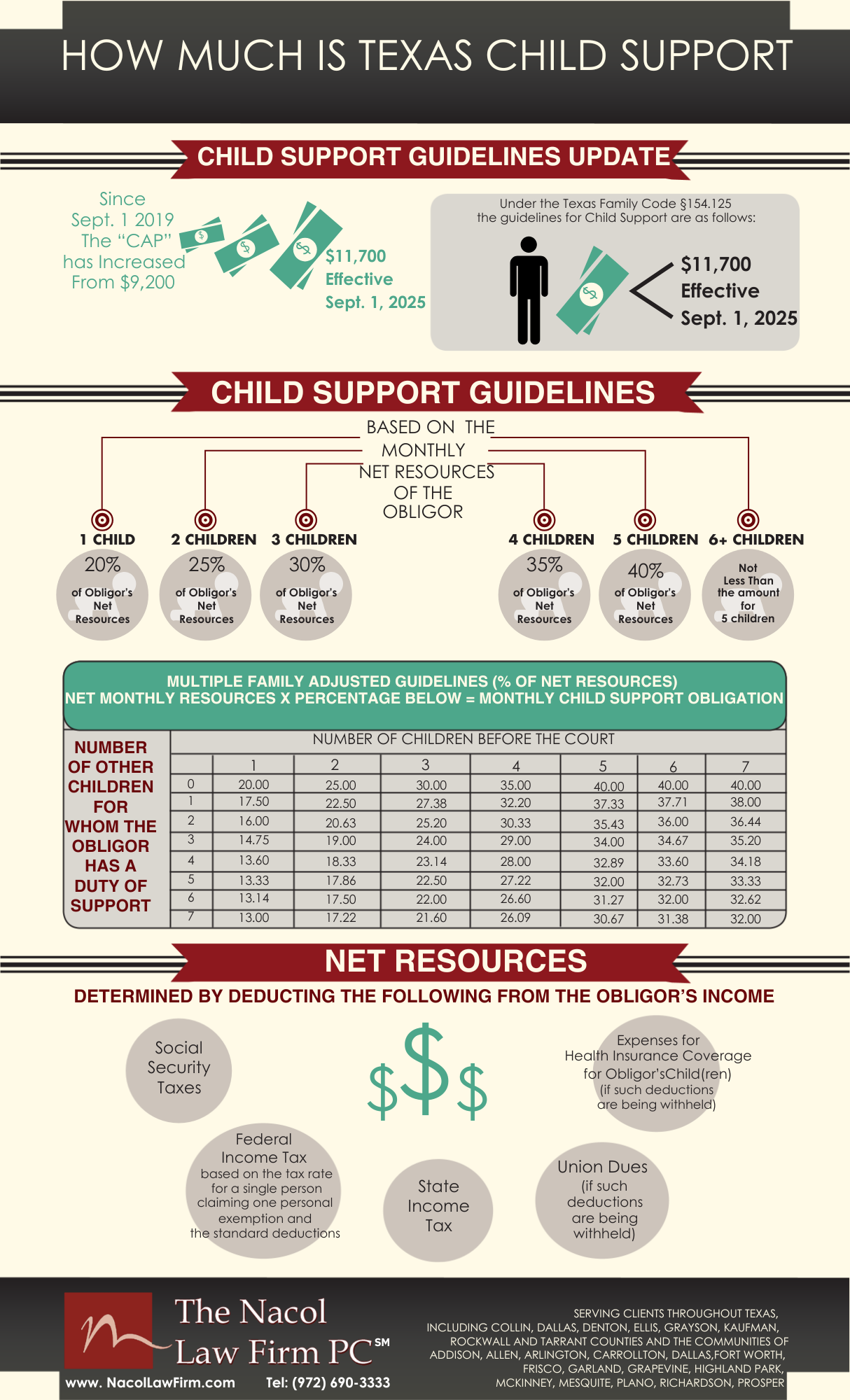
- 1 Child: 20% of Net Resources
- 2 Children: 25% of Net Resources
- 3 Children: 30% of Net Resources
- 4 Children: 35% of Net Resources
- 5 Children: 40% of Net Resources
- 6+ Children: Not less than the amount for five children
From a financial planning perspective, these figures represent a significant portion of a household budget. If you are an obligor, this means roughly one-fifth to two-fifths of your take-home pay is allocated before other expenses are considered.
Adjustments for Children in Multiple Households
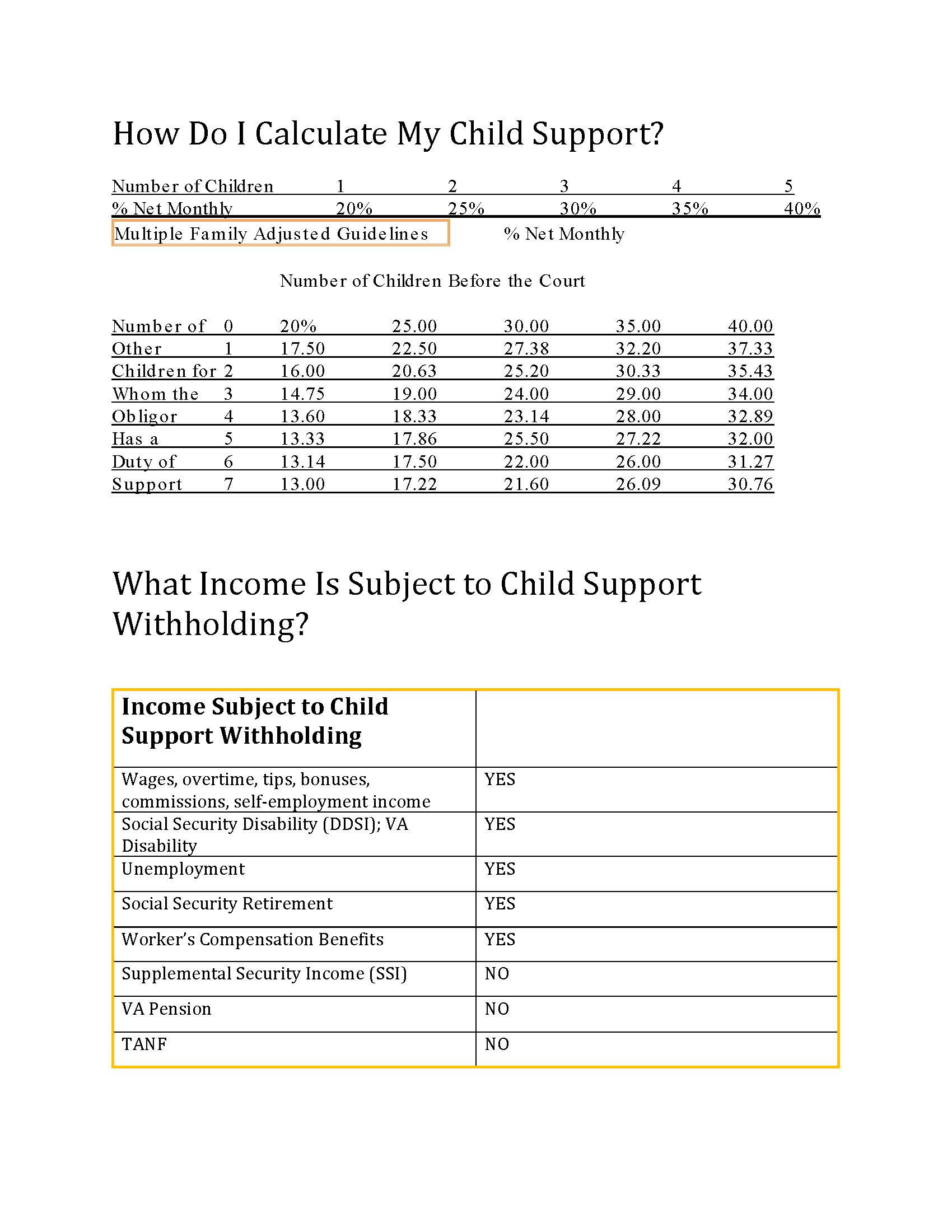
A common complexity in personal finance occurs when a parent has a legal duty to support children in different households. Texas law provides a “Multiple Family Adjusted Guidelines” table. For instance, if you are paying support for one child in the current case but already support another child from a previous relationship, the percentage for the current child drops from 20% to 17.5%. This adjustment acknowledges the total financial strain on the obligor and ensures that all children receive a proportional share of the available resources.
Calculating “Net Resources”: The Financial Engine
The most frequent mistake in estimating child support is confusing “Gross Income” with “Net Resources.” In the world of Texas finance, “Net Resources” is a specific legal and mathematical definition that differs from the “Net Pay” shown on your corporate pay stub.
Defining What Counts as Income
Texas takes a broad view of income. When calculating the base for the percentages mentioned above, the court looks at:
- Earned Income: 100% of all wage and salary income and other compensation for personal services (including commissions, overtime pay, tips, and bonuses).
- Investment Income: Interest, dividends, and royalty income.
- Business Income: Net income from self-employment or business ownership (gross revenue minus ordinary and necessary business expenses).
- Passive Income: Net rental income and trust distributions.
- Other Sources: Severance pay, retirement benefits, pensions, annuities, social security benefits, unemployment benefits, and even gifts or prizes.
Allowable Deductions to Reach “Net”
To arrive at the final number to which the percentage is applied, the law allows for specific deductions. These are strictly limited to:
- Social Security taxes (FICA).
- Federal income tax (based on the tax rate for a single person claiming one personal exemption and the standard deduction).
- State income tax (not applicable in Texas, but relevant if the obligor works out of state).
- Union dues.
- Expenses for the cost of health insurance and dental insurance for the children.
It is important to note that voluntary 401(k) contributions, life insurance premiums, and car payments are not deducted when determining Net Resources for child support purposes.
Income Caps and High-Earner Considerations
For individuals with high net worth or high-earning corporate roles, the Texas child support calculation features a “ceiling.” As of the most recent adjustments, the guidelines apply to the first $9,200 of monthly net resources.
The $9,200 Guideline Cap
If an obligor earns a net resource amount of $15,000 per month, the court generally applies the percentage (e.g., 20% for one child) only to the first $9,200. In this scenario, the “guideline” support would be $1,840 per month. This cap exists to ensure that child support remains focused on the needs of the child rather than serving as a de facto wealth transfer between parents.
Above-Guideline Support
While the cap provides a baseline, it is not an absolute limit. If the “proven needs of the child” exceed the guideline amount, a court may order additional support. This often occurs in families where the child has historically enjoyed a high standard of living, requires expensive private schooling, or has significant extracurricular costs (such as competitive sports or specialized tutoring). Financially, this means high earners should be prepared for the possibility that their obligation could exceed the 20-40% calculation applied to the $9,200 cap.
Beyond the Base Percentage: Additional Financial Obligations
A common misconception is that the 20% or 25% payment covers every expense related to the child. In reality, Texas law treats medical and dental support as an “additional” financial obligation that sits on top of the base percentage.
Medical and Dental Support Costs
The obligor is typically required to provide health and dental insurance for the child. If the employer offers a plan, the cost of the child’s portion of the premium is deducted from the gross income before the child support percentage is applied, but the obligor is still responsible for making that payment to the insurer. If the obligee (the receiving parent) provides the insurance, the obligor is usually ordered to reimburse the monthly premium cost as “additional child support.”
Unreimbursed Medical Expenses
Even with insurance, there are co-pays, deductibles, and prescriptions. Texas orders typically split these “unreimbursed” costs 50/50 between the parents. From a budgeting perspective, it is wise to maintain an emergency fund specifically for these variable costs, as they can fluctuate significantly depending on the child’s health needs.
Strategic Financial Planning for Child Support
Managing a child support obligation requires a proactive approach to personal finance. Whether you are paying or receiving, the following strategies can help maintain financial stability.
Adjusting Your Personal Budget
When child support begins, it represents a fixed cost that must be prioritized alongside housing and utilities. For a parent paying 25% of their net resources for two children, a “bottom-up” budgeting approach is essential. You must recalibrate your lifestyle to fit within the remaining 75% of your income. This may involve downsizing housing, choosing more fuel-efficient vehicles, or reducing discretionary spending on travel and entertainment.
The Impact of Tax Laws
Under the Tax Cuts and Jobs Act (TCJA), child support payments are tax-neutral. They are not tax-deductible for the payer, and they are not considered taxable income for the recipient. This is a vital distinction for financial planning; you are paying child support with “after-tax” dollars. When calculating your annual tax liability, ensure you are not counting these payments as deductions, as doing so could lead to audits and penalties.
Modifications and Financial Changes
The financial world is rarely static. Job losses, significant raises, or changes in the child’s needs can make the current percentage-based order obsolete. In Texas, child support can be modified if it has been at least three years since the order was established and the amount would change by either 20% or $100 per month. Alternatively, a “material and substantial change in circumstances” (such as a 50% decrease in salary) can justify a legal review.
Staying informed about these financial triggers allows you to move quickly to adjust your legal obligations to match your current economic reality. By understanding the percentages, the calculation of net resources, and the additional costs of medical care, you can navigate the Texas child support system with financial confidence and clarity.
aViewFromTheCave is a participant in the Amazon Services LLC Associates Program, an affiliate advertising program designed to provide a means for sites to earn advertising fees by advertising and linking to Amazon.com. Amazon, the Amazon logo, AmazonSupply, and the AmazonSupply logo are trademarks of Amazon.com, Inc. or its affiliates. As an Amazon Associate we earn affiliate commissions from qualifying purchases.