
In the world of global finance, the term “bible” is often used metaphorically to describe a definitive guide or a foundational text. Investors might refer to Benjamin Graham’s The Intelligent Investor as the “bible of value investing.” However, when we ask, “What is the Muslim Bible?” in a financial context, we are referring to the Quran—the central religious text of Islam—which serves as the ultimate regulatory framework for economic conduct for over 1.8 billion people.
For the modern professional, entrepreneur, or investor, understanding this “Muslim Bible” is not merely an exercise in theology; it is a prerequisite for navigating one of the fastest-growing sectors in the global economy: Islamic Finance. With the global Islamic finance market projected to top $4 trillion by 2026, the principles derived from the Quran are shaping everything from fintech startups in London to sovereign wealth funds in the Gulf.

The Foundational Principles: Understanding the Economic Mandate of the Quran
To understand the “Muslim Bible” from a money perspective, one must recognize that Islam does not separate faith from finance. The Quran provides a comprehensive blueprint for how wealth should be generated, managed, and distributed. Unlike conventional capitalism, which often prioritizes profit maximization above all else, Islamic economic principles prioritize social justice and the intrinsic value of labor.
The Prohibition of Riba (Usury and Interest)
The most significant financial takeaway from the Quran is the absolute prohibition of Riba. While often translated simply as “interest,” Riba encompasses any exploitative gain or unjustified increase in a loan. In the eyes of the “Muslim Bible,” money is not a commodity that can generate more money on its own. Instead, it is a medium of exchange. Charging interest is seen as a way for the wealthy to extract value from the poor without taking any entrepreneurial risk. This fundamental shift requires investors to look toward profit-and-loss sharing models rather than traditional debt-based lending.
Eliminating Gharar and Maysir
Two other critical concepts derived from the Quranic framework are Gharar (uncertainty) and Maysir (gambling). In personal finance and investing, this means that any contract with excessive ambiguity or speculative risk is deemed void. This is why many traditional insurance products and complex derivatives—the very instruments that contributed to the 2008 financial crisis—are considered non-compliant. By removing “gambling” from the equation, the “Muslim Bible” encourages a more stable, asset-backed approach to wealth creation.
The Requirement of Halal Activities
Wealth cannot be generated from industries deemed harmful to society. This “negative screening” process is a precursor to modern socially responsible investing (SRI). Investments in alcohol, tobacco, gambling, weapons, or adult entertainment are strictly prohibited. For a modern investor, this means the “Muslim Bible” acts as a moral filter, ensuring that capital is only deployed in sectors that contribute positively to human flourishing.
Modern Financial Tools for the Faith-Driven Investor
In the past, strictly following the financial dictates of the “Muslim Bible” meant that many Muslims stayed away from the stock market and traditional banking. However, the last decade has seen an explosion in financial engineering designed to bridge the gap between ancient scripture and modern markets.
The Rise of Sukuk (Islamic Bonds)
Since traditional bonds are based on interest, the Islamic world developed Sukuk. Unlike a bond, which represents a debt obligation, a Sukuk certificate represents a partial ownership in an underlying tangible asset or project. When you invest in Sukuk, you aren’t earning interest; you are earning a share of the profit generated by that asset. This aligns perfectly with the Quranic mandate of asset-backed financing and has become a preferred tool for infrastructure projects worldwide.
Halal Equity Investing and ETFs
For personal finance enthusiasts, the stock market is now more accessible than ever through Halal ETFs (Exchange-Traded Funds). These funds use sophisticated algorithms to screen thousands of global stocks. They filter out companies with high debt-to-equity ratios (which would violate the rule against Riba) and companies involved in prohibited industries. This allows the modern investor to build a diversified portfolio that remains “spiritually liquid.”
Purifying Wealth
Even with the best intentions, a company might earn a small percentage of its income from non-compliant sources (like interest on their bank accounts). The “Muslim Bible” provides a solution for this through “purification.” Investors are encouraged to calculate the portion of their dividends derived from non-compliant sources and donate that specific amount to charity. This practice ensures that the remaining wealth is “Halal” (permissible) and ethically sound.

Fintech and the Digital Transformation of Ethical Wealth
The intersection of technology and the “Muslim Bible” has birthed a vibrant Islamic Fintech ecosystem. These apps and platforms are making it easier for individuals to manage their money, start side hustles, and invest without compromising their values.
Digital Robo-Advisors
Platforms like Wahed Invest and Zoya have revolutionized how young professionals interact with their finances. By using AI and automated portfolio management, these tools provide a “set-it-and-forget-it” investment experience that is fully Sharia-compliant. They act as a digital bridge, translating the complex requirements of the Quran into a user-friendly interface that appeals to Gen Z and Millennial investors who value both ethics and efficiency.
Blockchain and Smart Contracts
Blockchain technology is perhaps the most exciting frontier for Islamic finance. Because the “Muslim Bible” demands transparency and the elimination of Gharar (uncertainty), the immutable nature of a blockchain ledger is a perfect fit. Smart contracts can ensure that all parties in a business transaction adhere to pre-agreed ethical standards automatically, reducing the need for costly intermediaries and ensuring that profit-sharing is executed fairly and transparently.
The Evolution of Crowdfunding
For entrepreneurs looking for side hustles or startup capital, Islamic crowdfunding platforms have emerged as a powerful alternative to traditional venture capital. These platforms allow communities to pool resources to fund small businesses or real estate projects based on equity-sharing models. This democratizes access to wealth and ensures that the “Muslim Bible’s” emphasis on community support is reflected in the digital age.
Wealth Distribution and Social Impact: The Zakat Model
A unique feature of the “Muslim Bible” is that it does not just tell you how to make money; it mandates how you should give it away. This is perhaps the most sophisticated “wealth tax” and social safety net ever devised.
Zakat: The Compulsory Alms
Zakat is the third pillar of Islam and is a mandatory donation of 2.5% of one’s surplus wealth annually. Unlike voluntary charity, Zakat is considered a right of the poor over the wealthy. In the context of business finance, Zakat acts as a mechanism to prevent wealth hoarding. It ensures that capital stays in circulation, stimulating the economy from the bottom up rather than the top down.
Sadaqah and Waqf
Beyond the mandatory Zakat, the Quran encourages Sadaqah (voluntary charity) and the establishment of Waqf (endowments). Historically, Waqf institutions funded hospitals, universities, and infrastructure. Today, many Muslim entrepreneurs are integrating these concepts into their corporate social responsibility (CSR) strategies, creating “Social Enterprises” where a portion of the profits is permanently diverted to a charitable trust.
Ethical Side Hustles and the Gig Economy
For those looking to generate online income, the principles of the “Muslim Bible” suggest that the best side hustles are those that provide real value. Exploitative models, such as high-interest micro-lending or “get-rich-quick” schemes that lack a clear product or service, are avoided. Instead, the focus is on “Tayyib” (wholesome) income—earning money through skills, trade, and transparent services.
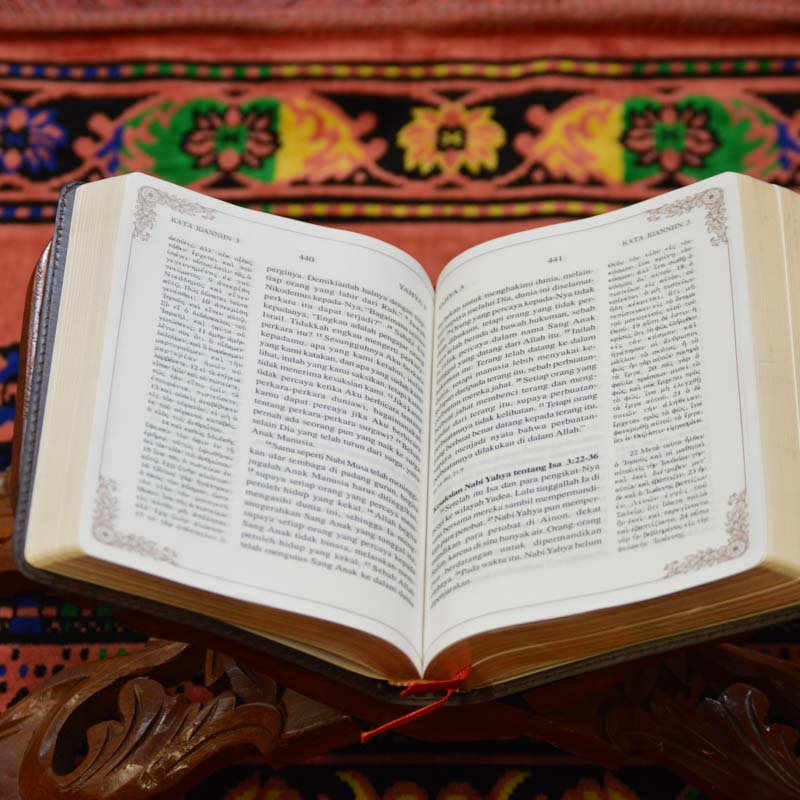
Conclusion: The “Muslim Bible” as a Roadmap for Universal Ethical Finance
When we answer the question, “What is the Muslim Bible?” through the lens of money and finance, we find a system that is remarkably relevant to the challenges of the 21st century. The Quranic approach to wealth is not just for Muslims; its emphasis on transparency, risk-sharing, and social responsibility mirrors the global shift toward ESG (Environmental, Social, and Governance) investing.
By avoiding the pitfalls of excessive debt, speculative bubbles, and unethical industries, the “Muslim Bible” offers a roadmap for a more stable and equitable global economy. Whether you are a professional looking to diversify your portfolio, an entrepreneur seeking ethical capital, or someone interested in the mechanics of wealth distribution, the financial wisdom found in this ancient text provides a timeless guide for building a prosperous and meaningful financial future. In a world of volatile markets and shifting values, the principles of Sharia-compliant finance offer a “North Star” for anyone seeking to align their bank account with their conscience.
aViewFromTheCave is a participant in the Amazon Services LLC Associates Program, an affiliate advertising program designed to provide a means for sites to earn advertising fees by advertising and linking to Amazon.com. Amazon, the Amazon logo, AmazonSupply, and the AmazonSupply logo are trademarks of Amazon.com, Inc. or its affiliates. As an Amazon Associate we earn affiliate commissions from qualifying purchases.