
Navigating the intersection of healthcare and personal finance is one of the most critical aspects of modern household management. In the state of Illinois, Medicaid—often referred to as Medical Assistance—serves as a vital safety net for individuals and families. However, because Medicaid is a means-tested program, eligibility is strictly tied to your financial standing.
Understanding the monthly income limits for Medicaid in Illinois is not just about meeting a requirement; it is about strategic financial planning. Whether you are transitioning between jobs, managing a fixed income in retirement, or looking for ways to reduce your out-of-pocket healthcare costs, knowing these thresholds is essential. This guide breaks down the complex financial structures of the Illinois Medicaid system to help you determine where you stand.

1. Understanding the Financial Framework: MAGI vs. Non-MAGI
To understand income limits, you must first understand how the state of Illinois calculates your money. Illinois utilizes two distinct methodologies depending on the category of the applicant: Modified Adjusted Gross Income (MAGI) and Non-MAGI.
The Role of MAGI in Modern Eligibility
Since the implementation of the Affordable Care Act (ACA), Illinois has used the Modified Adjusted Gross Income (MAGI) standard for most “Expansion” populations. This includes non-disabled adults aged 19–64, pregnant women, and children. MAGI is a specific way of calculating income that aligns with federal tax definitions. From a personal finance perspective, this is beneficial because it allows for certain pre-tax deductions—such as student loan interest or IRA contributions—to lower your “countable” income, potentially bringing you under the eligibility threshold.
Non-MAGI Standards for Seniors and the Disabled
For individuals aged 65 or older, or those with a qualifying disability (the AABD population—Aged, Blind, or Disabled), the financial rules are different. These individuals are evaluated under Non-MAGI rules, which are often stricter. Unlike the MAGI group, Non-MAGI applicants are also subject to an “Asset Test.” This means the state looks not just at your monthly cash flow, but also at your savings, stocks, and property (excluding your primary residence and one vehicle).
Why the Distinction Matters for Your Budget
Distinguishing between these two categories is the first step in financial planning. If you are under 64 and healthy, your primary focus is your monthly gross income. If you are a senior, you must manage both your monthly income and your accumulated wealth to maintain eligibility for state-funded long-term care or supplemental insurance.
2. 2024 Income Limits and Eligibility Thresholds
Medicaid income limits are tied to the Federal Poverty Level (FPL), which is updated annually by the federal government. In Illinois, the percentage of the FPL you are allowed to earn varies significantly based on your “coverage group.”
Monthly Limits for Single Adults (The Expansion Group)
For most adults aged 19–64 who do not have dependent children and are not disabled, the income limit is set at 138% of the FPL. As of 2024, this translates to approximately $1,732 per month for a household of one. If your monthly gross income falls below this line, you generally qualify for the Illinois Department of Healthcare and Family Services (HFS) medical programs.
Thresholds for Families and Children
Illinois is known for having relatively generous limits for children and pregnant individuals through programs like All Kids and Moms & Babies.
- Children: Income limits can go as high as 318% of the FPL, depending on the specific tier of the program.
- Pregnant Women: The limit is typically 213% of the FPL (roughly $2,670 per month for a single person, though the unborn child counts as a household member, raising the limit).
From a family budgeting perspective, these higher thresholds ensure that even “middle-income” families in Illinois can often secure state-subsidized or no-cost healthcare for their children.
Limits for Seniors and Persons with Disabilities (AABD)
For the AABD population, the monthly income limit is generally lower, set at 100% of the FPL. For a single individual in 2024, this is approximately $1,255 per month. Because these limits are tighter, many seniors find themselves in a “gray area” where they earn too much for Medicaid but too little to comfortably afford private supplemental insurance.
3. The Role of Assets and the “Spend-down” Process
One of the most complex areas of personal finance within the Medicaid system is the treatment of assets and the “Spend-down” program. While the “Expansion” group (adults 19-64) does not have an asset limit, the AABD group does.
Navigating Asset Limits
For seniors and disabled individuals in Illinois, the asset limit is typically $17,500 for a single person. This includes checking accounts, savings, CDs, and non-homestead property. If your assets exceed this amount, you may be required to “liquidate” or “spend down” those assets on medical expenses or exempt items (like funeral trusts) before qualifying. Strategic asset reallocation is a common practice in elder law and financial planning to ensure that a lifetime of savings isn’t entirely depleted by a few months of nursing home care.
Understanding the Medicaid Spend-down (Monthly Deductible)
What happens if your monthly income is $2,000, but the limit is $1,255? In Illinois, you may still qualify through the “Spend-down” program. Think of this as a monthly insurance deductible. In this scenario, your “spend-down” amount would be the difference between your income and the limit (approximately $745). Once you provide receipts showing you have incurred $745 in medical bills in a given month, Medicaid kicks in to cover the rest of your expenses for that month.
Financial Management of Medical Expenses
For those on a spend-down, personal finance becomes a game of timing. Consolidating doctor visits, prescription refills, and elective procedures into a single month can help you meet your spend-down quickly, ensuring the state covers the bulk of your high-cost claims.
4. Income Sources: What Counts and What Doesn’t?
Not all money that enters your bank account is considered “income” by the Illinois Department of Human Services (DHS). Distinguishing between countable and non-countable income is vital for staying under the monthly limit.
Countable Income Streams
In the realm of personal finance, most “earned” and “unearned” income counts toward your Medicaid limit. This includes:
- Gross wages and salary (before taxes).
- Net earnings from self-employment (side hustles).
- Social Security benefits (SSDI and Retirement).
- Pensions and distributions from IRAs or 401(k)s.
- Unemployment compensation.
Non-Countable Income and Disregards
To the benefit of the applicant, certain financial inflows are ignored. These often include:
- Supplemental Security Income (SSI).
- Veterans Benefits (specifically “Aid and Attendance”).
- Foster care payments.
- Federal tax refunds and Earned Income Tax Credits (EITC).
- Child support payments (under certain MAGI rules, these are often excluded from the recipient’s income).
The Impact of Household Size
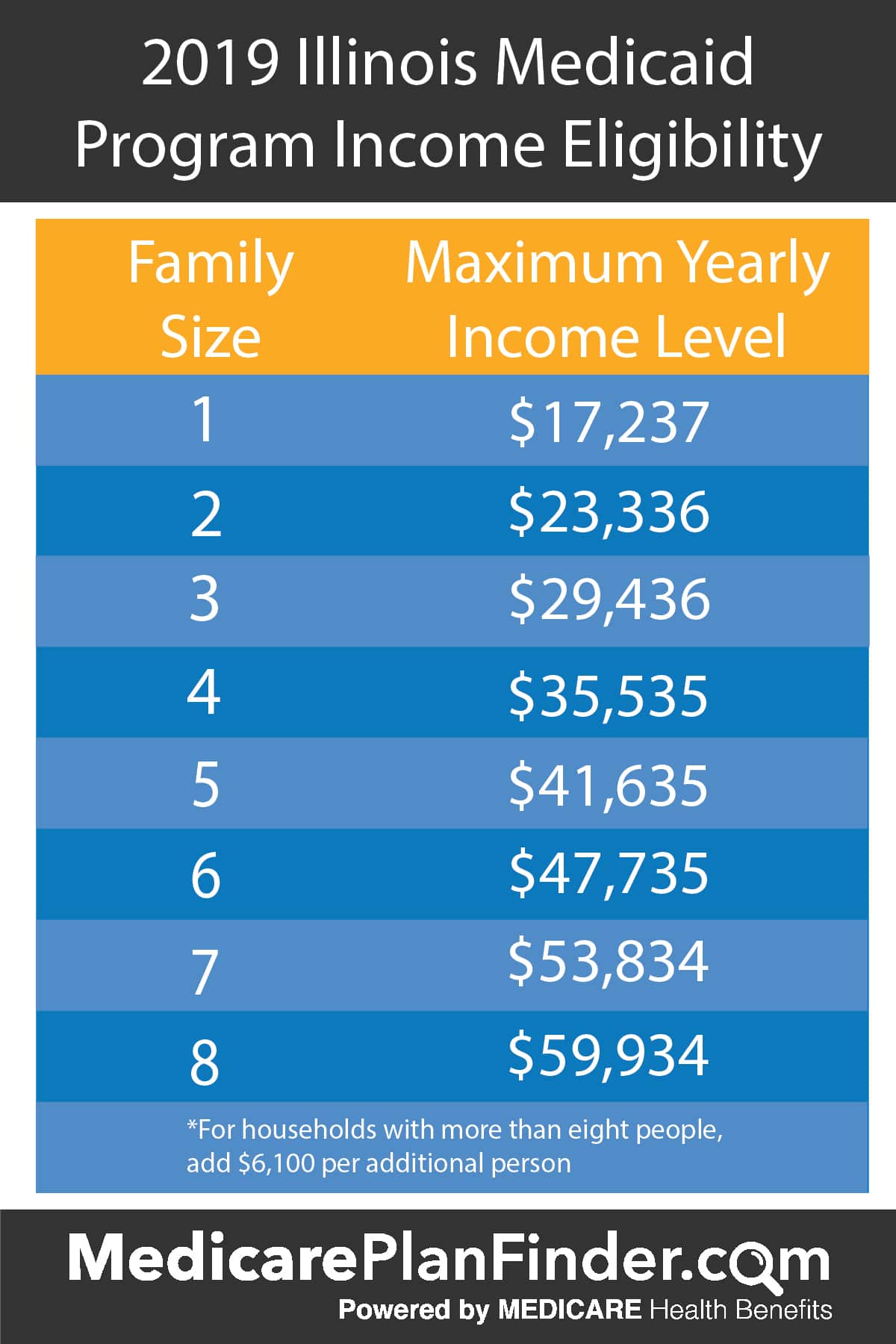
From a financial planning perspective, “household size” is a multiplier. The monthly income limit increases with every additional person in your tax household. For instance, while a single adult is limited to roughly $1,732, a household of four can earn up to approximately $3,565 per month and still qualify for Medicaid expansion. Correctly identifying who counts as a household member—including college students or tax dependents—can be the difference between an approval and a denial.
5. Strategic Financial Outlook: Maintaining Eligibility
Securing Medicaid is the first step; maintaining it requires ongoing financial vigilance. In Illinois, “Redetermination” is the annual process where the state re-evaluates your income to ensure you are still eligible.
Reporting Income Fluctuations
If you are a freelancer or have a variable income, your monthly income might spike during certain seasons. In Illinois, you are required to report changes in income that exceed $150. Failure to do so can result in “overpayment” claims where the state attempts to claw back the cost of benefits provided. Managing these fluctuations by putting money into a “rainy day” fund while staying within the reporting guidelines is a key part of financial stability.
Transitioning to the Marketplace
For those whose income rises above the Medicaid limit, the “Money” strategy shifts to the Health Insurance Marketplace (GetCoveredIllinois.gov). If you lose Medicaid because your income increased, this is a “Qualifying Life Event.” Because your income is likely still near the 138%–200% FPL range, you will likely qualify for significant Premium Tax Credits (PTCs) and Cost-Sharing Reductions (CSRs), which can keep your monthly premiums near zero.
Conclusion: The Value of Financial Literacy in Healthcare
The monthly income limit for Medicaid in Illinois is more than just a number; it is a moving target that requires constant attention. By understanding the nuances of MAGI, the impact of household size, and the specific rules for the AABD population, you can better manage your personal finances.
Whether you are looking to qualify for the first time or trying to maintain your benefits while growing your income, knowledge of these thresholds allows you to make informed decisions. In the landscape of personal finance, healthcare is often the largest variable expense. Mastering the rules of Illinois Medicaid provides a foundation of financial security that allows you to focus on other goals—like building a side business, saving for education, or preparing for a secure retirement.
aViewFromTheCave is a participant in the Amazon Services LLC Associates Program, an affiliate advertising program designed to provide a means for sites to earn advertising fees by advertising and linking to Amazon.com. Amazon, the Amazon logo, AmazonSupply, and the AmazonSupply logo are trademarks of Amazon.com, Inc. or its affiliates. As an Amazon Associate we earn affiliate commissions from qualifying purchases.