
In the traditional art world, “media” (the plural of medium) referred strictly to the materials used to create a piece of art—oil paints, charcoal, marble, or clay. However, in the contemporary landscape, the definition of media has undergone a profound technological transformation. Today, when we ask “what is media in artwork,” we are increasingly looking at a fusion of software, hardware, and algorithmic processes. The medium is no longer just the substance applied to a surface; it is the digital environment, the code, and the interactive platforms that facilitate creative expression.
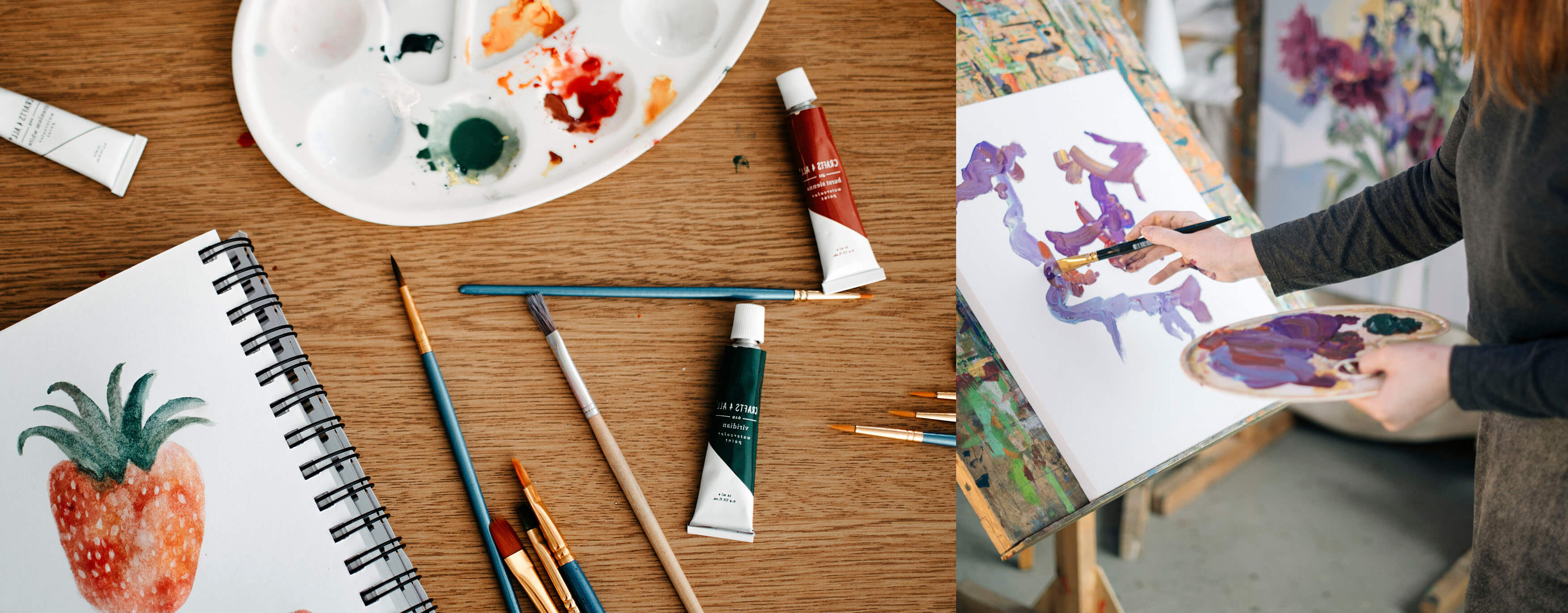
Understanding media in artwork through a technological lens requires an exploration of how digital tools have shifted the artist’s role from a manual laborer to a technical director. This evolution from physical pigments to digital pixels has not only expanded the boundaries of what is possible but has also redefined the relationship between the creator, the tool, and the audience.
The Technological Toolkit: Software and Hardware Redefining Media
The most significant shift in artistic media over the last three decades has been the move from analog tools to sophisticated digital ecosystems. In this context, the “medium” is the software and the hardware that enables the creation of visual information. For the modern artist, the choice of technology is as critical as a painter’s choice between watercolor and acrylic.
Vector vs. Raster: The Foundation of Digital Art
At the most fundamental level, digital media is categorized into two technical types: raster and vector. Raster-based media, utilized by software like Adobe Photoshop or Procreate, relies on pixels—tiny squares of color mapped to a grid. This technology mimics traditional painting by allowing for complex color blending and texture. In contrast, vector-based media, used in Adobe Illustrator, uses mathematical equations to create lines and shapes. This tech-heavy approach allows for infinite scalability without loss of quality, making it the primary medium for modern graphic design and digital illustration.
The Rise of Tablets and Stylus Technology
The hardware used to manipulate these software environments has also become a medium in itself. Pressure-sensitive tablets and styluses, such as the Wacom Cintiq or the Apple Pencil, have bridged the gap between tactile sensation and digital precision. These tools utilize electromagnetic resonance or Bluetooth connectivity to translate physical pressure, tilt, and velocity into digital data. This synergy of hardware and software allows artists to maintain the “hand-drawn” feel while working within a non-destructive, digital medium where “undo” functions and layers replace the permanence of physical paint.
Artificial Intelligence: The Newest Medium in the Artist’s Arsenal
Perhaps the most controversial and revolutionary development in artistic media is the advent of Generative Artificial Intelligence (AI). In this paradigm, the “media” is no longer a brush or a mouse, but a complex neural network trained on billions of data points. AI art represents a shift toward algorithmic creativity, where the artist’s primary input is language and parameters rather than manual execution.
Generative AI as a Collaborative Partner
Tools such as Midjourney, DALL-E 3, and Stable Diffusion have introduced a new form of “prompt engineering” as an artistic medium. The artist acts as a curator and director, using natural language processing to guide the AI through latent space—a multidimensional mathematical space representing all possible images the AI can generate. This process is inherently technological, relying on Diffusion models that start with a field of digital noise and iteratively refine it into a coherent image based on the user’s input.
The Ethics and Technicality of AI-Generated Media
Viewing AI as a medium also brings technical challenges, particularly regarding the dataset. The “media” here includes the vast libraries of scraped images used to train the models. For technologists and artists alike, the focus has shifted toward “fine-tuning” models and “LORA” (Low-Rank Adaptation) weights to achieve specific aesthetic outcomes. This is art as a technical discipline, involving the management of GPU (Graphics Processing Unit) power, seed numbers, and sampling methods to produce a desired visual result.
Emerging Horizons: Virtual Reality, Augmented Reality, and Immersive Media
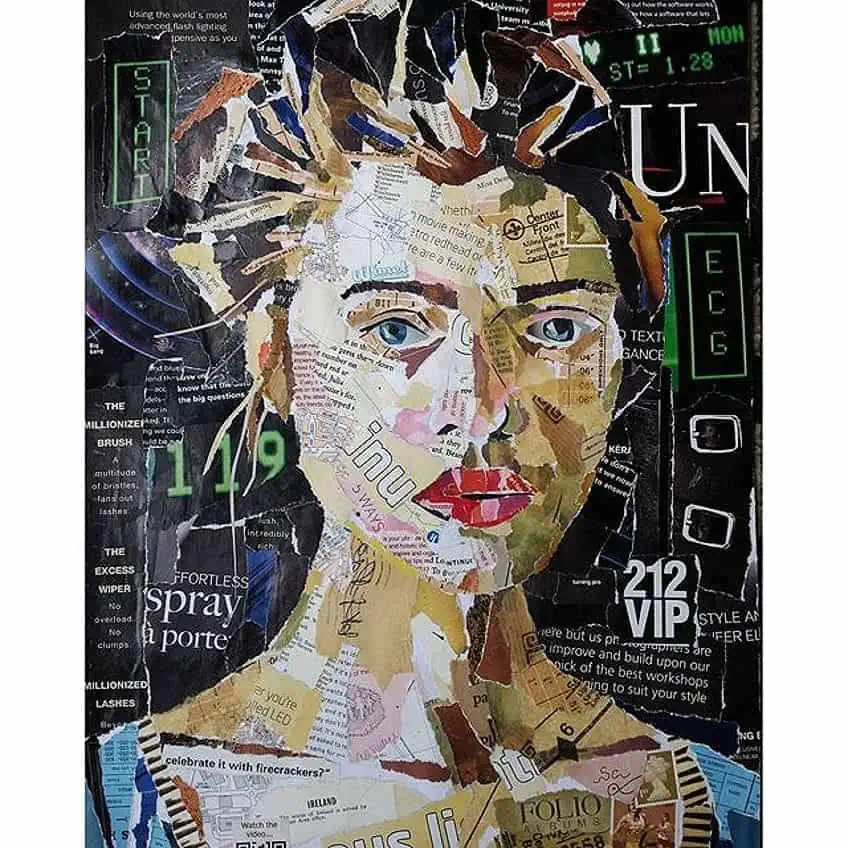
As we move beyond 2D screens, the concept of media in artwork is expanding into three-dimensional and four-dimensional (time-based) spaces. Immersive technology has turned “media” into a literal environment that the viewer can inhabit.
VR Art Spaces and Spatial Computing
Virtual Reality (VR) platforms like Tilt Brush or Gravity Sketch allow artists to paint with light and geometry in a 3D vacuum. In this medium, the artwork is not a flat plane but a coordinate-based structure. The “canvas” is the 360-degree space around the user, and the “paint” is often a series of polygons or voxels. This requires a deep understanding of spatial computing and 3D rendering engines. The technical complexity of creating art for VR involves optimizing frame rates and managing polygon counts to ensure a smooth, nauseating-free experience for the viewer.
AR Integration in Public and Commercial Art
Augmented Reality (AR) serves as a bridge between the digital and physical worlds. Using ARKit or ARCore frameworks, artists can overlay digital media onto the physical environment through a smartphone or wearable lens. Here, the medium is “contextual.” The artwork changes based on the viewer’s GPS location or the physical surfaces detected by the device’s LIDAR (Light Detection and Ranging) sensors. This technological layer transforms a static physical space into a dynamic digital gallery, making the software infrastructure the essential medium of the experience.
Digital Media as a Disruptive Force: Interactivity and Generative Code
In the realm of “New Media Art,” the artwork is often not a finished product but a living, breathing system. This is where media intersects with computer science to create generative and interactive works.
Creative Coding and Algorithmic Art
For many tech-forward artists, the medium is code. Languages like Processing (Java-based) or p5.js (JavaScript-based) allow creators to write scripts that generate visual patterns. In this scenario, the artwork is the algorithm itself. The output can be randomized or react to external inputs—such as sound, weather data, or stock market fluctuations—making the media “generative.” This shifts the artist’s focus from the final image to the logic of the system that creates the image.
Interactive Media and User Feedback Loops
When media becomes interactive, the audience becomes part of the artwork’s technical ecosystem. Using sensors (like the Xbox Kinect or Leap Motion), artists create installations that respond to human movement. The media here is a feedback loop: a camera captures motion, software processes the data in real-time, and a projector displays a visual response. This high-level integration of computer vision and display technology represents the pinnacle of modern media in artwork, where the boundaries between the tool, the creator, and the observer are entirely blurred.
Choosing the Right Digital Medium for Your Artistic Vision
As technology continues to advance, the “media” available to artists will only become more diverse and complex. For those looking to enter the world of digital art, the choice of medium is a strategic decision based on technical requirements and the desired output.
Hardware Essentials for Modern Digital Media
To work effectively in modern artistic media, a baseline of technical hardware is required. This includes:
- High-Performance GPUs: Essential for 3D rendering, AI generation, and real-time interactive effects.
- Color-Accurate Displays: Critical for ensuring that digital media translates correctly across different devices and print formats (utilizing standards like sRGB or DCI-P3).
- Input Devices: Beyond the mouse, tools like MIDI controllers or haptic gloves are increasingly used to manipulate digital media in intuitive ways.
Future-Proofing Your Technical Skillset
The definition of media in artwork is no longer static. An artist today must also be a lifelong learner of technology. Mastering one software package is rarely enough; the modern “medium” is an interconnected web of apps and platforms. Learning how to move assets from a 2D painting app into a 3D modeling environment, and eventually into a game engine like Unreal Engine 5, is becoming a standard workflow.
In conclusion, “media in artwork” has evolved from a simple description of physical materials into a complex dialogue with technology. Whether it is the precision of vector math, the generative power of AI, or the immersive potential of VR, media today is defined by its technological capabilities. By embracing these tools, artists are not just changing how they create; they are changing what art is—transforming it into a dynamic, data-driven, and infinitely scalable experience.
aViewFromTheCave is a participant in the Amazon Services LLC Associates Program, an affiliate advertising program designed to provide a means for sites to earn advertising fees by advertising and linking to Amazon.com. Amazon, the Amazon logo, AmazonSupply, and the AmazonSupply logo are trademarks of Amazon.com, Inc. or its affiliates. As an Amazon Associate we earn affiliate commissions from qualifying purchases.