
The concept of “infinity” is one of the most profound and counter-intuitive ideas in mathematics and computer science. When we hear “infinite plus infinite,” our immediate human intuition, accustomed to finite quantities, often falters. Yet, within the realm of technology, understanding and manipulating infinite sets, or at least dealing with concepts that represent infinity, is crucial for the development and operation of sophisticated systems. This exploration delves into the technological implications of “infinite plus infinite,” not as a simple arithmetic problem, but as a conceptual bridge to understanding computational limits, data structures, and the very nature of digital information.
The Algorithmic Infinity: When Loops Never End
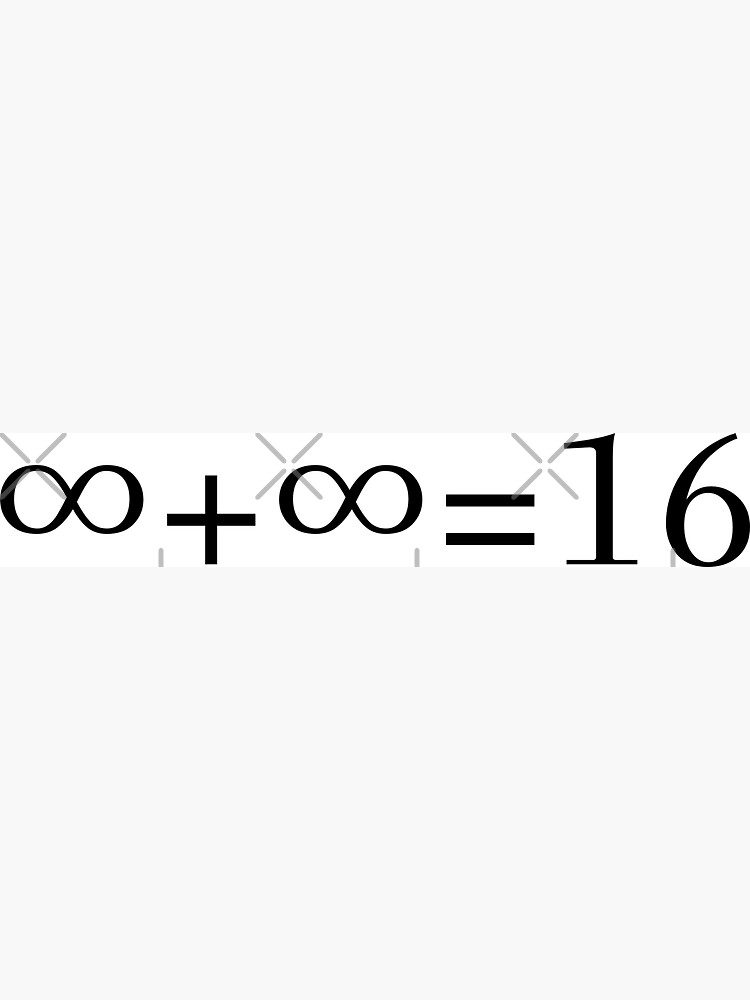
In computer science, an “infinite loop” is a fundamental concept that, while seemingly a bug, is also a powerful tool in specific contexts. It represents a sequence of instructions that, without external intervention or a specific termination condition, will repeat endlessly. This is the most direct manifestation of “infinite plus infinite” within the operational world of technology – a process that continues without bound.
Accidental Infinities: Bugs and Unintended Consequences
Often, infinite loops are the result of programming errors. A common scenario involves a loop condition that is never met. For instance, a while loop that checks if a variable is less than a target value, but the variable is never incremented, will continue to execute its body indefinitely. Such “accidental infinities” can lead to applications freezing, systems becoming unresponsive, and severe performance degradation, colloquially known as a “hang” or “crash.” Debugging these issues often involves carefully tracing the execution flow and identifying the flawed logic that prevents the loop from terminating. The sheer computational power available today, while immense, is still finite. An uncontrolled infinite loop can consume all available processing resources, bringing the entire system to a standstill. This highlights a critical aspect of software development: the need for robust error handling and predictable termination conditions.
Intentional Infinities: The Foundation of Continuous Processes
Conversely, some technological systems are designed to operate in a state of continuous, or “intentional,” infinity. Consider operating system processes that constantly monitor for user input, network traffic, or scheduled tasks. These processes are often implemented as infinite loops, designed to wait for events and respond accordingly. For example, a web server’s main loop is intended to continuously listen for incoming requests, process them, and send back responses. It doesn’t have a predetermined end point; its “infinity” is defined by its ongoing service. Similarly, embedded systems in critical infrastructure, like power grids or air traffic control, are designed to run indefinitely, monitoring and responding to real-time data. The “plus infinite” here can be seen in the way these systems often handle multiple concurrent tasks or process vast streams of incoming data. Each incoming request, each sensor reading, can be thought of as an addition to the ongoing stream of operations. The system’s ability to handle this continuous influx, without collapsing under its own weight, is a testament to its design and the underlying algorithms that manage this perpetual activity.
Recursive Infinity and Stack Overflows
Another form of computational infinity arises from recursion. A recursive function is one that calls itself. If the base case – the condition that stops the recursion – is missing or incorrectly defined, the function will call itself endlessly. This is another path to an infinite loop, but one with a specific consequence in memory management: a stack overflow. Each time a function is called, a new “stack frame” is created in memory to store its local variables and return address. In an infinite recursive loop, these stack frames accumulate relentlessly. Since computer memory is finite, this eventually leads to the “stack overflow” error, crashing the program. The “infinite plus infinite” here can be interpreted as the unending chain of self-calls, each adding to the memory burden until it’s exhausted. Understanding recursion and ensuring proper base cases is therefore paramount for writing stable and predictable software.
The Data Deluge: Infinite Streams and Data Structures
Beyond computational processes, the concept of infinity is also deeply relevant to how we store, manage, and process data. In the age of big data, the sheer volume of information being generated is staggering, and in many respects, the streams of data we encounter can be considered effectively infinite from a practical processing standpoint.
Infinite Data Streams: Real-time Information Processing
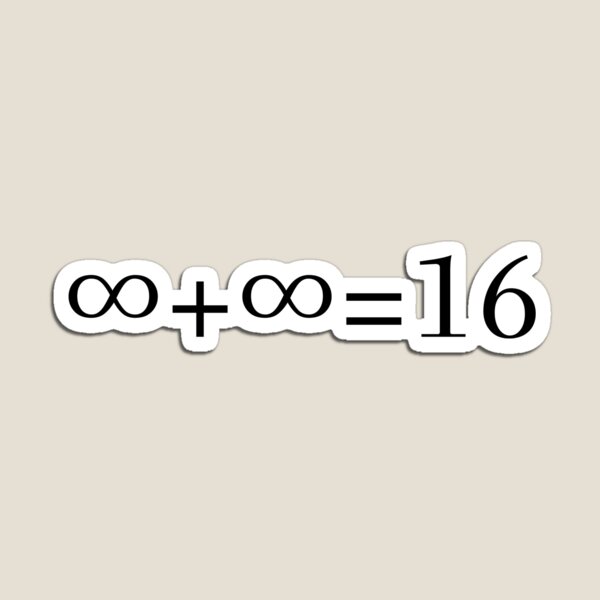
The Internet of Things (IoT), sensor networks, social media feeds, and financial transaction logs all generate continuous, high-velocity streams of data. These are not finite, static datasets; they are dynamic, ever-growing entities. For a data processing system, encountering such a stream is akin to facing an infinite influx. The challenge lies in designing systems that can ingest, process, and analyze this data in real-time, or near real-time, without ever reaching a point of saturation. The “infinite plus infinite” here can be envisioned as the unending flow of incoming data points, each being processed by algorithms that themselves might involve iterative or perpetual operations. Techniques like stream processing, using technologies like Apache Kafka or Apache Flink, are designed precisely to handle these “infinite” flows, allowing for continuous analysis and decision-making.
Representing the Infinite: Set Theory in Computing
While we can’t store an infinite amount of data, the theoretical underpinnings of computer science are deeply rooted in set theory, which deals with infinite sets. For instance, the set of all integers is infinite. Computer systems, however, operate on finite representations. The concept of “infinite plus infinite” in this context touches upon the nature of different sizes of infinity, a concept explored by Georg Cantor. While it might seem abstract, this has practical implications. For example, in programming languages, data types have finite ranges. However, when dealing with complex data structures or theoretical algorithms, we often reason about them in terms of their potential to grow indefinitely. The “infinite plus infinite” can be seen as the union of two infinitely large sets. In set theory, the union of two countably infinite sets is still a countably infinite set. This mathematical principle informs our understanding of how large datasets might combine and the theoretical limits (or lack thereof) of their collective size when dealing with abstract representations.
The Illusion of Infinite Memory: Virtual Memory and Paging
Modern operating systems employ techniques like virtual memory to give applications the illusion of having access to a vast amount of RAM, far exceeding the physical memory installed. This is achieved through memory management units (MMUs) and paging, where chunks of memory (pages) are swapped between RAM and slower storage (like SSDs or HDDs). While the addressable space for a program can be very large, it is ultimately bounded by the size of the virtual address space defined by the CPU architecture and the available storage. Nevertheless, for many applications, this virtual memory creates an environment where the concept of “running out of memory” is significantly deferred. In a sense, this is a technological approximation of dealing with “infinite plus infinite” memory demands. The system can handle more data than physically present by intelligently managing its resources, a testament to sophisticated algorithmic design.
Navigating the Infinite: Limits, Bounds, and Computational Frontiers
The concept of infinity in technology is not just about endless processes or boundless data; it’s also about understanding and operating within limits, and pushing the frontiers of what is computationally possible.
Computational Complexity and “Infinite” Growth
In algorithms, we often analyze their “computational complexity” using Big O notation. This notation describes how the running time or space requirements of an algorithm grow as the input size increases. Algorithms with complexities like O(n log n) or O(n^2) are considered efficient for many practical purposes. However, algorithms with complexities like O(2^n) or O(n!) are considered “exponential” or “factorial” and grow so rapidly that they become practically intractable for even moderately sized inputs. While not strictly infinite, their growth is so steep that they can be considered effectively infinite in terms of their resource demands for larger problem instances. The “infinite plus infinite” here could be interpreted as combining two exponentially growing computational tasks. The sum of two exponential functions is still an exponential function, meaning the combined problem would likely be even more computationally expensive, pushing us towards the boundaries of what can be solved with current technology.
The Limits of Floating-Point Arithmetic
In computing, representing numbers precisely, especially irrational numbers or very large/small values, is a challenge. Floating-point numbers, the standard way computers represent real numbers, have inherent limitations in precision and range. They cannot represent every real number, and they have maximum and minimum representable values. Attempting to perform operations that would theoretically result in infinity, like dividing a non-zero number by zero, typically results in special floating-point values like Infinity or NaN (Not a Number). These are special markers within the floating-point representation, not true mathematical infinities. When we talk about “infinite plus infinite” in the context of floating-point arithmetic, we often encounter specific behaviors defined by the IEEE 754 standard. For example, Infinity + Infinity results in Infinity. However, Infinity - Infinity results in NaN, highlighting that arithmetic with these representations is not always straightforward and requires careful consideration of the underlying computational model.
Theoretical Computing Models: Turing Machines and Unsolvable Problems
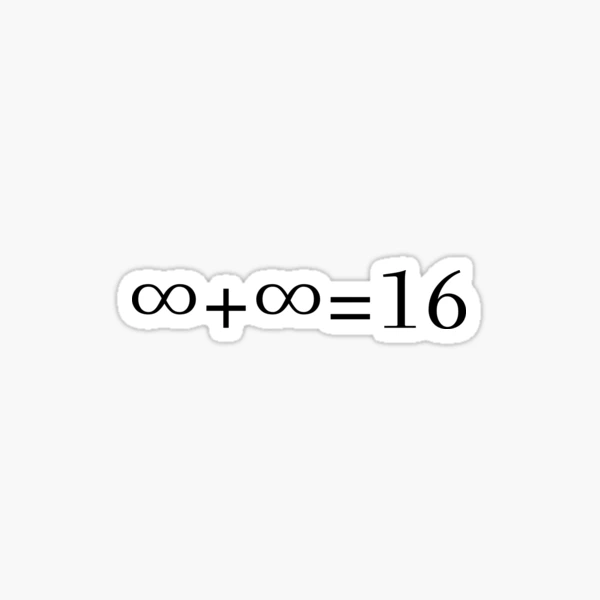
Theoretical computer science often uses abstract models like the Turing machine to explore the fundamental limits of computation. A Turing machine is a hypothetical device that can manipulate symbols on an infinite tape according to a set of rules. This “infinite tape” is a key element, allowing the machine to perform an unlimited number of operations. The halting problem, famously proven by Alan Turing, demonstrates that it is impossible to create a general algorithm that can determine whether any given program will eventually halt or run forever (i.e., enter an infinite loop). This fundamental limit illustrates that even with theoretical machines capable of operating infinitely, there are inherent boundaries to what we can predict and solve. The “infinite plus infinite” in this context could be seen as the potential for infinite computation combined with the infinite possibilities of programs, leading to unsolvable problems.
In conclusion, while “infinite plus infinite” might seem like a simple arithmetic query, its exploration within the technological landscape reveals a far richer and more complex reality. From the unintentional bugs of infinite loops to the deliberate design of continuous processes, from the unending streams of data to the theoretical boundaries of computation, the concept of infinity is woven into the fabric of modern technology. Understanding these nuances is not just an academic exercise; it is essential for building robust systems, pushing the boundaries of innovation, and navigating the ever-expanding digital universe.
aViewFromTheCave is a participant in the Amazon Services LLC Associates Program, an affiliate advertising program designed to provide a means for sites to earn advertising fees by advertising and linking to Amazon.com. Amazon, the Amazon logo, AmazonSupply, and the AmazonSupply logo are trademarks of Amazon.com, Inc. or its affiliates. As an Amazon Associate we earn affiliate commissions from qualifying purchases.