
Bearings are fundamental components in virtually every rotating mechanism within a modern automobile. Often overlooked by the average driver, these unsung heroes are the silent guardians of smooth motion and efficient operation, ensuring that parts like wheels, engines, and transmissions spin freely and with minimal friction. Without them, the intricate dance of automotive mechanics would grind to a halt, leading to inefficiency, wear, and ultimately, catastrophic failure. This exploration delves into the technological intricacies of automotive bearings, their vital roles, and the advanced engineering that keeps our vehicles moving.
The Unseen Workhorses: Understanding Bearing Technology
At its core, a bearing is a machine element that constrains relative motion to only the desired motion, and reduces friction between moving parts. In the context of a car, this primarily translates to reducing the friction encountered when one part rotates or slides against another. This reduction in friction is paramount for several reasons: it conserves energy, reduces heat generation, minimizes wear and tear on components, and allows for smoother, quieter operation.
The fundamental principle behind most automotive bearings is the separation of two surfaces that would otherwise be in direct, high-friction contact. This separation is achieved through the use of either rolling elements (like balls or rollers) or a fluid film. The type of bearing employed is dictated by the specific application, the loads it will experience, the speeds at which it will operate, and the required lifespan and precision.
Rolling Element Bearings: The Backbone of Rotation
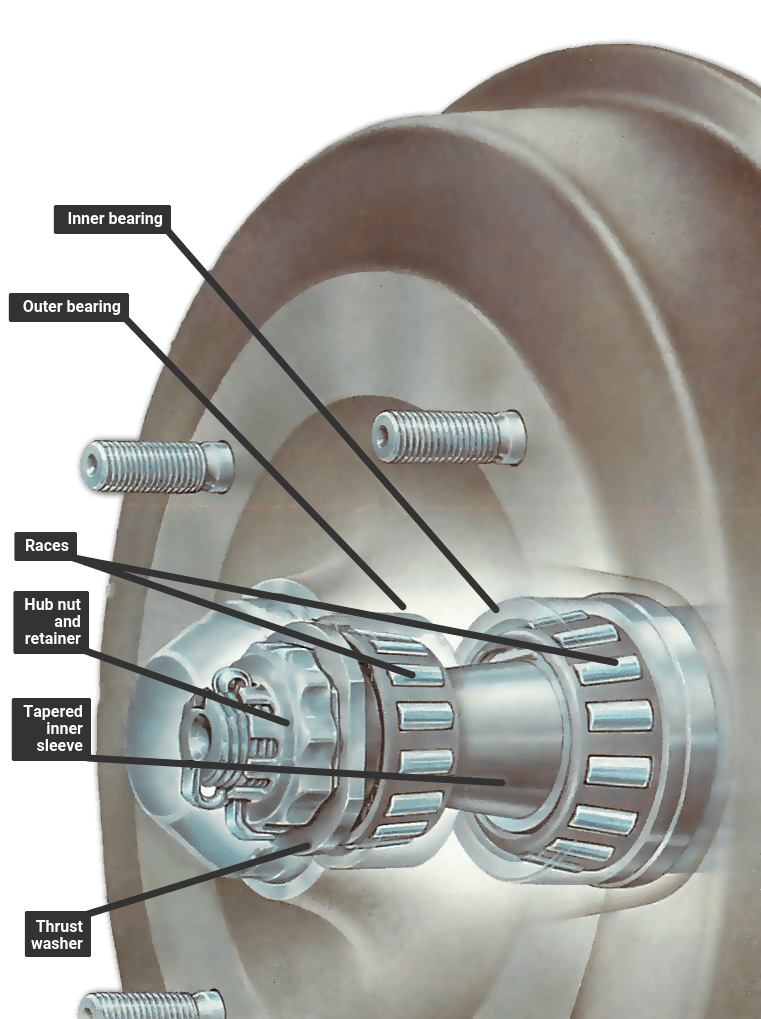
The vast majority of bearings found in cars are rolling element bearings. These bearings utilize spherical or cylindrical elements to facilitate the rolling motion between two races (inner and outer rings). The key advantage of rolling element bearings is their low starting friction, making them ideal for applications requiring frequent starts and stops, such as wheel hubs.
Ball Bearings: Versatility in Motion
Ball bearings are perhaps the most ubiquitous type of rolling element bearing. They consist of an inner ring, an outer ring, a set of hardened steel balls positioned between the rings, and a cage (or retainer) that keeps the balls evenly spaced. The balls roll within specially ground raceways on the inner and outer rings, effectively supporting radial (perpendicular to the shaft) and axial (parallel to the shaft) loads.
- Radial Ball Bearings: These are designed primarily to handle loads perpendicular to the axis of rotation. Deep-groove ball bearings are a common example, featuring a continuous groove in each race that allows them to handle significant radial loads and moderate axial loads in both directions.
- Angular Contact Ball Bearings: As the name suggests, these bearings are designed to handle combined radial and axial loads. They are typically used in pairs, with the inner and outer races offset, creating an angle of contact. This configuration provides higher axial load capacity in one direction.
- Self-Aligning Ball Bearings: These bearings have a spherical outer raceway that allows them to compensate for shaft misalignment or bending. They are useful in applications where precise alignment cannot be guaranteed.
Roller Bearings: Strength Under Pressure
Roller bearings use cylindrical, tapered, spherical, or needle-shaped rollers instead of balls. These shapes allow for a larger contact area with the raceways, resulting in a higher load-carrying capacity compared to ball bearings of similar size.
- Cylindrical Roller Bearings: These feature cylindrical rollers that run between the inner and outer races. They are excellent for high radial load applications but typically cannot accommodate significant axial loads unless specifically designed to do so.
- Tapered Roller Bearings: These are arguably the most critical type of bearing for automotive applications, particularly in wheel hubs and transmissions. They utilize tapered rollers that run between tapered inner and outer races. This design allows them to efficiently handle large combined radial and axial loads simultaneously. The taper allows for adjustment of the bearing pre-load, which is crucial for achieving optimal performance and lifespan in demanding automotive environments.
- Spherical Roller Bearings: These have two rows of barrel-shaped rollers and a common spherical outer raceway. This design allows them to accommodate misalignment and heavy radial and axial loads. They are often found in heavy-duty applications.
- Needle Roller Bearings: These bearings use long, thin cylindrical rollers that resemble needles. They are ideal for applications with limited radial space but high radial load requirements, such as in transmissions and steering systems.
Fluid Film Bearings: The Smooth Operators
While rolling element bearings are dominant, some critical automotive components utilize fluid film bearings. These bearings do not rely on solid rolling elements but rather on a thin layer of lubricant (oil or grease) that separates the moving surfaces. The lubricant is pressurized, either by the motion of the parts themselves (hydrodynamic lubrication) or by an external pump (hydrostatic lubrication), creating a wedge or film that completely prevents metal-to-metal contact.
Hydrodynamic Bearings: The Engine’s Heartbeat
Hydrodynamic bearings are most famously employed in the internal combustion engine. The crankshaft and camshaft journals rotate within their respective bearings, drawing oil into the narrow gap between the rotating shaft and the bearing surface. The rotation of the shaft, combined with the shape of the bearing, generates pressure in the oil film, lifting the shaft and preventing direct contact.
- Journal Bearings (Plain Bearings): These are the most common type of hydrodynamic bearing in engines. They are essentially semi-circular shells lined with a bearing material (like babbitt metal or bronze alloys) that house the rotating shaft. The precision of the gap and the quality of the lubricant are critical for their function.
The advantage of fluid film bearings is their ability to operate at very high speeds with extremely low wear, provided the lubrication is adequate. However, they have higher starting friction than rolling element bearings and are vulnerable to damage from contaminants in the lubricant.
Critical Applications of Bearings in a Car
The presence of bearings is fundamental to the operation of nearly every moving part in a vehicle. Their specific design and placement are tailored to the unique demands of each system.
Wheel Hub Bearings: The Foundation of Rolling
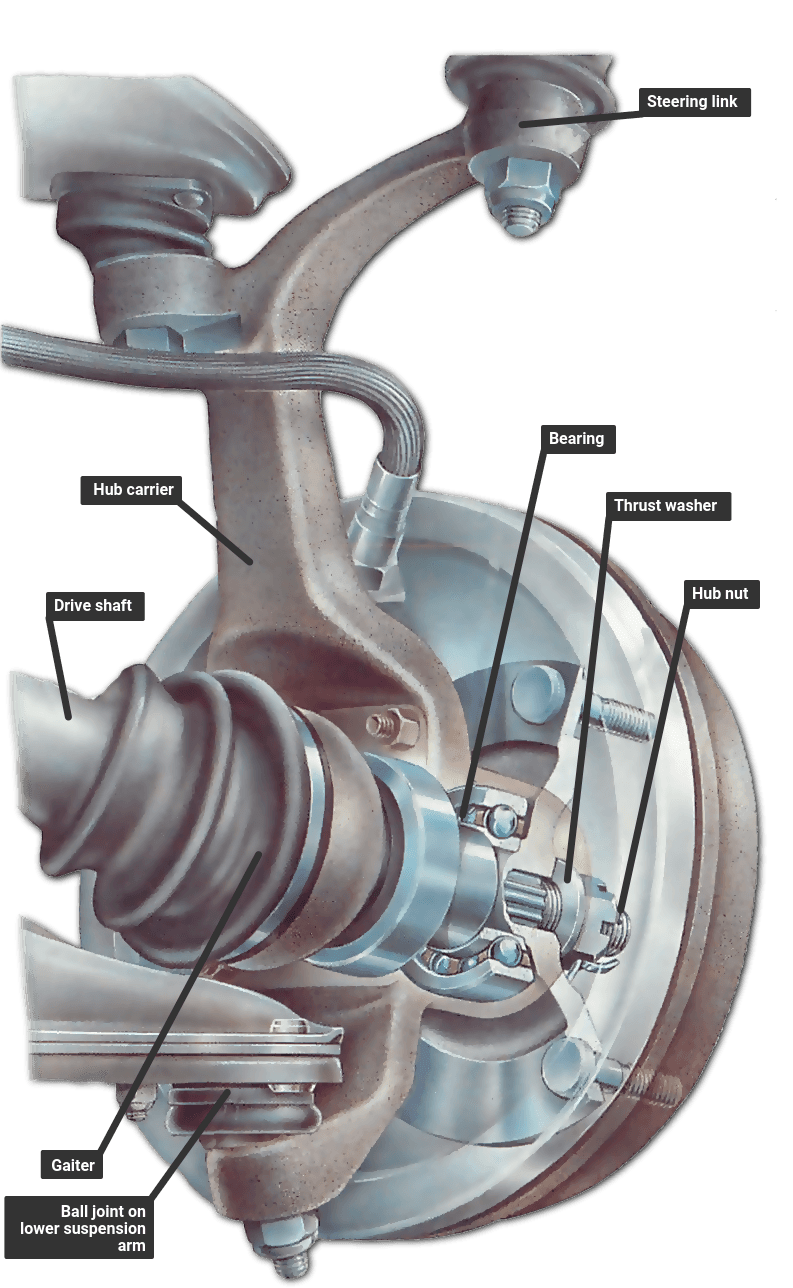
Wheel hub bearings are arguably the most critical and frequently replaced bearings in a car. Located within the wheel hub assembly, they allow the wheels to rotate freely and smoothly while supporting the immense radial and axial loads imposed by the vehicle’s weight, acceleration, braking, and cornering forces.
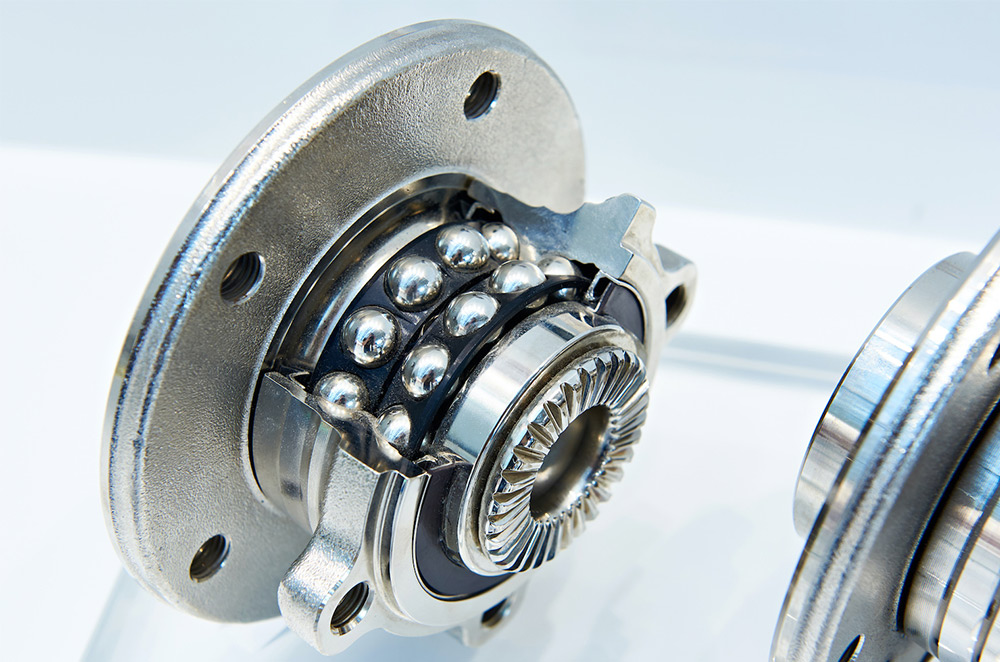
Modern vehicles predominantly use sealed and pre-lubricated wheel hub bearing assemblies, often employing tapered roller bearings or ball bearings. These units are designed for the lifetime of the vehicle and are typically replaced as a complete assembly when they fail. Failure, often indicated by a humming or grinding noise that changes with speed and turning, can lead to wheel wobble and potentially catastrophic wheel detachment. Advanced designs incorporate ABS (Anti-lock Braking System) sensors directly into the bearing assembly, highlighting their integration with other vehicle technologies.
Powertrain Bearings: Transmitting Power
The powertrain, encompassing the engine and transmission, is densely packed with various types of bearings, essential for the efficient transfer of power.
- Engine Bearings: As mentioned, journal bearings are crucial for the crankshaft and camshafts. They are designed to withstand extreme temperatures, pressures, and rotational speeds. The precision of these bearings directly impacts engine efficiency, power output, and longevity.
- Transmission Bearings: Transmissions, whether manual or automatic, rely heavily on a multitude of bearings to support gears, shafts, and clutches. Tapered roller bearings are common for supporting the main shafts due to their ability to handle combined loads. Needle roller bearings are often used in applications where space is limited but high radial loads are present, such as within automatic transmission clutch packs. These bearings must endure constant engagement and disengagement cycles and varying load conditions.
Steering and Suspension Bearings: Enabling Control
The steering and suspension systems also utilize bearings to facilitate smooth and precise movement.
- Steering System Bearings: Components like the steering column and steering rack employ bearings to ensure effortless turning. These might include ball bearings or bushings to reduce friction and provide smooth articulation.
- Suspension Bearings: While less reliant on rotating bearings in the traditional sense, suspension components like control arms and ball joints often incorporate bushings. These are essentially sleeves made of rubber, polyurethane, or other materials that act as a form of bearing, allowing for controlled movement and vibration damping while minimizing friction. More sophisticated suspension designs might utilize specialized bearings for pivot points.
Bearing Maintenance and Longevity: A Technological Perspective
While many modern automotive bearings are designed for long life and are often sealed and maintenance-free, understanding factors that influence their longevity is crucial for preventative maintenance and diagnosing issues.
Lubrication: The Lifeblood of Bearings
For any bearing, especially fluid film bearings and those not permanently sealed, proper lubrication is paramount. The lubricant’s primary roles are to:
- Reduce Friction: Minimizing energy loss and heat generation.
- Cooling: Dissipating heat generated by friction.
- Protection: Preventing wear by forming a protective film between surfaces.
- Cleaning: Carrying away wear particles and contaminants.
The type, viscosity, and cleanliness of the lubricant are critical. Incorrect lubricant viscosity can lead to insufficient film formation in fluid bearings or increased friction in rolling element bearings. Contaminated lubricant can act as an abrasive, rapidly destroying bearing surfaces. Regular oil changes and filter replacements are therefore essential for maintaining engine and transmission bearing health.
Load and Speed: The Operational Envelope
Every bearing is designed to operate within a specific load and speed range. Exceeding these limits can lead to premature failure.
- Overloading: Applying loads beyond the bearing’s capacity can cause plastic deformation, brinelling (indentations on raceways), and eventual fatigue failure. Wheel hub bearings, for instance, are subjected to immense loads during aggressive cornering.
- Over-speeding: Operating bearings at speeds higher than their design limits can lead to excessive heat generation, lubricant breakdown, and centrifugal forces that can damage the rolling elements.
Understanding the typical operating conditions for each bearing is key. For example, the bearings in a high-performance sports car will be subjected to far more extreme loads and speeds than those in a city commuter.
Contamination and Sealing: The Guardians of Purity
External contaminants such as dirt, water, and road salt are major adversaries of automotive bearings. These contaminants can enter bearing assemblies, compromising the lubricant and causing abrasive wear.
- Seals: Modern bearings, particularly wheel hub bearings, are equipped with robust seals that prevent contaminants from entering and lubricant from escaping. The integrity of these seals is vital for the bearing’s lifespan. Damage to seals, often caused by road debris or improper installation, is a common precursor to bearing failure.
- Cleanliness: During manufacturing and assembly, extreme cleanliness is maintained to prevent the introduction of contaminants. Mechanics performing bearing replacements must also adhere to strict cleanliness protocols.
Material Science and Manufacturing Precision
The longevity and performance of automotive bearings are heavily influenced by the materials used and the precision of their manufacturing.
- Bearing Steels: High-quality bearing steels (like chrome steel alloys) are used for their hardness, toughness, and resistance to fatigue. These materials are precisely heat-treated to achieve the desired properties.
- Manufacturing Tolerances: The extremely tight manufacturing tolerances for raceways, rolling elements, and their spacing are critical. Even microscopic imperfections can lead to increased friction, vibration, and reduced lifespan. Advanced manufacturing techniques, including superfinishing and precise grinding, ensure the high performance and reliability expected of automotive bearings.
In conclusion, bearings are intricate pieces of engineering that, despite their small size and often hidden location, are fundamental to the safe, efficient, and smooth operation of any car. From the high-speed rotation of wheels to the intricate movements within the engine and transmission, bearings silently perform their vital task, enabling the complex symphony of automotive mechanics. Understanding their function, applications, and the factors influencing their longevity provides a deeper appreciation for the sophisticated technology that underpins our daily journeys.
aViewFromTheCave is a participant in the Amazon Services LLC Associates Program, an affiliate advertising program designed to provide a means for sites to earn advertising fees by advertising and linking to Amazon.com. Amazon, the Amazon logo, AmazonSupply, and the AmazonSupply logo are trademarks of Amazon.com, Inc. or its affiliates. As an Amazon Associate we earn affiliate commissions from qualifying purchases.