
When embarking on any drywall installation or repair project, the choice of fastener is as critical as the quality of the drywall itself. Among the myriad of considerations, screw length stands out as a fundamental decision that directly impacts the integrity, finish, and longevity of the wall system. For those working with 5/8-inch drywall, often employed in applications requiring enhanced fire resistance or sound dampening, understanding the precise screw length needed is paramount. This article delves into the technical considerations, best practices, and common pitfalls associated with selecting the correct drywall screws for 5/8-inch applications, ensuring a robust and professional outcome.
The Science of Screw Penetration: Anchoring Power for 5/8″ Drywall
The primary function of a drywall screw is to securely fasten the drywall panel to its underlying framing, typically wood or metal studs. For 5/8-inch drywall, the increased thickness necessitates a screw that can achieve adequate penetration into the framing material without compromising the drywall itself. This is not merely a matter of length; it’s about the interplay between screw design, drywall composition, and the substrate to which it’s attached.
Understanding the Substrate: Wood vs. Metal Studs
The material of the framing studs significantly influences screw selection.
Wood Studs: The Traditional Foundation
Wood studs, generally 1 1/2 inches nominal (3/4 inch actual) in width, provide a more forgiving substrate for screw penetration. The inherent compressibility of wood allows screws to bite and hold effectively. For 5/8-inch drywall attached to wood studs, the goal is to embed the screw head slightly below the surface of the drywall paper without tearing it, thereby creating a dimple for subsequent finishing. A screw that is too short will not achieve sufficient purchase in the wood, leading to loose panels and potential structural issues. Conversely, a screw that is excessively long could pass through the stud entirely, offering no anchoring benefit and potentially creating a safety hazard.
The rule of thumb for wood studs is to ensure the screw penetrates at least 3/8 inch into the stud. Given the 5/8-inch thickness of the drywall panel, this translates to a minimum screw length requirement.
Metal Studs: Precision Engineering Required
Metal studs, typically 1 1/4 inches or 1 5/8 inches wide (and often thinner in gauge than wood studs), present a different challenge. The smooth, non-porous surface of metal requires screws designed to cut their own threads and achieve a strong mechanical lock. The thinner profile of some metal studs also means that over-penetration is a more significant concern.
When working with metal studs, particularly those with thinner gauges (e.g., 20-gauge or 25-gauge), the screw must be able to pierce the metal without stripping the threads or failing to achieve adequate grip. The choice of screw head and thread type becomes more critical in this scenario.
Screw Gauge and Thread Type: Complementary Features
Beyond length, the screw’s gauge (diameter) and thread type are crucial for optimal performance with 5/8-inch drywall.
Gauge Considerations: Strength and Stability
The gauge of a drywall screw refers to its diameter. For standard drywall applications, #6 and #8 gauges are most common. For 5/8-inch drywall, especially in situations demanding higher structural integrity or where fire-resistance ratings are critical, a #8 gauge screw is often recommended. The increased diameter provides greater shear strength and resistance to pull-out. A #6 gauge screw might be sufficient for lighter-duty applications, but for the robustness expected with 5/8-inch drywall, opting for a #8 gauge screw generally offers superior performance.
Thread Design: The Grip Mechanism
Drywall screws come with different thread types, each designed for specific purposes.
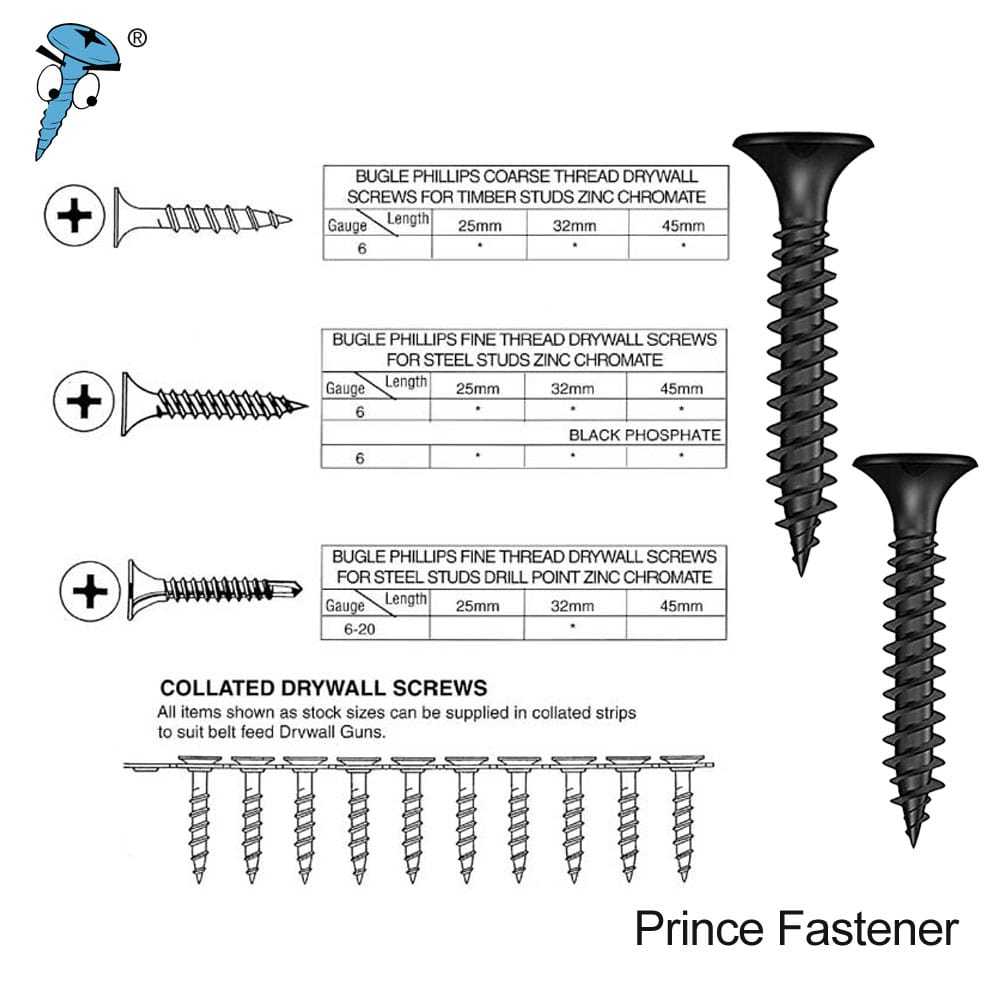
- Coarse Threads: These are ideal for wood studs. The wider spacing of the threads allows for faster driving and a stronger grip in the softer wood fibers. The self-tapping nature of coarse threads helps them cut into the wood effectively.
- Fine Threads: These are specifically designed for metal studs. The closer spacing of fine threads allows them to cut into thin metal more effectively, providing a secure grip without stripping.
- Self-Drilling Screws: For metal studs, self-drilling screws (often with a small drill bit-like tip) are highly recommended. These screws eliminate the need for pre-drilling and can quickly and efficiently penetrate metal framing.
The thread pitch and depth are engineered to maximize holding power without damaging the paper face of the drywall.
Determining the Optimal Screw Length for 5/8″ Drywall
Now, let’s address the core question: what length drywall screws are appropriate for 5/8-inch drywall? The answer is not a single, universal figure, but rather a range dictated by the substrate.
Screws for 5/8″ Drywall on Wood Studs
As established, with wood studs, the screw must penetrate at least 3/8 inch into the stud. A standard 5/8-inch drywall panel has a total thickness of 0.625 inches. To achieve the required 3/8-inch penetration, we need a screw that accounts for the drywall thickness plus the penetration depth.
- Calculation: Drywall Thickness (0.625″) + Minimum Stud Penetration (0.375″) = 1.0 inch.
This calculation suggests a minimum screw length of 1 inch. However, to ensure a robust connection and accommodate slight variations in drywall thickness or stud surface, it’s prudent to opt for a slightly longer screw.
- Recommended Lengths for Wood Studs:
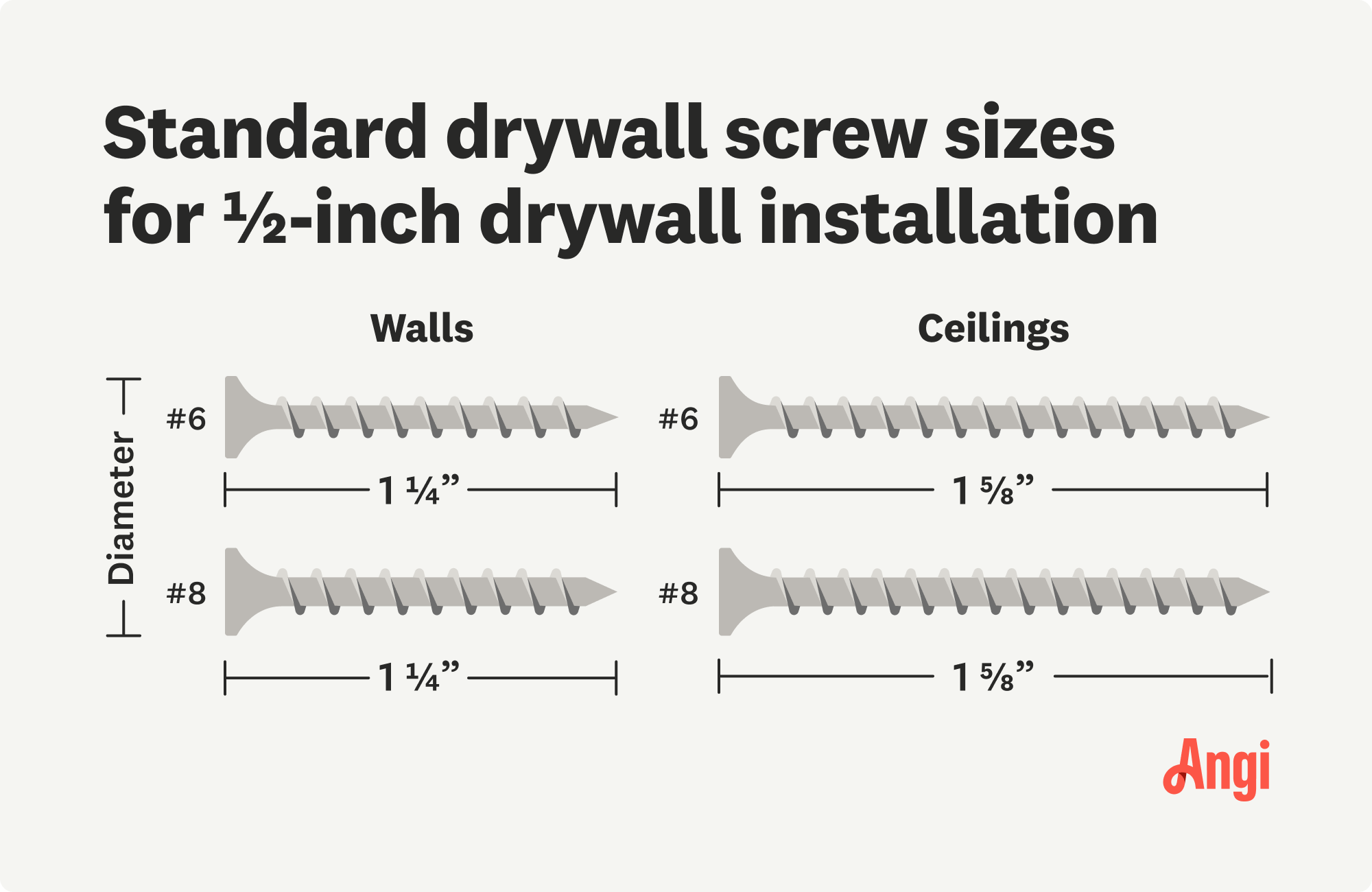
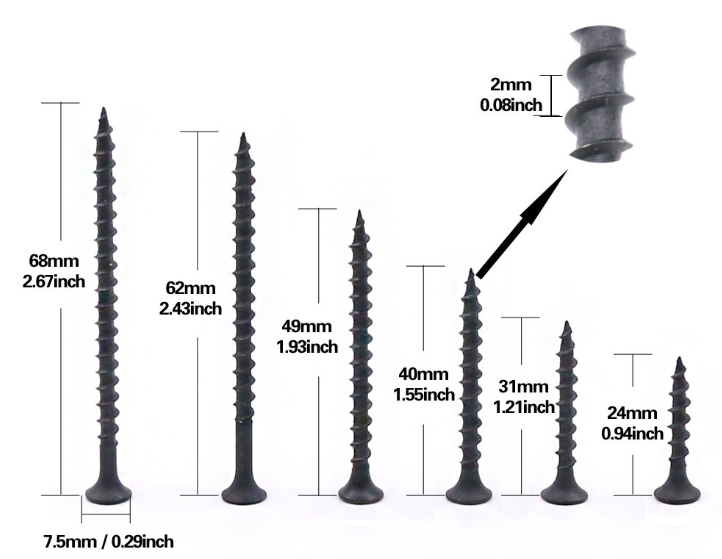
- 1 1/4 inch screws: This is a very common and generally suitable length for 5/8-inch drywall on wood studs. It allows for the full drywall thickness and approximately 5/8 inch of penetration into a standard 1 1/2 inch nominal (3/4 inch actual) wood stud, providing excellent holding power.
- 1 5/8 inch screws: While potentially slightly longer than strictly necessary for optimal penetration on wood, 1 5/8 inch screws are also frequently used, especially when the drywall is applied over furring strips or when an extra margin of security is desired. They offer even more substantial engagement with the wood stud.
Crucially, the screw should not protrude through the back of the stud. This is generally not an issue with standard wood stud depths and these screw lengths.
Screws for 5/8″ Drywall on Metal Studs
Metal studs, particularly common in commercial construction or areas requiring advanced fire ratings, demand a different approach. The screws must be able to grip the metal firmly.
- Self-drilling screws are the preferred choice here. Their hardened tips are designed to pierce metal with ease.
- The thread type will typically be fine-threaded.
The thickness of the metal stud itself is a critical factor. Standard metal studs are often 20-gauge or 25-gauge, which translates to a thickness of roughly 0.0359 inches (20-gauge) and 0.0179 inches (25-gauge).
- Recommended Lengths for Metal Studs:
- 1 1/4 inch self-drilling screws: This length is often sufficient for 5/8-inch drywall on standard metal studs. The screw needs to pass through the 5/8-inch drywall and then engage securely with the metal stud. The fine threads are designed to create a strong mechanical lock in the metal.
- 1 5/8 inch self-drilling screws: For thicker gauge metal studs or when an additional layer of drywall is being installed (e.g., double-layer fire-rated assemblies), 1 5/8 inch self-drilling screws might be necessary. It’s important to ensure that the screw is long enough to achieve at least two to three full threads of engagement into the metal stud for maximum holding strength.
A key technical consideration for metal studs is the screw’s ability to penetrate without causing the metal to deform excessively or the threads to strip. The quality of the self-drilling tip and the thread design are paramount.
Avoiding Common Mistakes: Over-penetration and Under-penetration
The consequences of choosing the wrong screw length can range from cosmetic flaws to structural deficiencies.
The Perils of Under-penetration
When a screw is too short, it fails to achieve adequate purchase in the framing.
- Loose Panels: The drywall panel will not be held firmly against the studs, leading to a loose, “bouncy” feel when pressed.
- Cracking: As the structure moves or bears weight, the loosely attached drywall can flex and crack, particularly at joints and screw locations.
- Poor Finish: The screw head may not be countersunk sufficiently, making it difficult to feather in joint compound without creating ridges or bumps.
- Reduced Fire Rating: In fire-rated assemblies, proper screw penetration is essential for the system’s integrity and its ability to resist fire for the specified duration. Under-penetration compromises this.
The Dangers of Over-penetration
Conversely, screws that are too long can also cause problems.
- Tearing the Paper Facings: If a screw is excessively long and driven too deep, especially into wood, it can push through the back of the stud or cause the drywall paper to tear, compromising the structural connection.
- Stripping Threads: In metal studs, an over-long screw might not have enough material left to form a secure thread grip after piercing the stud, leading to stripped threads and a weak connection.
- Creating Protrusions: In rare cases, if a screw is significantly too long, it might protrude through the back of the stud, creating a hazard or an uneven surface.
- Compromising Insulation: If insulation is present behind the drywall, an over-long screw can compress it, potentially reducing its R-value and creating thermal bridges.
The goal is to achieve a consistent, secure embedment that creates a slight dimple in the drywall paper without breaking through. This allows the joint compound to fully encapsulate the screw head and create a smooth, monolithic surface.
Best Practices for Drywall Screw Installation with 5/8″ Drywall
Beyond selecting the correct screw length, proper installation techniques are vital for realizing the full potential of 5/8-inch drywall and its fasteners.
Tooling and Settings
- Drywall Screw Gun: A dedicated drywall screw gun is highly recommended for any significant drywall project. These tools feature adjustable depth-setting collars that allow for precise control over screw embedment.
- Depth Setting: When using a screw gun, set the depth collar so that the screw head indents the paper slightly, creating a dimple, but does not tear through. A common visual cue is for the screw head to be flush with the paper or slightly below it.
- Speed and Torque: Use a moderate speed and torque setting. Excessive speed can strip threads or tear the paper, while insufficient speed may not drive the screw effectively.
Screw Spacing and Placement
- Stud Engagement: Ensure every screw penetrates into the framing stud. This typically means screws should be placed no more than 12 inches apart along each stud in the field of the panel and 6-8 inches apart along the edges of the panel.
- Edge vs. Field Screwing: Screws along the edges of drywall panels are critical for creating strong joints. Field screws (those in the middle of the panel) provide overall stability.
- Avoid Overlapping Joints: Do not place screws in a way that overlaps or bridges over joints between panels unless specifically instructed by manufacturer guidelines for certain types of systems.
Material Compatibility
- Corrosion Resistance: For applications in damp environments (e.g., bathrooms, kitchens) or exterior-rated drywall, use screws with appropriate corrosion-resistant coatings. Standard phosphate-coated screws are generally for interior, dry applications. Vinyl-coated or galvanized screws offer better protection against rust.
- Fire-Rated Assemblies: In fire-rated wall assemblies, it is crucial to use screws specifically approved and tested for that system. These screws may have specific lengths, gauges, and coatings to meet stringent performance requirements. Always consult the fire-rated system’s documentation.
By meticulously selecting the appropriate screw length – typically 1 1/4 inch or 1 5/8 inch for 5/8-inch drywall, depending on the substrate (wood or metal studs) – and employing precise installation techniques, professionals and DIYers alike can ensure that their drywall installations are not only visually appealing but also structurally sound, durable, and meet any required performance standards. The humble drywall screw, when chosen and installed correctly, plays a vital role in the overall success of any building project.
aViewFromTheCave is a participant in the Amazon Services LLC Associates Program, an affiliate advertising program designed to provide a means for sites to earn advertising fees by advertising and linking to Amazon.com. Amazon, the Amazon logo, AmazonSupply, and the AmazonSupply logo are trademarks of Amazon.com, Inc. or its affiliates. As an Amazon Associate we earn affiliate commissions from qualifying purchases.