
When embarking on a kitchen renovation or simply looking to upgrade your primary cooking appliance, the terminology surrounding ranges can quickly become a source of confusion. Among the most common distinctions you’ll encounter are “freestanding” and “slide-in” ranges. While both serve the fundamental purpose of cooking food, their design, installation, and aesthetic integration into your kitchen cabinetry differ significantly, impacting everything from budget to the overall visual harmony of your culinary space. Understanding these differences is crucial for making an informed decision that aligns with your practical needs, design aspirations, and even your home’s unique layout. This article delves into the core distinctions between freestanding and slide-in ranges, offering insights to guide you toward the perfect fit for your kitchen.
Understanding the Core Distinctions: Design and Installation
The primary divergence between freestanding and slide-in ranges lies in their construction and how they are designed to interface with your kitchen’s existing cabinetry. This fundamental difference dictates not only their appearance but also the ease and cost of installation, as well as their compatibility with various kitchen layouts.
Freestanding Ranges: The Classic All-In-One Solution
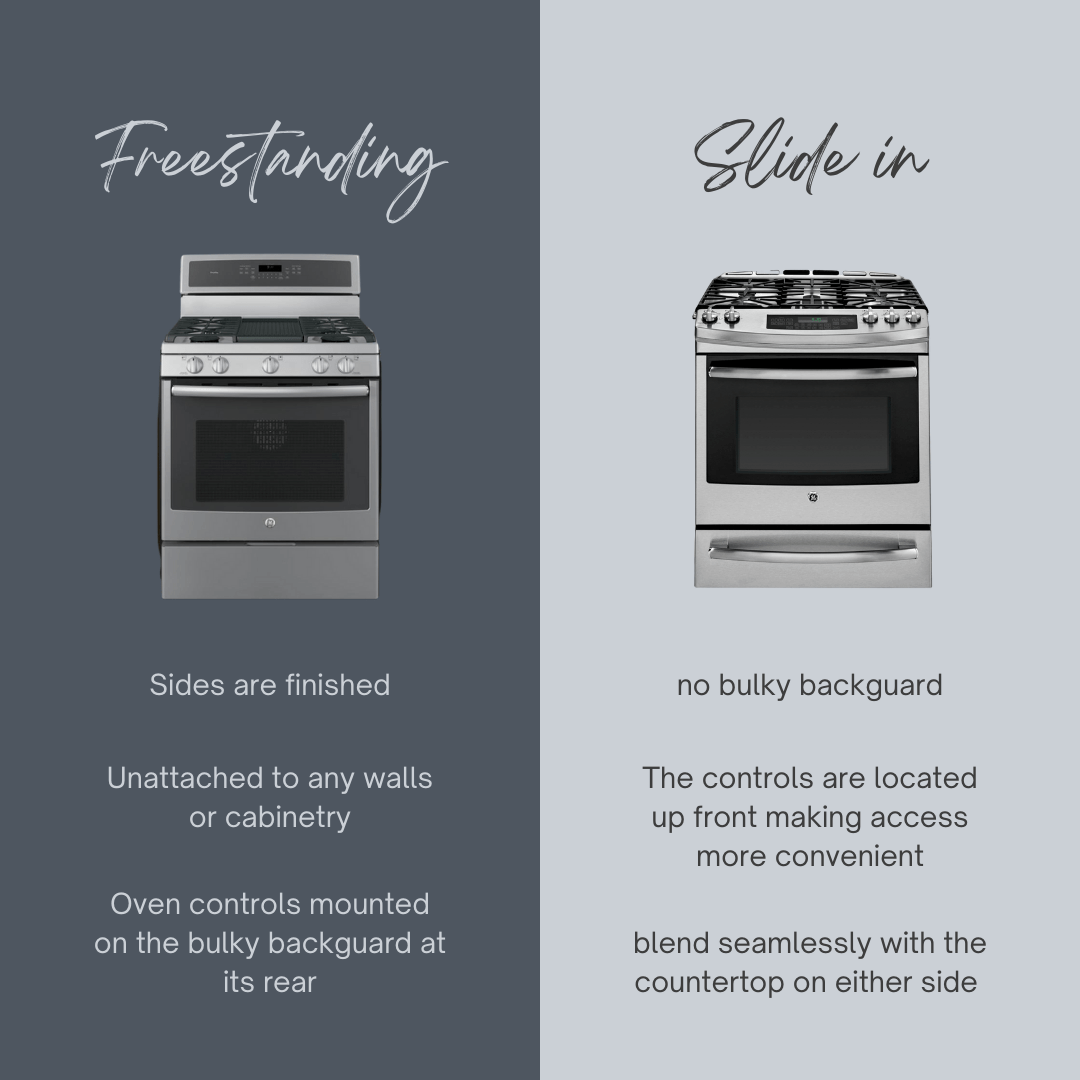
Freestanding ranges, often referred to as “traditional” or “conventional” ranges, are the archetypal kitchen appliance. Their design is characterized by a finished exterior on all sides, allowing them to stand independently. This means they are not reliant on custom cabinetry for support or a seamless look.
Key Design Features of Freestanding Ranges:
- Finished Sides: The most defining characteristic is that freestanding ranges have fully finished sides, often in matching enamel or stainless steel. This allows them to be placed anywhere in the kitchen, even as a standalone unit against a wall with no cabinetry surrounding it.
- Top-Mounted Controls: Typically, the control panel for a freestanding range is located on the backsplash, a vertical extension at the rear of the cooktop. This placement makes them easily accessible and visible, even when someone is standing in front of the range.
- Versatile Placement: Because they don’t require a specific cutout or integration with cabinets, freestanding ranges offer the most flexibility in terms of placement. They can be installed against any suitable wall, and their finished sides mean they don’t create awkward gaps if not pushed flush against cabinets.
- Ease of Installation: Installation is generally straightforward. They require standard electrical or gas hookups and a level surface. If you’re replacing an existing freestanding range, the process is often as simple as disconnecting the old unit and connecting the new one.
- Budget-Friendly: Historically, freestanding ranges have tended to be more budget-friendly than their slide-in counterparts. Their simpler construction and wider market availability contribute to lower price points, making them an excellent option for those on a tighter budget or for rental properties.
- Broader Selection: The vast market for freestanding ranges means you’ll find an extensive array of models, features, and price points. From basic, no-frills options to high-end units with advanced cooking technologies, the selection is almost limitless.
Installation Considerations for Freestanding Ranges:
The installation of a freestanding range is relatively uncomplicated. The primary requirement is to ensure it’s placed on a stable, level floor and connected to the appropriate power source (a standard 240-volt outlet for electric ranges or a gas line for gas ranges) and ventilation system. A gap is often left between the back of the range and the wall to accommodate the necessary hookups, and the control panel on the backsplash typically obscures this gap, maintaining a relatively clean appearance. However, this gap can sometimes accumulate grease and debris, making it a point of difference compared to the more integrated look of slide-in models.
Slide-In Ranges: The Integrated Aesthetic
Slide-in ranges, as their name suggests, are designed to “slide in” to a pre-existing cabinet cutout, creating a more seamless and integrated look with your kitchen countertops and cabinetry. They are designed to have a finished front that faces outwards, with less emphasis on finished sides as they are intended to be nestled between cabinets.
Key Design Features of Slide-In Ranges:
- Flush Integration: The hallmark of a slide-in range is its ability to sit flush with your countertops. The cooktop surface typically extends slightly over the front edge of the countertop, and the control panel is located on the front of the appliance, below the cooktop. This eliminates the gap between the range and the cabinets that is common with freestanding models.
- Front-Mounted Controls: The control panel is situated on the front of the range, below the cooking surface. This design not only contributes to the sleek, integrated look but also keeps controls within easy reach, similar to a freestanding range, without the obstruction of a rear backsplash.
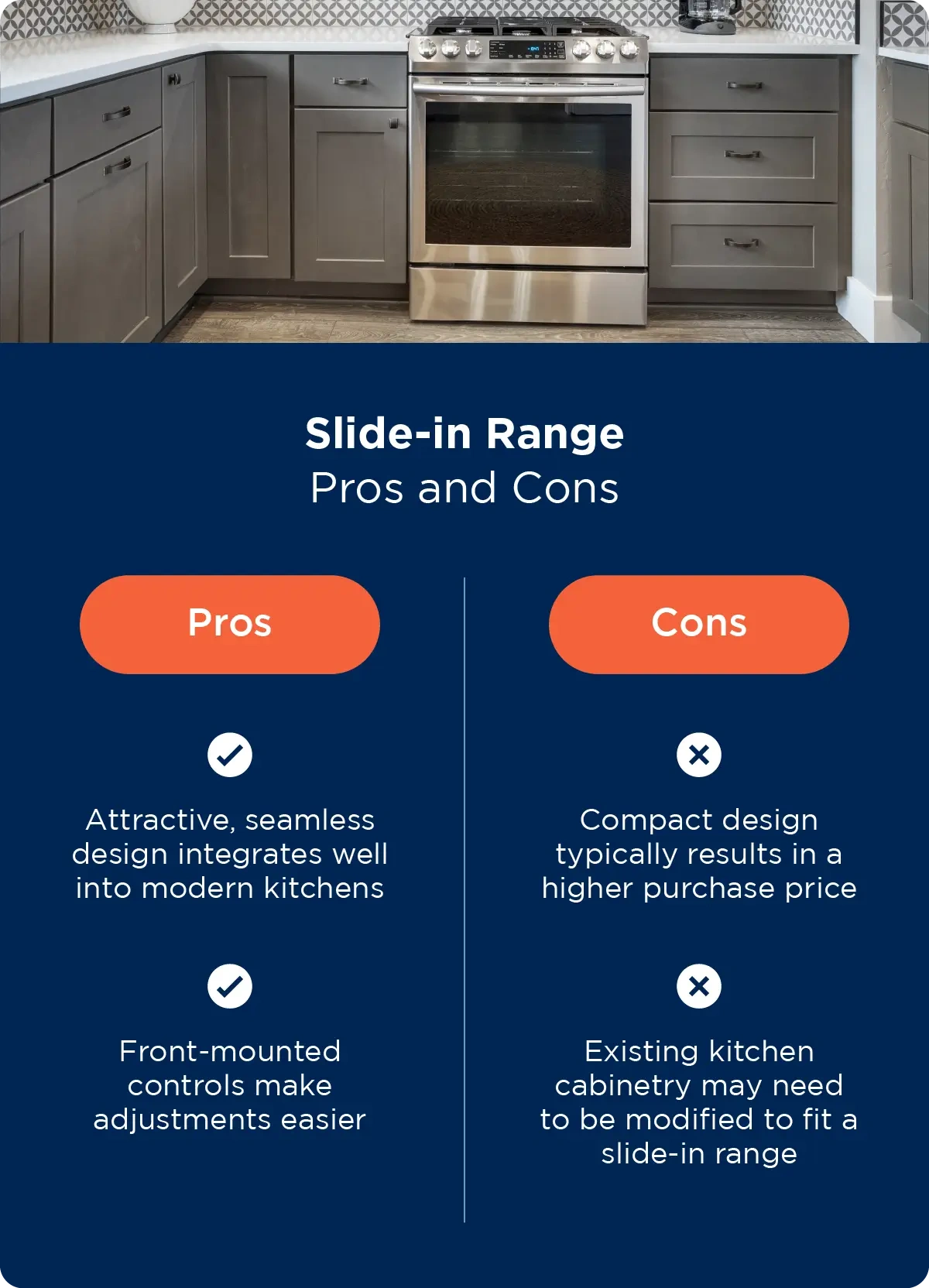
- Custom Cabinetry Required: Slide-in ranges are designed to fit into standard countertop cutouts, typically 30 inches wide. This necessitates either existing cabinetry that accommodates this size or the installation of custom cabinets to create the proper opening.
- Aesthetically Pleasing: The primary appeal of slide-in ranges is their sophisticated and modern appearance. The flush integration with countertops creates a clean, streamlined look that is highly desirable in contemporary kitchen designs. It presents a more built-in, high-end aesthetic.
- Easier Cleaning: Because there’s no gap between the range and the countertop, slide-in models are generally easier to clean. Spills and crumbs are less likely to fall into hidden crevices, and the continuous surface of the countertop and cooktop simplifies wiping down the area.
- Higher Price Point: Generally, slide-in ranges come with a higher price tag than their freestanding counterparts. This is due to their more intricate design, the need for precise manufacturing to achieve the flush fit, and the fact that they are often positioned as a more premium option.
Installation Considerations for Slide-In Ranges:
Installing a slide-in range requires a pre-determined cabinet opening. Standard slide-in ranges are designed to fit into a 30-inch wide space, with specific depth and height requirements to ensure a flush fit with standard countertops. The installer will need to ensure the cabinetry can support the weight of the range and provide adequate space for electrical or gas connections behind the unit. While the installation is not overly complex, it typically requires more precise measurements and potentially adjustments to existing cabinetry, which can increase labor costs if custom work is needed.
Installation Nuances and Cabinetry Integration
The way these ranges integrate with your kitchen cabinetry is a pivotal factor influencing your choice. This section explores the practicalities of installation and how each type of range interacts with your kitchen’s built-in elements.
Freestanding Ranges and Cabinetry: Flexibility vs. Gaps
Freestanding ranges offer unparalleled flexibility when it comes to installation. Because they have finished sides and are designed to stand independently, they don’t require specific cabinet cutouts. This means they can be placed against any suitable wall, whether it’s flanked by cabinets or not. This independence makes them ideal for kitchens with unconventional layouts or for those who prefer not to commit to permanent cabinetry modifications.
However, this freedom comes with a trade-off. To accommodate the gas line or electrical cord, a gap is typically left between the back of the freestanding range and the wall. While the backsplash of the range usually covers this gap from view, it can become a magnet for dust, grease, and food debris, requiring regular cleaning to maintain hygiene and aesthetics. Some freestanding models do come with optional “cabinet-compatible” or “flush-fit” kits that aim to minimize this gap and create a more integrated appearance, but this is not their inherent design.

Slide-In Ranges and Cabinetry: The Seamless Aesthetic
Slide-in ranges, conversely, are built with seamless integration in mind. They are designed to fit snugly into a standard 30-inch wide opening within your kitchen cabinets. The cooktop surface typically extends slightly over the front edge of the countertop, creating a smooth, continuous transition from countertop to appliance. This design eliminates the unsightly gap often found with freestanding ranges, contributing to a cleaner, more polished, and high-end kitchen appearance.
The installation of a slide-in range necessitates a pre-existing or custom-built cabinet cutout that meets specific dimensions. This can be a significant consideration for kitchen renovations. If your current cabinetry is not designed for a slide-in range, you may need to invest in custom cabinet modifications or new cabinetry to accommodate the appliance. However, for those seeking a sleek, built-in look without the expense of a full range hood installation (as slide-in ranges often have integrated downdraft ventilation or are designed to be used with standard microwave hoods), the effort and cost can be well worth it.
Aesthetic Considerations and Kitchen Design Impact
The visual impact of a range on your kitchen’s overall design is significant. The choice between freestanding and slide-in models can dramatically alter the perceived style, modernity, and flow of your culinary space.
Freestanding Ranges: Versatility in Style
Freestanding ranges offer a wide spectrum of aesthetic possibilities. Their classic design means they can fit into virtually any kitchen style, from rustic farmhouses to modern minimalist spaces. They are available in a vast array of finishes, including stainless steel, black, white, and even custom colors, allowing them to complement or contrast with your cabinetry and décor.
While they can be a focal point on their own, their less integrated nature means they don’t necessarily disappear into the cabinetry. This can be a positive for those who want their range to be a prominent feature, showcasing a specific design or finish. However, for a truly minimalist or ultra-modern kitchen, the exposed sides and the potential gap at the rear might detract from the desired seamlessness. They are the workhorse of the kitchen, offering functionality and choice without demanding strict integration.
Slide-In Ranges: The Epitome of Modern Elegance
Slide-in ranges are almost universally associated with modern and contemporary kitchen designs. Their ability to blend seamlessly with countertops and cabinetry creates an uncluttered, sophisticated, and high-end look. This integrated aesthetic is highly sought after by homeowners aiming for a streamlined and cohesive kitchen environment.
The front-mounted control panel further enhances this modern appeal, eliminating the need for a prominent backsplash that can sometimes interrupt the visual flow. The continuous countertop surface achieved with a slide-in range contributes to a sense of spaciousness and order. If your design vision leans towards clean lines, minimalist aesthetics, and a built-in feel, a slide-in range is often the preferred choice. They are the appliance that makes the kitchen look custom-designed.
Cost and Value Proposition: Budgeting for Your Range
The financial aspect of purchasing and installing a new range is a crucial consideration for most homeowners. Understanding the cost differences between freestanding and slide-in models, as well as their long-term value, can help you make a decision that aligns with your budget and priorities.
Freestanding Ranges: Value and Accessibility
Freestanding ranges are generally the more budget-friendly option. Their simpler construction, mass production, and wider availability contribute to lower purchase prices. You can find reliable, feature-rich freestanding ranges at a considerably lower cost than comparable slide-in models. This makes them an excellent choice for first-time homebuyers, those on a tighter budget, or for situations where the appliance is not expected to be a long-term fixture (e.g., rental properties).
The installation costs for freestanding ranges are also typically lower. Since they don’t require custom cabinetry or significant modifications, professional installation is often straightforward and less expensive. The long-term value proposition of a freestanding range lies in its accessibility and broad appeal. They offer a vast selection of features and functionalities at various price points, ensuring that a suitable option exists for almost every budget.
Slide-In Ranges: Investment in Aesthetics and Functionality
Slide-in ranges typically carry a higher price tag than their freestanding counterparts. This increased cost is a reflection of their more sophisticated design, the precision required for their flush installation, and their positioning as a premium appliance. If your budget is a primary concern, the initial investment for a slide-in range might be a significant hurdle.
However, the value of a slide-in range extends beyond its purchase price. The aesthetic upgrade it provides to a kitchen can significantly enhance its perceived value and appeal, which can be a crucial factor in home resale. The ease of cleaning and the streamlined look contribute to a more enjoyable and functional kitchen experience. Furthermore, many slide-in ranges come equipped with advanced features and technologies that justify their higher cost, such as enhanced cooking modes, smart connectivity, and superior build quality. When considering a slide-in range, it’s important to view it as an investment in both functionality and the overall design of your kitchen.
Conclusion: Choosing the Right Range for Your Kitchen
Ultimately, the decision between a freestanding and a slide-in range hinges on a careful evaluation of your kitchen’s existing structure, your design aspirations, your budget, and your practical needs. Freestanding ranges offer unparalleled flexibility, a wide selection, and often a more accessible price point, making them a practical and versatile choice for many households. Their ease of installation and standalone nature provide freedom in placement and are ideal for those seeking a reliable workhorse appliance without the need for custom cabinetry.
Conversely, slide-in ranges are the choice for those who prioritize a sleek, integrated, and high-end aesthetic. Their ability to blend seamlessly with countertops and cabinetry creates a modern, uncluttered look that can significantly enhance the visual appeal of a kitchen. While they typically come with a higher initial cost and may require cabinet modifications, the sophisticated finish and ease of cleaning they offer can be a worthwhile investment for those aiming for a custom-built feel. By understanding the distinct characteristics of each type, you can confidently select the range that best suits your culinary endeavors and elevates the heart of your home.
aViewFromTheCave is a participant in the Amazon Services LLC Associates Program, an affiliate advertising program designed to provide a means for sites to earn advertising fees by advertising and linking to Amazon.com. Amazon, the Amazon logo, AmazonSupply, and the AmazonSupply logo are trademarks of Amazon.com, Inc. or its affiliates. As an Amazon Associate we earn affiliate commissions from qualifying purchases.