
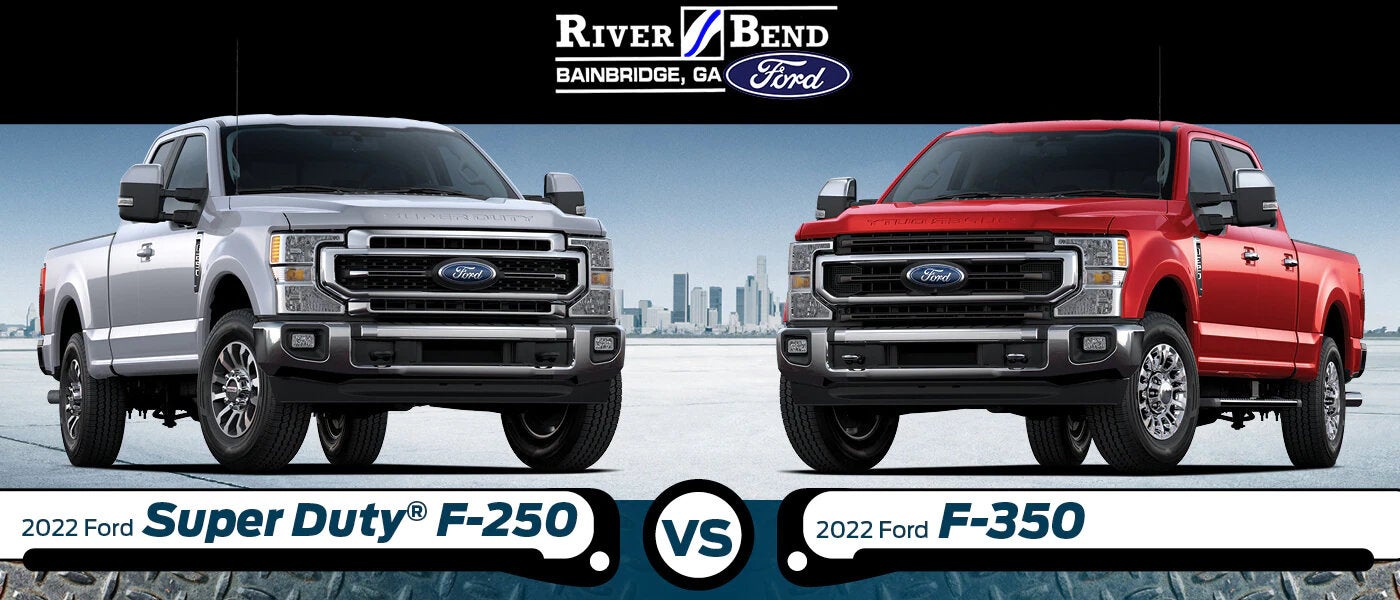
The Ford F-Series Super Duty trucks, specifically the F-250 and F-350, represent the pinnacle of capability within the light-duty pickup segment. For many consumers and businesses, understanding the nuanced differences between these two formidable machines is crucial for making an informed purchase decision that aligns with their specific needs, whether for demanding work applications, recreational towing, or specialized commercial use. While they share a common lineage and a robust foundation, the F-250 and F-350 are engineered with distinct capabilities that cater to escalating levels of duty. This article will delve into the core distinctions, focusing on their practical implications for consumers and businesses operating within the realm of heavy-duty hauling and towing.
Understanding the Core Distinctions: Payload and Towing Prowess
At the heart of the F-250 and F-350 difference lies their fundamental purpose: to handle more demanding tasks. While both are classified as “heavy-duty,” the F-350 is engineered to exceed the F-250’s capabilities in critical areas, primarily payload and towing capacity. This distinction is not arbitrary; it’s a direct result of engineering choices that prioritize strength, durability, and the ability to safely manage heavier loads.
Payload Capacity: The Bed’s Carrying Strength
Payload capacity refers to the maximum weight a truck can carry in its bed, including passengers and cargo. This is a critical metric for anyone using a truck for work or hauling large items. The F-350 consistently offers higher payload capacities than the F-250. This difference is achieved through a combination of factors, most notably its beefier suspension components and, in certain configurations, its wheel and tire packages.
- Suspension and Axle Enhancements: The F-350 typically features stronger springs, more robust shock absorbers, and often a heavier-duty rear axle compared to the F-250. These components are designed to absorb and distribute the forces generated by heavier payloads, ensuring stability and preventing undue stress on the vehicle. The increased rigidity of the suspension also contributes to a more controlled ride when the truck is fully loaded.
- Tire and Wheel Configurations: While both trucks offer a range of wheel and tire options, the F-350 may come standard or offer as an option, tires with higher load ratings. These tires are specifically designed to support greater weights and maintain their integrity under extreme pressure. The increased sidewall strength and tread design contribute to enhanced load-bearing capabilities.
- GVWR (Gross Vehicle Weight Rating): A key indicator of payload capacity is the Gross Vehicle Weight Rating (GVWR). This is the maximum allowable weight of the fully loaded vehicle, including the chassis, body, engine, fluids, fuel, accessories, driver, passengers, and cargo. The F-350 will have a higher GVWR than a comparably equipped F-250. Subtracting the vehicle’s curb weight from its GVWR gives you the maximum payload capacity. For example, an F-350 might have a GVWR of 11,500 pounds, while an F-250 might be rated at 10,000 pounds. This 1,500-pound difference is significant for many commercial and heavy-duty applications.
Towing Capacity: Hauling Power Redefined
Towing capacity is arguably the most defining characteristic of heavy-duty trucks, and it’s where the F-350 truly distinguishes itself. The ability to tow larger and heavier trailers—from fifth-wheel campers to substantial work trailers—is a primary reason why buyers opt for one over the other. The F-350’s superior towing capabilities are a result of its reinforced chassis, stronger drivetrain components, and advanced towing technology.
- Fifth-Wheel and Gooseneck Towing: When it comes to fifth-wheel or gooseneck trailers, the F-350 typically offers substantially higher towing limits. These types of hitches distribute the trailer’s tongue weight more directly over the truck’s frame, allowing for significantly larger trailer capacities. The F-350’s chassis is engineered to handle this concentrated tongue weight with greater ease and safety.
- Conventional Towing: Even for conventional bumper-pull trailers, the F-350 generally holds an advantage. This is due to its reinforced frame, sturdier rear axle, and often more powerful braking systems designed to manage the increased inertia and stopping forces associated with heavier loads.
- Drivetrain Considerations: While both trucks offer powerful engine options (typically Ford’s renowned Power Stroke diesel and robust gasoline V8s), the F-350’s drivetrain components, such as the transmission and rear axle, are often rated for higher torque and load capacities. This ensures the powertrain can reliably transfer power and endure the stresses of towing at the upper limits of its capacity.
- Integrated Towing Technology: Both models benefit from Ford’s suite of towing technologies, such as trailer sway control, integrated trailer brake controllers, and advanced camera systems. However, the F-350’s higher towing ratings mean these systems are designed to manage even more extreme towing scenarios, providing peace of mind for drivers operating at the edge of their vehicle’s capabilities.
Engineering for Enhanced Durability and Performance
Beyond payload and towing, the engineering differences between the F-250 and F-350 extend to the underlying structural and mechanical components that contribute to their overall durability and performance under extreme conditions. These subtle yet significant enhancements ensure the F-350 can withstand the rigors of continuous heavy use.
Chassis and Frame Reinforcements
The foundation of any heavy-duty truck is its chassis and frame. For the F-350, Ford applies additional reinforcements and utilizes stronger materials to create a more robust structure capable of handling higher stress loads.
- Frame Thickness and Crossmembers: The F-350 frame might feature thicker gauge steel in key areas or additional crossmembers to enhance rigidity and torsional strength. This increased structural integrity is crucial for maintaining the truck’s composure when carrying heavy payloads or towing substantial trailers, preventing frame flex and ensuring predictable handling.
- Axle Strength and Design: While both trucks utilize sturdy axles, the F-350’s rear axle is typically a heavier-duty unit designed to handle greater torque and weight. This often translates to larger axle shafts, stronger differentials, and a more robust housing, all contributing to increased longevity and reliability under severe duty cycles.
- Spring Rates and Suspension Geometry: As mentioned earlier, the F-350’s springs are designed with higher spring rates to support greater weight. The overall suspension geometry may also be optimized to work in conjunction with these heavier components, ensuring that even when fully loaded, the truck maintains a safe and effective stance.

Braking Systems and Wheel End Components
The ability to stop a heavy load safely is as important as the ability to accelerate and carry it. The F-350 often benefits from upgraded braking systems and more substantial wheel end components to match its increased load-handling capabilities.
- Brake Rotor and Caliper Size: The F-350 may come standard with larger brake rotors and more powerful calipers, providing increased stopping power and better heat dissipation. This is critical for preventing brake fade during prolonged descents or emergency stops when towing heavy loads.
- Wheel Bearings and Hubs: The constant stress of heavy hauling can put significant strain on wheel bearings and hubs. The F-350 is often equipped with larger and more robust wheel bearings and hubs designed to withstand these increased forces, reducing the risk of premature failure and ensuring consistent performance.
- Tire Load Ratings: As previously discussed, the tires themselves are a critical part of the braking system. The higher load-rated tires found on some F-350 configurations are engineered to maintain their structural integrity under extreme pressure, which directly impacts braking effectiveness.
Choosing the Right Truck: Matching Needs to Capabilities
The decision between an F-250 and an F-350 is not about which truck is “better” in an absolute sense, but rather which truck is “better suited” for a specific user’s requirements. This choice hinges on a thorough understanding of the intended use, the types of loads to be carried and towed, and the frequency of such demanding operations.
Identifying Your Payload and Towing Needs
The first and most critical step in this decision-making process is to accurately assess your typical and maximum payload and towing requirements.
- Weight of Trailers: If you regularly tow trailers that approach or exceed the F-250’s maximum conventional or fifth-wheel towing capacities, the F-350 becomes a necessity. Consulting the specific trailer’s weight ratings (Gross Vehicle Weight Rating – GVWR) and understanding tongue weight is paramount.
- Weight of Cargo: Similarly, if you frequently carry heavy payloads in the truck bed—such as construction materials, landscaping supplies, or specialized equipment—you must calculate the total weight of this cargo and ensure it comfortably falls within the F-250’s payload capacity. If you consistently push the F-250’s limits, the F-350 offers a more comfortable margin of safety and reduced stress on the vehicle.
- Frequency and Intensity of Use: For occasional heavy towing or hauling, an F-250 might suffice. However, if these demanding tasks are part of your daily operations or frequent weekend activities, the added durability and capacity of the F-350 will likely prove more beneficial in the long run, potentially leading to reduced maintenance and increased longevity.
Considering the Impact on Driving Experience and Fuel Economy
While capability is paramount, the differences between the F-250 and F-350 can also influence the day-to-day driving experience and fuel efficiency.
- Ride Quality: Due to its more robust suspension designed for heavier loads, the F-350 can sometimes exhibit a firmer ride when unloaded compared to the F-250. While modern Super Duty trucks offer a surprisingly comfortable ride across both models, those prioritizing a softer unloaded experience might find the F-250 slightly more compliant. However, when loaded, the F-350’s suspension often provides a more stable and controlled ride.
- Fuel Economy: Generally, trucks with higher load capacities and more robust powertrains tend to be less fuel-efficient. While the engines offered on both the F-250 and F-350 can be similar, the F-350’s potentially heavier components and the tendency for drivers to utilize its full capacity more frequently can lead to slightly lower average fuel economy. This is a trade-off for increased capability.
- Maneuverability: While both are large trucks, the F-350’s potentially heavier-duty components and more substantial tires might contribute to a slightly different feel in terms of steering and maneuverability, especially at lower speeds. However, this difference is usually minimal and often negligible for experienced truck operators.

Conclusion: A Hierarchy of Heavy-Duty Capability
The Ford F-250 and F-350 are both exceptionally capable trucks, designed to tackle tasks far beyond the scope of their F-150 brethren. The fundamental difference lies in their engineered capacity. The F-350 represents a step up in the hierarchy of heavy-duty performance, offering increased payload and towing limits through a more robust chassis, suspension, and drivetrain.
For the professional who regularly hauls substantial materials, the contractor towing large equipment, or the recreational enthusiast with significant towing needs for fifth-wheel campers or heavy-duty trailers, the F-350 is often the logical choice. It provides the necessary margin of safety, durability, and confidence to handle these demanding applications without compromise.
Conversely, the F-250 remains a powerhouse, more than capable of handling a vast array of heavy-duty tasks for many users. For those whose towing and hauling needs fall within its impressive but lower limits, the F-250 offers a compelling balance of capability, potentially with a slightly more compliant ride when unloaded and a marginal improvement in fuel economy.
Ultimately, the “better” truck is the one that precisely matches your operational requirements. A careful evaluation of your typical loads, towing demands, and intended usage will lead you to the Ford Super Duty that will best serve your purpose, ensuring you have the right tool for the job.
aViewFromTheCave is a participant in the Amazon Services LLC Associates Program, an affiliate advertising program designed to provide a means for sites to earn advertising fees by advertising and linking to Amazon.com. Amazon, the Amazon logo, AmazonSupply, and the AmazonSupply logo are trademarks of Amazon.com, Inc. or its affiliates. As an Amazon Associate we earn affiliate commissions from qualifying purchases.