
In the realm of firearms and shooting, the pursuit of accuracy is paramount. Whether for competitive marksmanship, tactical operations, or even responsible hunting, the ability to consistently place shots with remarkable precision is highly valued. This pursuit of pinpoint accuracy often leads to discussions about “MOA,” and more specifically, “Sub-MOA.” But what exactly does Sub-MOA mean, and why is it a significant benchmark in the world of firearms? This article will delve into the technical definition of Sub-MOA, explore its implications across various applications, and discuss the factors that contribute to achieving this coveted level of precision.
Understanding the Fundamentals: MOA Explained
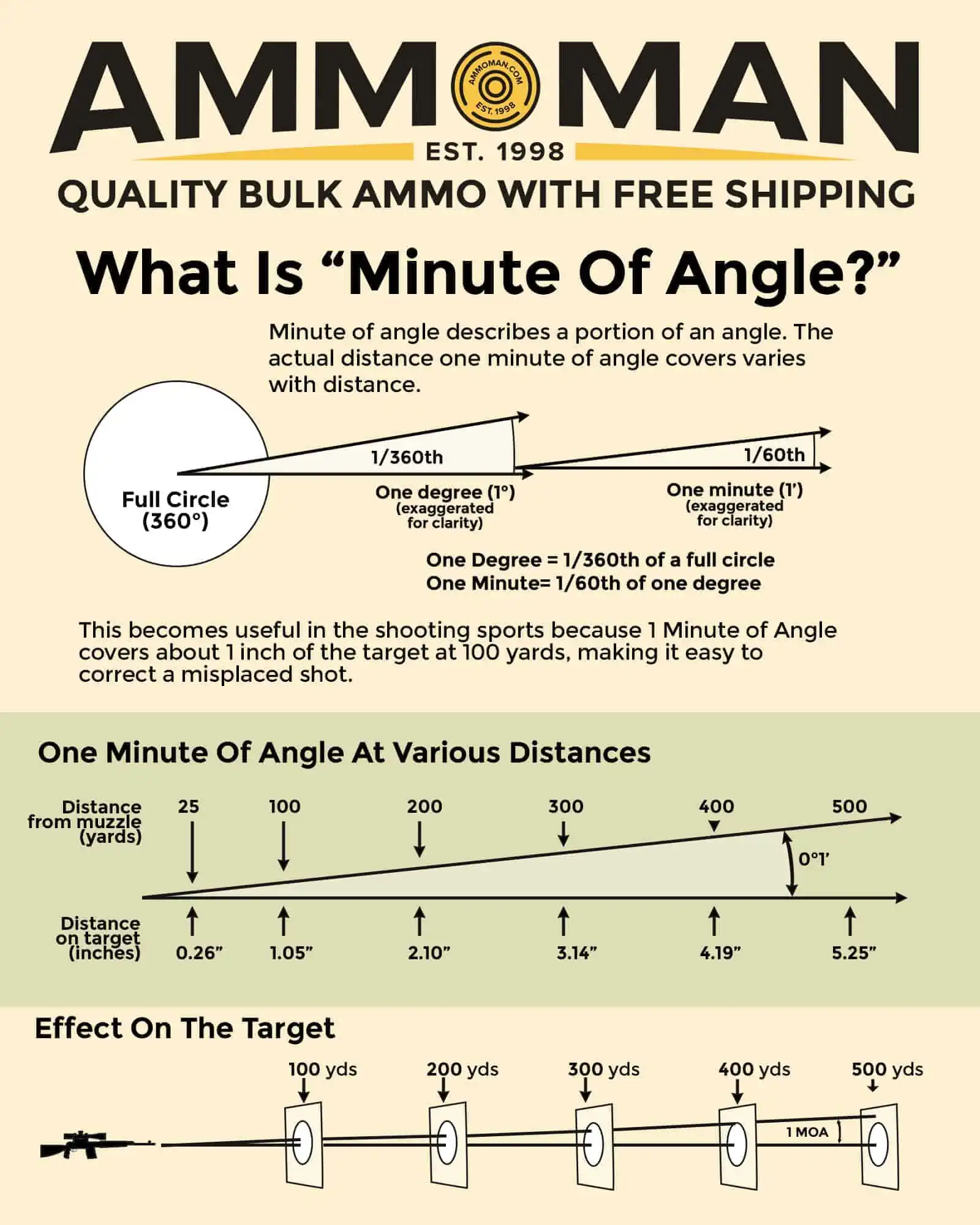
Before we can grasp the concept of Sub-MOA, we must first understand Minute of Angle (MOA). MOA is a unit of angular measurement used in ballistics and shooting to describe the accuracy of a firearm and ammunition combination. It represents the angular deviation of a projectile from its intended point of impact.
The Geometry of Accuracy
An angle is formed by two lines diverging from a common point. In the context of shooting, the point of origin is the firearm’s muzzle, and the two lines represent the path of two separate shots fired from the same firearm under consistent conditions. The “minute” in Minute of Angle refers to one sixtieth of a degree.
At a distance of 100 yards (which is a standard benchmark for MOA measurements), one minute of angle translates to approximately 1.047 inches. For practical purposes in shooting, this is often rounded to simply 1 inch. Therefore, when a firearm is described as having an accuracy of 1 MOA at 100 yards, it means that under ideal conditions, the shots fired from that firearm would consistently group within a circle measuring approximately 1 inch in diameter at that distance.
Scaling the Measurement
The beauty of MOA as a measurement is its scalability. Because it’s an angular measurement, the size of the group it represents increases proportionally with distance. This means:
- At 200 yards: 1 MOA would represent a group approximately 2 inches in diameter.
- At 300 yards: 1 MOA would represent a group approximately 3 inches in diameter.
- At 600 yards: 1 MOA would represent a group approximately 6 inches in diameter.
This consistent relationship between angle and distance allows shooters to predict the potential dispersion of their shots at various ranges, provided they know the inherent accuracy of their firearm and ammunition.
The Pinnacle of Precision: Defining Sub-MOA
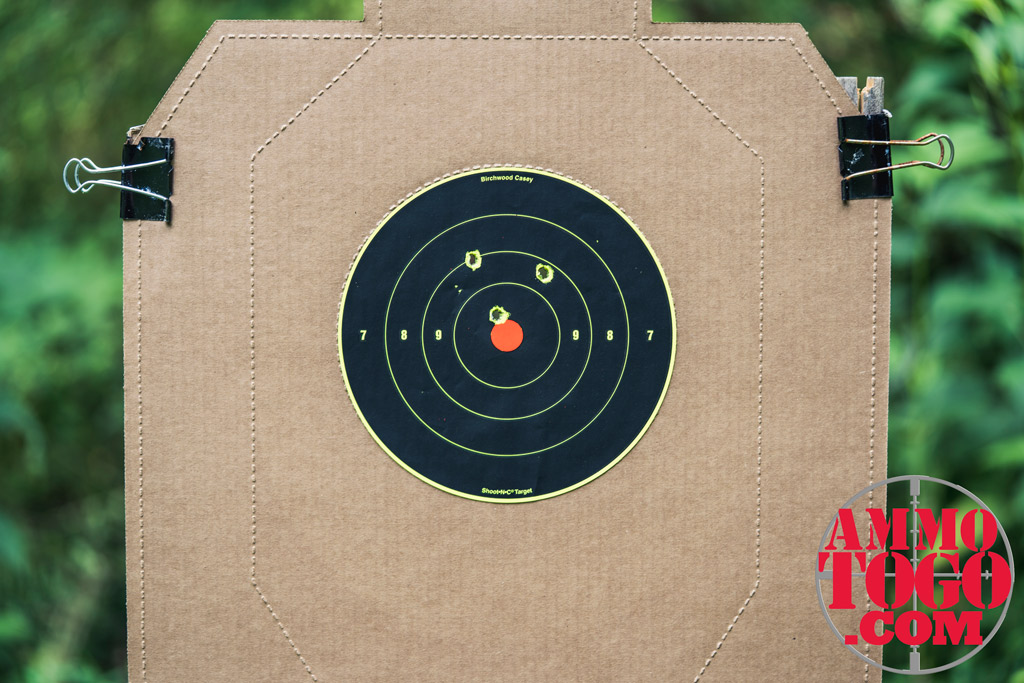
Now that we understand MOA, we can define Sub-MOA. The term “Sub-MOA” is quite literal: it signifies accuracy that is less than one minute of angle. In practical terms, this means a firearm capable of consistently grouping its shots into a diameter smaller than 1 inch at 100 yards.
Quantifying Sub-MOA Performance
When a rifle manufacturer advertises a rifle as being Sub-MOA, they are making a significant claim about its inherent accuracy. Typically, this refers to the rifle’s ability to shoot groups of 0.75 MOA or smaller, or even 0.5 MOA or smaller, at 100 yards. These are not just nominal figures; they represent a quantifiable level of precision.
For example, a rifle advertised as 0.5 MOA at 100 yards is expected to consistently produce groups where all shots fall within a circle approximately half an inch in diameter. This level of accuracy is exceptionally high and is not achievable by all firearms. It speaks to the quality of the barrel, the action, the overall construction, and the attention to detail in manufacturing.
The Significance of “Consistent”
It’s crucial to emphasize the word “consistent” when discussing Sub-MOA. Any firearm can, by chance, produce a single exceptional group. However, true Sub-MOA performance means that this level of accuracy can be reliably replicated across multiple shots, under varying conditions (within reasonable limits), and with a skilled shooter. This consistency is what separates truly accurate firearms from those that occasionally perform well.
Factors Contributing to Sub-MOA Accuracy
Achieving Sub-MOA accuracy is not a matter of luck; it’s the result of a meticulous combination of design, manufacturing, and operational factors. Several key elements contribute to a firearm’s ability to achieve this high standard.
The Barrel: The Heart of Accuracy
The barrel is arguably the most critical component determining a rifle’s accuracy. Several aspects of barrel design and manufacturing are paramount for Sub-MOA performance:
- Material and Construction: High-quality steel is essential. Barrels are often hammer-forged or button-rifled, processes that create precise rifling with minimal stress on the metal. The consistency of the bore diameter and the uniformity of the rifling are critical.
- Lapping and Honing: After rifling, barrels are often lapped and honed to achieve an exceptionally smooth internal surface. This process removes imperfections, reduces friction, and ensures a consistent diameter along the entire length of the bore.
- Chamber and Crown: The chamber, where the cartridge is seated, must be precisely cut to ensure proper headspace and alignment. The muzzle crown, the very end of the barrel where the bullet exits, is equally vital. A perfectly square and undamaged crown ensures that the bullet leaves the barrel cleanly, without any turbulent gas escaping prematurely and disturbing its flight.
- Free-Floating: For bolt-action rifles aiming for Sub-MOA, a free-floating barrel is almost a necessity. This means the barrel is not in contact with the rifle’s fore-end or any other part of the stock, except at the action. Any pressure exerted on the barrel by the stock can cause it to flex unpredictably, negatively impacting accuracy.
Action and Bedding: A Solid Foundation
The action of a rifle houses the bolt, trigger, and magazine. Its rigidity and precise fit with the barrel and stock are crucial.
- Action Rigidity: A stiff and precisely machined action ensures that the barrel remains stable under firing pressure. Any flex or play in the action can translate to shot dispersion.
- Bedding: This refers to the precise interface between the rifle’s action and the stock. In high-accuracy rifles, the action is often “bedded” into a custom-fit recess in the stock. This process uses epoxy or other bedding compounds to create a perfect, stress-free fit, ensuring that the action is firmly and consistently supported, without any torque or twist. This eliminates variations caused by wood expansion/contraction or stock flexing.
Ammunition: The Perfect Partner
Even the most accurate rifle is limited by the ammunition it fires. The consistency and quality of ammunition are vital for achieving Sub-MOA accuracy.
- Bullet Consistency: Variations in bullet weight, diameter, and concentricity (how perfectly round and balanced the bullet is) will directly impact accuracy. Bullets designed for precision shooting are manufactured to extremely tight tolerances.
- Powder Charges: Consistent powder charges are critical for repeatable muzzle velocities. Deviations in powder can lead to significant variations in bullet flight. High-quality ammunition uses carefully measured and loaded propellant.
- Case Consistency: The brass cases holding the propellant and bullet also play a role. Consistent case dimensions and primer seating contribute to uniform ignition and expulsion of gases.
- Handloading: Many shooters who demand Sub-MOA accuracy opt for handloading their ammunition. This allows them to precisely control every variable, from bullet selection and powder charge to case preparation and seating depth, optimizing the ammunition for their specific rifle.
The Shooter: The Final Variable
It’s important to remember that the shooter is a significant factor in achieving any level of accuracy, including Sub-MOA.
- Marksmanship Fundamentals: Proper trigger control, sight alignment, breathing techniques, and a stable shooting platform are essential. Even a Sub-MOA rifle will not shoot accurately if handled poorly.
- Rifle Handling: Consistent stock weld, grip, and minimal disturbance of the rifle during the shot are vital.
- Environmental Factors: Wind, temperature, and humidity can all affect bullet trajectory. A skilled shooter understands how to compensate for these factors.
Applications of Sub-MOA Performance
The pursuit of Sub-MOA accuracy is driven by specific needs and applications where extreme precision is not just desirable but essential.
Competitive Shooting: The Pursuit of Perfection
In precision rifle competitions, such as those governed by the Precision Rifle Series (PRS) or various sniper rifle matches, Sub-MOA accuracy is often the baseline requirement. Competitors are tasked with engaging targets at long distances, often under challenging conditions, with extreme accuracy being the deciding factor. Achieving and maintaining Sub-MOA performance allows shooters to confidently engage targets that are mere inches in size at hundreds of yards.
Law Enforcement and Military Snipers: Critical Missions
For military and law enforcement sniper teams, Sub-MOA accuracy is not a luxury but a necessity. The lives of officers, civilians, and friendly forces can depend on the ability of a sniper to make a single, perfectly placed shot at extended ranges. This precision is critical for threat neutralization, hostage rescue, and reconnaissance missions, where collateral damage must be minimized.
Long-Range Hunting: Ethical and Effective Pursuits
Ethical hunting demands that a hunter be able to make a clean, humane kill. For hunters who pursue game at longer distances, Sub-MOA rifles are invaluable. They allow for more precise shot placement on vital organs, ensuring a quick and efficient harvest. This capability respects the animal and minimizes suffering.
Precision Firearm Manufacturing: A Mark of Quality
For firearm manufacturers, producing rifles capable of Sub-MOA accuracy is a testament to their engineering, machining, and quality control capabilities. It establishes their reputation as producers of high-end, precision instruments, appealing to discerning customers who prioritize performance above all else.
The Investment in Precision
Achieving and maintaining Sub-MOA accuracy is an investment. Sub-MOA rifles are typically more expensive than standard sporting rifles due to the higher tolerances, premium materials, and meticulous craftsmanship involved in their production. Furthermore, the ammunition required to achieve this level of accuracy can also be more costly, especially if it’s match-grade or handloaded.
However, for those who demand the highest levels of performance, the investment is well worth it. A Sub-MOA rifle offers the confidence that comes with knowing your equipment will perform to its utmost potential, allowing you to push your own shooting skills to their limits. It represents a commitment to excellence in design, manufacturing, and ultimately, in the fundamental act of placing a projectile precisely where it needs to be. The journey to Sub-MOA is a testament to human ingenuity and the relentless pursuit of perfection in the art and science of shooting.
aViewFromTheCave is a participant in the Amazon Services LLC Associates Program, an affiliate advertising program designed to provide a means for sites to earn advertising fees by advertising and linking to Amazon.com. Amazon, the Amazon logo, AmazonSupply, and the AmazonSupply logo are trademarks of Amazon.com, Inc. or its affiliates. As an Amazon Associate we earn affiliate commissions from qualifying purchases.