
In the intricate world of business transactions, particularly those involving significant capital investment and complex negotiations, the primary agreement often tells only part of the story. Beneath the surface of the main contract, a crucial document frequently plays a pivotal role in shaping the terms and understanding between parties: the side letter. While not always a public or standard component of every deal, side letters are powerful tools that can clarify ambiguities, establish specific understandings, or introduce bespoke arrangements not fully articulated in the main agreement. Understanding what a side letter is, its purpose, and its implications is essential for anyone involved in sophisticated financial and corporate dealings.

The Nature and Purpose of Side Letters
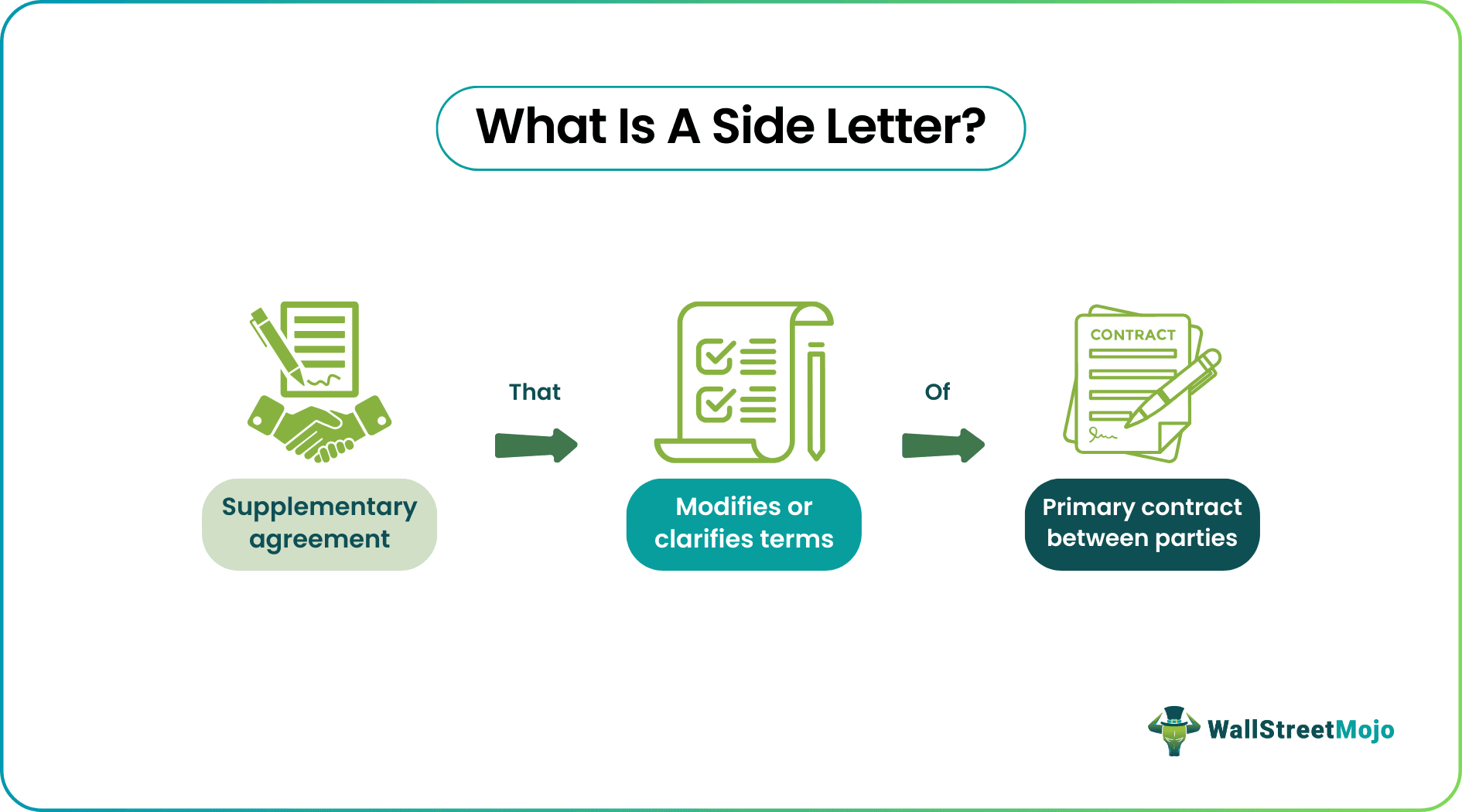
At its core, a side letter is a supplementary agreement that is entered into between parties to a principal contract. It is typically executed concurrently with the main agreement, or shortly thereafter, and its provisions are intended to modify, clarify, or supplement the terms of that main contract. The key characteristic of a side letter is that it is “off to the side” of the main document, meaning it is not incorporated by reference into the main agreement itself but exists as a separate, legally binding document. This distinction is important for several reasons, including evidentiary purposes and potential disclosure requirements.
Distinguishing Side Letters from Main Agreements
The primary contract, whether it be a merger agreement, an investment term sheet, or a partnership deed, sets out the foundational terms and conditions of the transaction. It is the document that will be scrutinized by legal counsel, regulators, and potentially courts if disputes arise. Side letters, on the other hand, are designed to handle specific nuances or concessions that might be too detailed, too sensitive, or simply too specific to be included in the broader, more formalized main agreement.
For example, in a private equity investment, the main agreement might outline the valuation, the number of shares purchased, and the board representation. A side letter, however, might detail specific operational control rights for the investor in a particular scenario, clarify the treatment of certain future liabilities, or outline a pre-agreed exit strategy for a portion of the investment. These are critical points for the parties involved, but their inclusion in the main agreement could make it unwieldy or overly specific, potentially complicating its drafting and negotiation.
Legal Enforceability and Binding Nature
Despite their “side” designation, side letters are legally binding documents. When properly drafted and executed by all parties to the main agreement, the commitments and understandings within a side letter are just as enforceable as those within the primary contract. This means that if a party fails to adhere to the terms of a side letter, the other party has legal recourse. The enforceability often hinges on whether the side letter is consistent with the main agreement and does not, for instance, contradict a fundamental term of the primary document in a way that would render the entire transaction invalid or ambiguous. Legal counsel will meticulously review both the main agreement and any side letters to ensure consistency and to confirm that the intentions of the parties are accurately captured and legally sound.
Common Scenarios for Using Side Letters
Side letters find application in a wide array of business contexts where flexibility and specificity are paramount. They are particularly prevalent in:
- Mergers and Acquisitions (M&A): In M&A deals, side letters can address a variety of issues, such as employee retention incentives for key management, specific representations and warranties with a limited scope, or understandings regarding the treatment of pre-existing contractual obligations of the target company. They might also be used to confirm understandings about the post-acquisition integration plan or the future roles of existing management.
- Venture Capital and Private Equity Investments: Investors, especially those making significant capital injections, often use side letters to secure certain rights or preferences. This can include rights to information beyond what is standard for all shareholders, specific liquidation preferences, veto rights over certain corporate actions, or assurances regarding the appointment of board members. Founders or companies seeking investment may also use side letters to negotiate specific terms related to their ongoing involvement or the management of the company.
- Joint Ventures and Strategic Partnerships: When companies collaborate on projects, side letters can define the operational responsibilities of each party in more detail, outline dispute resolution mechanisms specific to the venture, or set out conditions for the termination or dissolution of the partnership. They can also clarify intellectual property rights and revenue-sharing arrangements that are too complex for the main partnership agreement.
- Financing Arrangements: In complex debt or equity financing rounds, side letters can clarify the terms of covenants, define specific events of default with particular nuances, or outline the lender’s rights concerning collateral in specific circumstances.
The common thread across these scenarios is the need to precisely define certain aspects of a relationship or transaction that are not adequately addressed by the standard clauses of a principal agreement, or where a party requires a bespoke assurance or concession.
Types of Provisions Addressed in Side Letters
The content of a side letter can be remarkably diverse, tailored to the unique needs of the parties and the specific transaction. However, certain categories of provisions are recurrently found in these supplementary documents. These provisions often relate to governance, financial arrangements, operational specifics, and future contingencies.
Governance and Control Provisions
A significant use of side letters involves establishing specific governance rights or control mechanisms that go beyond the standard provisions of a corporate charter or a general shareholders’ agreement. For instance, an investor might negotiate for a “put option” – the right to sell their shares back to the company or other shareholders under specific conditions – which might not be appropriate for inclusion in the main investment agreement but is critical for the investor’s risk management.
Another common provision relates to board representation and decision-making. While a main agreement might grant a party a board seat, a side letter could stipulate that certain major decisions, such as the sale of assets, significant capital expenditures, or the issuance of new shares, require the unanimous consent of the board, or the affirmative vote of the representative appointed by that party. This ensures that a particular party has a more direct influence over critical strategic choices.
Information rights are also frequently addressed. An investor might request enhanced reporting beyond the standard financial statements, such as access to detailed operational metrics, specific management reports, or the right to meet with key personnel regularly. These rights are often crucial for monitoring the performance of an investment and ensuring that the business is being managed in accordance with agreed-upon strategies.
Financial and Economic Understandings
Financial matters are a cornerstone of most business agreements, and side letters often serve to clarify or add specific economic terms. This can include understandings about the distribution of profits, the allocation of specific costs or liabilities, or the timing and conditions of future payments.
For example, in an M&A context, a seller might agree to a portion of the purchase price being held in escrow for a specified period to cover potential warranty claims. A side letter could detail the exact process for determining what constitutes a valid claim, the method for resolving disputes over the escrowed funds, and the timeline for their release or distribution.
Another frequent use is in venture capital deals where side letters may confirm the investor’s preference in the event of a liquidation or sale of the company. While a main term sheet might mention liquidation preferences, a side letter can offer more granular detail about how different classes of shares are treated, the calculation of preferred returns, and the circumstances under which these preferences are triggered. This specificity is vital for investors seeking to protect their capital and ensure a predictable return.
Operational and Strategic Commitments
Beyond financial and governance matters, side letters can also encompass crucial operational and strategic commitments that shape how the business will be run. These might relate to specific operational targets, strategic direction, or the management of particular business units.
For instance, in a joint venture, the main agreement might establish the general purpose of the venture. A side letter could then detail specific operational responsibilities of each partner, such as one partner being solely responsible for sales and marketing, while the other handles research and development. It might also outline key performance indicators (KPIs) that the venture must achieve and the consequences if these KPIs are not met.
In some cases, side letters can also address intellectual property (IP) rights. While the main agreement might cover the general ownership of IP developed within a partnership, a side letter could clarify ownership of pre-existing IP brought into the venture by each party, or the terms under which that IP can be used or licensed by the venture or the other party.
Future Contingencies and Exit Strategies
Side letters are also frequently employed to address future contingencies and to outline agreed-upon exit strategies. This provides clarity and reduces uncertainty for all parties involved, particularly in long-term investments or complex business relationships.
One common example is the inclusion of “drag-along” or “tag-along” rights, which are often detailed in side letters, particularly in venture-backed companies. A drag-along right allows a majority shareholder to force minority shareholders to sell their shares to a third-party buyer on the same terms. Conversely, a tag-along right allows minority shareholders to join in a sale by a majority shareholder, ensuring they are not left behind. While these rights are fundamental to investment agreements, the specific triggers, thresholds, and procedures can be complex and are often best elaborated in a side letter.
Furthermore, side letters can establish pre-agreed terms for the eventual exit of an investor or a partner. This could involve outlining a target valuation for a future sale, specifying conditions under which a party can demand a sale, or defining the process for a buy-back of shares. This proactive approach can prevent future disputes and ensure a smoother transition when the time comes to divest.
Drafting and Legal Considerations
The creation and execution of a side letter are not merely administrative formalities; they are critical legal processes that require careful attention to detail. Given their supplementary nature, side letters must be drafted with a keen understanding of their relationship to the main agreement and their potential impact on the overall transaction.
Ensuring Consistency and Avoiding Conflict
A fundamental principle in the drafting of side letters is the avoidance of direct conflict with the main agreement. While a side letter is intended to modify or clarify, it should not outright contradict a core provision of the principal contract. If a side letter contains a term that is fundamentally at odds with the main agreement, it could lead to disputes, render the side letter unenforceable, or even cast doubt on the validity of the entire transaction. Legal counsel will meticulously review both documents to ensure that any modifications or additions made by the side letter are complementary and serve to enhance, rather than undermine, the primary understanding between the parties.
The structure of the main agreement often includes clauses that address how amendments and supplementary agreements will be handled. It is crucial to ensure that any side letter aligns with these provisions, including any requirements for written amendments signed by all parties.
The Role of Legal Counsel
The involvement of experienced legal counsel is indispensable when dealing with side letters. Lawyers specializing in corporate law, M&A, or venture capital will possess the expertise to:
- Draft clear and unambiguous language: The precise wording of a side letter is paramount. Ambiguities can lead to costly disputes down the line. Legal counsel will ensure that the language used accurately reflects the parties’ intentions and is legally robust.
- Identify potential conflicts: Attorneys will scrutinize the side letter in conjunction with the main agreement to identify any potential inconsistencies or contradictions that could jeopardize the enforceability of either document.
- Advise on enforceability and implications: Counsel will explain the legal ramifications of the provisions in the side letter, including their enforceability under relevant jurisdictions and their impact on other stakeholders.
- Negotiate favorable terms: They will guide their clients through the negotiation process, advocating for their interests and ensuring that the side letter provides the desired protections and assurances.
- Ensure proper execution: Legal counsel will oversee the execution of the side letter, confirming that all necessary parties sign the document, and that it is properly dated and witnessed where required.
Failure to engage qualified legal professionals can result in overlooked risks, unintended consequences, and ultimately, a transaction that does not fully meet the parties’ objectives.
Evidentiary Value and Disclosure Considerations
The fact that side letters are separate documents has implications for their evidentiary value and potential disclosure requirements. In the event of litigation, a side letter can serve as critical evidence of the parties’ intentions and specific understandings that might not be apparent from the main agreement alone. It can help to clarify ambiguities or provide context for the interpretation of the main contract.
However, the separate nature of side letters also raises disclosure considerations. In certain regulatory environments or public offerings, all material agreements related to a transaction may need to be disclosed. While side letters are not typically intended for public consumption, their status as legally binding documents means they could be subject to discovery in legal proceedings or require disclosure in specific corporate filings, particularly if they contain terms that are material to the financial health or governance of a company. Parties should consult with their legal counsel about the potential disclosure obligations associated with any side letters they enter into.

Conclusion: The Strategic Importance of Side Letters
In the dynamic landscape of corporate finance and business transactions, side letters stand as a testament to the need for precision, flexibility, and bespoke arrangements. They are not mere footnotes to larger agreements but rather integral components that can significantly shape the outcome and ongoing relationship between parties. By providing a mechanism to address specific concerns, clarify ambiguities, and establish tailored understandings, side letters empower businesses to navigate complex deals with greater confidence and control.
From defining nuanced governance rights and securing specific financial assurances to detailing operational commitments and outlining future exit strategies, the utility of side letters is vast and varied. Their power lies in their ability to refine the broad strokes of a main contract into the fine details that matter most to the parties involved.
However, the strategic importance of side letters is matched by the necessity for meticulous legal drafting and execution. The enforceability and effectiveness of a side letter are contingent on its clarity, consistency with the main agreement, and the careful guidance of experienced legal counsel. Ignoring these considerations can transform a valuable tool into a source of unintended complications and disputes.
Ultimately, for businesses engaging in significant transactions, understanding and strategically utilizing side letters can be the difference between a successful, well-defined partnership and a future fraught with uncertainty and disagreement. They are a sophisticated instrument for ensuring that all parties enter into agreements with a shared, precise understanding of their rights, obligations, and the expected trajectory of their venture.
aViewFromTheCave is a participant in the Amazon Services LLC Associates Program, an affiliate advertising program designed to provide a means for sites to earn advertising fees by advertising and linking to Amazon.com. Amazon, the Amazon logo, AmazonSupply, and the AmazonSupply logo are trademarks of Amazon.com, Inc. or its affiliates. As an Amazon Associate we earn affiliate commissions from qualifying purchases.